Avian flight II: albatross flight

Albatross spend most of their lives in flight. They forage in the open ocean, where food may be separated by many miles, and they head for islands only to breed. They have been documented making around-the-world trips in just 46 days (take that, Jules Verne!) and flying for weeks at an average speed of 950 km per day (Croxall et al. 2005). That’s 40 km per hour, so you could beat them in a car (if you could stay awake that long), but still!

I am awesome. Photo by Tony Schneider

I am awesome.
Photo by Tony Linde

How can an animal spend so much time in such fast flight? How do albatross not waste away and die from the sheer energetic effort?
Continue reading

Animal April Fools

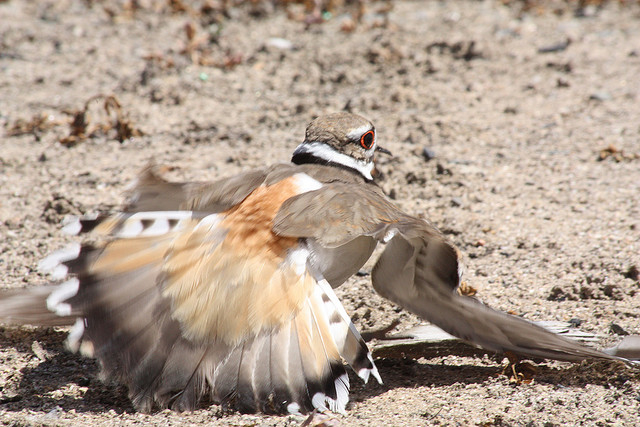
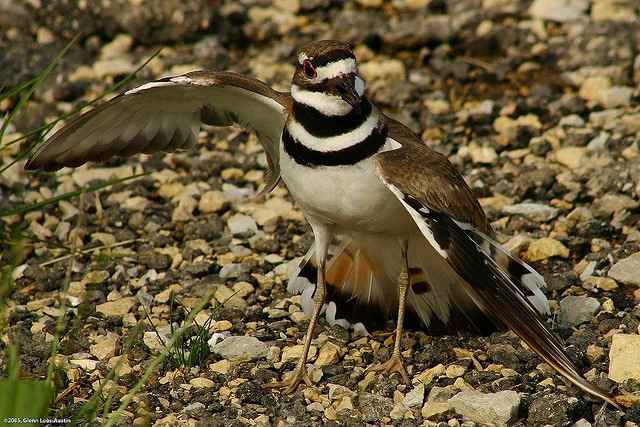
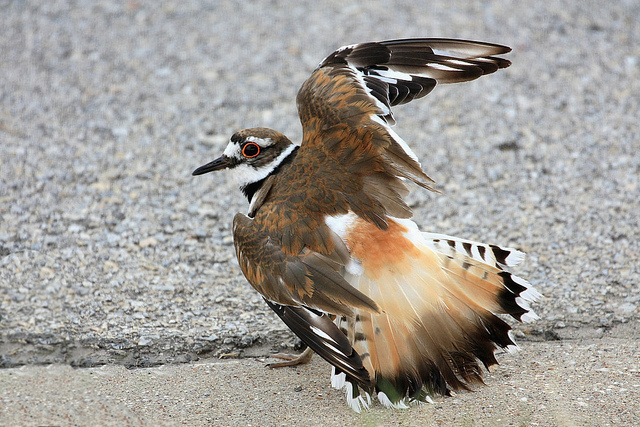
Oh no! I broke my wing! I’m so injured and defenseless and tasty!

Look how broken my wing is! Are you looking? Ooh, it stings!(Photo by Glenn Loos-Austin)

Look how broken my wing is! Are you looking? Ooh, it stings!
(Photo by Glenn Loos-Austin)

Ooh better follow me as I flop brokenly over this way!(Photo by Ken Slade)

Ooh better follow me as I flop brokenly over this way!
(Photo by Ken Slade)

Ouch ouch! What a flailing broken mess of deliciousness I am being over here!(Photo by Jon Rutlen)

Ouch ouch! What a flailing broken mess of deliciousness I am being over here!
(Photo by Jon Rutlen)

Continue reading

The incredible story of the Black Robin

This is the Black Robin (Petroica traversi), a species found only in the Chatham Islands, New Zealand:

Black Robin. Photo originally by schmechf, modified by Wikimedia Commons.

Black Robin. Photo originally by schmechf, modified by Wikimedia Commons.

This was the total world population of Black Robins in 1980:

black_robin5

Five birds. That’s not great—and it gets worse. Guess how many of those were adult females?

One.

Almost any conservationist would tell you that this was a hopeless situation. You can’t restart a species from one female—especially when that female is a whopping eight years old already, in a species that generally lives four years.

Continue reading

Dinosaurs probably looked just as awesome as you think they should have

When you’re little, you play with toy dinosaurs all bright red or blue or painted spotted with many colors. You fill coloring books with purple velociraptors taking down plaid apatosaurs. Then you get older and learn about camouflage; and you watch nature documentaries of brown felines taking down brown gazelles in tall brown grass; and—zebras notwithstanding—you start to think that probably dinosaurs weren’t plaid after all.

Well, buck up! They—at least some of them—probably did look really awesome.

Continue reading

Learning how to eat like a bird

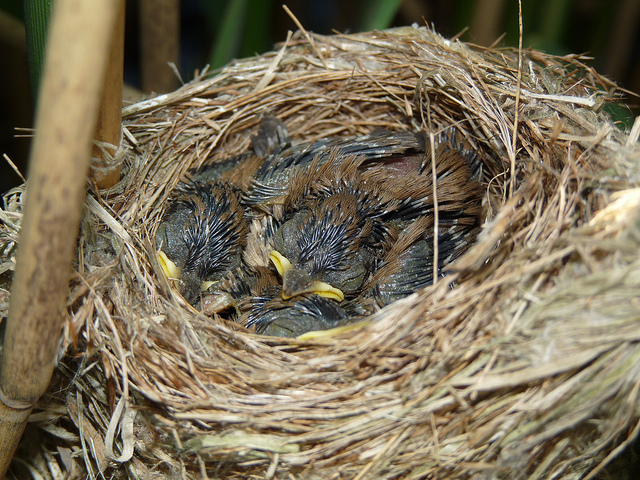
When you’re an altricial baby bird, life is either great or over. If it isn’t over—that is, assuming you aren’t eaten by a mouse, chipmunk, snake, slug, coyote, etc.—then your life is sitting still in the warm and having food shoved in your face. Excellent.

Reed Warbler chicks. This is the life.Photo by nottsexminer

Reed Warbler chicks. This is the life.
Photo by nottsexminer

But that doesn’t last. After you fledge, your parents keep feeding you, but soon they start feeding you less. You can follow them around begging, but soon even that doesn’t do any good. You have to face it: you need to learn how to catch your own food. But that food flies and crawls and runs away!

Doesn't matter. I can catch it.Photo by David Mikulin

Doesn’t matter. I can catch it.
Photo by David Mikulin

We tend to think of wild animals as “instinctually” being able to do everything they do, but in fact, a lot of those skills have to be learned and practiced. Two of my favorite scientific papers looked at how fledgling birds developed their foraging skills. As adults, they were the expert bug-catchers you see all the time; but as fledglings, they did—well, about as well as the four-year-old child of a champion fisherman would do, the first time you handed her the fishing rod.

Continue reading

Badges of status, or, keeping House Sparrows honest

In many bird species, the males have to acquire and defend a good territory – filled with great food or great places to put a nest – in order to have a prayer of attracting a mate. There’s even evidence that some females pay more attention to the quality of the male’s territory than to the quality of the male, so having a good territory is a big deal.

In these species, males fight a lot. They fight to get territories and then they fight to keep them. It’s a bit like a football game: you have to run fast and smash into people in order to get the ball, and then continue running fast and smashing into people (and withstanding them smashing into you) in order to hang onto it.

Male House Sparrows fighting.Photo by Jessica Lucia

Male House Sparrows fighting.
Photo by Jessica Lucia

Take that!Photo by Jessica Lucia

Photo by Jessica Lucia

All that fighting takes a lot of time and energy, not to mention risk of injury. So the birds (and many other resource-defending animals) have found a less-dangerous shortcut: instead of fighting, they wear “badges of status,” color markings on their body that stand for how tough they are. Birds with less-tough badges don’t bother challenging the tougher birds, and everyone has to fight less. Sounds great, right? It’s the equivalent of a football player wearing a jersey that says “I’m Tougher Than You,” and the other football players just leaving him alone. So much less violent!

… but it doesn’t seem like it should work, does it? If it did, then anybody could put on a jersey that says “I’m Tougher Than Everybody” and win the Superbowl. What stops the birds from lying?

Continue reading

Avian flight I: built for flight

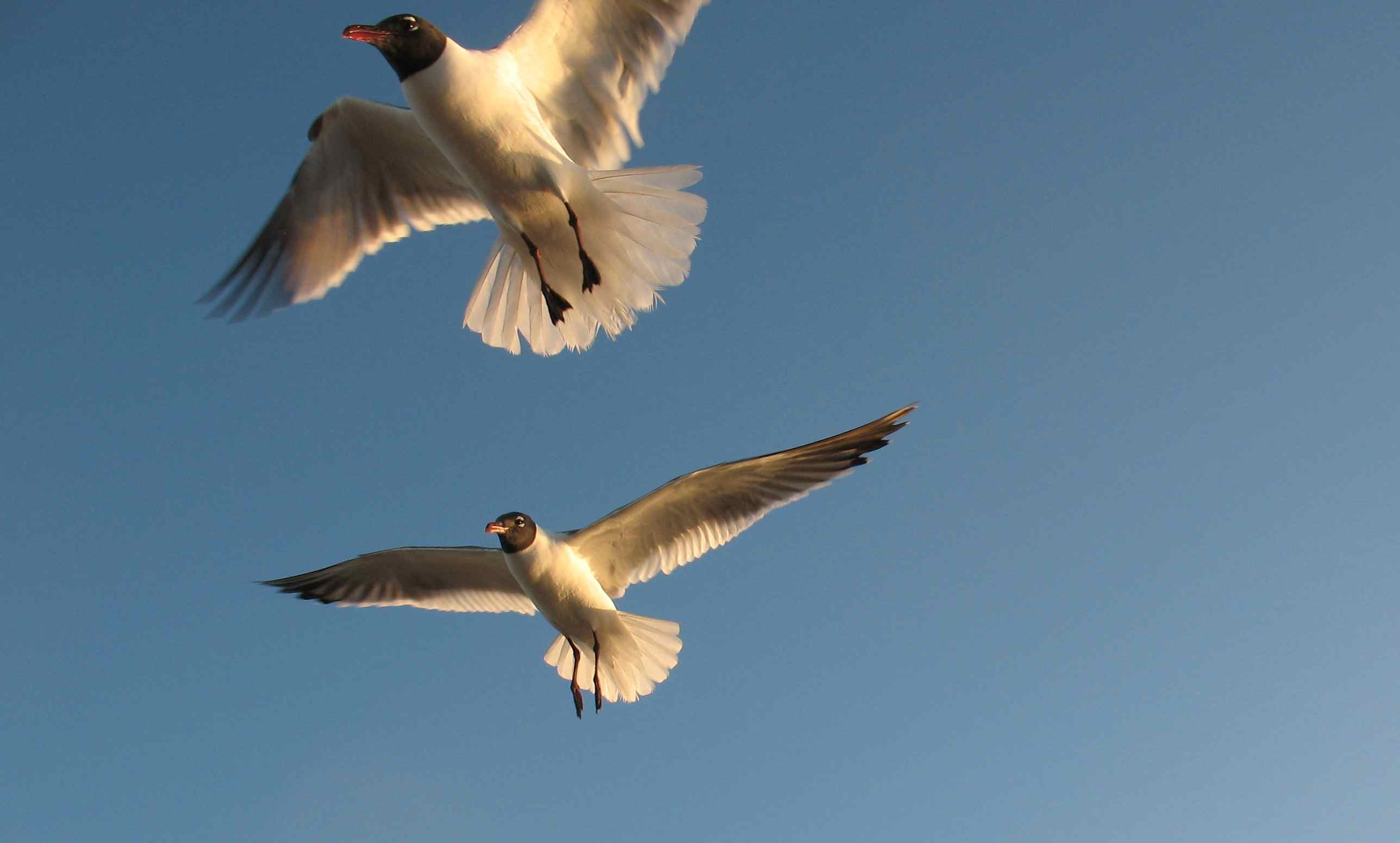
Laughing Gulls in flight

Laughing Gulls in flight

Everything about avian morphology has been shaped by the requirements of flight. Flight is hard. Animals are heavy, being largely composed of water, and air is not dense; you have to work hard to generate any force by manipulating air. The problem for any flying animal is to be light yet powerful – and to still be a viable animal, capable of eating and storing energy and making babies. A hypothetical weak but extremely light animal – think an air-jellyfish – might be able to fly, but would probably starve. While the ocean is filled with floating particles that real jellyfish can catch simply by passively floating, the air is not so bountiful. (You could argue that web spiders filter-feed in air, but… all right, I don’t know if air-jellyfish are impossible. I think we’re getting off-topic here.)

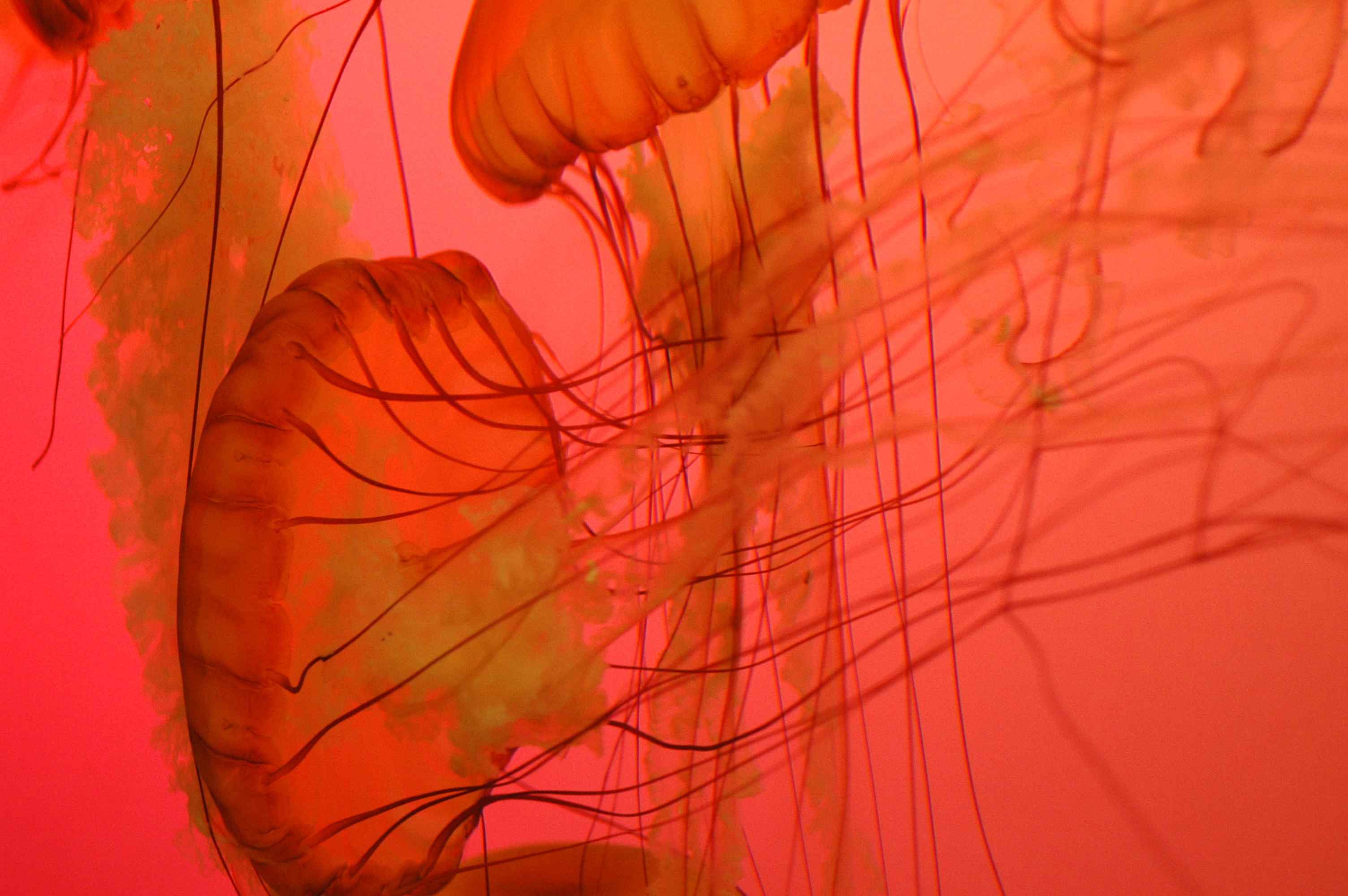
Air-jellyfish floating in a pink sunset.(Or, Northeast Pacific sea nettle in an artistically-lit tank at the Shedd Aquarium.)

Air-jellyfish wafting through a pink sunset.
(Or, Northeast Pacific sea nettle in an artistically-lit tank at the Shedd Aquarium.)

In any case, birds didn’t start out as light, thin, filmy creatures. They started out as small raptor-y dinosaurs. Natural selection acts only on the traits that are present: massive change to the shape of an organism is hard. (Not impossible! But comparatively rarer.) Birds started out with backbones, four limbs, a head, two eyes, etc., and they evolved flight from that initial morphology.

But how do you make a dinosaur that can fly? Dinosaurs are strong, yes, but they are heavy. Bones are heavy; muscle is heavy; fat is heavy; teeth are heavy.

Continue reading

Bird dances for two

The birds of paradise have been getting a lot of attention lately for the elaborate courtship dances of their males, and nobody is going to argue that they don’t deserve it. But it isn’t all “males dance, females judge” in the avian world. The displays of male birds of paradise reflect high reproductive skew: a few males mate a lot, a lot of males never mate. It’s worth it to the males to devote incredible amounts of energy and resources to attracting females, because if they’re successful, they may sire many chicks. They can afford to spend all that energy and resources on crazy feathers and tricky dance moves because that’s all they have to do, parent-wise: they don’t help females build the nest or incubate the egg or raise the chicks.

Male Greater Bird-of-paradise. Photo by Ivan Teage.

Male Greater Bird-of-paradise. Photo by Ivan Teage.

But birds are diverse; the birds of paradise reflect just one point on a spectrum of mating systems. Near the other end are birds with low reproductive skew. Males of these species look pretty much like the females, and they contribute about equally to parental duties. You might expect that these species would lack dances the same way they lack meter-long curlicue tailfeathers, but some of them have dances every bit as formalized and elaborate as the birds of paradise. The difference is that these dances are duets.

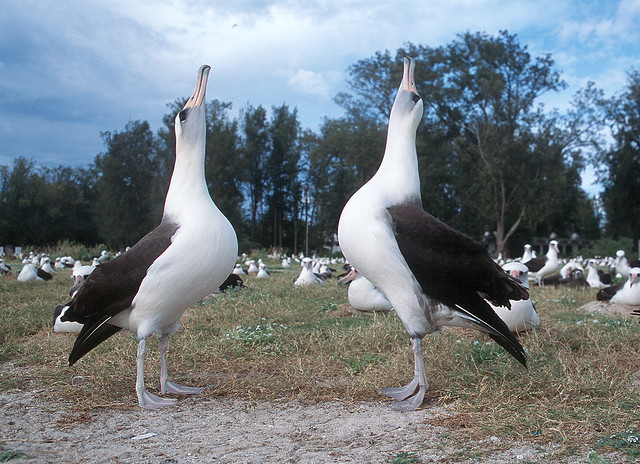
Laysan Albatross pair performing courtship dance. Photo by Michael Lusk.

Laysan Albatross pair performing courtship dance. Photo by Michael Lusk.

(Note on videos: I know clicking on videos is annoying. But it’s worth watching the videos in this post, I promise.)

Continue reading

The local juncos, mutant and otherwise

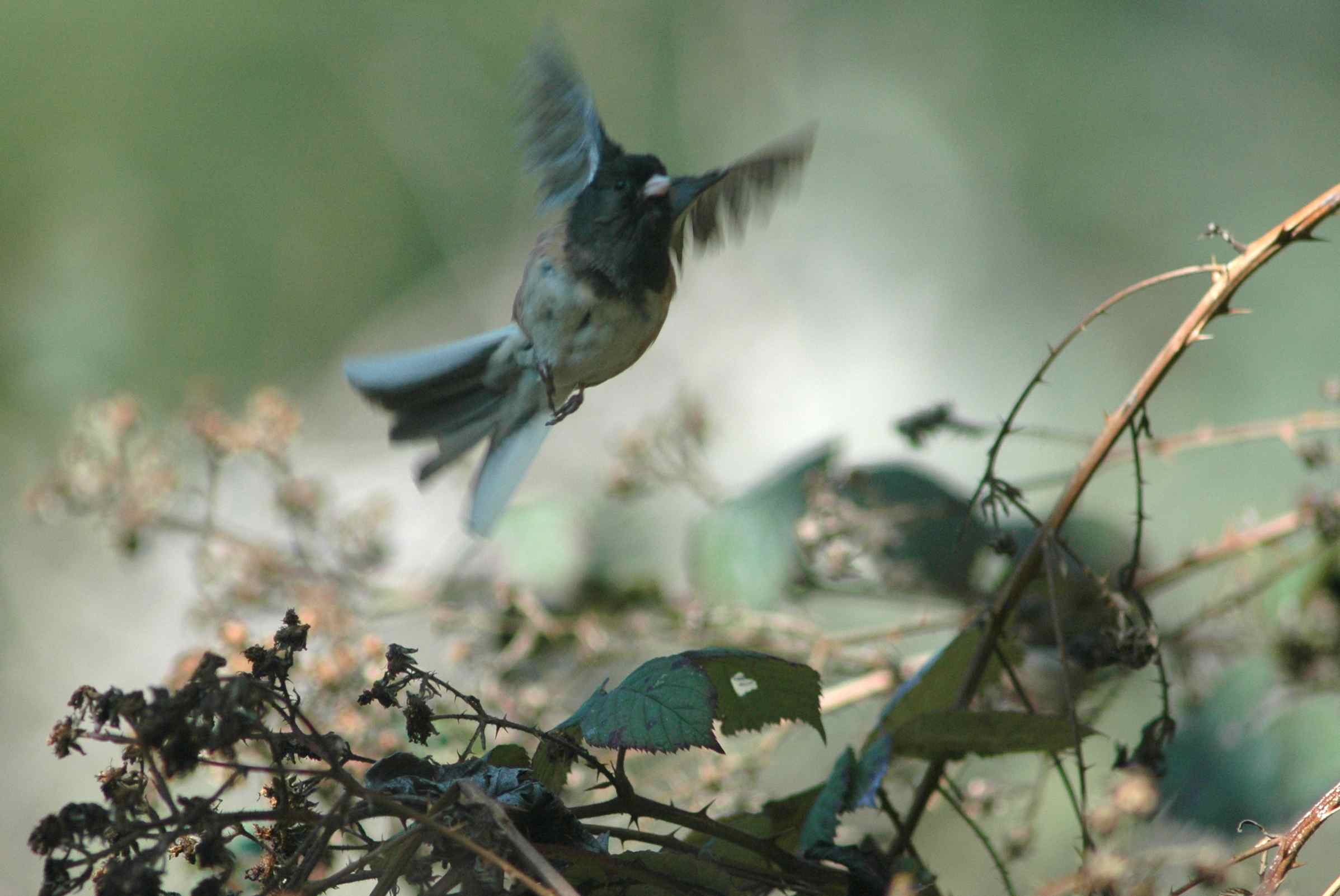
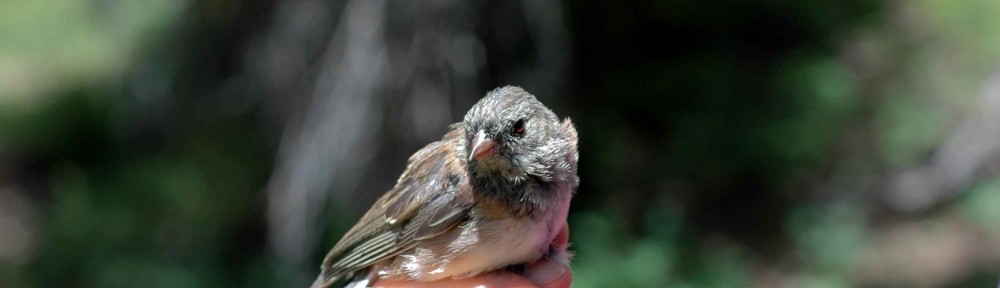
After mentioning my local mutant junco here several times, I figured I owed you a photo, so I went stalking him today. In searching for him I also found lots of normal-looking juncos. I did eventually find my white-splashed bird, so read on to see this unusual junco – after first admiring the regular juncos, because every junco is awesome.

cj_flight

Continue reading

If you meet a time-traveling ancient Egyptian, talk about birds

The next time you come across an ancient Egyptian mummy in a museum, rather than thinking of looming pyramids and cursed tomb robbers, consider this: that mummy was probably a better birder than you are.

Okay, I don’t know if the ancient Egyptians would have considered it “birding” – I doubt they maintained life lists. But they certainly knew their birds to a degree that I doubt many in the modern era could equal. The Oriental Institute’s exhibit “Between Heaven and Earth: Birds in Ancient Egypt” showcases just how thoroughly birds permeated every aspect of ancient Egyptian life. They painted birds and sculpted them, drew them in their writing as hieroglyphs, raised and shepherded and ate them, and saw their gods embodied in their forms.

Barn Owl sculpture. Owls were unusual in Egyptian art for being depicted face-on instead of in profile.Photo Anna Ressman. Courtesy of the Oriental Institute of the University of Chicago.

Barn Owl sculpture. Owls were unusual in Egyptian art for being depicted face-on instead of in profile, as most animals (including humans) were.
Photo by Anna Ressman. Courtesy of the Oriental Institute of the University of Chicago.

Continue reading