Bird dances for two

The birds of paradise have been getting a lot of attention lately for the elaborate courtship dances of their males, and nobody is going to argue that they don’t deserve it. But it isn’t all “males dance, females judge” in the avian world. The displays of male birds of paradise reflect high reproductive skew: a few males mate a lot, a lot of males never mate. It’s worth it to the males to devote incredible amounts of energy and resources to attracting females, because if they’re successful, they may sire many chicks. They can afford to spend all that energy and resources on crazy feathers and tricky dance moves because that’s all they have to do, parent-wise: they don’t help females build the nest or incubate the egg or raise the chicks.

Male Greater Bird-of-paradise. Photo by Ivan Teage.

Male Greater Bird-of-paradise. Photo by Ivan Teage.

But birds are diverse; the birds of paradise reflect just one point on a spectrum of mating systems. Near the other end are birds with low reproductive skew. Males of these species look pretty much like the females, and they contribute about equally to parental duties. You might expect that these species would lack dances the same way they lack meter-long curlicue tailfeathers, but some of them have dances every bit as formalized and elaborate as the birds of paradise. The difference is that these dances are duets.
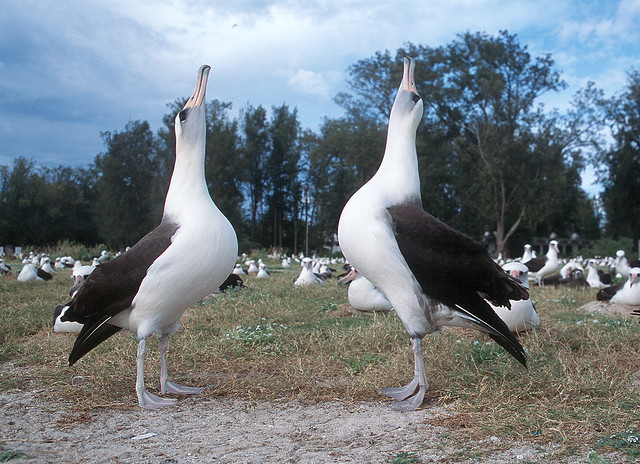
Laysan Albatross pair performing courtship dance. Photo by Michael Lusk.

Laysan Albatross pair performing courtship dance. Photo by Michael Lusk.

(Note on videos: I know clicking on videos is annoying. But it’s worth watching the videos in this post, I promise.)

Continue reading

Color bands: check

Last year, I waited to order color leg bands (for banding the juncos) until spring. This turned out to be a mistake, since everyone else ordered their leg bands at the same time, so all the good colors got backordered and I spent the first half of the field season banding my birds in just orange, lime, green, light blue, brown, and grey. If you’re wondering whether brown or grey bands show up on a junco leg: well, no, they don’t.

I learned my lesson. I’ll have a full arsenal of colors for this field season:

bands1


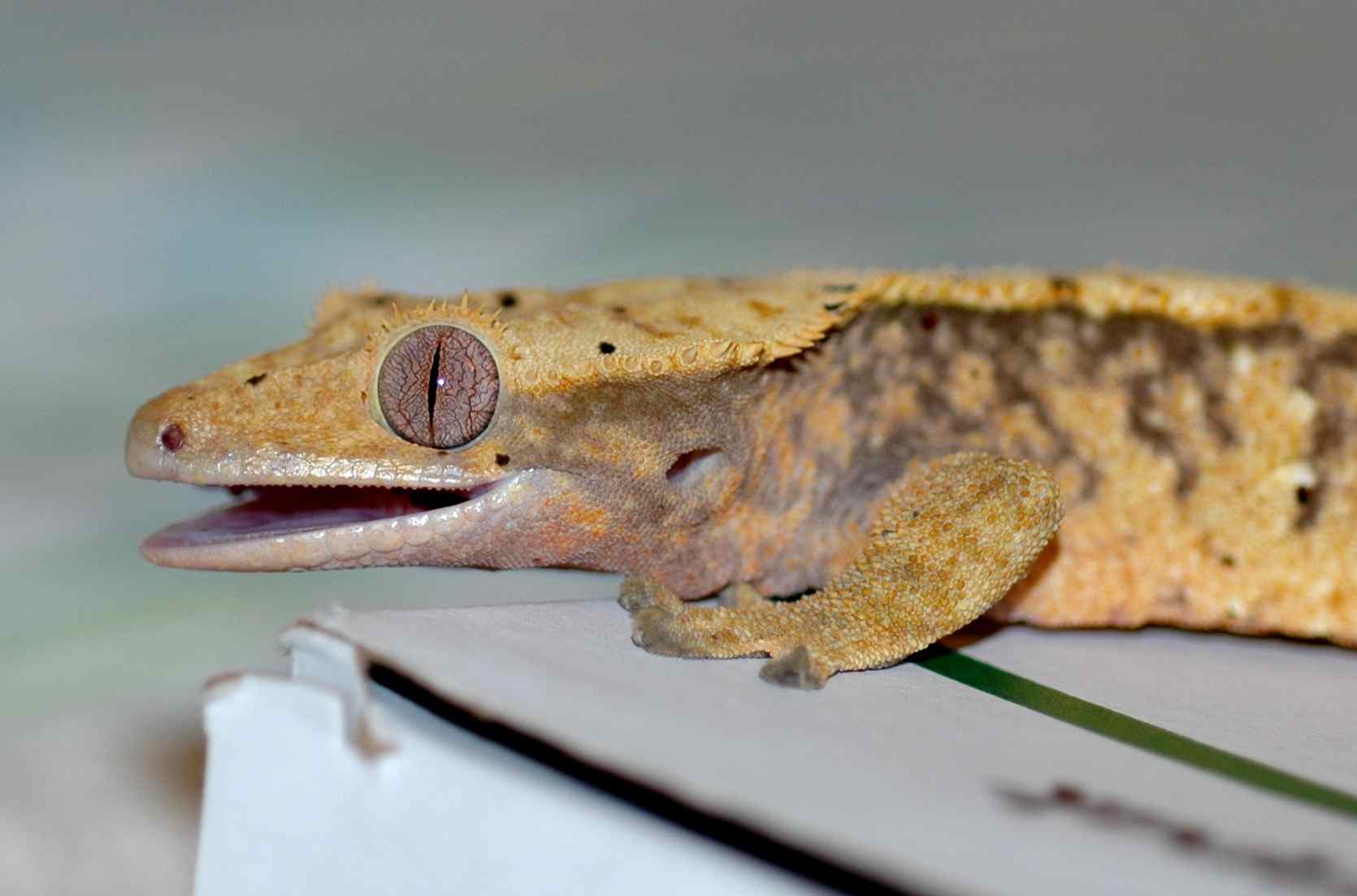
I think this is the least dignified photo of Limpet I have ever taken

I think this is the least dignified photo of Limpet I have ever taken

If you meet a time-traveling ancient Egyptian, talk about birds

The next time you come across an ancient Egyptian mummy in a museum, rather than thinking of looming pyramids and cursed tomb robbers, consider this: that mummy was probably a better birder than you are.

Okay, I don’t know if the ancient Egyptians would have considered it “birding” – I doubt they maintained life lists. But they certainly knew their birds to a degree that I doubt many in the modern era could equal. The Oriental Institute’s exhibit “Between Heaven and Earth: Birds in Ancient Egypt” showcases just how thoroughly birds permeated every aspect of ancient Egyptian life. They painted birds and sculpted them, drew them in their writing as hieroglyphs, raised and shepherded and ate them, and saw their gods embodied in their forms.

Barn Owl sculpture. Owls were unusual in Egyptian art for being depicted face-on instead of in profile.Photo Anna Ressman. Courtesy of the Oriental Institute of the University of Chicago.

Barn Owl sculpture. Owls were unusual in Egyptian art for being depicted face-on instead of in profile, as most animals (including humans) were.
Photo by Anna Ressman. Courtesy of the Oriental Institute of the University of Chicago.

Continue reading

Sounds and video from Cornell’s Macauley Library

The Cornell Lab of Ornithology’s Macauley Library of sounds and videos has been fully digitized and posted online for browsing for free by everyone. It is really fun to explore.

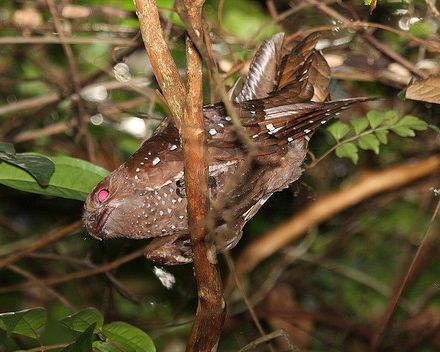
Ever wanted to know what an Oilbird sounds like? It sounds like this!

Oilbird. Photo by Dominic Sherony

Oilbird. Photo by Dominic Sherony

Check out a colorful mantis shrimp swiveling its crazy eyes, then listen to it making sounds eerily like those of a drum set!

Go eye-level with Adelie Penguins, get close enough to a sea turtle to count the scales under its chin, then listen to a baby walrus ruff like a puppy!

Here is an article from the Lab of O – scroll to the end for links to: the earliest recording (a Song Sparrow from 1929); the sounds of an ostrich chick still in the egg; the haunting clarinet-like moan of the idri, a lemur; a bird of paradise apparently imitating a very melodious UFO; and a cute video of an American Dipper living up to its name by bobbing and dipping.

And then explore the library yourself! Hooray for open-access science.

The perils of searching the literature

Back in the day, there was no internet, and researchers had to search for papers by actually searching. In a library, with old copies of journals. Sometimes they wrote to authors, and the authors mailed them physical copies of their papers. (When you publish a paper, journals still offer you the option to order hundreds of these physical copies, called “offprints.”) I know, right? Ridiculous.

Now we can just search online. Instead of sifting through piles and piles of journals, I search, download, and in mere seconds can have the paper I wanted saved on my computer under some totally non-obscure name like “fledgling_conflict+habitat_yellowwarbler” that I will definitely not forget the meaning of in a week.

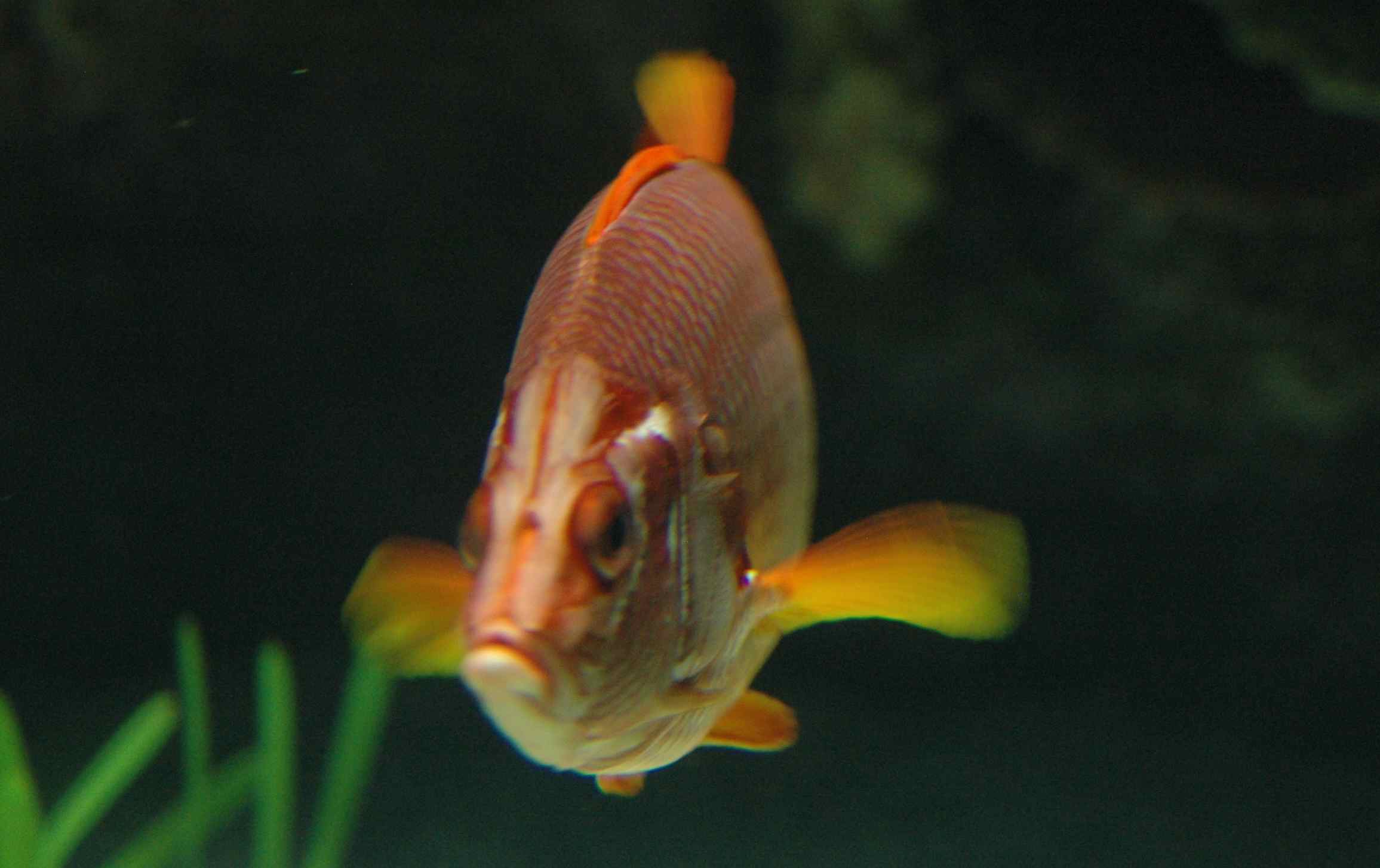
Judgmental fish thinks you will definitely forget what that file name means.

Judgmental fish thinks you will definitely forget what that file name means.

Yet despite this incredible technological progress, there are still some perils to searching the literature:

Continue reading

Awkward duck candids

The other day, I thought I’d try out a new camera lens by taking some photos of ducks. It turned out that the ducks were all having the duck version of a bad hair day. If the ducks were on facebook, they would immediately demand that I untag them from these pictures.

Female Mallard: lovely coy pose, but blinked.

Female Mallard: lovely coy pose, but you blinked.

Continue reading

Happy holidays!

Edit: I have added identifications to each photo in the caption.

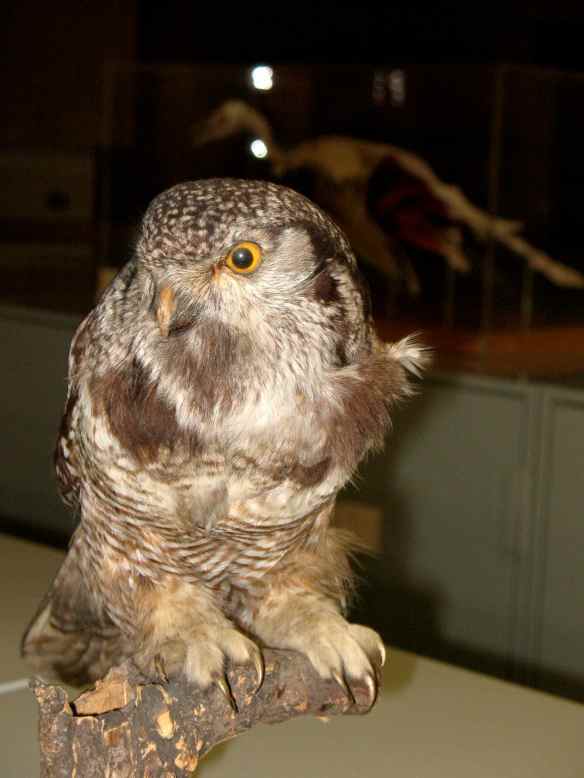
The curators at the museum decorate for the holidays by changing around the mounted specimens on display. (These are all pretty old, usually gifted to us – we almost never mount specimens in a lifelike way.) For Thanksgiving, all the specimens on display were edible animals.

For the winter holiday season… quiz! What connects all of the specimens in these pictures?

(And if you’re not into the quiz, here is your holiday/day-before-the-end-of-the-world gift: a video of a sledding crow.)

hh_brownowl

Northern Hawk Owl

Continue reading

The slow, slimy style of snails

It doesn’t rain very often here, but when it does, the snails come out in force. I’ve always liked snails and their ilk; as a kid I kept slugs as pets. Unfortunately I think the snails here are brown garden snails, an invasive species.

snails1Sinister invaders or not, like any snails they’re surprisingly engaging to watch. Bumpy skin, patterned shells, eyes on stalks, and total flexibility give a lot of opportunities for expression.

Continue reading

What a PhD means

The general public–and especially the media–appears to be conflicted over what it means when a person has a PhD. There are three main schools of thought:

1) A PhD means you are an awesome genius and know everything.

2) A PhD means you are an ivory tower elitist and know nothing.

3) A PhD means you belong to a nefarious conspiracy dedicated to lending credibility to lies in order to get money or fame.

Sometimes several of these are combined. Believe both #1 and #3, and you’ve got one of the main arguments of climate change deniers (“Climate scientists are lying and spreading false fear in order to keep their jobs secure, and we know this because we found one climate scientist who says climate change isn’t real!”).

The ivory tower elitist PhDs are in a conspiracy of lies to make the public continue to give them research money, and I believe this because the guy who told me has a PhD, so you know he’s right!

None of these three are true.

Continue reading

This is fun. Is fun the right word?

I’m waiting to find out if my big grant proposal will be rejected without review on an über-technicality.

Hold on while I refresh my email again… nope, still no news.

The error was a small omission of part of a section; basically a poor copy-paste job. It wasn’t my error, but I should have caught it before submitting, as should about eight other people involved in this process – some of whose job description is to catch technical errors in grant proposals, none of whom did – but in the end it’s my proposal, and I’m the one who should have caught it.

I may be allowed to fix the error, or I may be rejected on the spot, without even any helpful feedback (which is half the reason to apply for these things – even if you don’t get the funding, the feedback is valuable).

Isn’t this fun? Suspense! (whimper) Hold on while I refresh my email again…