It’s all connected: birds, introduced trout, and talking trees

We all know about food webs—or we think we do. Herbivores eat plants, then predators eat herbivores, and if one part of the web is affected, other parts are impacted too. Seems pretty simple—except that the threads in those webs sometimes connect things you would never expect.

For example: trout and a songbird, the Gray-crowned Rosy-Finch, in an alpine habitat. The fish are in the water and the birds are on land—how connected can they be? If the birds were Bald Eagles or Ospreys or Great Blue Herons, sure, they would be connected because the birds eat the fish. If the birds were ducks, maybe the trout would be an occasional threat to the ducklings. But this is a Gray-crowned Rosy-Finch:

3213837447_80503ab4f7_b

Photo by Blake Matheson*

They’re not going to be eating fish, and their babies definitely don’t float about on the water.

The reason that we need to worry about what threads on the food web those trout might be tugging at is that the trout are introduced, nonnative species. Alpine lakes often don’t have any fish in them naturally. In the Sierra Nevada and many other mountain habitats, however, people have stocked these lakes with fish so that people can come and fish them for fun. This has been a problem for aquatic species such as frogs, which get gobbled up quite happily by the new fish, but nobody was particularly worried about the effects on songbirds.

It turns out that we should have been.
Continue reading

Why it’s important to clean up fishing line

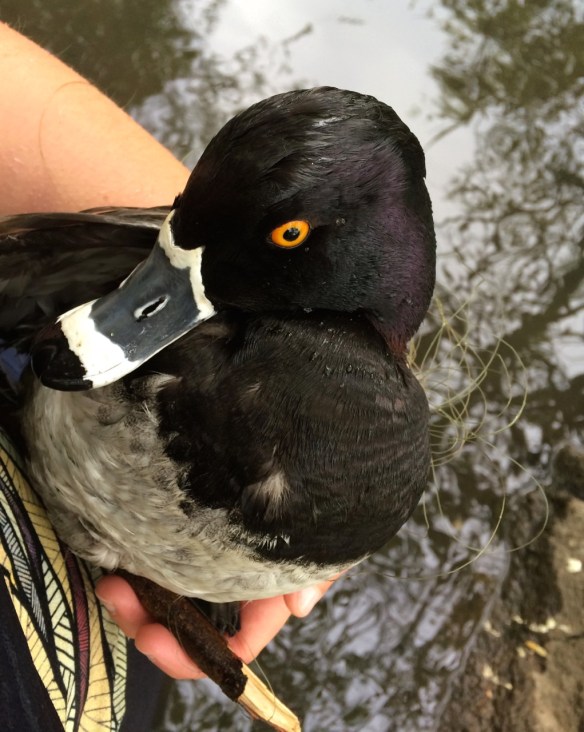
Anza_duckThis handsome bird is a male Ring-necked Duck, but not a happy one. I spotted him splashing in a small lake where a tangle of thin tree branches hung low over the water. A duck having a bath, I thought. Then, as he took a break from splashing and his head drooped so low that his bill went under the surface of the water, Maybe not.
His right foot was caught in a snarl of fishing line and attached to one of the submerged tree branches. The foot was bloody and, from what I could see, the leg broken, probably as a result of his attempts to free himself. There was absolutely no way he could have escaped the fishing line on his own: it was wrapped many times around his foot, the branch, and other branches. It probably caught his foot loosely at first, while he was diving for food; then, as he tugged at it, pulled tighter and tighter, until he was trussed to that branch and pulling against his own flesh when he struggled. Fishing line is made not to snap.

Continue reading

Birds as friendly faces

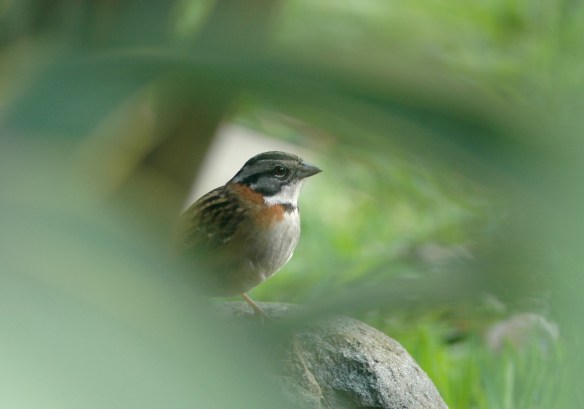
A birder’s brain responds to photos of familiar bird species in a way that is, neurologically, “strikingly similar” to the way that anyone’s brain responds to photos of familiar human faces (Tanaka & Curran 2001): birders seem to use a similar strategy to recognize birds as everyone uses to recognize people they know. If you are a birder, this probably isn’t surprising; certainly, to me, recognizing a bird species feels similar to recognizing a friend. And it isn’t only birders: the study also looked at “dog experts”—which I did not know existed before I read this—and found the same pattern when those experts looked at photos of dogs. If you are passionate about models of cars or architectural styles or garden flowers, I wouldn’t be surprised if you experience the same thing.

(Bafflingly, the study reports that the photos it showed to the birders included “the robin, sparrow… oriole… [and] hawk,” none of which are actually individual species. Which sparrow, guys? Didn’t you talk to your birders at all while you were studying their brains?)

DSC_0605

The sparrow, obviously. (Rufous-collared Sparrow, San Jose, Costa Rica.)

Continue reading

Birds in the hand again (finally!)

Today was my first day volunteering at a local bird banding station. This place is great: they have been banding birds for decades, recording population changes and individual measurements, and they care a lot about both the birds and the data.

More importantly, though:  I finally got my hands on some birds again.

SFBBO_LISP

Lincoln’s Sparrow, obviously delighted to be involved.

It’s been a while. I had an abbreviated field season this summer, so I haven’t held a bird since July. Since then I’ve been applying for postdocs and writing my dissertation, both of which involve a lot of sitting inside and staring at a computer screen. I need some bird time. That is, after all, the whole reason why I’m applying for postdocs and writing a dissertation: because I love these guys.

SFBBO_RCKI1

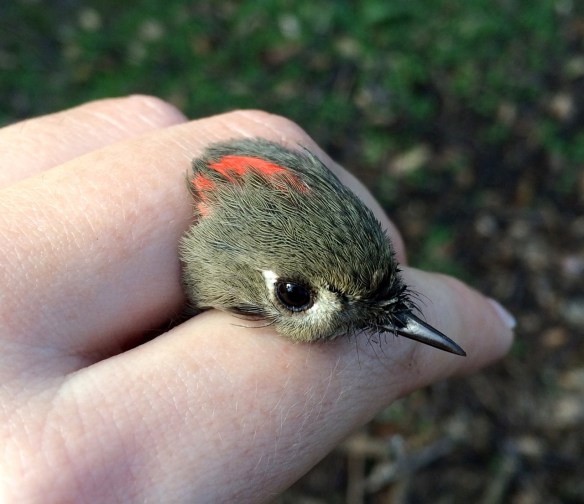
Male Ruby-crowned Kinglet showing his “crown”.

Continue reading

Thanks for your patience!

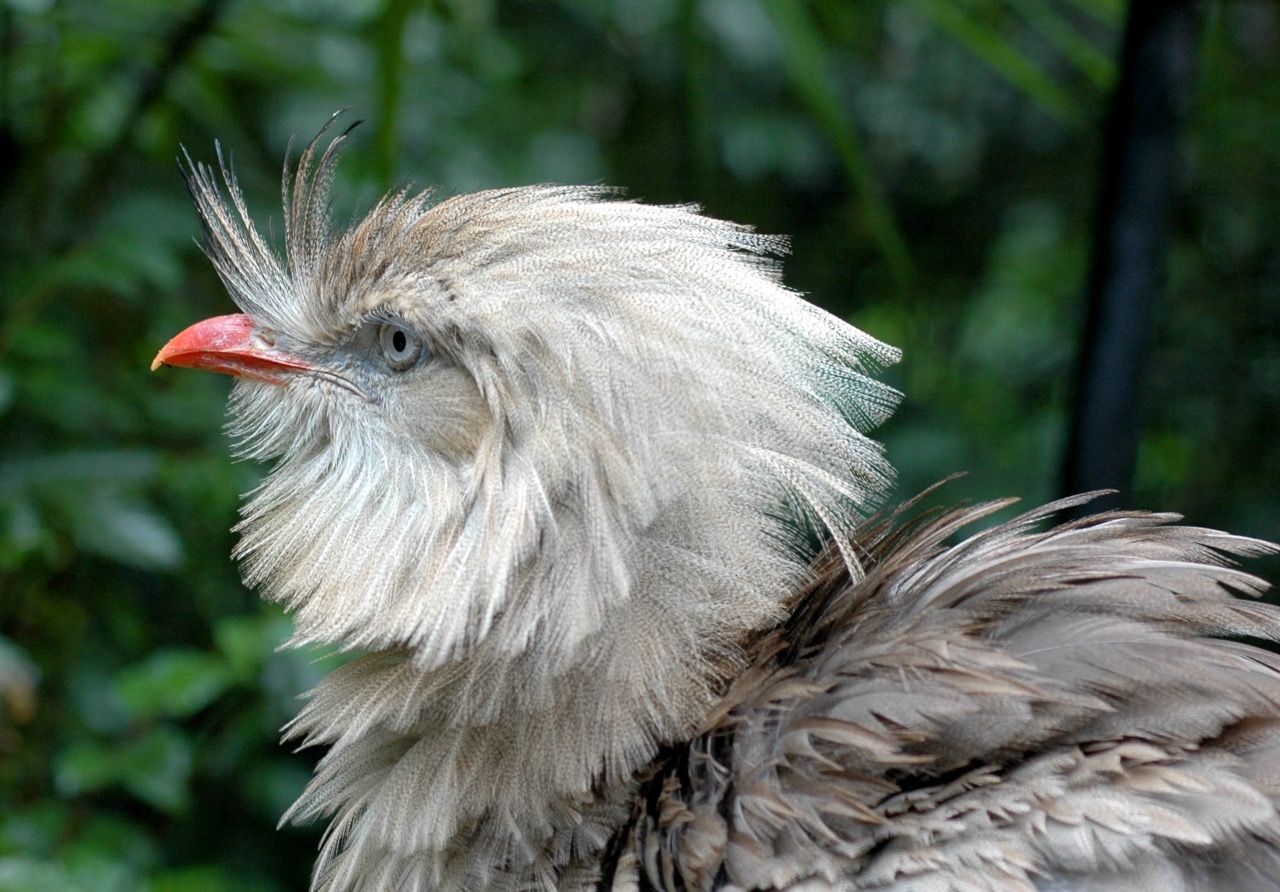
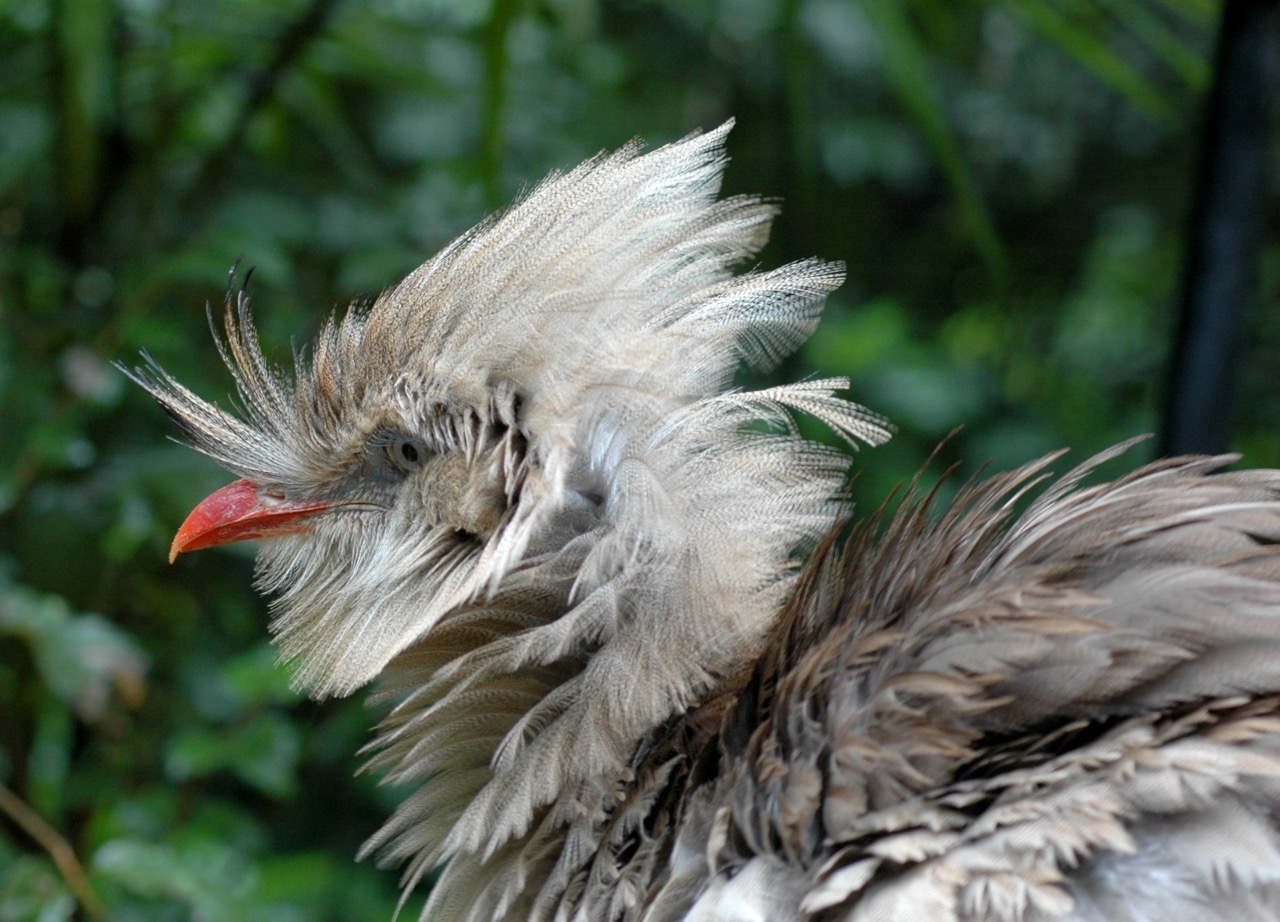
Black Crowned Crane appreciates your understanding.

Black Crowned Crane appreciates your understanding.

Hi loyal readers,

I just wanted to say thanks for hanging in there – I’ve been short on posts these last few months. It’s not that I’m out of cool biology to cover! Rather, it’s that I’m trying to write my dissertation and apply for some postdocs with coinciding due dates, so all of my writing-about-science-ideas energy has been going towards those goals. Once the postdoc applications are submitted, I’ll be able to write more here again. (And these postdocs, if I got any of them, would make for some great research blog posts—cross your fingers!)

In the meantime, here are some more birds that appreciate your patience with me.

Southern Lapwing says "thank you" with a swagger.

Southern Lapwing says “thank you” with a swagger.

Continue reading

Fun: birds in small words

The webcomic xkcd posted a comic a while ago that explains rocket science using “only the ten hundred words people use the most often.” It’s a great idea, and clearly the creator thought so too, since he’s now writing an entire book around the concept. He has also made freely available a tool that allows you to write using only those one thousand most common words.

Here is the first sentence of an old post (Animal visual illusions), as I originally wrote it: “Animals interact visually all the time.” Here is the same sentence rewritten using only those thousand most common words: “Animals do things with each other using what their eyes see all the time.” The second version is much harder to understand; there is definitely value in having more than a thousand words to work with.

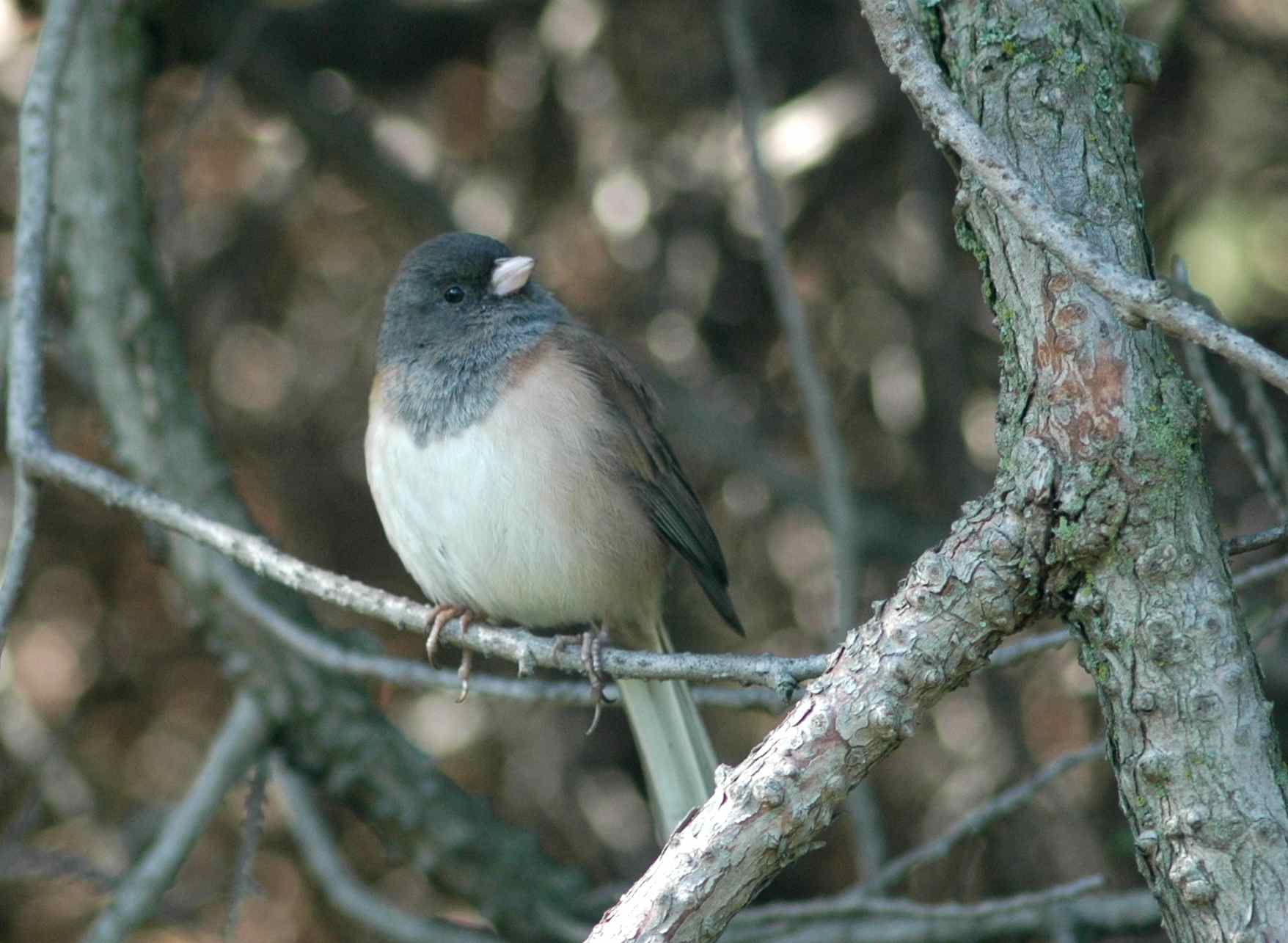
But what about words that don’t represent some especially nuanced or complex concept, but exist for the sake of specificity: labels, like bird species names? Dark-eyed Junco does not pass muster in the xkcd word checker tool, unsurprisingly. I can get as far as Dark eyed small brown bird that jumps along the ground and has white on the outside of its — but now I’m in trouble: tail isn’t allowed; neither is butt feathers or bottom fan. I have to switch directions and go instead with: Dark eyed small brown bird that jumps along the ground and has a white stomach and black head and looks round in the cold.

juncos_everywhere_Berkeley3

Why not just say “Very great best bird”?

Continue reading

Other nests

I’ve seen a lot of junco nests in my four years of field work. Rarely, I’ve been lucky enough to happen upon the nest of something other than a junco. I don’t find enough of these other nests to study them, so they don’t help me in my research—but boy, is it fun to find them!

Quick review: this is a junco nest.

_DSC7120This is not a junco nest:

_DSC6915Some major differences: the junco’s is a ground nest, while this one is a cup nest, suspended above the ground in the branches of a bush. The chicks are covered in light greyish fuzz instead of the junco chicks’ dark fuzz, and are maybe a bit stockier than the junco chicks.

Continue reading

A predator caught in the act

We were searching for junco nests when I heard the unmistakable tic-tic-tic of junco alarm chipping. We followed the sound a ways and found a pair of juncos perched on a low branch, alarm chipping for all they were worth. Strange of the juncos to be alarm chipping at us when we were so far away, before, I thought. I wouldn’t have thought they’d see us as a threat from that far away. Odd birds. Directly below the branch with the agitated juncos was a small shrub. “The nest will be in there,” I predicted, showing off for my new field assistants.

2015_snake_nest2I parted the prickly branches, and tiny pink beaks gaped hungrily at me. “There they are,” I said, pleased with myself. “Three chicks.”

2015_snake_nest

And just as I said that, I saw the snake.

Continue reading

A pigeon walks into an art museum…

Consider the pigeon. Among birds, they are distinguished by their abilities to drink water through their nostrils and to raise their babies on a diet of human trash. It might surprise you, then, to learn that a number of scientific studies have focused on pigeons’ taste in art.

This abstract work, in feces and found lamppost, really captures the satisfaction of finding a good place to perch.

This abstract work, in feces and found lamppost, really captures the satisfaction of finding a good place to perch.

To be fair, these studies aren’t aimed at divining pigeons’ preferences so that museums can better appeal to the aesthetics of critical tastemaker pigeons; the goal is to understand how animals perceive images. Pigeons are easily raised and trained, so they are a good model to look at visual processing in birds. And why use art? “Discrimination of visual arts is an extreme example of higher visual cognition” (Watanabe 2011). So there is logic to this. But it still produces papers with titles like “Van Gogh, Chagall and pigeons.”

Continue reading