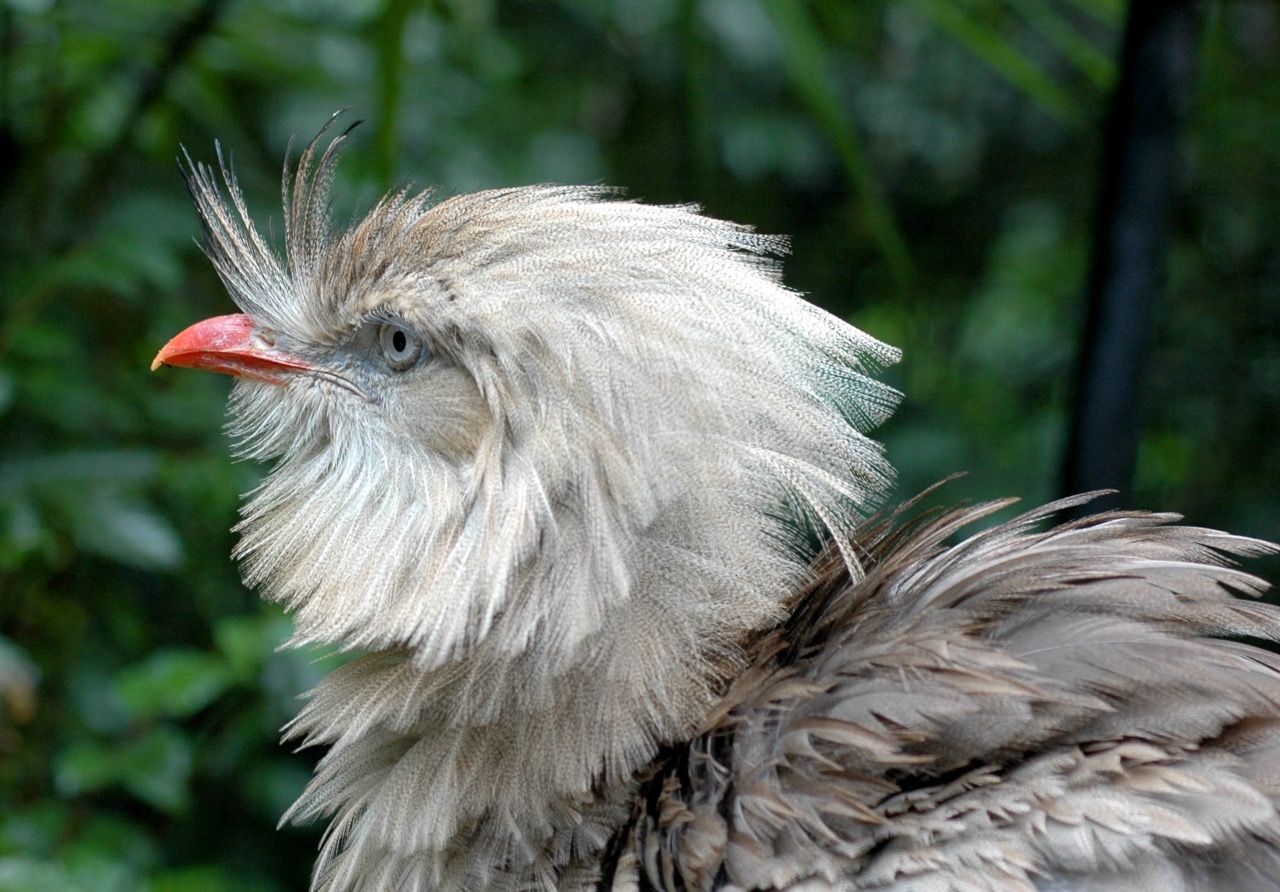
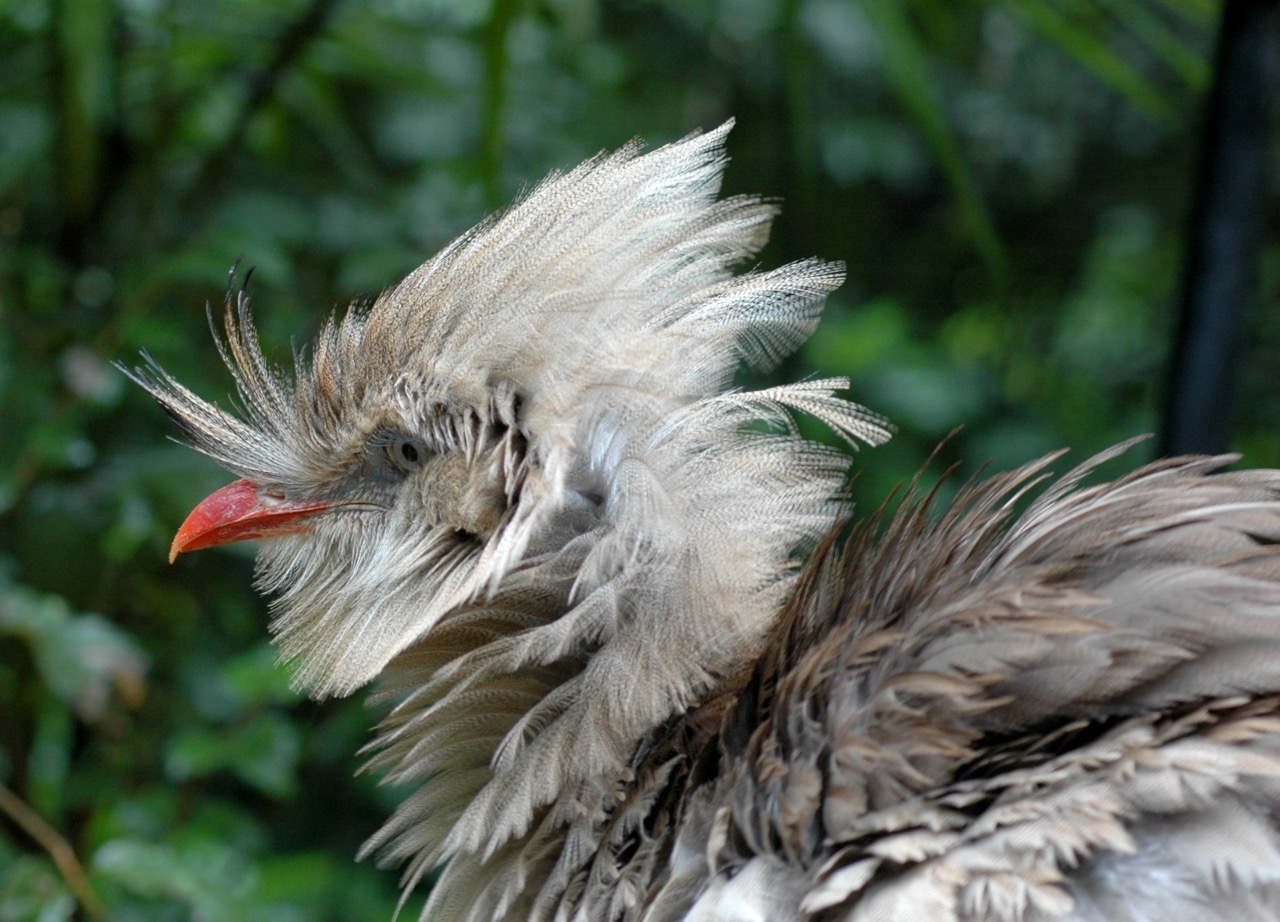
Fun: birds in small words

The webcomic xkcd posted a comic a while ago that explains rocket science using “only the ten hundred words people use the most often.” It’s a great idea, and clearly the creator thought so too, since he’s now writing an entire book around the concept. He has also made freely available a tool that allows you to write using only those one thousand most common words.

Here is the first sentence of an old post (Animal visual illusions), as I originally wrote it: “Animals interact visually all the time.” Here is the same sentence rewritten using only those thousand most common words: “Animals do things with each other using what their eyes see all the time.” The second version is much harder to understand; there is definitely value in having more than a thousand words to work with.

But what about words that don’t represent some especially nuanced or complex concept, but exist for the sake of specificity: labels, like bird species names? Dark-eyed Junco does not pass muster in the xkcd word checker tool, unsurprisingly. I can get as far as Dark eyed small brown bird that jumps along the ground and has white on the outside of its — but now I’m in trouble: tail isn’t allowed; neither is butt feathers or bottom fan. I have to switch directions and go instead with: Dark eyed small brown bird that jumps along the ground and has a white stomach and black head and looks round in the cold.
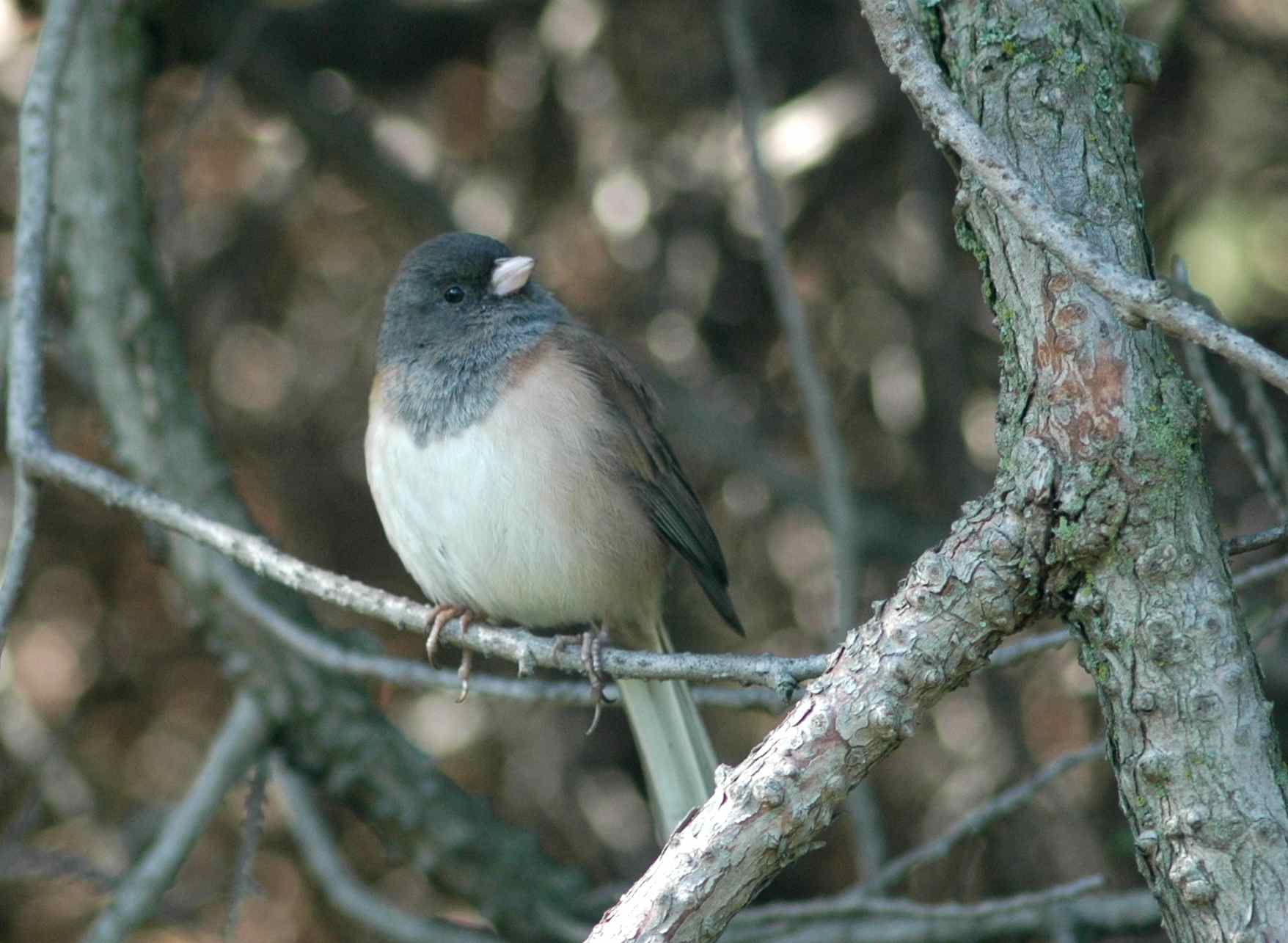
juncos_everywhere_Berkeley3

Why not just say “Very great best bird”?
Continue reading

Advice from whales and elephants: listen to Grandma

Grandmothers are an evolutionary mystery.

Well, not grandmothers exactly: rather, women who have passed menopause. Human men can sire children as long as they live, but human women can’t have children after they go through menopause. But why do we have menopause at all—why stop having babies? Isn’t it always better, evolutionarily, to have more babies?

I don't know, this might be too many babies...

I don’t know, this might be too many babies…

The mystery is far from solved, but we have some good clues.

Continue reading

Why do animals lick their fur?

Furry animals can spend a lot of time licking their own fur. Here, a mother sea otter demonstrates:

The simple explanation—that these animals lick their fur to keep it clean—is more or less true, but not nearly the whole story: animals get a lot more out of licking their fur than a stain-free coat.

Continue reading

Other nests

I’ve seen a lot of junco nests in my four years of field work. Rarely, I’ve been lucky enough to happen upon the nest of something other than a junco. I don’t find enough of these other nests to study them, so they don’t help me in my research—but boy, is it fun to find them!

Quick review: this is a junco nest.

_DSC7120This is not a junco nest:

_DSC6915Some major differences: the junco’s is a ground nest, while this one is a cup nest, suspended above the ground in the branches of a bush. The chicks are covered in light greyish fuzz instead of the junco chicks’ dark fuzz, and are maybe a bit stockier than the junco chicks.

Continue reading

A predator caught in the act

We were searching for junco nests when I heard the unmistakable tic-tic-tic of junco alarm chipping. We followed the sound a ways and found a pair of juncos perched on a low branch, alarm chipping for all they were worth. Strange of the juncos to be alarm chipping at us when we were so far away, before, I thought. I wouldn’t have thought they’d see us as a threat from that far away. Odd birds. Directly below the branch with the agitated juncos was a small shrub. “The nest will be in there,” I predicted, showing off for my new field assistants.

2015_snake_nest2I parted the prickly branches, and tiny pink beaks gaped hungrily at me. “There they are,” I said, pleased with myself. “Three chicks.”

2015_snake_nest

And just as I said that, I saw the snake.

Continue reading

Going out with a thud-crack-ow!

I just wrapped up what I think will be my last field work on the juncos for my dissertation. It was quite the eventful trip; I saw a few things I’ve never seen before – but more on that in a future post.

We were trying to catch an unbanded male. He was interested in our playback, but had escaped from the net once already, meaning he was likely to be wary of the net now. When he flew into the net the second time, I ran for him quickly, wanting to get to him before he managed to escape again.

…Or I started to run. Then I failed to clear a large rotting log and went down.

“Are you okay?” one of my field assistants asked.

“I’m not sure,” I answered honestly, from the ground. “Get the bird!”

Continue reading

Find the nest 4

Juncos love to nest near corn lilies. Usually this means they nest near the base of the corn lily, using the thick stalk and broad leaves as cover. SEAL, however, decided that his nest didn’t need to be near an upright corn lily—and I have to admit that it’s not a bad idea: it took me an extra little while to find this nest, just because it didn’t look like a conventional junco nest location.

This slideshow requires JavaScript.

A pigeon walks into an art museum…

Consider the pigeon. Among birds, they are distinguished by their abilities to drink water through their nostrils and to raise their babies on a diet of human trash. It might surprise you, then, to learn that a number of scientific studies have focused on pigeons’ taste in art.

This abstract work, in feces and found lamppost, really captures the satisfaction of finding a good place to perch.

This abstract work, in feces and found lamppost, really captures the satisfaction of finding a good place to perch.

To be fair, these studies aren’t aimed at divining pigeons’ preferences so that museums can better appeal to the aesthetics of critical tastemaker pigeons; the goal is to understand how animals perceive images. Pigeons are easily raised and trained, so they are a good model to look at visual processing in birds. And why use art? “Discrimination of visual arts is an extreme example of higher visual cognition” (Watanabe 2011). So there is logic to this. But it still produces papers with titles like “Van Gogh, Chagall and pigeons.”

Continue reading

Conferences everywhere

This is the first summer in several years that I’ve decided to prioritize something other than field work. This year, I’m focusing on going to conferences and writing up my work—as well as some field work, fear not: there will be photos of baby juncos this year.

Here's a Mew Gull chick to tide you over in the meantime.

Here’s a Mew Gull chick to tide you over in the meantime.

Conferences are a strange combination of things. They are a chance to meet new people and spark collaborations: hey, you do that thing and I do this thing, we should do things together! But they are also a chance to size up the competition, to try to gauge where your work falls on the spectrum of research quality. Scientists naturally see each other as resources and potential collaborators, but occasionally we have to remember that we are all competing for the same limited pot of research funding, of post-doctoral positions, of jobs.

Sometimes fish, too.

Sometimes fish, too.

Given that reality, I’m always proud of how little we behave like competitors: we edit each other’s grant applications and give suggestions on each other’s job talks, even while we know that we too need grants and jobs.

Continue reading