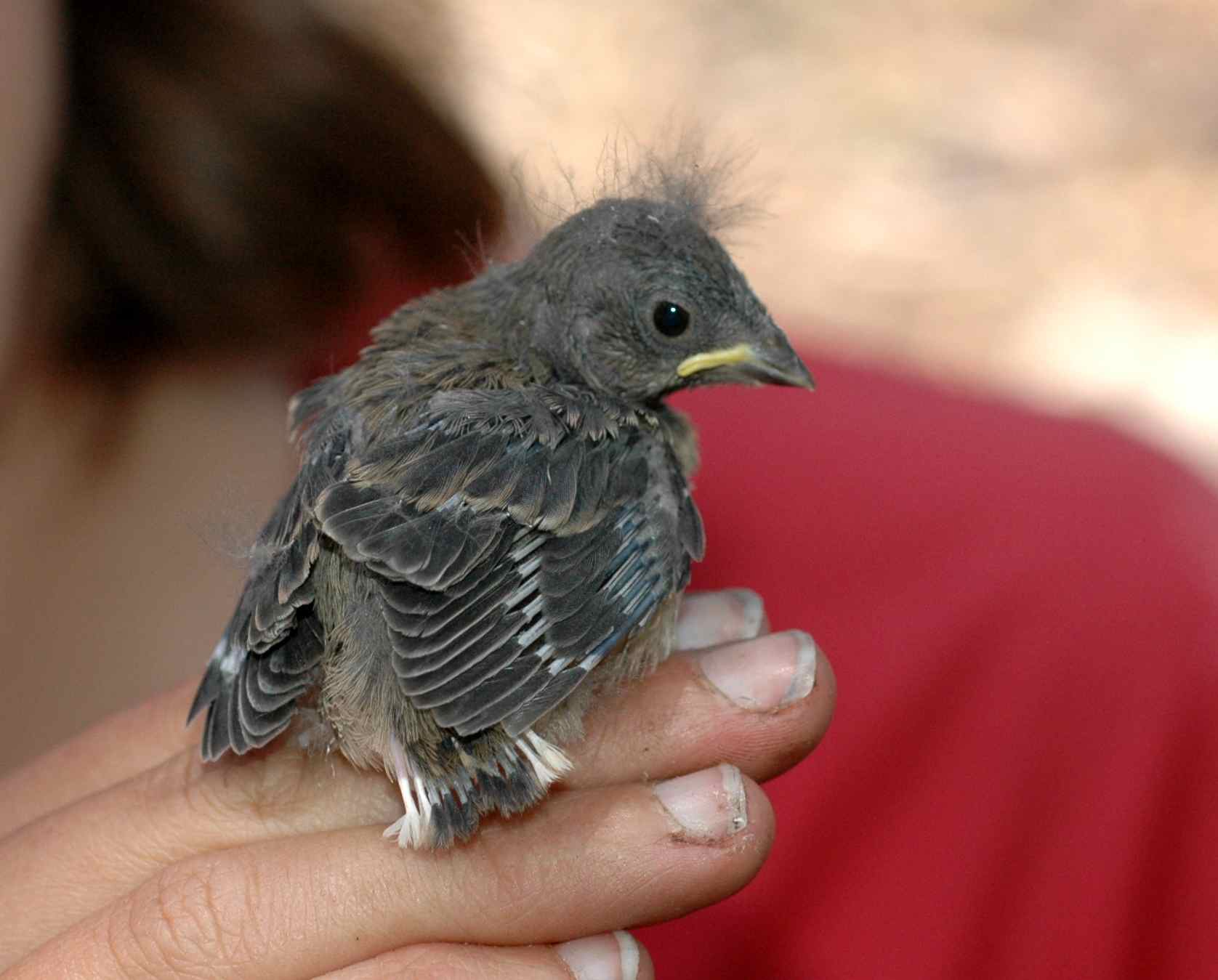
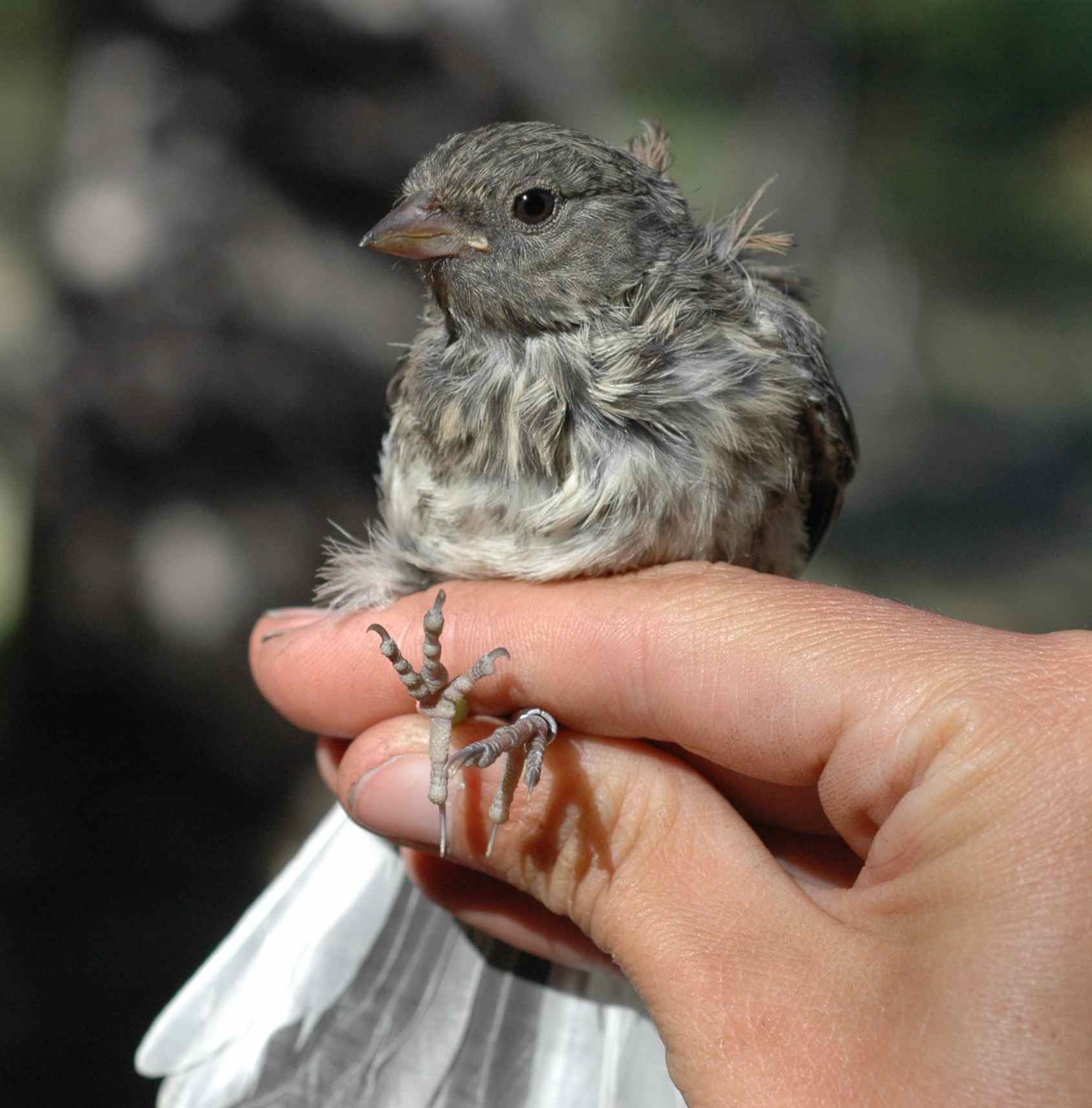
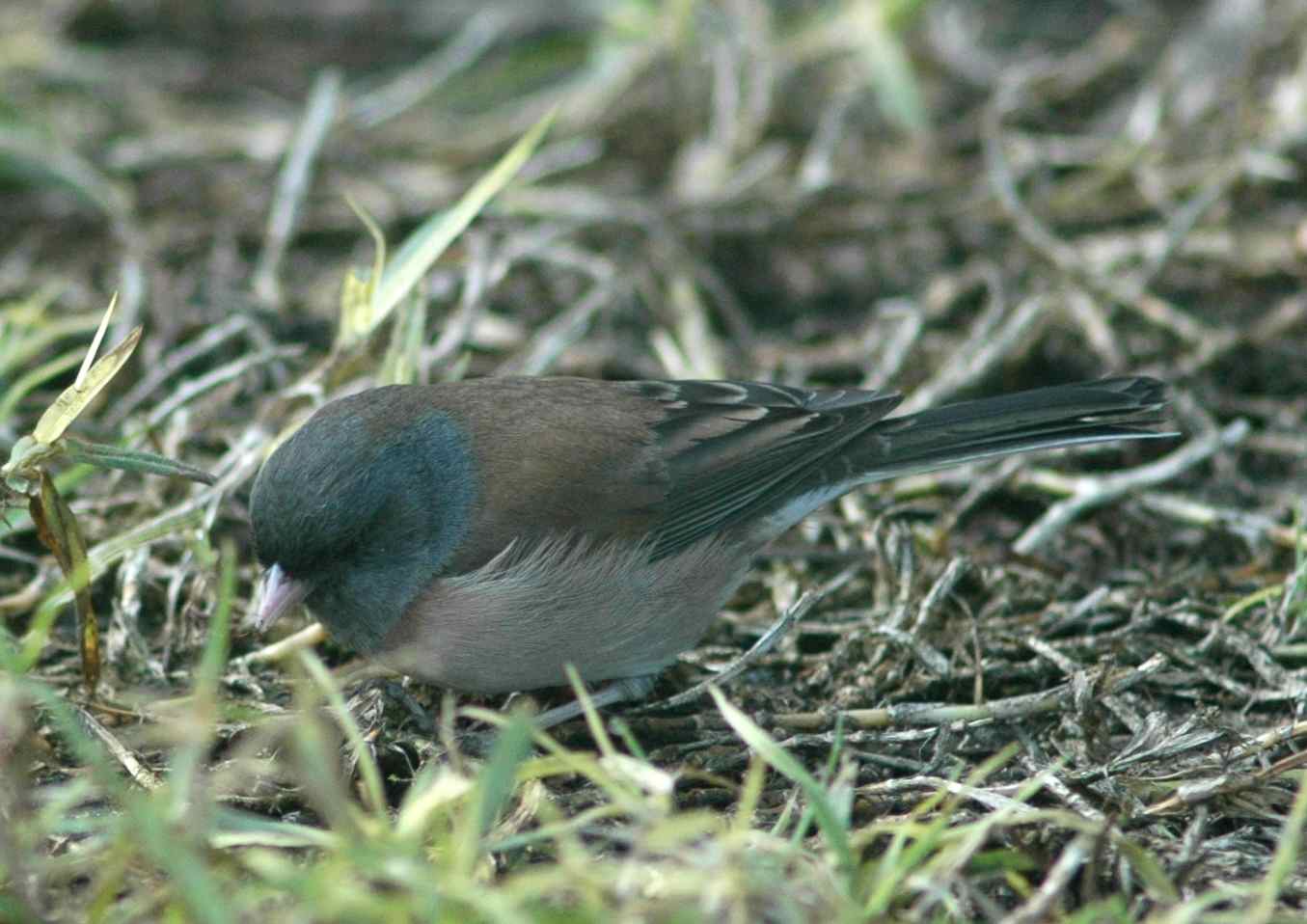
“Ordinary Extraordinary Junco” and the wider world of juncos

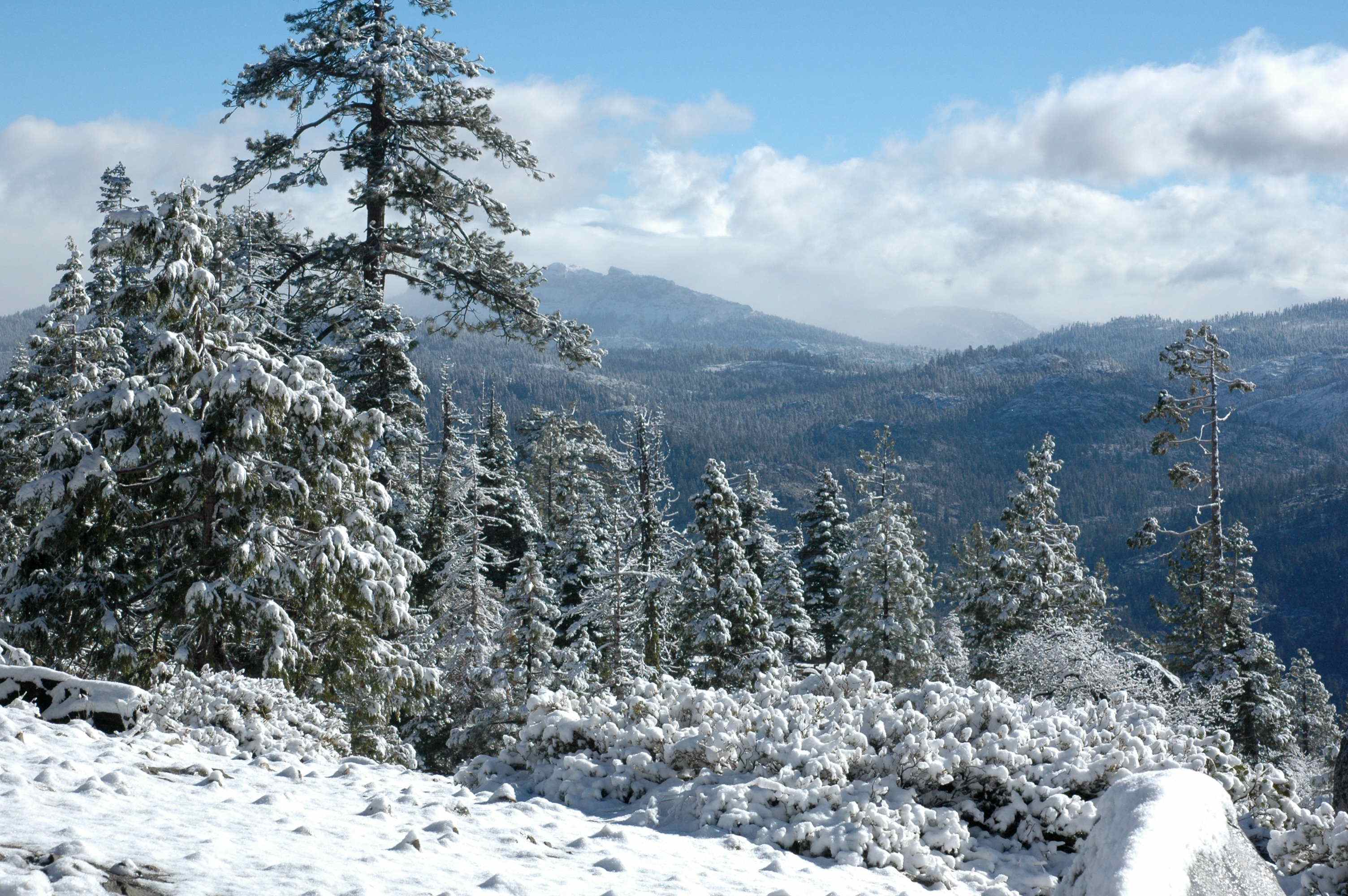
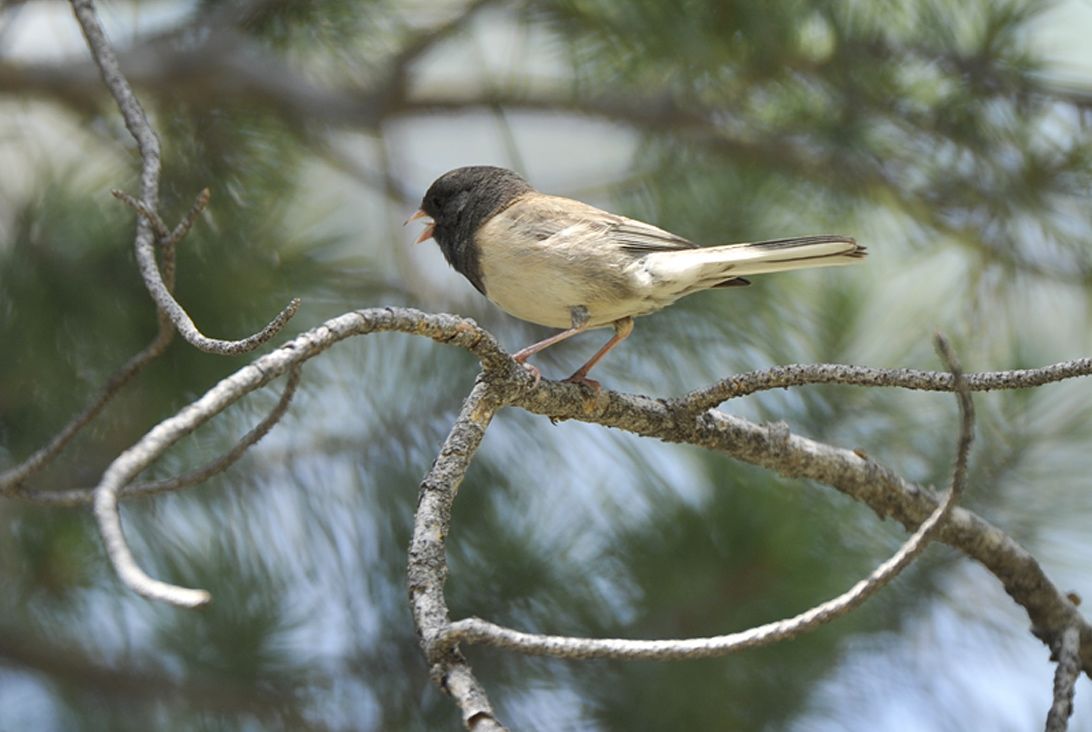
ARKM, a male junco from one of my study sites in the Sierra Nevada mountains

ARKM, a male junco from one of my study sites in the Sierra Nevada mountains. Photo by M. LaBarbera

Ah, my noble research junco. Dramatic black hood, peach flanks, rusty back, hopping around the Sierra Nevada mountains and (hopefully) giving me insights into behavior, life history, and adaptation to environmental variability. That’s the story you mostly get from this blog, because it’s the one that I’m most intimately wrapped up in. But it’s a very small piece of the larger world of juncos and junco research.

The Junco Project has produced a series of videos entitled “Ordinary Extraordinary Junco,” all about the wide world of junco research. The videos are wonderful, covering the research in an interesting and accessible way, and filled with great footage of juncos doing every possible thing. If you only have time to watch one, check out Chapter 2: Appalachian Spring, which shows the field methods that I also employ, like nest searching, mist netting, banding, and collecting blood. It’s one thing to see photographs, and quite another to see how these birds look in motion. (As you watch, try to ignore the sound of my so-intense-it’s-audible envy of the resources these junco researchers have—aviaries! eight field assistants! nest cameras! radio-tracking devices!)

Just as my research is one tiny part of junco research overall, my population of juncos is a tiny portion of the juncos that are out there – and many of them are quite different. The juncos in Berkeley, CA, despite being quite far away from the Sierra Nevada juncos and many thousands of feet lower in elevation, look pretty much the same as “my” juncos…
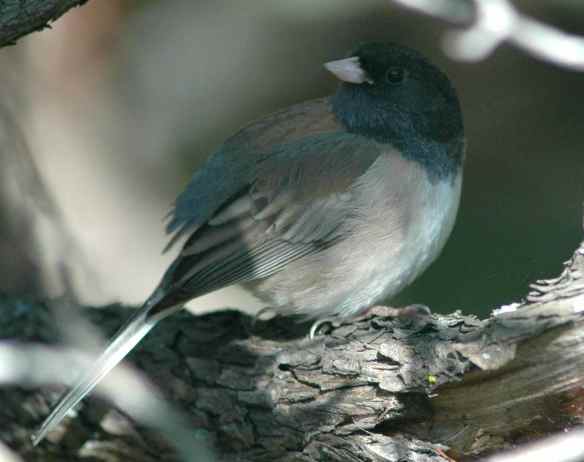
juncos_everywhere_Berkeley5

Continue reading

Ghost junco

ghost1

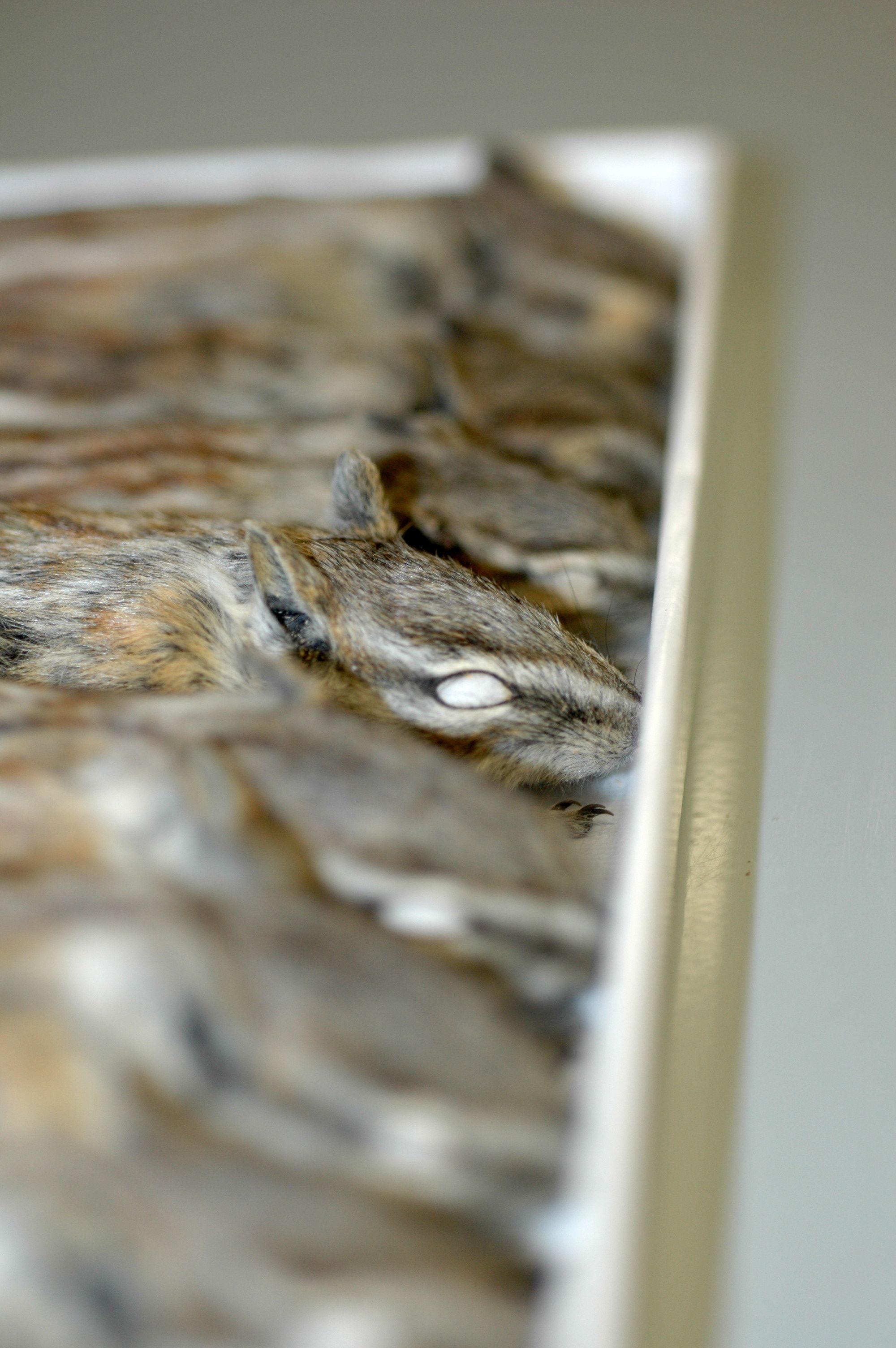
Isn’t he beautiful? He was caught in the hills in Marin County, not all that far from me, and kept in captivity until he died in 1931.

You might think he’s purely colorless at first glance, but he isn’t. He’s more blue-silver than white, an incredible color to come shining out of a drawer of junco specimens when you’ve just spent the last few weeks measuring the same brown-and-black birds over and over. When you look close you find that hidden in those pale feathers are the whispers of normal junco coloration.

Continue reading

Banding a nest

It’s rare that I have photos of the process of banding a nest, since usually everyone is holding a chick and we don’t have any extra hands for photographic documentation. For a few nests, however, I was lucky enough to have my father with us, and boy does he like to photograph things! Thanks to him I can show you what it looks like when we band a nest.

EDIT: If you click on these (or any photos on this blog) you can see them bigger.

The nest. If you click to expand it and look closely you can see the female sitting on it.

The nest, tucked next to the clump of plants in the center. If you look closely you can see Mom sitting on it.

Me taking the chicks from the nest, with Kyle ready to catch any runners.

Me taking the chicks from the nest, with Kyle ready to catch any runners.
Photo by M. LaBarbera

Often when you approach the nest, the female will flare her tail and run around on the ground to try to draw your attention away from the nest. This is a tail-on view of Mom doing that. Photo by M. LaBarbera

Often when you approach the nest, the female will flare her tail and spread her wings and run around on the ground to try to draw your attention away from the nest. This is a tail-on view of Mom doing that.
Photo by M. LaBarbera

Mom, angrily chipping at us. Photo by M. LaBarbera

Mom, angrily chipping at us.
Photo by M. LaBarbera

Continue reading

Small nest? Big babies? No problem!

Nesting moms, are you having trouble fitting all your babies into one nest? Your troubles are over! We’ve got photos to inspire you to fit all those babies into one nest in an elegant, orderly way. A successful breeding season doesn’t have to mean clutter anymore!

These eggs are a mess. Look at that one shoved under the others. Don't let this be your nest!

These eggs are a mess. Look at that one shoved under the others. Don’t let this be your nest!

Continue reading

Say “aah”

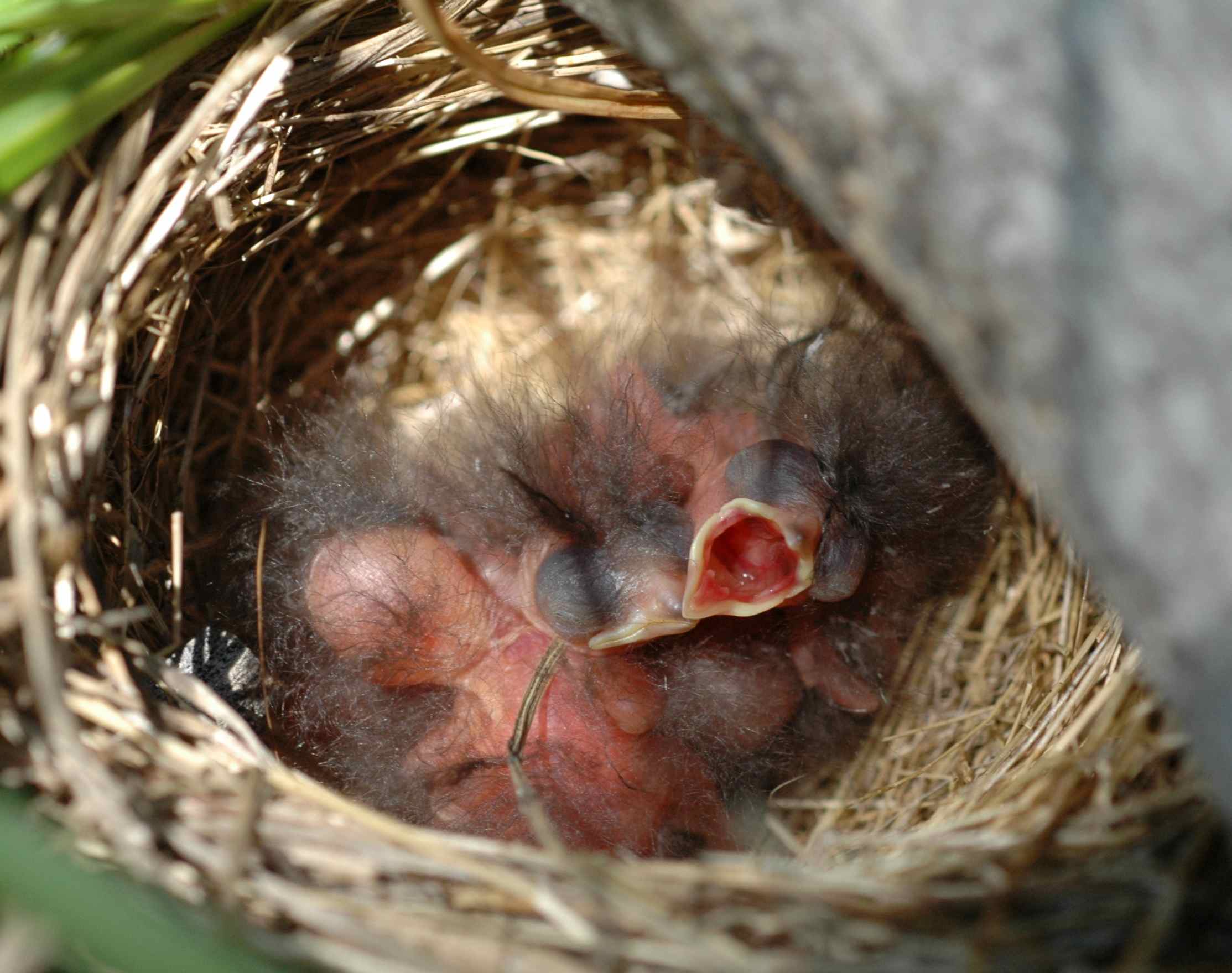
There are a few easy ways for baby juncos to distinguish me from their parents. For example, their parents have feathers and dark heads and are about their size, while I am a gigantic fabric-draped Godzilla monster. However, hungry chicks seem to not always be alert to such nuance, so I’ve accumulated quite a few photographs of the view down the gullets of baby juncos.

SEAL and NORA's chicks

SEAL and NORA’s chicks

In the above photo you can see how the bright pink/red of the mouth, surrounded by the yellow bill outline, makes an obvious target for a parent with food.

Mostly, though, I just like how these photos make the chicks look even more like crazy pink alien beings than usual.

INGA's chicks

INGA’s chicks

Continue reading

Update on The Nest That Came Back

We banded the chicks from The Nest That Came Back From The Dead. They were all a bit small, looking about a day younger than their actual age; that might be because of their pinecone encounter, but it also might simply be that they aren’t getting much food. They hatched pretty late in the season, so there aren’t as many insects out now, and we’ve only ever seen one parent feeding them. Their “single mom” may be having trouble finding enough food for the three of them.

That may not sound great, but the important thing is that they’re alive. If they can make it another two weeks, they’ll be flighted and fattening themselves on fall’s plentiful seeds. The biggest of the chicks, ROAN, clearly can’t wait to be flying:

Big sister ROAN

Big sister ROAN

I can do it!!

I can do it!!

Continue reading

The fleeting beauty of the fall molt

As fledglings undergo their fall molt (the Prebasic I molt), their appearance changes from obvious-youngster to apparent-adult. In the middle of that transition, they look a little… wild. It’s a strange and fleeting look, here-today-and-gone-in-two-weeks. We’ve caught enough molting fledglings that I’ve been able to put together a series of photos showing the transition.

Fledgling juncos start out a streaky light brown, with dark bills and yellow gapes.

Young fledgling GRAS

Young fledgling GRAS

As they get older, the yellow gape shrinks.

Older fledgling KALI. Note the remnant of yellow gape at the edge of the bill.

Older fledgling KALI. Note the remnant of yellow gape at the edge of the bill.

Continue reading

The nest that came back from the dead

This summer we have lost nests to logging, cows, and natural junco predators. None of those shocked me. A pinecone as death-dealer, however, was a surprise.

2013_NCB1When I took this picture, I thought that this nest was dead. The chick you see was completely motionless and stone cold. The pinecone—which was not supposed to be in the nest—had (we think) prevented the female from warming her chicks up, and without their mother’s warmth these very young, naked chicks quickly got too cold.

But when I took the pinecone out to count chick bodies, one of the bodies moved. My field assistant and I took the chicks—there were three, all as cold as the morning mountaintop air—in our warm hands. I still thought they were probably dead: recently dead things may twitch when disturbed.

But as the tiny bodies began to feel less chilly, they squirmed more and more.

2013_NCB2 Continue reading