Not chasing Marsh Wrens

dsc_2711While I was working on my dissertation, I imagined that finishing it (finally!) would mean a sudden change in my life. I pictured an acceleration, a speeding-up of things: all the junco research published, a new research project started up efficiently thanks to everything I had learned from the juncos, new analyses performed and revealed quickly.

But although the junco research is on its way to publication, and although I am starting a new research project, neither process has been swift. I catch myself laying the blame for this at my own feet: why can’t I work faster? Why didn’t this get done yesterday?

I’ve been spending a lot of my free time in marshes lately. I like the combination of open space and dense impenetrability. I like the stalking egrets, the hovering kites, the harriers bounding along just above the reeds.
Continue reading

Why do birds flock in winter?

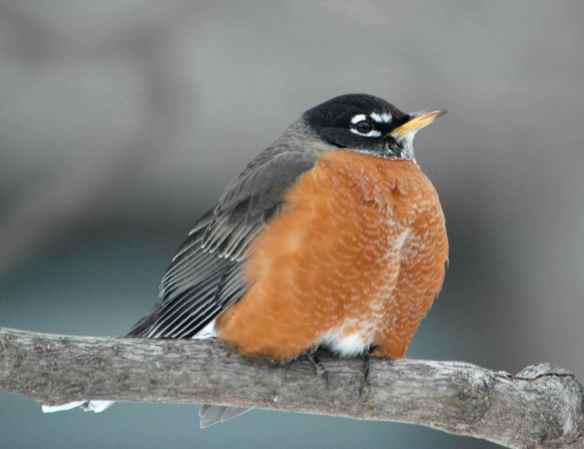
If you live in a temperate climate and pay attention to your local birds, you have probably noticed that their preferences for companionship change with the seasons. In spring, pairs stick close by each other and three’s a crowd—any third-wheel interloper is likely to be chased off in a flurry of angry wingbeats. But in fall and winter, the birds suddenly become community minded, travelling around in flocks of dozens of their fellows. In Chicago in the winter you can find trees liberally decorated with the round orange forms of fluffed-up American Robins, bearing more than a passing resemblance to Christmas tree ornaments. Even in the Bay Area, not generally known for its seasonal variation, huge flocks of quietly chirruping Dark-eyed Juncos make it clear that (mild, occasionally rainy) winter has arrived.

robin

Not pictured: about fifteen of this robin’s winter friends.

Why flock in winter? Or, why flock only in winter?

Continue reading

“Rare” birds at the banding station

“Rare” is context-dependent. My Collins Bird Guide lists the Dark-eyed Junco as a “rare vagrant,” but that is, of course, because Collins is a bird guide to Europe. Common birds where you don’t expect to find them are exciting. We have our own rarities at the banding station, birds that may be common in the general region but rarely grace our nets; and although no one else would consider them remotely remarkable, we still get excited.

img_7307

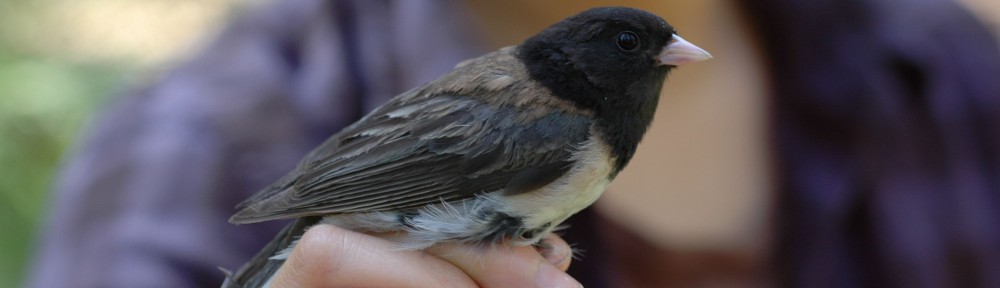
Dark-eyed Junco

Juncos flock in huge numbers all around the area, but for whatever reason, they do not like the specific patch of riparian land that the banding station monitors. The banding station catches only around five juncos every year, making them rare by our very particular standards.

Continue reading

Birds and mirrors, revisited

I wrote about birds and mirrors a while ago, and not much has changed scientifically since then. Most bird species tested have interpreted their own reflections as other individuals, responding either with aggression or courtship. Female pigeons who view their own reflections ovulate, apparently interpreting their reflections as suitable mates. Among birds, only magpies, so far, have been demonstrated to understand that the mirror reflects their own image, although pigeons can be trained to use spatial information from mirrors correctly in the real world.

So why bring this up again? Recently I saw a Yellow-rumped Warbler interacting with its reflection in a car side mirror, and took a video with my phone. Here it is (apologies for the lack of zoom):

At the time I took the video, I didn’t think much of it beyond general amusement. But rewatching it, I began to have some questions.

Continue reading

The very confused wren and the birdwatcher who noticed

In the spring of 2015, a male House Wren and his mate built their nest inside a nestbox near a honeysuckle. His mate laid her eggs and dutifully incubated them. Then, one morning— cheep! cheep! High-pitched calls and gaping red mouths cried hungry, daddy! and the male wren was off in a paternal tizzy, collecting bugs and delivering them to his new offspring.

It was, maybe, odd that his new offspring weren’t in the nest that he had built. It was, maybe, odd that other, larger birds were also feeding his babies. It might even have been called odd that his mate was still sitting in their nest, atop whole and silent eggs. But— cheep! No time for that! The chicks were hungry!

What this male House Wren was doing, no doubt to the profound irritation of his mate, was feeding the offspring of a pair of Northern Cardinals who had nested in the honeysuckle near his nestbox.

Continue reading

Why is a bird like a violin?

Don’t worry: this isn’t Lewis Carroll’s maddeningly unanswered riddle “Why is a raven like a writing desk?” (Although, if you’re interested, it turns out that has been answered.) There is an answer to this one—two answers, in fact.

Answer 1: They both make sounds by vibrating strings.

Well, strings, feathers—they’re all the same, right? This Club-winged Manakin produces its courtship song by vibrating its wing feathers: they strike each other about 107 times per second.

Continue reading

Let’s not forget how cool dinosaurs probably looked

We know a little bit about how dinosaurs probably looked: we’re learning that a lot of them had feathers, and even beginning to be able to figure out what patterns might have been on their plumage. But there’s a lot we don’t know; we may never know for sure.

In evolutionary biology, when you don’t know something about an extinct species—what kind of nest it built, or what sounds it made, or how many babies it had—you look at the species that evolved from it. You infer that it probably was similar to at least some of its descendent lineages. For dinosaurs, then, we would look at birds.

DSC_9533

I remember, as a kid, thoughtfully coloring my dinosaur coloring books and paper-mache dinosaur scultures in shades of green and brown. I knew about camouflage, and I was sure that this earthy color palette must have been the one favored by these animals. Silly me.

Continue reading

Birds looking odd? They may be molting

IMG_6332

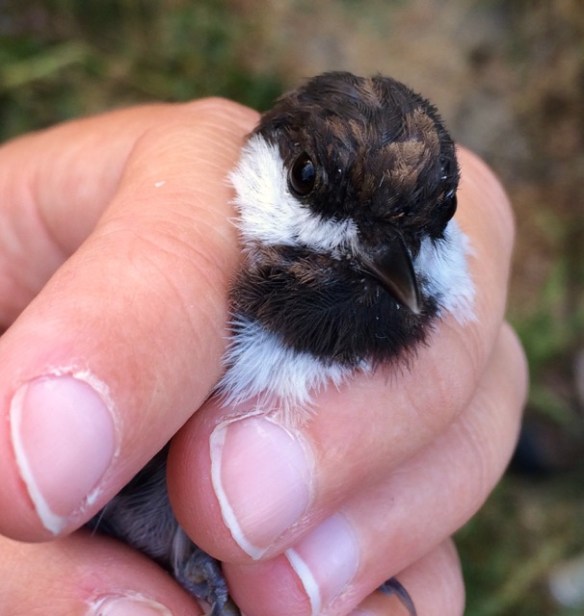
This Chestnut-backed Chickadee is molting his head feathers, hence the odd colors.

After breeding, if you’re a bird, comes molting. Time to discard those old, worn, raggedy flight feathers and start with some fresh ones for the long haul of the fall molt, or replace sparse downy feathers with good warm ones for the cold of winter. This means that around now—from mid-July to September—you may see a lot of birds who aren’t looking their best.

Continue reading

Niche partitioning by the bay

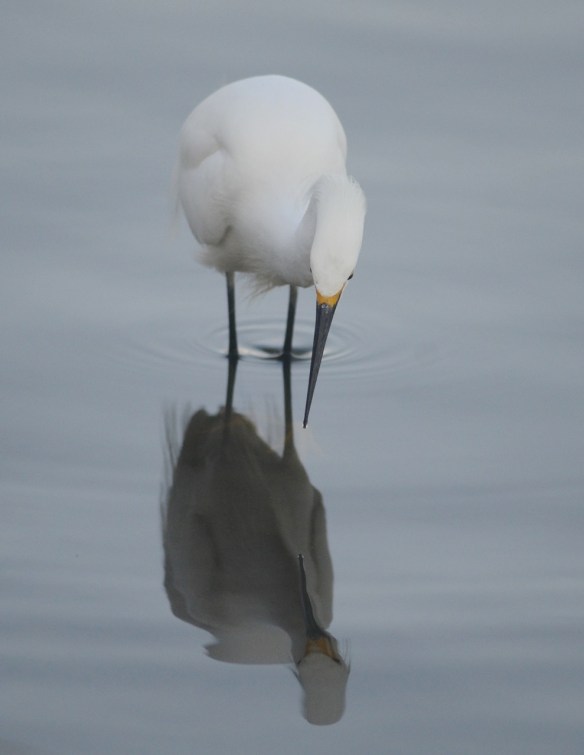
DSC_6511The sun dips low over the bay, its fading rays gilding the avocets as they swish their heads through the water. The egrets eye their own reflections as if in profound self-contemplation. A willet flashes past, its black-and-white wings an exclamation in the dusk.

DSC_7921Faced with such beauty, two words come irrepressibly to mind: niche partitioning.

Continue reading