Scary search term adventures

While it seems like it might be logical for people to find my blog after searching something like “pictures of juncos” or “how do birds fly?”, internet users (and search engines) are thinking a bit more creatively. So once again I, your humble servant, will attempt to give you what you really want from this blog by responding to the actual search terms that have led you here.

This time, though, you guys are kinda scaring me.

human babies

Wait, no. Do not come to this site if you want information on human babies. I don’t know anything about human babies! Search engines, don’t send people who search “human babies” to a bird research blog! And now I’ve written “human babies” four times here so that probably won’t help…
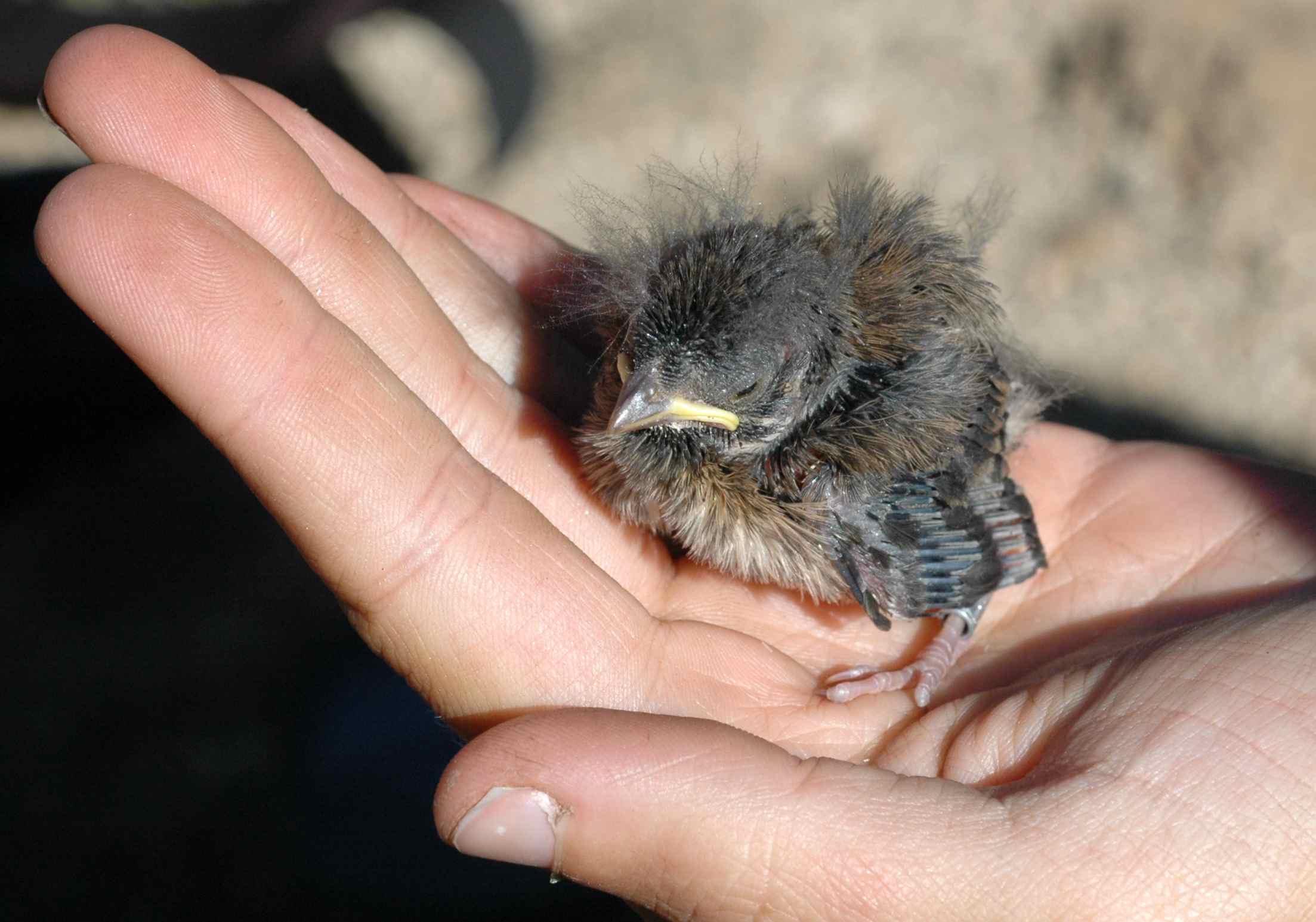
Cute, yes, but crucially NOT A HUMAN BABY.

Cute, yes, but crucially NOT A HUMAN BABY.

floating skeletons

If these are a problem, put up some strong netting around your house, work area, etc. to catch the floating skeletons. Grab a ladder and pull the bones out of the net at least once a week so it doesn’t get clogged up.

Continue reading

Banding a nest

It’s rare that I have photos of the process of banding a nest, since usually everyone is holding a chick and we don’t have any extra hands for photographic documentation. For a few nests, however, I was lucky enough to have my father with us, and boy does he like to photograph things! Thanks to him I can show you what it looks like when we band a nest.

EDIT: If you click on these (or any photos on this blog) you can see them bigger.

The nest. If you click to expand it and look closely you can see the female sitting on it.

The nest, tucked next to the clump of plants in the center. If you look closely you can see Mom sitting on it.

Me taking the chicks from the nest, with Kyle ready to catch any runners.

Me taking the chicks from the nest, with Kyle ready to catch any runners.
Photo by M. LaBarbera

Often when you approach the nest, the female will flare her tail and run around on the ground to try to draw your attention away from the nest. This is a tail-on view of Mom doing that. Photo by M. LaBarbera

Often when you approach the nest, the female will flare her tail and spread her wings and run around on the ground to try to draw your attention away from the nest. This is a tail-on view of Mom doing that.
Photo by M. LaBarbera

Mom, angrily chipping at us. Photo by M. LaBarbera

Mom, angrily chipping at us.
Photo by M. LaBarbera

Continue reading

Think like a scientist: human-driven selection

A salmonella outbreak on chicken has hospitalized over a hundred people so far. Salmonella is on a lot of chicken; if you cook chicken at all regularly, you have definitely purchased and handled salmonella-tainted chicken. But that’s okay, because you cook it, and the bacteria die from the heat, and then the chicken does not kill you. No worries!

This chicken might want to kill you... Photo by Ido Mor

This chicken might want to kill you…
Photo by Ido Mor

Except that those 100+ sick people probably weren’t eating chicken sushi. Even if they did all manage to undercook their chicken, there’s this: a Costco found salmonella on its rotisserie chicken after they were cooked at 180 Fahrenheit. Chicken is “safe” when it’s cooked at 165 Fahrenheit, so 180 should be extra safe. Now, I’m not a salmonella investigator; maybe Costco lied about its cooking temperature, or maybe someone handled raw chicken and then the rotisserie chicken and that’s how they got contaminated. But there is a third option: maybe a strain of salmonella has evolved, under selection driven by you and me and everyone else who cooks their chicken, to survive cooking.

We all know what natural selection can do, how the pressure of competing with other individuals and evading predators and finding food and staying the right temperature so that you can make the most babies can drive the evolution of “forms most beautiful and most wonderful” (Darwin).

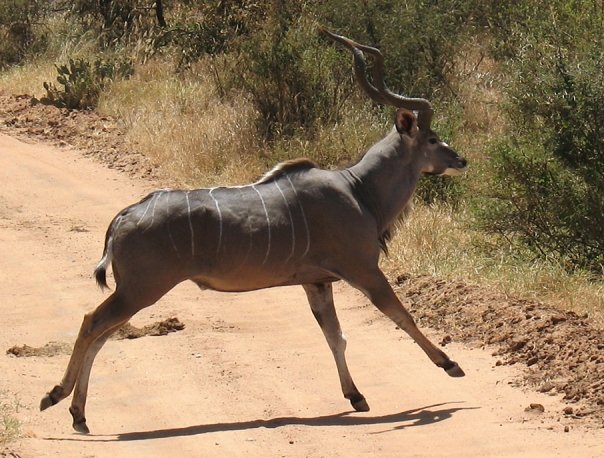
A form beautiful and wonderful: male greater kudu in Kenya.

A form beautiful and wonderful: male greater kudu in Kenya.

Continue reading

Come on, government, you can do it…

The butterfly was a California Sister. Photo by M. LaBarbera

A California Sister butterfly on my hand. Photo by M. LaBarbera

This summer in the field, once, a butterfly landed on my hand. I am reminded of it now that the government is maybe going to think about reopening and not plunging the world into economic crisis. Except that the butterfly was a delicate and beautiful creature that I felt might startle at any moment, while the government is… well, it might startle at any moment, but the other adjectives do not apply.

Come one, government! Do it for this crazy reverse-colored ladybug! And also, you know, for people.

A Rathvon's lady beetle from my study area. Photo by M. LaBarbera.

A Rathvon’s lady beetle from my study area. Photo by M. LaBarbera.

UPDATE: Huzzah.

Small nest? Big babies? No problem!

Nesting moms, are you having trouble fitting all your babies into one nest? Your troubles are over! We’ve got photos to inspire you to fit all those babies into one nest in an elegant, orderly way. A successful breeding season doesn’t have to mean clutter anymore!

These eggs are a mess. Look at that one shoved under the others. Don't let this be your nest!

These eggs are a mess. Look at that one shoved under the others. Don’t let this be your nest!

Continue reading

Precedented bycatch

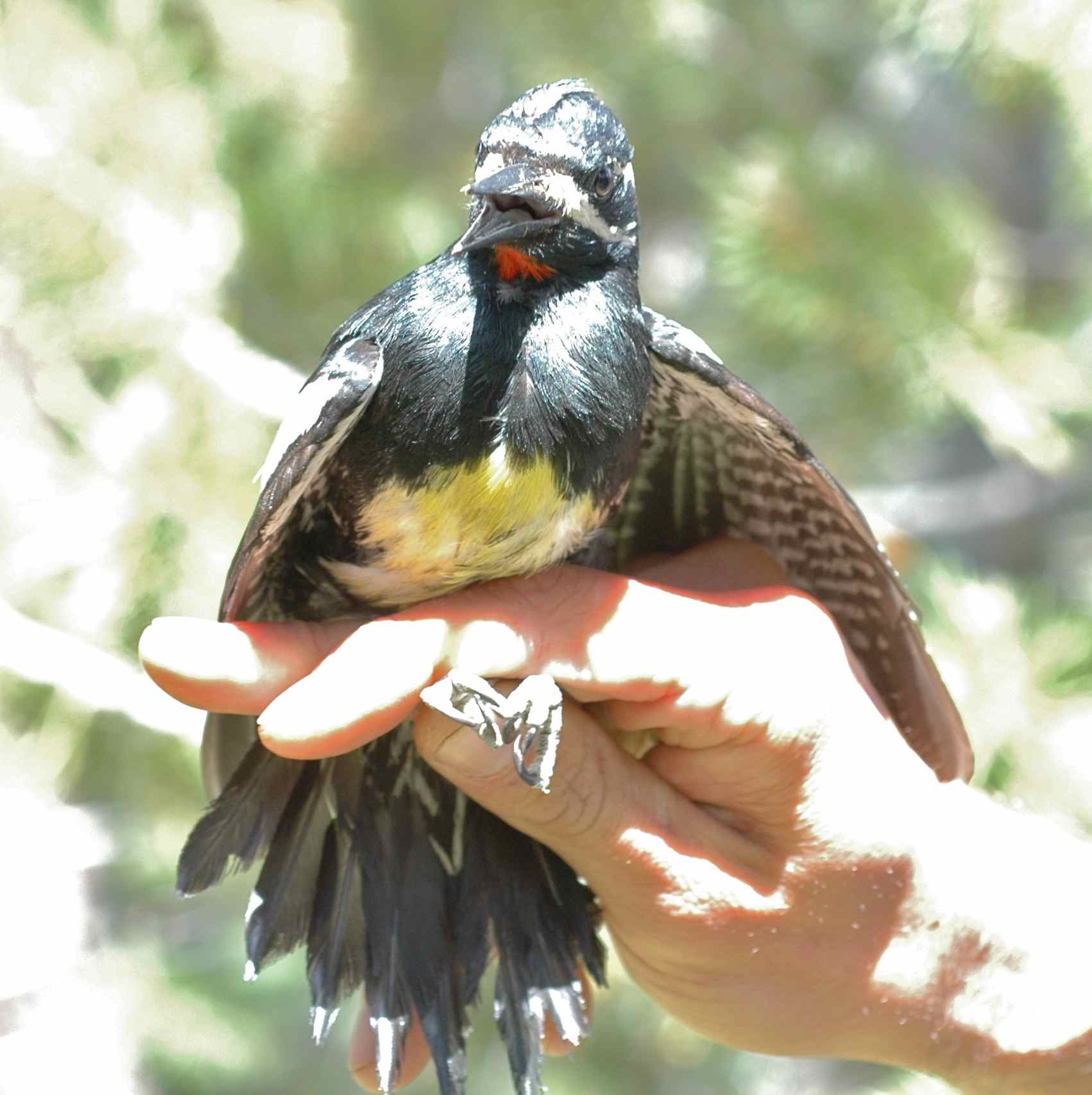
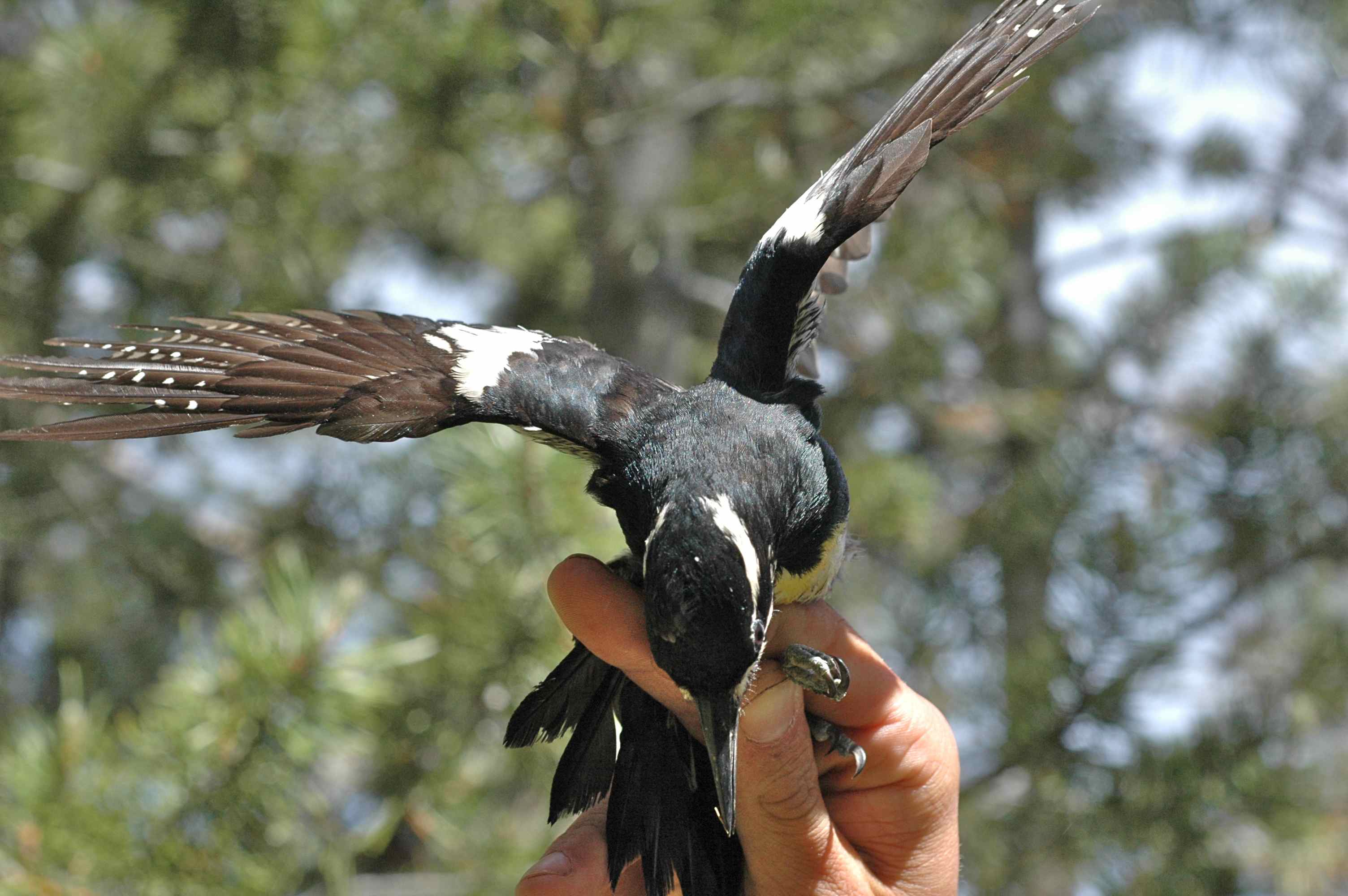
After I made such a fuss about catching a sapsucker and a hummingbird early in the season, of course, we caught another sapsucker and another hummingbird. These guys are no longer quite so unprecedented—although they were novel species for me—but they are still awesome.

Male Williamson’s Sapsucker

Continue reading

Shutdowns and outages: when infrastructure fails science

Last night, my university’s campus suffered a power outage, possibly due to the theft of copper grounding cables. Everyone—well, everyone not trapped in an elevator—was ordered to evacuate campus, which turned out to be a good call, because a backup generator then exploded, spitting flames two stories high. (No one was seriously injured.)

My scientist colleagues and I, while worrying about the trapped elevator people and the explosion, had one more thing to sweat over: our samples. If the freezers in our building go down, they can take years’ worth of research samples with them. One of my labmates had just returned from the field the previous day, and all of her summer of work was potentially thawing out that night.

OH NO!

OH NO!

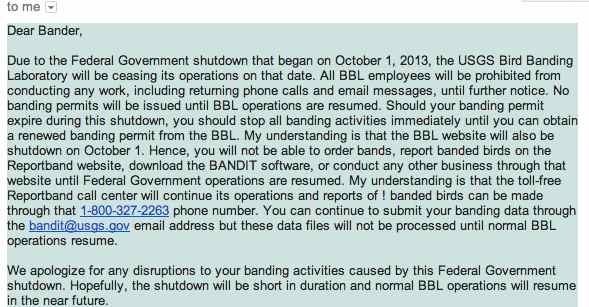
Today, the country has a government outage. The government shutdown is already having widespread effects, and these will only worsen if it continues. I am lucky in my experience of the shutdown compared to most people: I am not losing the food stamps I depend on or the wages I have earned, for example. But the effects are still shocking. This morning I received this email, from the government office that issues banding permits and bands to people like me who band birds to study them:

2013_shutdown_BBL

Continue reading

Spotty, squishy, and sweaty mushrooms of the field

We may go out in the field to study birds, but that doesn’t mean we turn a blind eye to all the other strange and interesting life on the mountain. This year I particularly noticed the mushrooms after I encountered a fantastically cool species called, appropriately, the Alpine Jelly Cone or Poor Man’s Gumdrop.

2013_mushroom_squishy2These guys are small and conical, attached to dead wood just at their tip. They came out in force at one of our sites early in the season among lingering patches of old snow. I like their color and geometric neatness of shape, but the best thing about them is—unfortunately—not conveyable by photograph: they are squishy. Like jello, but not at all sticky, just dry and weirdly, wonderfully squishy.

2013_mushroom_squishy

Continue reading

Say “aah”

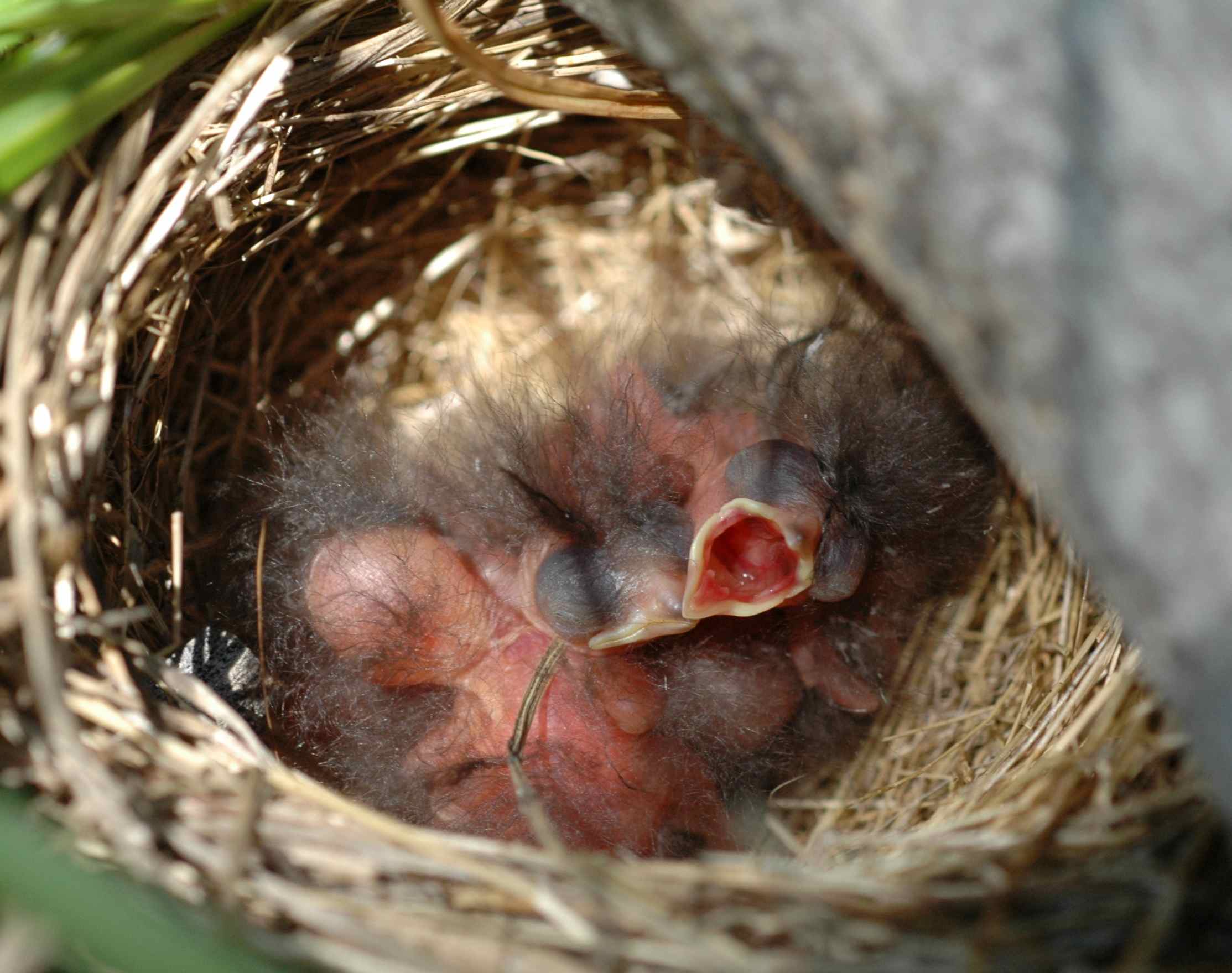
There are a few easy ways for baby juncos to distinguish me from their parents. For example, their parents have feathers and dark heads and are about their size, while I am a gigantic fabric-draped Godzilla monster. However, hungry chicks seem to not always be alert to such nuance, so I’ve accumulated quite a few photographs of the view down the gullets of baby juncos.

SEAL and NORA's chicks

SEAL and NORA’s chicks

In the above photo you can see how the bright pink/red of the mouth, surrounded by the yellow bill outline, makes an obvious target for a parent with food.

Mostly, though, I just like how these photos make the chicks look even more like crazy pink alien beings than usual.

INGA's chicks

INGA’s chicks

Continue reading