Anthropomorphism and how we think about animals

I once saw a talk by a scientist who works on jumping spiders—those colorful, fuzzy, big-eyed teddy bears of the spider world—in which the speaker paused, after discussing the spiders’ excellent vision (courtesy of their many eyes, which are of several different types and see in various ways) and their sensitivity to vibrations (which they perceive through their legs and through the many fine hairs covering their body), to wonder, “What does the world feel like to these animals? What is it like to be a jumping spider?”

What is it like to be something other than human? There is so much research touching on this question, studies asking everything from “How does a bee navigate?” to “Are rats kind?” It’s a fascinating question, and it’s incredibly difficult.
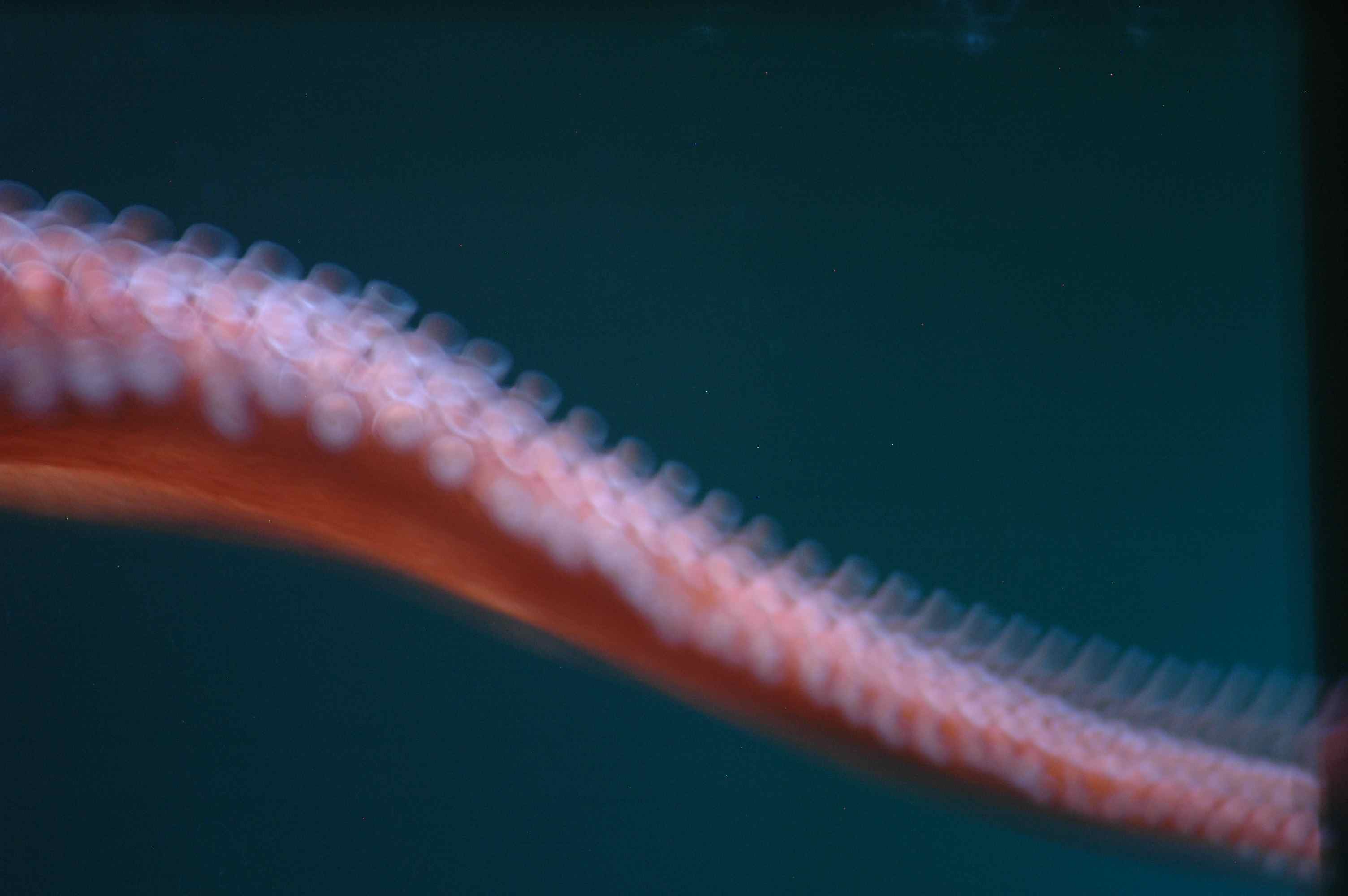
What is it like to be an octopus?
What is it like to be an octopus?

Continue reading

Adoption in birds (really!)

Sometimes the titles of scientific papers are so surprising that they seem to transform into news headlines in my head:

Adoption of chicks by the Pied Avocet – Adoption of fledglings by Black and Red Kites – Caspian Terns fledge a Ring-billed Gull chick – Adoption of young Common Buzzards by White-tailed Sea Eagles

How can this be true? Raising chicks is hard; it takes energy and time and risk. Why would any bird make those sacrifices for an unrelated chick?

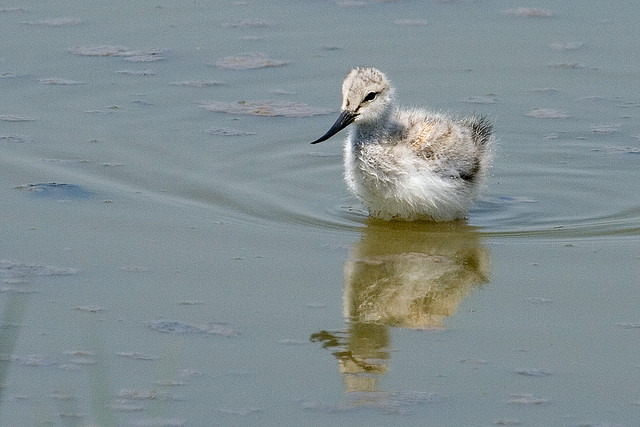
Okay, I would absolutely adopt this guy. Pied Avocet chick. Photo by Keith Marshall

Okay, I would absolutely adopt this guy.
Pied Avocet chick. Photo by Keith Marshall

Continue reading

Red finch, orange finch, yellow finch

In general, we understand red birds thusly: the brighter the red, the better the bird. (Why? See this post.) The better the bird, the better his genes/parental care/mate, and the better his reproductive success.

But sometimes it’s more complex—and interesting—than that.

Red male House Finch. Photo by M. LaBarbera.

Red male House Finch. Photo by M. LaBarbera.

Yellow and orange male House Finches. Photo by Ken-ichi Ueda.

Yellow and orange male House Finches.
Photo by Ken-ichi Ueda.

Continue reading

Funny-looking birds look like that for a reason

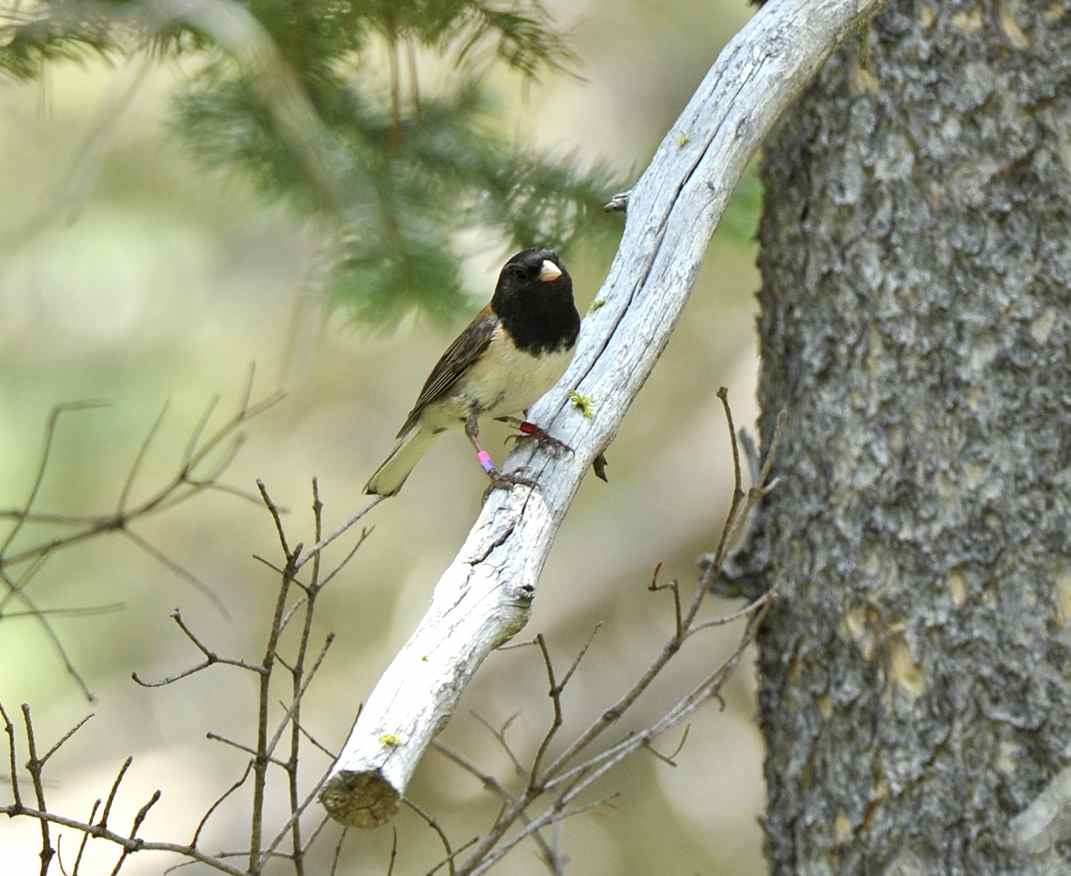
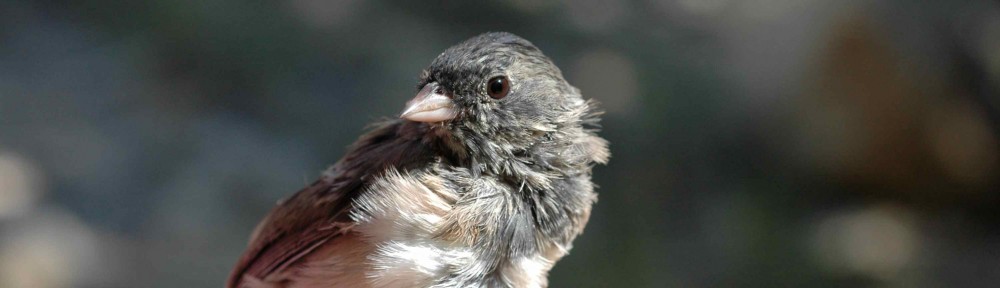
ARKM the Dark-eyed Junco showing off his perfect birdiness. Photo by M. LaBarbera

ARKM the Dark-eyed Junco showing off his perfect birdiness.
Photo by M. LaBarbera

I think we can all agree that the junco is pretty much the Ideal Bird. Ask any small child. Brownish, feathers all over, small round body, short neck, cute twiggy legs, little triangle for a bill: that’s what a bird looks like.

Um...

Um…

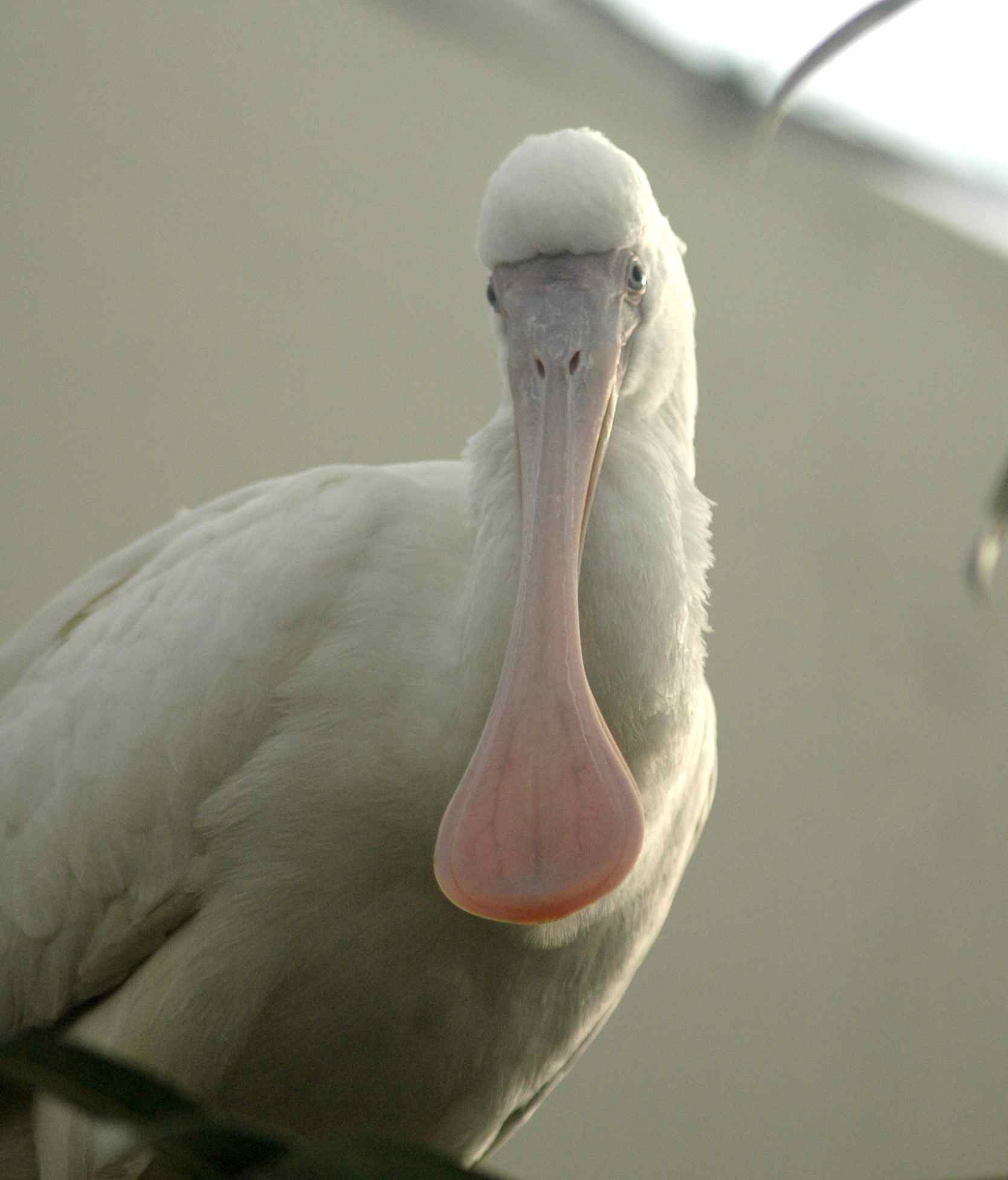
Or not. None of the following birds look like a small child’s quintessential Bird, because these birds—with their spoonbills, mustaches, and scary dinosaur feet—are awesome weirdos.

Continue reading

Think like a scientist: human-driven selection

A salmonella outbreak on chicken has hospitalized over a hundred people so far. Salmonella is on a lot of chicken; if you cook chicken at all regularly, you have definitely purchased and handled salmonella-tainted chicken. But that’s okay, because you cook it, and the bacteria die from the heat, and then the chicken does not kill you. No worries!

This chicken might want to kill you... Photo by Ido Mor

This chicken might want to kill you…
Photo by Ido Mor

Except that those 100+ sick people probably weren’t eating chicken sushi. Even if they did all manage to undercook their chicken, there’s this: a Costco found salmonella on its rotisserie chicken after they were cooked at 180 Fahrenheit. Chicken is “safe” when it’s cooked at 165 Fahrenheit, so 180 should be extra safe. Now, I’m not a salmonella investigator; maybe Costco lied about its cooking temperature, or maybe someone handled raw chicken and then the rotisserie chicken and that’s how they got contaminated. But there is a third option: maybe a strain of salmonella has evolved, under selection driven by you and me and everyone else who cooks their chicken, to survive cooking.

We all know what natural selection can do, how the pressure of competing with other individuals and evading predators and finding food and staying the right temperature so that you can make the most babies can drive the evolution of “forms most beautiful and most wonderful” (Darwin).

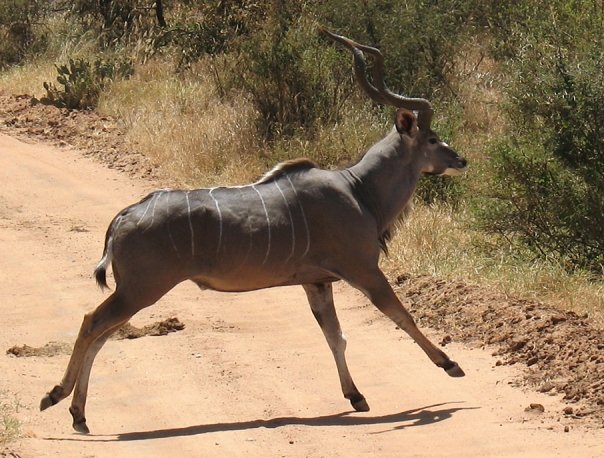
A form beautiful and wonderful: male greater kudu in Kenya.

A form beautiful and wonderful: male greater kudu in Kenya.

Continue reading

The amazing fox domestication experiment; or, how your puppy got floppy ears and a waggly tail

More than fifty years ago, Russian scientists began an experiment in domestication. At that time, silver foxes had been raised for fur for about 100 years already, so their care and breeding was well known. The scientists began their project like this: they would approach the cage of a silver fox and note its response. The fox would crouch, ears flattened, snarling in fear, or else back away as far as it could until its body was vertical against the back wall of the cage. All of the foxes were frightened of the humans—but some less than others. The scientists chose the foxes that showed the least fear of humans, and bred them. Then they did the same with the pups, raising up and breeding the least-frightened of them; and so on and so on.

Young wild silver fox. Photo by Matt Knoth

Young wild silver fox. Photo by Matt Knoth*

The original foxes were as close to wild animals as anything can be after being bred for fur for a century. Their descendants, after many generations of selection for just one thing—tameness, a liking of humans—look and act like dogs. They seek out humans, they whine and lick your face, they wag their tails. They even look like dogs—mostly, like border collies.

Fox kit showing the white markings characteristic of domestication. Photo by Luz Rovira

Fox kit showing the white markings characteristic of domestication. Photo by Luz Rovira*

Continue reading

What happens to the animals when there is a fire?

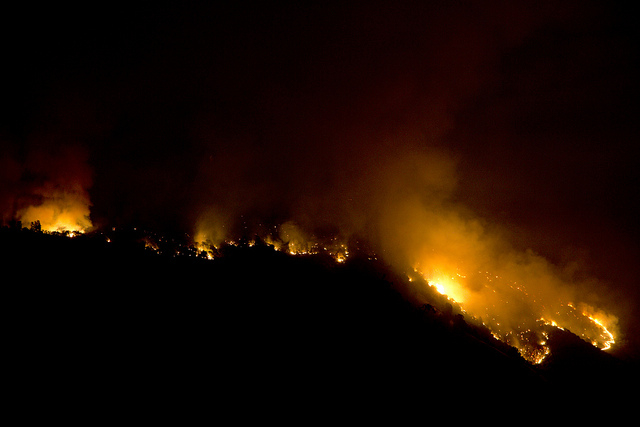
Rim Fire. Photo by Steve Ryan

Rim Fire.
Photo by Steve Ryan

You have (I hope!) seen news lately about the Rim Fire, which has been burning in Stanislaus National Forest next to Yosemite National Park. It began near the “Rim of the World” scenic viewpoint off Highway 120, and has been making Yosemite visitors and residents of Groveland quite nervous. It has burned over 200,000 acres and is reportedly 32% contained. A collection of pretty incredible photos of the fire is here.

First: no, this year’s juncos are not currently on fire. My field sites this year are in Stanislaus National Forest, but considerably further north. We have, however, seen smoke and had bits of white ash falling around us.

But of course, even if my juncos aren’t in the fire, other juncos are. And Chipping Sparrows, and American Robins, and mice, and gopher snakes… So what does wildlife do when the world starts burning around it? Are all the animals in that 200,000+ acres doomed?

Continue reading

What bird colors can tell you

Birds need to know a lot about each other. They need to know things like who will be the best parent; who will pass on the best genes; who could defeat them in a fight; and which offspring is worth investing in the most. One of the ways that birds can perceive such information about each other is by observing each other’s color signals—and the more researchers study these, the more it becomes clear that birds can tell a lot from color alone.

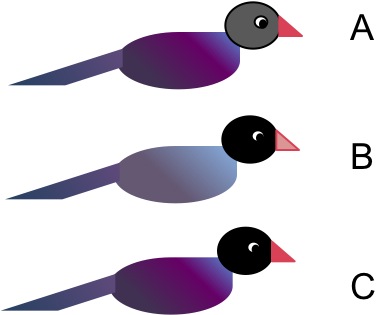
Let’s make up a bird species – the Superb Junco. This imaginary species has a black hood and pink bill like the Oregon Junco, but its body and tail are iridescent blue-violet. Here is an illustration of three individuals of this species:

superb_juncosThese individuals are clearly different: A has a paler head, B has a paler bill and is less brightly shiny, and C is brightly colored in all aspects. But what does that tell us?

Continue reading

Featured paper: cuttlefish are lying cheaters

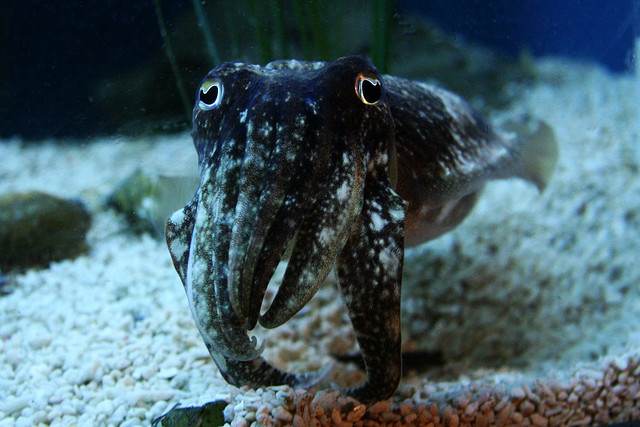
Although the cuttlefish may be best known for making those flat cuttlefish bones that your pet bird nibbles to get calcium, this paper shows that it should be known for being a lying cheater.

That was uncalled for. Photo by Tom Olliver

That was uncalled for.
Photo by Tom Olliver

Cuttlefish, like their relatives the squids and the octopuses, are masters of visual communication. They can change their appearance almost instantaneously (video here), and they use color and pattern to say things like “Back off, I’m angry!” and “Pretty lady, I would like to do some romance with you now,” and “Please don’t do romance with me, I am male.”

Continue reading