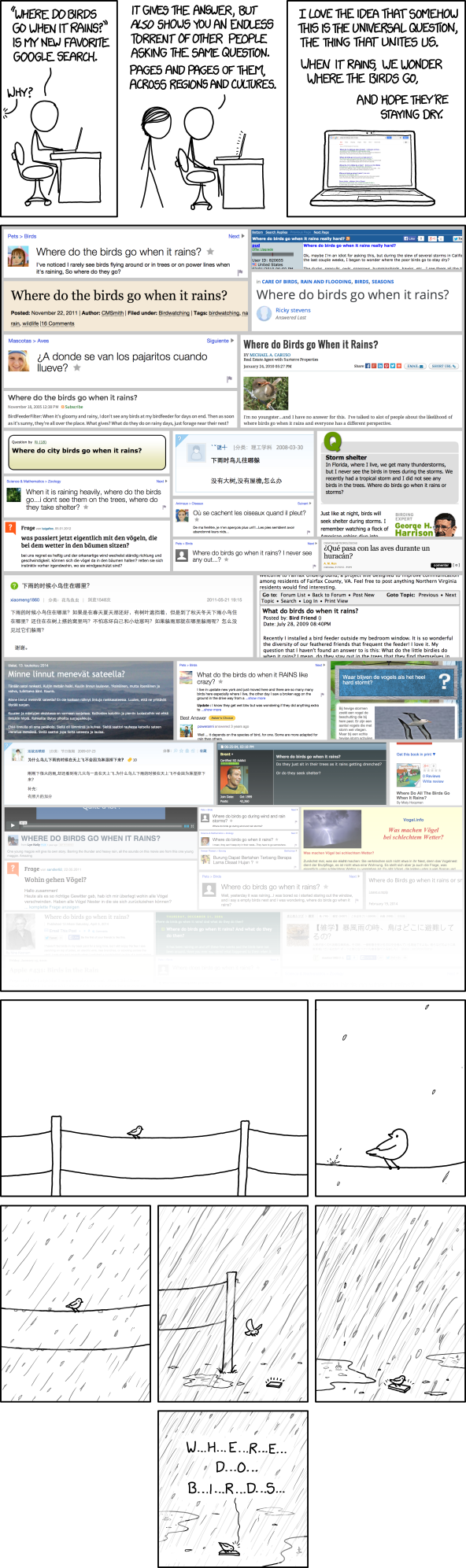
What do birds do when it rains?

I’ve been meaning to write about this topic for a while—now xkcd has beaten me to it:

Oh, well. Since the comic doesn’t actually answer the question, I’m hoping you’re all still interested! (Also, at the end there will be a bonus discussion of ant rain. Yes, ant rain. You won’t find that on xkcd!)

Continue reading

Fun with owl pellets, part 1

Today I submitted the Big Grant Proposal that I’ve been working on for a while. To celebrate this, because I am a normal person, I dissected some owl pellets.

Now that's what I call a party.

Now that’s what I call a party.

These particular owl pellets were from Great Horned Owls—these ones, in fact:

owlpellets_owls_scratchingWhen an owl eats something, it doesn’t digest the whole thing. The hard-to-digest parts—bones, fur, exoskeleton—get smooshed into a pellet in the gizzard and then regurgitated. These pellets are a record of what the bird has eaten.

This is my "How is it your business what I've eaten?" look.

This is my “How is it your business what I’ve eaten?” look.

Continue reading

The chickarees want my car

The chickarees have gone crazy. They spent the summer curious but shy, often fleeing us and then scolding from the safety of a tree. Now they seem to have no fear. They run under our table as we eat breakfast. They jump on top of our tents while we are inside. Sometimes they sneak in under the tent fly and look right at us, giant mammals separated from them only by some tent mesh, then saunter off unimpressed. As I was sitting with my back against a tree, one of them went up the other side of the trunk and then crept around to my side, at eye-level, until our faces were a bare few inches apart.

I have somewhat mixed feelings about this new friendliness. On the one hand, they’re cute.

Juvenile chickaree

Photo by M. LaBarbera

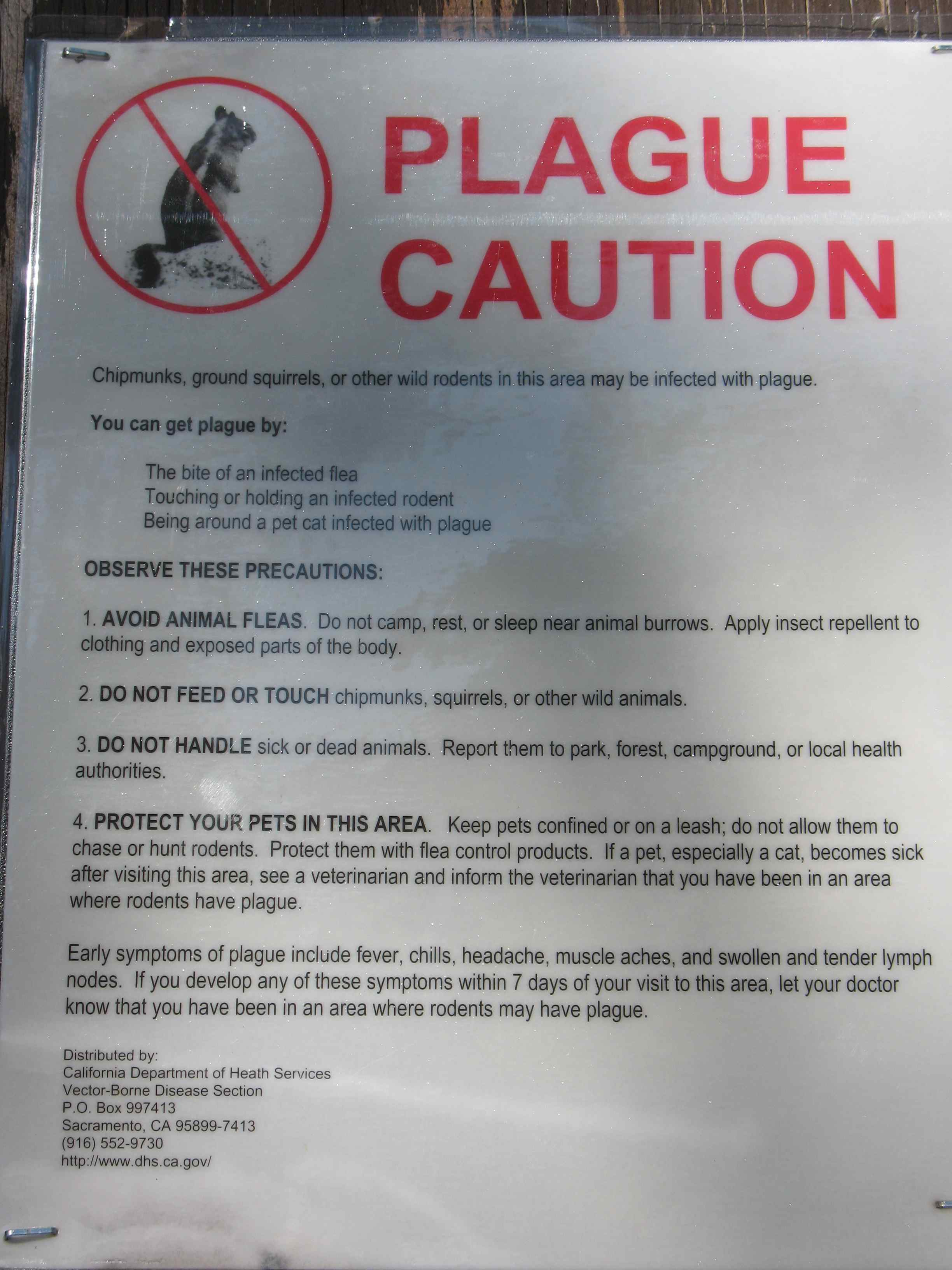
On the other hand, when we call them “plague squirrels,” it’s not just a term of endearment.plague

And then there’s the fact that they seem to be planning to steal my car.

Continue reading

The mystery of the robot bear

It was well past dark when I first heard it: around 2 in the morning, it woke me in my tent. I lay awake for what felt like a long time, listening, trying—and failing—to classify the noise definitively as not a danger so I could go back to sleep. At the same time, I tried to think of what it sounded like, so that I could describe it the next morning. A large animal roar. A metal chair scraping across the floor. A death-metal chord. A train whistle.

Whatever it was, it neglected to devour me that night, and in the morning I was relieved to find that one of my field assistants had also been woken by the noise and shared my bewilderment. We agreed that it was primarily a cross between the bellow of some large mammal and the scrape of something mechanical, and so it was dubbed “the robot bear.”

The robot bear

The robot bear

The robot bear called most nights after that. Sometimes I thought it must be a noise of pain, or maybe rage—the tearing roughness in it sounded like strong emotion. Sometimes I was sure it was distant machinery; but we were surrounded by forest, and why would anyone be running machinery in the middle of the night?

Continue reading

The many (and changeable) colors of the Pacific tree frog

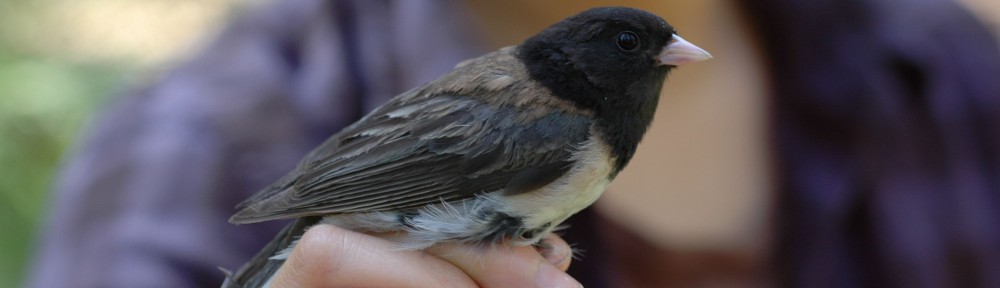
We spend a lot of time looking for junco nests in my field work, which means we spend a lot of time looking at the ground, which means we see a lot of these little guys:

2014_frogs13

Pacific tree frogs come in two main flavors: brown and green.

2014_frogs6

Some frogs stay the same color for their entire lives, but some can change from brown to green, or vice versa, depending on whether the background is dark (brown) or light (green). You can see how this might be handy if you want to blend in with the background.

You can't see me!

You can’t see me!

Continue reading

The animal’s guide to networking

Despite pop culture’s image of the scientist as solitary genius, hidden away in his office surrounded by old coffee cups and rat mazes, with escaped fruit flies whirring around his head while theories fizz in his lonely brain, scientists can be quite social. Networking is important in science: it’s how you get jobs, find collaborators, and see new ways to think about your data. (Of course, the networking you’re doing is with other scientists, so escaped fruit flies may still be involved.) This week I’m attending the conference of the International Society for Behavioral Ecology in order to do just that, and the prospect of networking myself has made me think of other animals who network and the benefits they get from it.

networks_geese

Continue reading

More animal higgledy piggledy

The higgledy piggledy poems return… (The first higgledy piggledy post is here.) Once again I have not quite followed all the rules.

————————————–

Parental care

Tentacled vermiform

mother caecilian

what simple kindness your

offspring must lack:

Un-altruistically

cannibalistically

eating their mama’s own

skin for a snack!

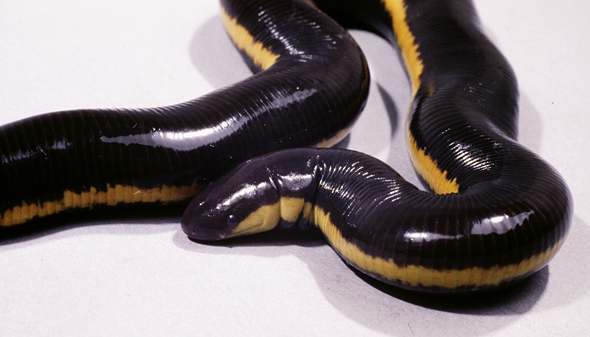
Yellow-striped caecilian. Photo by Kerry Matz*

Yellow-striped caecilian. Photo by Kerry Matz*

Caecilians are a kind of amphibian. Some caecilians feed their babies by growing a special layer of skin that the babies then eat. (Hey, is it really any weirder than what we mammals do to feed our babies?) All caecilians have little tentacles on their faces. See, goofy poetry is so educational!

Continue reading

A nest of Red-tailed Hawks grows up

Half-built nest in February

Half-built nest in February

In February, a pair of Red-tailed Hawks began to build a nest in the window of a tenth-floor conference room in Yonkers, NY. Over the next four months, Jerry and Beverly—who work in that office—watched and documented the red-tails as they raised their chicks. Many thanks to Jerry and Beverly for agreeing to share their photos and videos, and thanks to James for passing them on to me!

One of the adults at the nest

One of the adults at the nest. Red-tails like their nests to have a commanding view of the surroundings; you can see that this fits the bill nicely.

Continue reading

Helping baby wild animals

Growing up, I used to watch the Mallards breeding in the local pond every summer. The female would start out with many tiny, adorable ducklings; then, day by day, their number would shrink. I remember not understanding why I couldn’t take a few of the little fluffballs home and have them for myself. (Well, aside from the fact that a city apartment is perhaps not the optimal environment in which to keep ducks.) When so many died anyway, would they be missed? And wouldn’t I really be saving them by taking them?

I’ve been seeing similar sentiments on the internet lately: people who have found out how dangerous it is to be a baby bird asking whether it wouldn’t be best to preemptively “save” the chicks from their probable fate. They are babies in danger, after all—shouldn’t any good person help babies in danger?
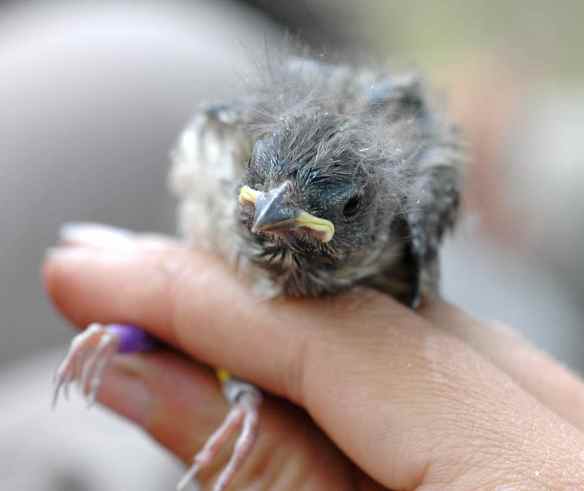
Maybe I should just keep little YAMM for myself? (Spoiler: no.)

Shouldn’t I just keep little YAMM for myself?

The simplest answer is that one should not steal away baby birds because it is illegal under the Migratory Bird Treaty Act—but that isn’t an answer likely to ease the consciences of animal lovers. So I’d like to talk about what it means to help wild animals, and when “helping” can be a really, really bad thing.

Continue reading