Safe behind these castle walls, eggs: how birds’ nests protect their precious contents

Recently I was lucky enough to spend some time in Spain, where the land is dotted with hilltop castles and the winding narrow streets of the old cities are encircled by sturdy stone walls. I crouched behind crenellations, pretending to be a bowman awaiting attack, and climbed dark winding staircases glad that no defending army waited at the top.

Winding staircase in the Olvera castle. Photo by Q. Stedman

Winding staircase in the Olvera castle.
Photo by Q. Stedman

It’s exciting and romantic to imagine castles and walled cities in the flush of functionality, but it’s hard to ignore that the motivating force for those structures was real, unromantic, gut-knotting peril and fear. The people who lived in those cities put up thick stone walls with their hands because they thought other people were going to come and unromantically kill them—which they sometimes did.

Gulls standing guard over Tarifa.

Gulls standing guard over Tarifa.

When birds build nests, they’re responding to that same threat. Eggs and baby birds are easy targets for anything from mice to snakes to deer to toucans. To keep them safe, birds too rely on stout walls, secret passageways, and defending armies.
Continue reading

Why be shaped like a snake? (Also, weasels)

Here’s a puzzle: you’ve gone to all the bother to evolve fins, then limbs, and then even limbs with all these complicated joints and toes and whatnot—and then you lose them. Limbs all gone.

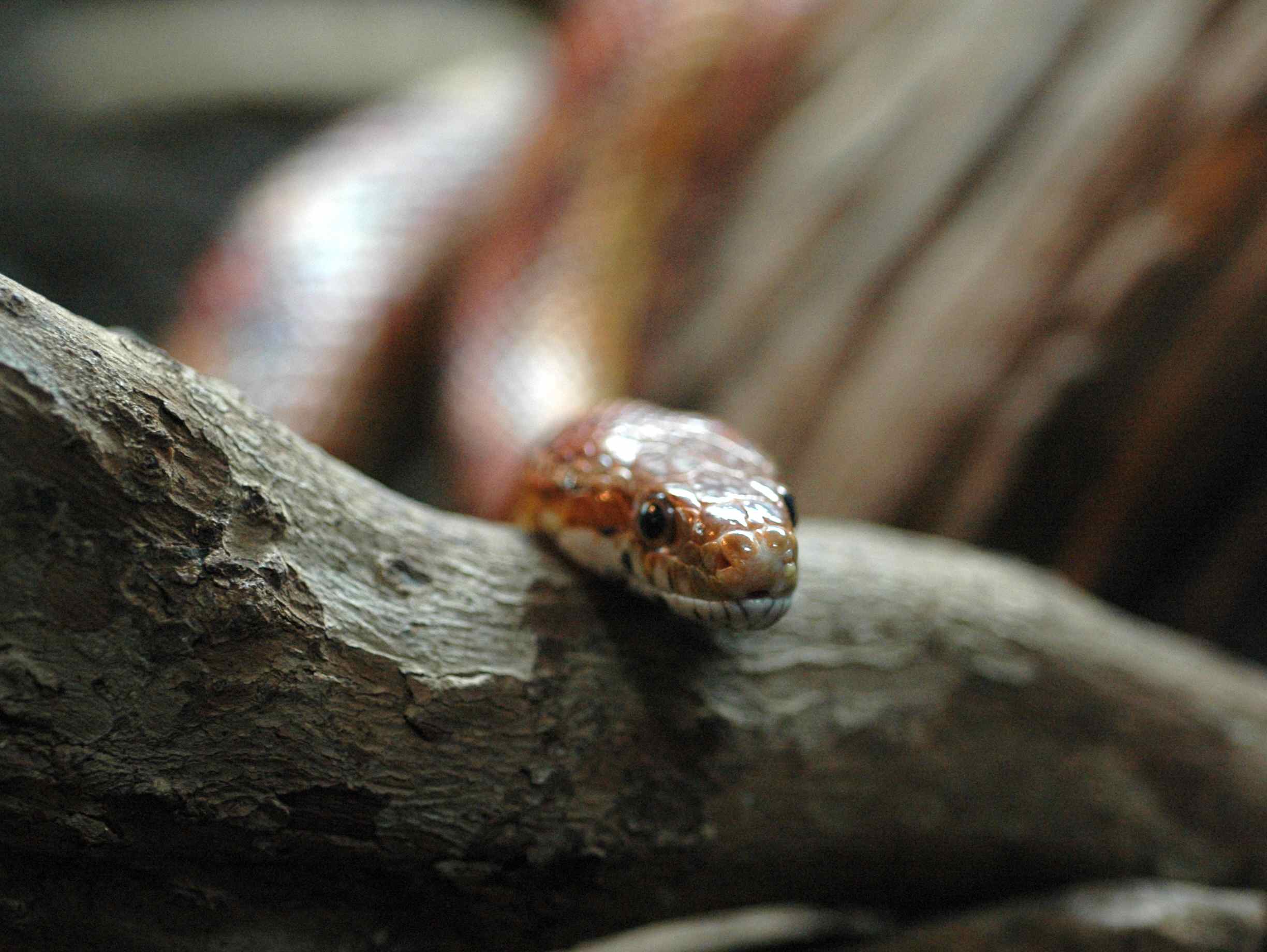
You're just a head and a tail now. Why, corn snake, why?

You’re just a head and a tail now. Why, corn snake, why?

This seems counterproductive, to say the least. Yet it isn’t just the snakes going in for the serpentine body plan: caecilians, amphisbaenians, and legless lizards lost their legs, too, and they aren’t evolved from snakes—these limbless animals all lost their limbs independently.

To understand how being snake-shaped might be adaptive, we’ll also consider some animals that are almost—but not exactly—snake-shaped: the mustelids, or weasels.

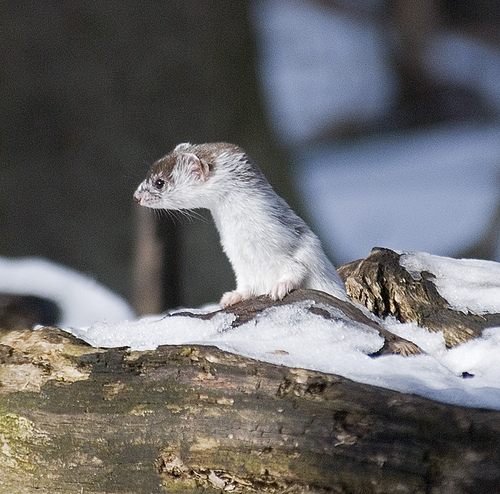
Least weasel. Photo by Sergey Yeliseev*

Least weasel. Photo by Sergey Yeliseev*

Continue reading

Think like a scientist: check your sources

In scientific papers we are very strict about citing sources. Not only do we put a list of our references at the end of papers, but we also indicate which reference gave us which fact right there in the text: “junco fledglings have big fuzzy eyebrows (LaBarbera 2012).” This makes fact checking easy.

Scientists writing for the general public don’t usually do this. Depending on the form of a science-for-a-general-audience column, references may all be at the end only, or they may not be there at all. When researchers write about their own research without any citations, saying “My research shows…” and “Many studies have found…” but not actually citing them, it’s up to you to either blindly believe them (don’t do this) or to check their sources yourself. If they do good research, this shouldn’t be hard.

Sometimes a "research" column is like a coot: fine at first glance, but when you look close, really creepy feet. You followed that analogy, right?

Sometimes a “research” column is like a coot: fine at first glance, but when you look close, really weird feet.
You know what I mean.

Continue reading

Could ducks in the water melt ice?

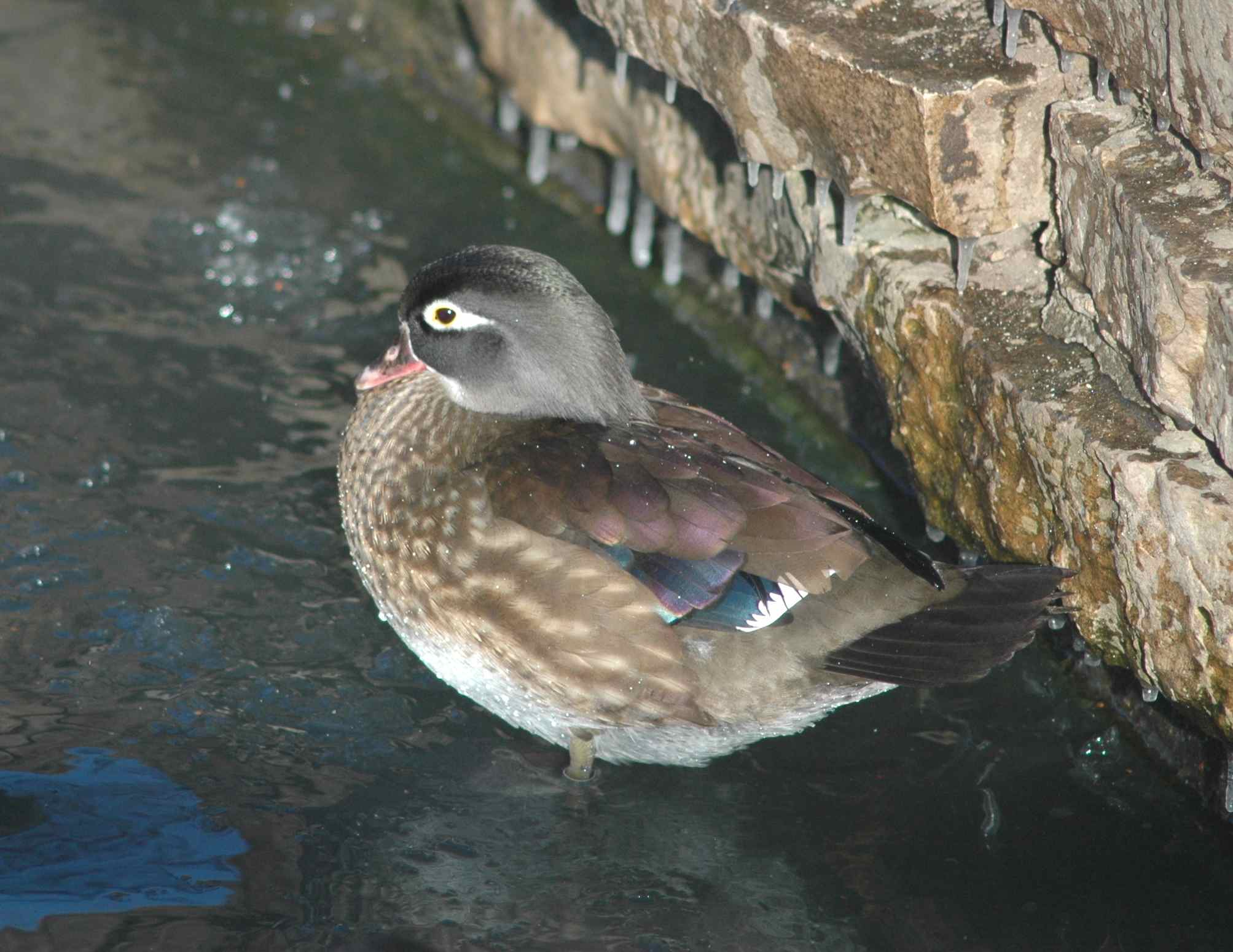
Female Wood Duck in Chicago in the winter.

Female Wood Duck in Chicago in the winter.

A reader question today! Dolores asks: Would the body heat of a modest mixed gathering of water birds (gulls, ducks etc) melt ice at the edges of a pond?

The answer to this depends on context. We can start by establishing some extreme end-points: one duck at the edge of a huge lake in way-below-freezing weather would not be able to melt any ice.

Female Common Goldeneye in Lake Michigan: it's a good thing the lake is already melted, 'cos you're not going to melt anything.

Female Common Goldeneye in Lake Michigan: it’s a good thing the lake is already melted, ‘cos you’re not going to melt anything.

Twenty ducks splashing around spiritedly in a kiddie pool with the barest skin of ice in weather just at the freezing point would probably, if you waited long enough, cause the ice to melt.

Between our two endpoints are more “normal” circumstances: a group of waterbirds hanging out at a pond. Could they melt any ice?

Continue reading

Adoption in birds (really!)

Sometimes the titles of scientific papers are so surprising that they seem to transform into news headlines in my head:

Adoption of chicks by the Pied Avocet – Adoption of fledglings by Black and Red Kites – Caspian Terns fledge a Ring-billed Gull chick – Adoption of young Common Buzzards by White-tailed Sea Eagles

How can this be true? Raising chicks is hard; it takes energy and time and risk. Why would any bird make those sacrifices for an unrelated chick?

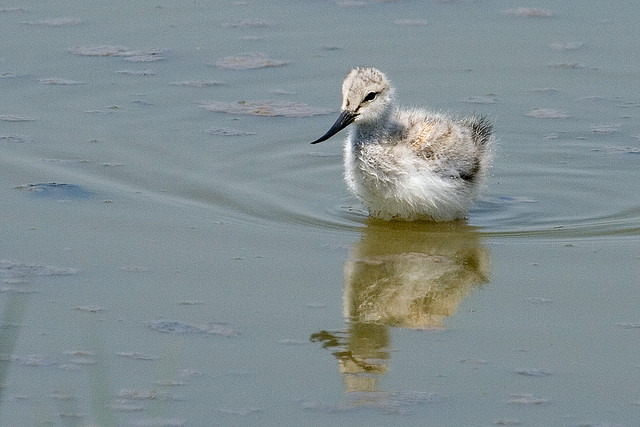
Okay, I would absolutely adopt this guy. Pied Avocet chick. Photo by Keith Marshall

Okay, I would absolutely adopt this guy.
Pied Avocet chick. Photo by Keith Marshall

Continue reading

Red finch, orange finch, yellow finch

In general, we understand red birds thusly: the brighter the red, the better the bird. (Why? See this post.) The better the bird, the better his genes/parental care/mate, and the better his reproductive success.

But sometimes it’s more complex—and interesting—than that.

Red male House Finch. Photo by M. LaBarbera.

Red male House Finch. Photo by M. LaBarbera.

Yellow and orange male House Finches. Photo by Ken-ichi Ueda.

Yellow and orange male House Finches.
Photo by Ken-ichi Ueda.

Continue reading

Funny-looking birds look like that for a reason

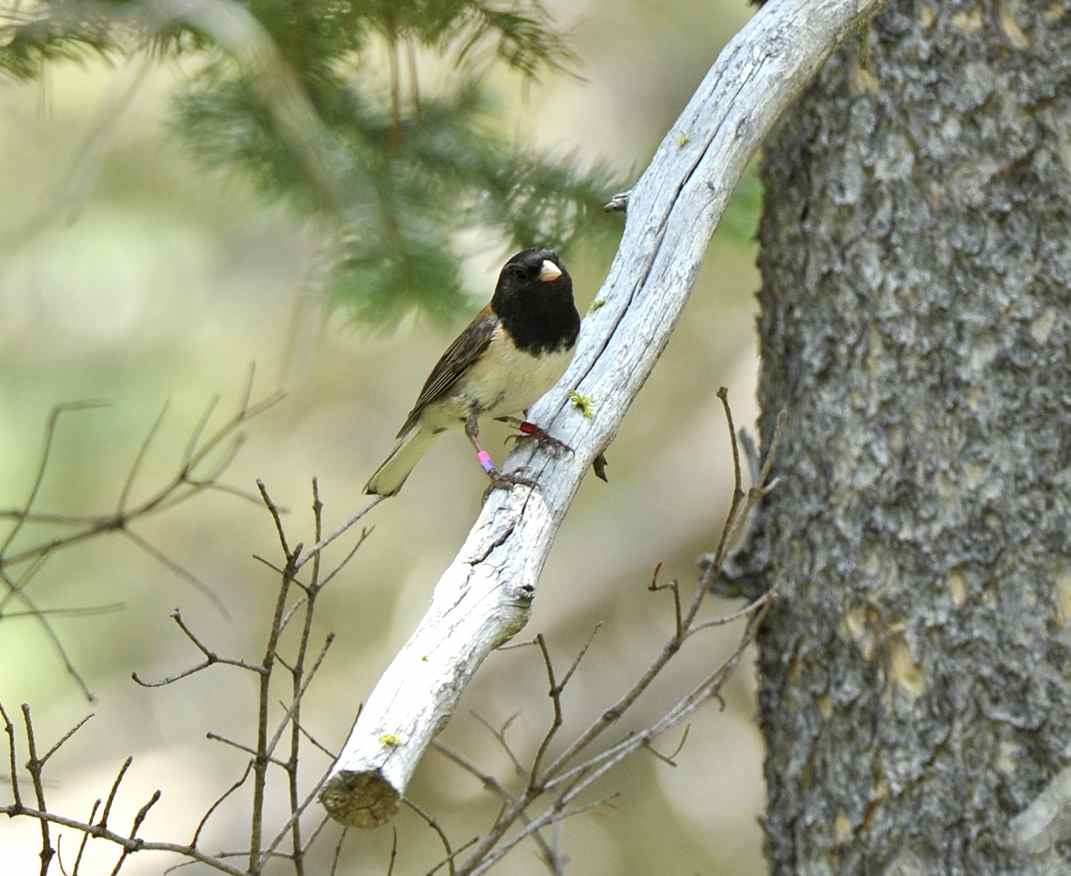
ARKM the Dark-eyed Junco showing off his perfect birdiness. Photo by M. LaBarbera

ARKM the Dark-eyed Junco showing off his perfect birdiness.
Photo by M. LaBarbera

I think we can all agree that the junco is pretty much the Ideal Bird. Ask any small child. Brownish, feathers all over, small round body, short neck, cute twiggy legs, little triangle for a bill: that’s what a bird looks like.

Um...

Um…

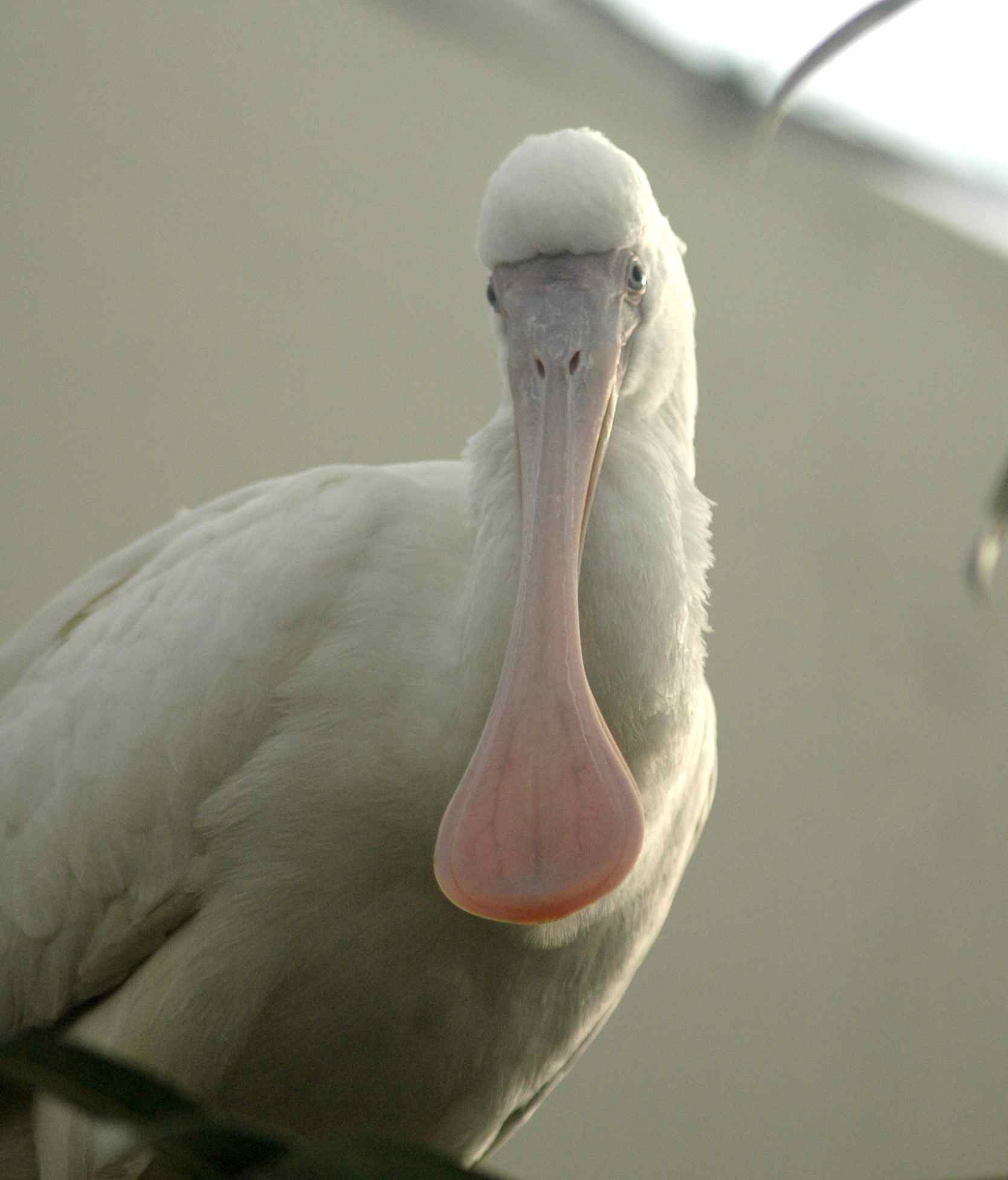
Or not. None of the following birds look like a small child’s quintessential Bird, because these birds—with their spoonbills, mustaches, and scary dinosaur feet—are awesome weirdos.

Continue reading

Think like a scientist: human-driven selection

A salmonella outbreak on chicken has hospitalized over a hundred people so far. Salmonella is on a lot of chicken; if you cook chicken at all regularly, you have definitely purchased and handled salmonella-tainted chicken. But that’s okay, because you cook it, and the bacteria die from the heat, and then the chicken does not kill you. No worries!

This chicken might want to kill you... Photo by Ido Mor

This chicken might want to kill you…
Photo by Ido Mor

Except that those 100+ sick people probably weren’t eating chicken sushi. Even if they did all manage to undercook their chicken, there’s this: a Costco found salmonella on its rotisserie chicken after they were cooked at 180 Fahrenheit. Chicken is “safe” when it’s cooked at 165 Fahrenheit, so 180 should be extra safe. Now, I’m not a salmonella investigator; maybe Costco lied about its cooking temperature, or maybe someone handled raw chicken and then the rotisserie chicken and that’s how they got contaminated. But there is a third option: maybe a strain of salmonella has evolved, under selection driven by you and me and everyone else who cooks their chicken, to survive cooking.

We all know what natural selection can do, how the pressure of competing with other individuals and evading predators and finding food and staying the right temperature so that you can make the most babies can drive the evolution of “forms most beautiful and most wonderful” (Darwin).

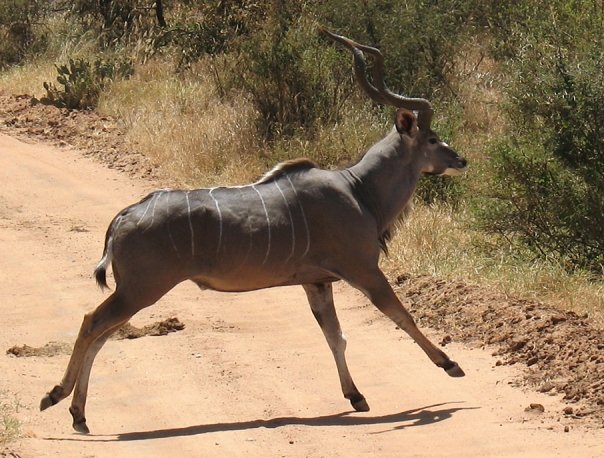
A form beautiful and wonderful: male greater kudu in Kenya.

A form beautiful and wonderful: male greater kudu in Kenya.

Continue reading