Our regular programming will resume shortly

I’ve been neglecting my blog-writing duties lately, preoccupied with the annual Big Grant Proposal Deadline. My grant proposal is on sexual selection in juncos. What part of juncos is sexually selected, you ask? Why, that flashy tail, of course! They’re practically peacocks!
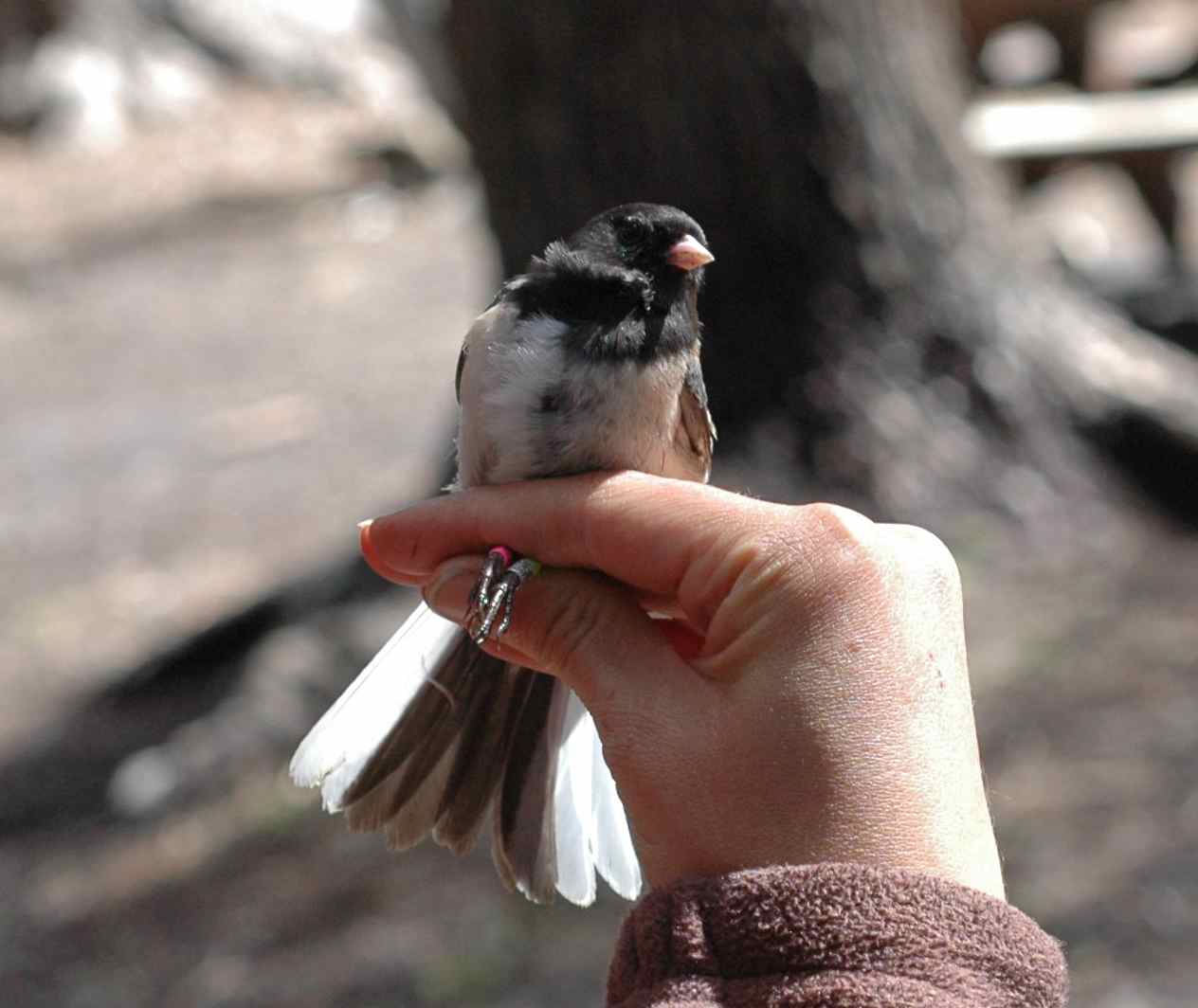
LANK showing off his sexy tail
LANK showing off his sexy tail

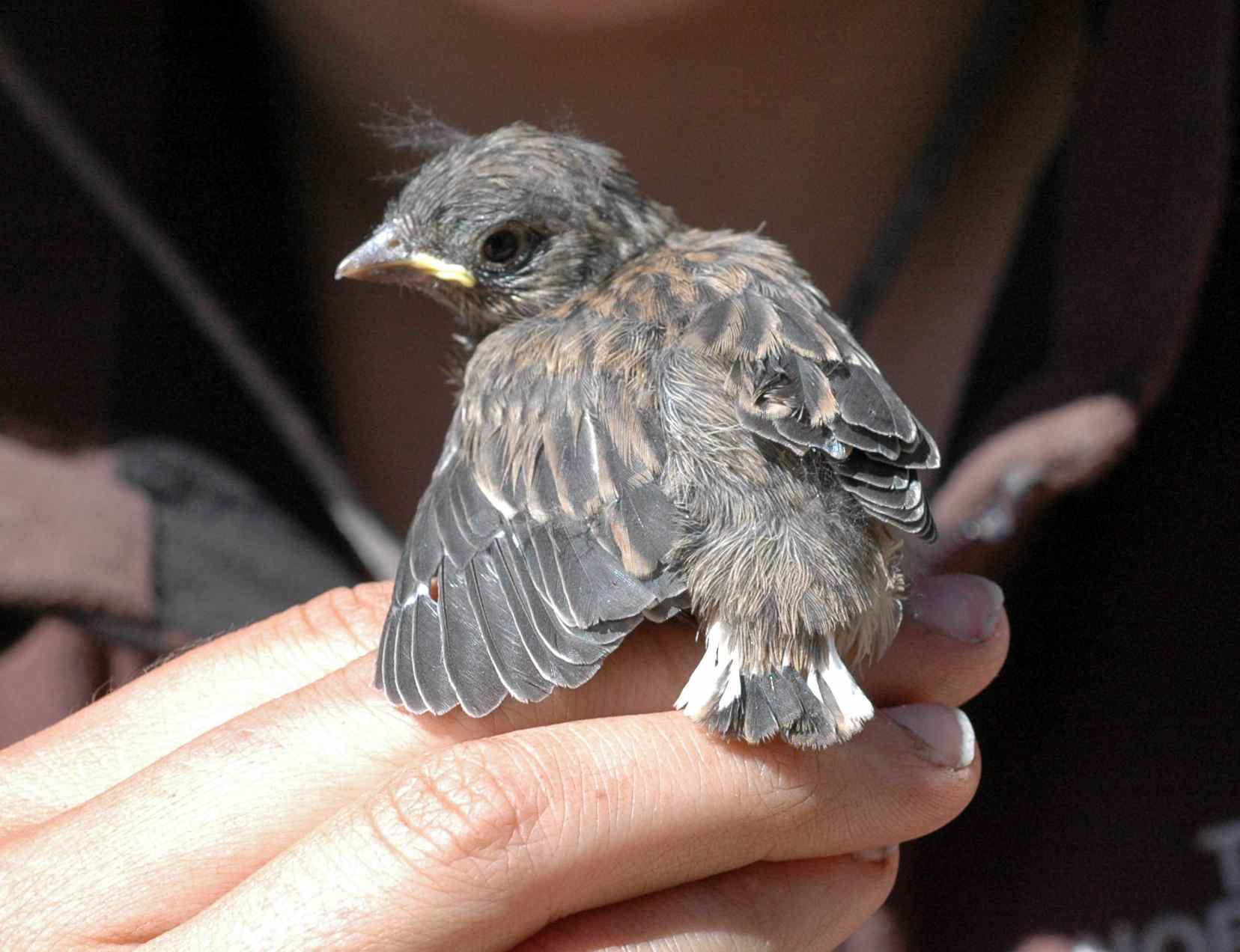
You're not quite there yet, little one...

You’re not quite there yet, little one…

I’ve also been TAing a class on animal behavior, so while I don’t have many extra words to spare right now—I need them all for that grant proposal—I do have a wealth of animal videos that have been brought to my attention by my fellow animal behavior fans. Please accept some videos in lieu of words.

Here is a video of a bird even drabber than a junco who attracts females with his sexually selected aesthetic tastes in things like flowers, shiny beetles, and slightly… er… less attractive items as well: the Vogelkop Bowerbird.

And here are some flies that—well, you should just watch it to believe it. It starts with them gulping air bubbles into their heads, and that’s not even the weird part.

Why are they like that? Sexual selection! Females in this species prefer their males as hammerheaded as possible.

Hey, why not?

Velella velella! Or, falling off the edge of the world

They were strewn all along the beach, these transparent, tripartite things. At first glance they looked like plastic trash, but they felt organic in my fingers.

velella5

Fortunately I happened to be beachcombing with a world expert on marine invertebrates. “Ooh,” he said, “Velella!”

Velella velella, or by-the-wind sailor: a living sailboat, a jellyfish on a stiff frame. In their preferred state, i.e. when not washed up on beaches, these animals float on the ocean surface with their tentacles just below the water, to catch food, and their upright sails above the water, to catch the wind.

velella8


Continue reading

Avian flight III: hummingbird flight

Hummingbirds are amazing fliers. They fly forward at up to 26 miles per hour; they fly backward; they hover. They beat their wings 50 times a second, so all you see is a blur, with that enameled little body floating serenely in the middle. They are flight acrobats. They are flight artistes. How do they do that?

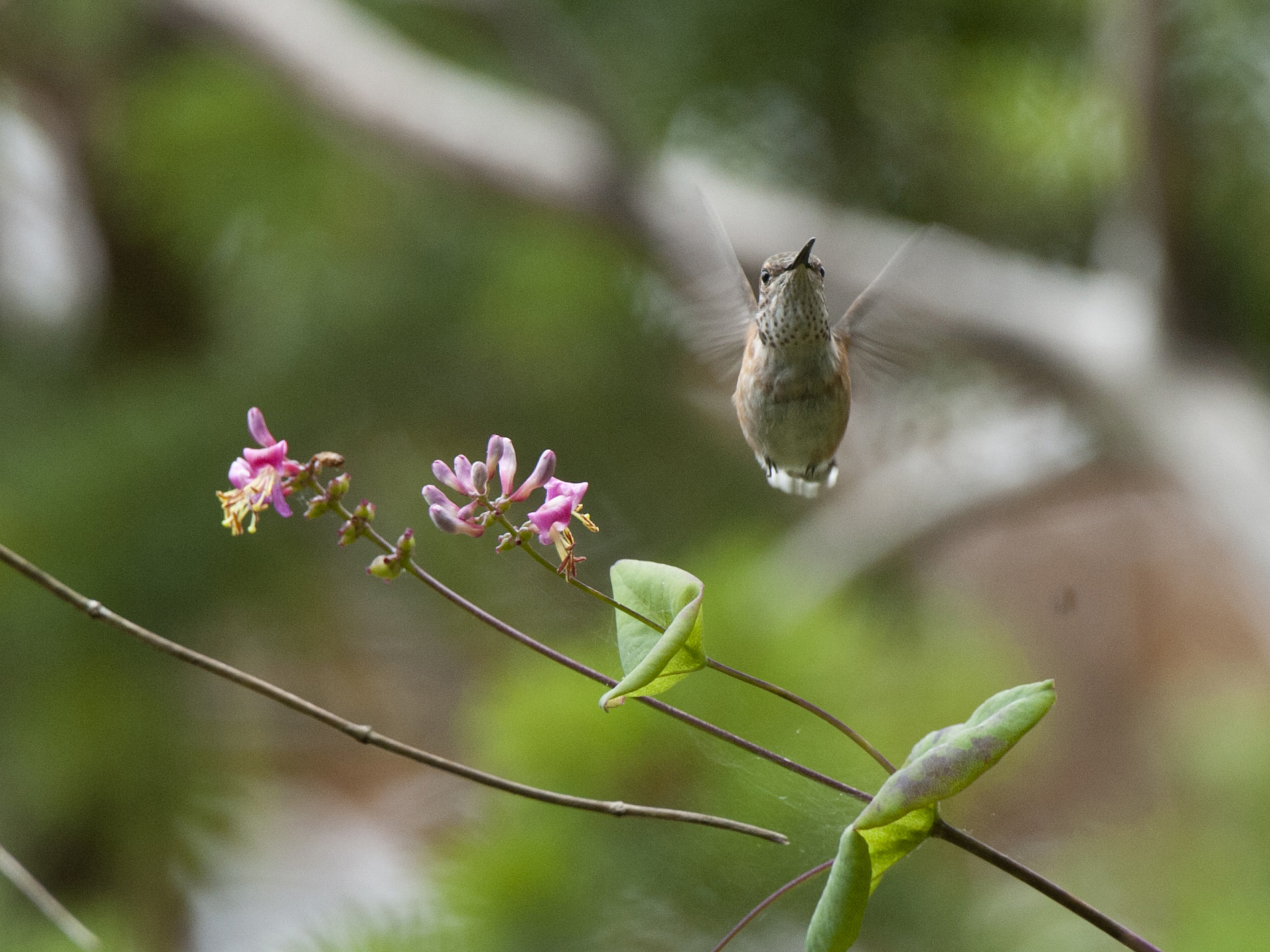
Rufous Hummingbird. Photo by M. LaBarbera

Rufous Hummingbird. Photo by M. LaBarbera

It helps that they are quite small. The amount of power that you can get out of your muscles increases as muscle mass (size) increases—bigger muscles, more power—but the amount of power increases less quickly than mass does. That is, if you double the size of the muscle, you get less than twice the amount of power out of it. This means that as an animal gets bigger, its ratio of muscle power to muscle mass decreases. An ant can carry enormous things for its size. A small bird can generate enough power with its muscles to hold its own body aloft and still in the air—to hover. A California Condor? Not so much. Hummingbirds’ small size means that they are, relative to their own body mass, very strong.

Rufous Hummingbirds are small. Photo by M. LaBarbera

Small size is a Rufous Hummingbird’s secret weapon.
Photo by M. LaBarbera

Continue reading

The mystery of the robot bear

It was well past dark when I first heard it: around 2 in the morning, it woke me in my tent. I lay awake for what felt like a long time, listening, trying—and failing—to classify the noise definitively as not a danger so I could go back to sleep. At the same time, I tried to think of what it sounded like, so that I could describe it the next morning. A large animal roar. A metal chair scraping across the floor. A death-metal chord. A train whistle.

Whatever it was, it neglected to devour me that night, and in the morning I was relieved to find that one of my field assistants had also been woken by the noise and shared my bewilderment. We agreed that it was primarily a cross between the bellow of some large mammal and the scrape of something mechanical, and so it was dubbed “the robot bear.”

The robot bear

The robot bear

The robot bear called most nights after that. Sometimes I thought it must be a noise of pain, or maybe rage—the tearing roughness in it sounded like strong emotion. Sometimes I was sure it was distant machinery; but we were surrounded by forest, and why would anyone be running machinery in the middle of the night?

Continue reading

The many (and changeable) colors of the Pacific tree frog

We spend a lot of time looking for junco nests in my field work, which means we spend a lot of time looking at the ground, which means we see a lot of these little guys:

2014_frogs13

Pacific tree frogs come in two main flavors: brown and green.

2014_frogs6

Some frogs stay the same color for their entire lives, but some can change from brown to green, or vice versa, depending on whether the background is dark (brown) or light (green). You can see how this might be handy if you want to blend in with the background.

You can't see me!

You can’t see me!

Continue reading

The animal’s guide to networking

Despite pop culture’s image of the scientist as solitary genius, hidden away in his office surrounded by old coffee cups and rat mazes, with escaped fruit flies whirring around his head while theories fizz in his lonely brain, scientists can be quite social. Networking is important in science: it’s how you get jobs, find collaborators, and see new ways to think about your data. (Of course, the networking you’re doing is with other scientists, so escaped fruit flies may still be involved.) This week I’m attending the conference of the International Society for Behavioral Ecology in order to do just that, and the prospect of networking myself has made me think of other animals who network and the benefits they get from it.

networks_geese

Continue reading

The sky is falling: birds and hail

The season of the summer disaster movie is upon us: Godzilla is stomping San Francisco, and I’m sure we’re all eagerly anticipating the premiere of Sharknado 2. To liven up the cinemas a bit, as a relief from the overabundance of sequels (I mean really, Sharknado 2!), I would like to propose a new genre mash-up: the animated talking birds disaster movie. It would be like those dancing penguin movies, or the solemn-looking owl movie (I have seen none of these…), plus disasters. The first one could be called Hailstorm!

It would not be a children’s movie. It would be terrifying.

It hailed on us a few days ago for about half an hour. The hail was mostly small, not larger than 1 cm in diameter, and the only animal reaction I saw was a decidedly alarmed chickaree—although to be fair, chickarees almost always look alarmed. I saw no evidence of damage afterwards; all of the junco nests we were monitoring weathered the storm just fine.

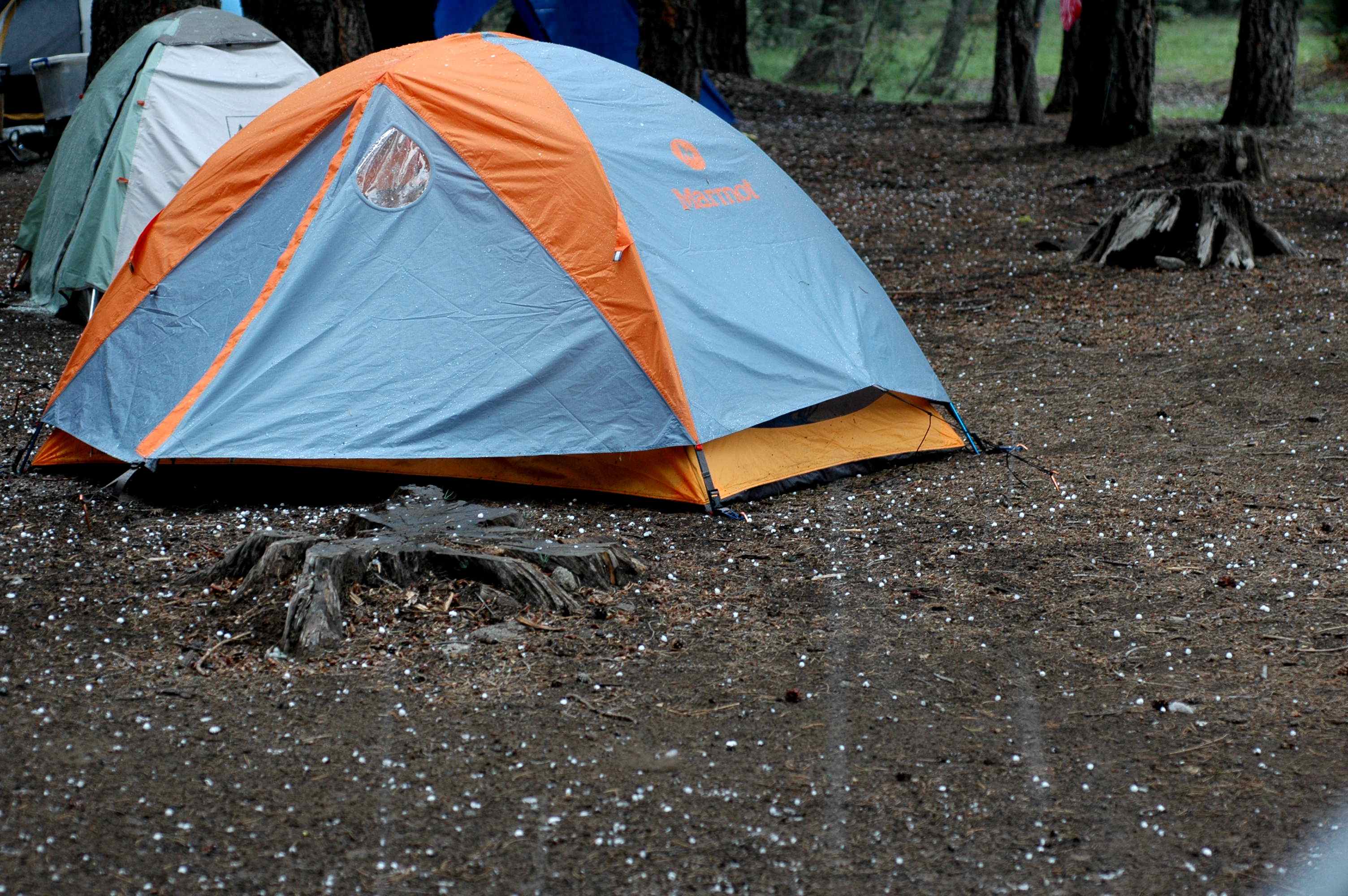
We hid in our tents.

You know the hail isn’t too bad when you can safely hide from it in a tent.

But sometimes hail is a sharper-fanged beast.

Continue reading

Ducklings with superpowers

Everyone knows ducklings: yellow fuzz, big flat bills, big flat feet, cute little waddles all in a line after Momma, and superpowers.

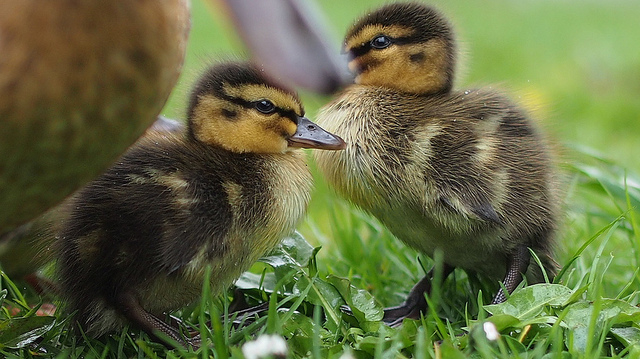
Photo by Farrukh*

Photo by Farrukh*

What, didn’t you know that last part?

Death-defying leaps!

Several duck species nest high above the ground in tree cavities. This is safer than nesting on the ground, predator-wise, but it also means that the ducklings hatch very, very high up. And then they have to get down.

When they hatch, the ducklings weight very little, which helps: the less you weigh, the less you are hurt by falling. Terminal velocity—the fastest that gravity will make you fall—depends on weight, so small creatures are essentially safe from falling no matter how far they fall. The cushiony leaf litter on the ground helps the ducklings too. And notice how they flatten out, spreading their little legs out behind and their wing stubs out front, their bodies as spread out as possible: they are gliding—albeit not as well as a true glider like a flying squirrel, but nevertheless slowing their descent so that they can land safely.

Continue reading

Animal visual illusions

Animals interact visually all the time. Males try to look big and scary to rivals, or sexy to females. Prey animals try to look inedible—or better, invisible—to predators. Sometimes these animals use visual trickery to assist their cause.

You’ve probably encountered visual illusions before. Here are some classic ones:

a) The vertical line looks longer than the horizontal line, even though they're both the same length. b) The top line looks longer than the bottom line, even though both are the same length. c) The middle circles are both the same size, but the one on the left looks bigger. d) The middle grey rectangle is just solid grey, but against the gradient background, it looks like a gradient. e) Both circles are the same shade of orange, but the one surrounded by black looks brighter.

a) The vertical line looks longer than the horizontal line, even though they’re both the same length. b) The top line looks longer than the bottom line, even though both are the same length. c) The middle circles are both the same size, but the one on the left looks bigger. d) The middle grey rectangle is just solid grey, but against the gradient background, it looks like a gradient. e) Both circles are the same shade of orange, but the one surrounded by black looks brighter.

Animals can use visual illusions a) and b) to appear bigger by changing their posture. Vertical stances make you look bigger than horizontal ones, and making a Y with your limbs looks bigger than letting them fall down. So if you’re a male peacock spider trying to look big and sexy to a female, you can raise a pair of back legs up in a Y to look bigger than you really are.

Peacock spider display. Photo by Jurgen Otto*

Peacock spider display. Photo by Jurgen Otto*

Continue reading

I might have started the field season a little too early

Last year, I started the field season as soon as the university spring semester ended, because my field assistants were undergraduates and needed to take their finals before heading off into the mountains. That turned out to be too late, as we found that some of the juncos had started breeding without us. So this year I found some awesome non-undergraduate volunteers and went out earlier.

But I might have started a little too early.

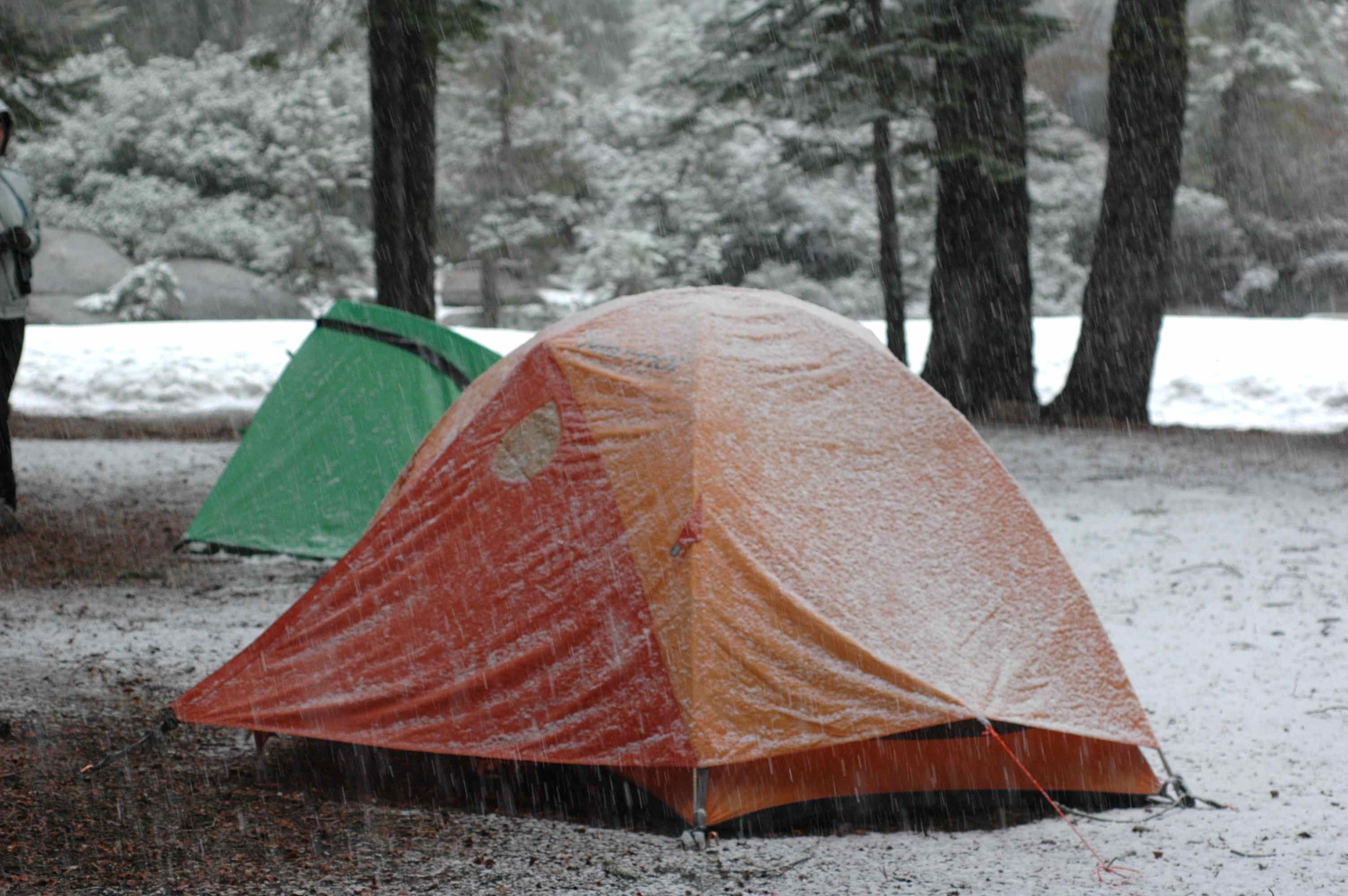
My tent, our first morning in the field.

My tent, our first morning in the field.

We’d known it was going to rain, and I thought it had – a particularly light-sounding rain pattering on my tent throughout the night. When I woke up I thought my tent had been covered in seeds washed loose by the rain. Then I stuck my head outside.

In fact it was better than rain: drier, and still permitting us to boil water for breakfast.

Our stoves boiling water for breakfast.

Our stoves boiling water for breakfast.

Continue reading