Featured paper: the heartbeats of fighting penguins

Viblanc VA, Valette V, Kauffmann M, Malosse N, Groscolas R. 2012. Coping with social stress: heart rate responses to agonistic interactions in king penguins. Behavioral Ecology 23(6):1178-1185.

Most animals live solitary lives, interacting with their own kind only to mate, raise young, or fight. In contrast are group-living animals, from meerkats to humans to Greylag Geese. Their sociality means an easier time locating mates and spotting predators, but it can also mean more disease and competition for resources. This competition can lead to injury and stress.

King Penguin colony. Photo by Liam Quinn.

King Penguin colony. Photo by Liam Quinn.

Breeding King Penguins crowd onto shores in huge numbers and claim tiny territories – about one-half of a square meter – where they incubate their egg and then brood the resulting chick. They have to defend these territories constantly, on average 100 times per hour. This occurs over a tiny space, since the penguins have an egg or chick on their feet and so can’t move much; most aggressive interactions are with neighbors no more than 50 cm away. Stressful interactions may not sound like a big deal – hey, we’re all stressed, right? – but these penguins are trying to maintain a high body temperature in cold conditions and keep their baby warm, and while doing that, they fast for weeks. They do not have energy to waste on stress.

Continue reading

Climate change in the Sierra Nevada mountains

Climate change will affect every corner of the globe in some way, from rising average temperatures to ocean acidification to increasingly extreme and unpredictable weather. It may eventually lead to coastal habitat becoming submerged and the desertification of once-green areas. Currently, however, one of the areas in which climate change exhibits its most dramatic effects is on mountains.

Sierra Nevada mountains

Sierra Nevada mountains

On mountains, the variation in elevation causes habitats to change over relatively small areas. Species may be adapted to just a small strip of habitat within a certain elevational range. With changing climatic conditions, those strips of habitat may move on the mountain, and species then have to follow that strip – track their climatic niche – or stay put and adapt rapidly to the new conditions there.

Continue reading

What a PhD means

The general public–and especially the media–appears to be conflicted over what it means when a person has a PhD. There are three main schools of thought:

1) A PhD means you are an awesome genius and know everything.

2) A PhD means you are an ivory tower elitist and know nothing.

3) A PhD means you belong to a nefarious conspiracy dedicated to lending credibility to lies in order to get money or fame.

Sometimes several of these are combined. Believe both #1 and #3, and you’ve got one of the main arguments of climate change deniers (“Climate scientists are lying and spreading false fear in order to keep their jobs secure, and we know this because we found one climate scientist who says climate change isn’t real!”).

The ivory tower elitist PhDs are in a conspiracy of lies to make the public continue to give them research money, and I believe this because the guy who told me has a PhD, so you know he’s right!

None of these three are true.

Continue reading

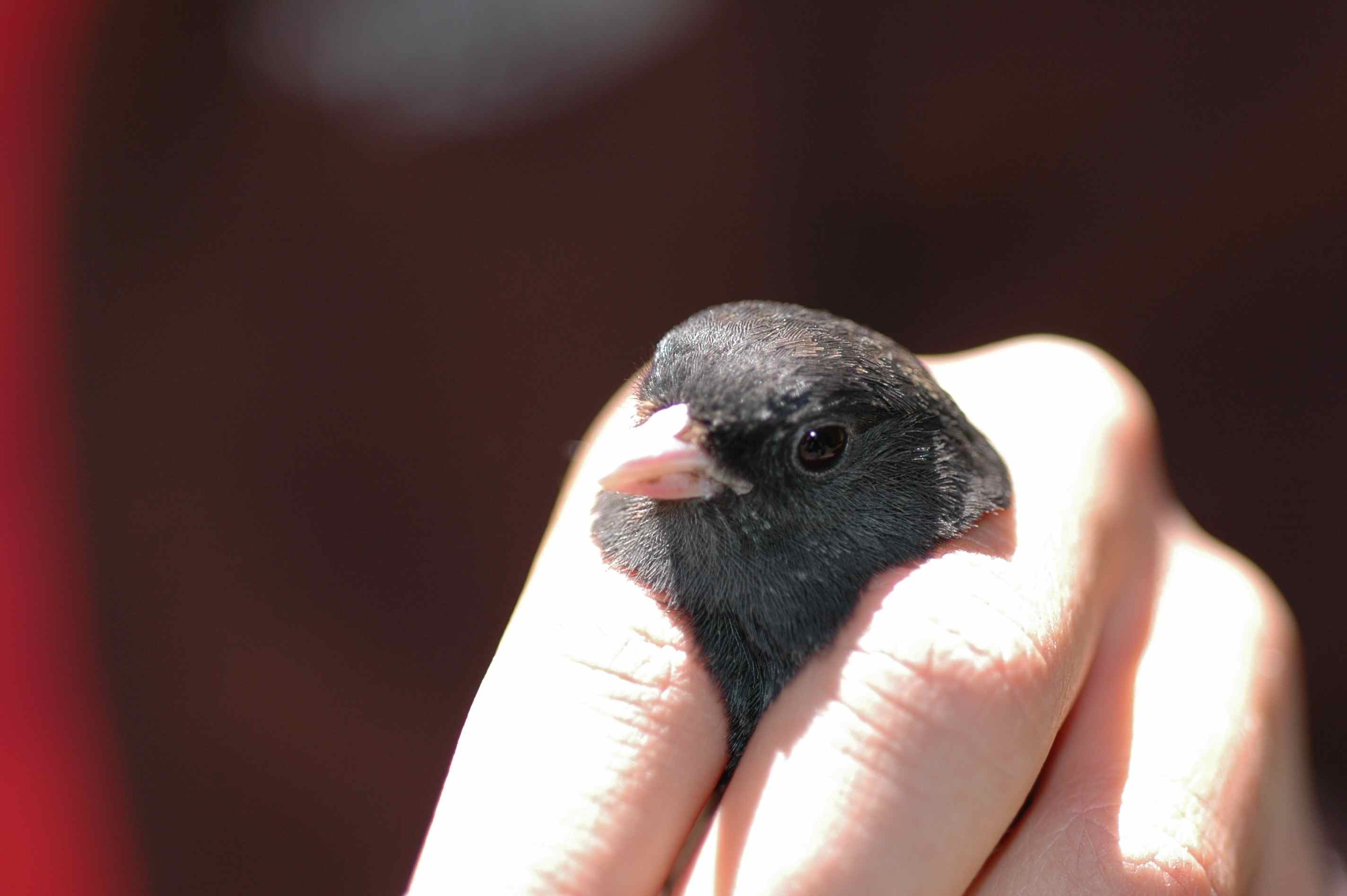
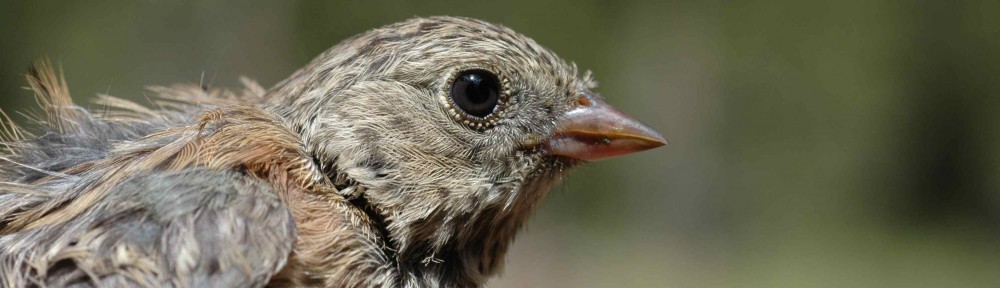
The other juncos

As I mentioned before, I don’t get to be out in the field interacting with the juncos right now. I am, however, making use of the other juncos: the ones that don’t fly away, don’t stress out when I handle them, and are always there when I go to look for them. The ones that live about twenty feet from my office.

I work in a museum, remember?

The other juncos

Continue reading

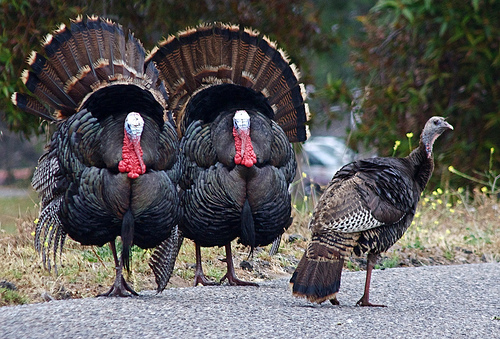
Featured paper: turkeys help their relatives get lucky

Featured paper: Thanksgiving edition. And it’s doubly relevant – it’s about turkeys and family!

AH Krakauer. 2005. Kin selection and cooperative courtship in wild turkeys. Nature vol. 434, pp. 69 – 72.

Wild turkeys males show off in front of females in the hopes of being impressive enough to get to mate. While some males show off alone, others form “coalitions” of two to four males and all display for females together. However only one male in each coalition – the dominant male – ever gets to mate. So why in the world do the other male turkeys help him, if they never get to mate? Why don’t they display alone, where they’d at least have a chance at mating?

[Photo from Smart Kitchen]

Continue reading

This is fun. Is fun the right word?

I’m waiting to find out if my big grant proposal will be rejected without review on an über-technicality.

Hold on while I refresh my email again… nope, still no news.

The error was a small omission of part of a section; basically a poor copy-paste job. It wasn’t my error, but I should have caught it before submitting, as should about eight other people involved in this process – some of whose job description is to catch technical errors in grant proposals, none of whom did – but in the end it’s my proposal, and I’m the one who should have caught it.

I may be allowed to fix the error, or I may be rejected on the spot, without even any helpful feedback (which is half the reason to apply for these things – even if you don’t get the funding, the feedback is valuable).

Isn’t this fun? Suspense! (whimper) Hold on while I refresh my email again…

Junco withdrawal

I miss the juncos. I see juncos around campus, but it’s not the same: they have no bands, so I don’t know who they are. (Except for the weird white-splattered junco, who doesn’t need bands to be distinctive. I was delighted to see him last week.)

I miss those warm, fragile bodies in my hand. I miss going back and finding them again and again.

NOLA

Continue reading

Think like a scientist: clever Hans

Clever Hans was a horse. He lived in the early 1900s, had an article written about him in the New York Times (“Berlin’s Wonderful Horse: He Can Do Almost Everything but Talk“), and has a scientific phenomenon named after him: the Clever Hans Effect.

Why was Hans clever? He could do math – even fractions! He could tell time! He could use a calendar! He could recognize currency! He could tell the difference between musical tones! He could identify people from photographs! He could not only understand German but read and spell it! Basically, clever Hans was smarter than your Honor Roll student. And he was a horse.

That seems plausible, right?

Right?

Extremely historically accurate depiction of clever Hans doing math

Many animals are highly intelligent. For example, I have no doubt that psychologist Irene Pepperberg’s late, great African Grey Parrot Alex could have performed most of clever Hans’ tasks. But, sad to say, clever Hans was a fraud.

Continue reading

Adventure of a freelance science mouse

Two of my labmates study chipmunks. Recently they have been working with an engineer to develop a small tag that they can attach to a chipmunk to record the chipmunk’s movements. This, if it works, will let them “see” what the chipmunk is doing without actually watching–and bothering–the chipmunk, which would be great: one of the difficulties of behavioral ecology is that, for animals as for subatomic particles, observing the thing often affects the very nature of that thing.

Part of developing this tag is being able to check how well it works. Unfortunately, our lab doesn’t have any chipmunks just hanging around on which to test the tag. So instead, for an unofficial, exploratory test run, we recruited one of my domestic mice.

Oreo the freelance science mouse

Continue reading

Rituals

Ritual is everywhere in the natural world. From braving flight over expansive, stormy seas, to the tenuous, exhausting work of rearing chicks, to squabbling for social rank on the wintering grounds, birds tread and hop and fly recognizable annual patterns.

And so do field biology graduate students.

Our most obvious ritual is the field season. Our study subjects follow an annual pattern and so must we: the ornithologists out May through August, give-or-take; my labmates the high-elevation chipmunk researchers waiting impatiently in June for the snow on Tioga Pass to melt; those studying South American fauna gone in our winter for the Southern Hemisphere summer. Only the tropical biologists are unpredictable.

Continue reading