Getting a (science) PhD is not the most terrible idea in the world

It seems as though, every few months, an article called something like “Never EVER Get A PhD, It WIll Ruin Your Life Forever!!” is published. It is then met with various response articles, either of the “Yes It Ruined My Life Too” or the “Actually PhDs Are Completely Worthwhile, You Jerks” varieties, and fades into obscurity just in time for the next article to come out.

I really don’t want to be another one of those response articles, but I think it’s worth writing a few things here that I generally don’t see mentioned in the PhD hate/lovefests. If you don’t care about PhDs, here is a fluffed-up Anna’s Hummingbird so this post isn’t a total loss.

hummingbird_fluffed

Continue reading

Birds who can see what we can’t

Seeing in the ultraviolet

Even in the visible spectrum, birds can discriminate more subtle color distinctions than we can, thanks to their at-least-five functional cone photoreceptor types (we only have three). But it’s in the ultraviolet (UV) part of the spectrum where they literally can see what we can’t.

Somewhat disappointingly, birds don’t generally have secret UV patterns the way that, for example, some flowers do (Andersson 1996). Instead, they seem to use UV to augment signals we can already see: bluebirds turn out to reflect UV, as do the spots on some thrushes, and so on. But the UV can still contain information invisible to our eyes. In the Alpine Swift and the European Starling, better-fed chicks reflect more UV from their skin; their parents can use this information to give more food to scrawny chicks in good times, or to cut their losses and favor the healthiest chicks in lean times (Bize et al. 2006).

Starling adult and fledglings - who may be too old and feathered to reflect much UV from their skin now, but are definitely still hungry. Photo by Tina S. White.

Starling adult and fledglings – who may be too old and feathered to reflect much UV from their skin now, but are definitely still hungry.
Photo by Tina S. White.

Continue reading

Genetics is complicated: mouse edition

Genetics is complicated. I have taken courses to this effect; I have taught the concept in Introductory Biology. Mendel’s peas with their neat logical Punnett squares were a lucky rarity—each trait governed by just one gene, each of those genes on a separate chromosome. The genetic basis of the vast majority of traits is far more complex. If the genes involved aren’t physically linked (called “linkage disequilibrium”) then they are pleiotropic (influencing many different traits at once), or epistatic (modified by other genes), or simply so subtle that their effects disappear in the noise of environmentally-caused trait variation. Relating traits to genes is hard.

I know this; I understand it; but until recently, I had never actually seen it. Then my pet mice decided to give me an object lesson in genetics.

What happens when you think you have all female mice, but you actually have mostly females and one male?

This happens. (Incidentally, doesn't this look like a mouse version of the Canadian flag?)

This happens.
(Unrelatedly: doesn’t this look like a mouse version of the Canadian flag?)

Continue reading

Avian flight II: albatross flight

Albatross spend most of their lives in flight. They forage in the open ocean, where food may be separated by many miles, and they head for islands only to breed. They have been documented making around-the-world trips in just 46 days (take that, Jules Verne!) and flying for weeks at an average speed of 950 km per day (Croxall et al. 2005). That’s 40 km per hour, so you could beat them in a car (if you could stay awake that long), but still!

I am awesome. Photo by Tony Schneider

I am awesome.
Photo by Tony Linde

How can an animal spend so much time in such fast flight? How do albatross not waste away and die from the sheer energetic effort?

Continue reading

Another freelance science mouse

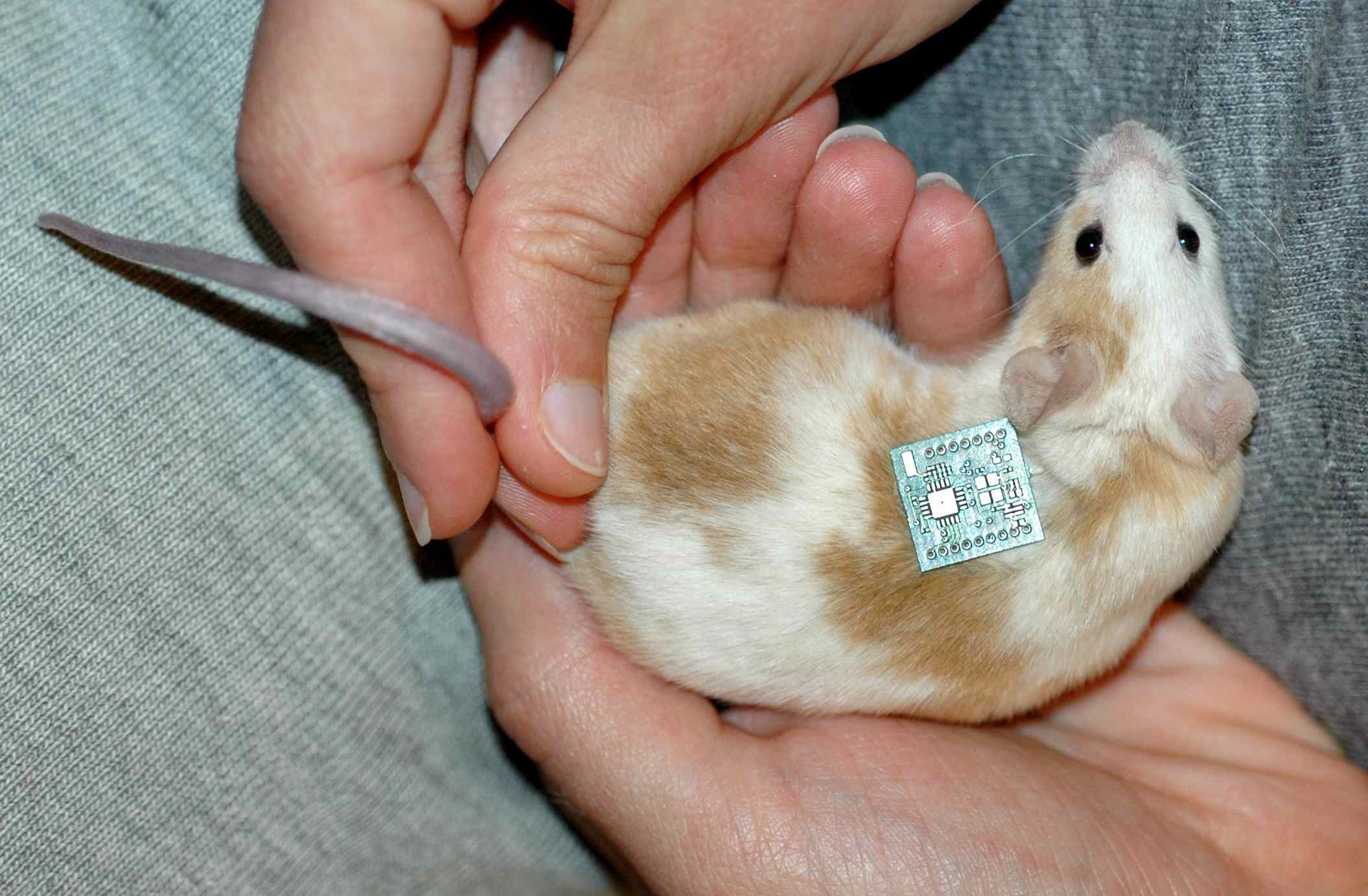
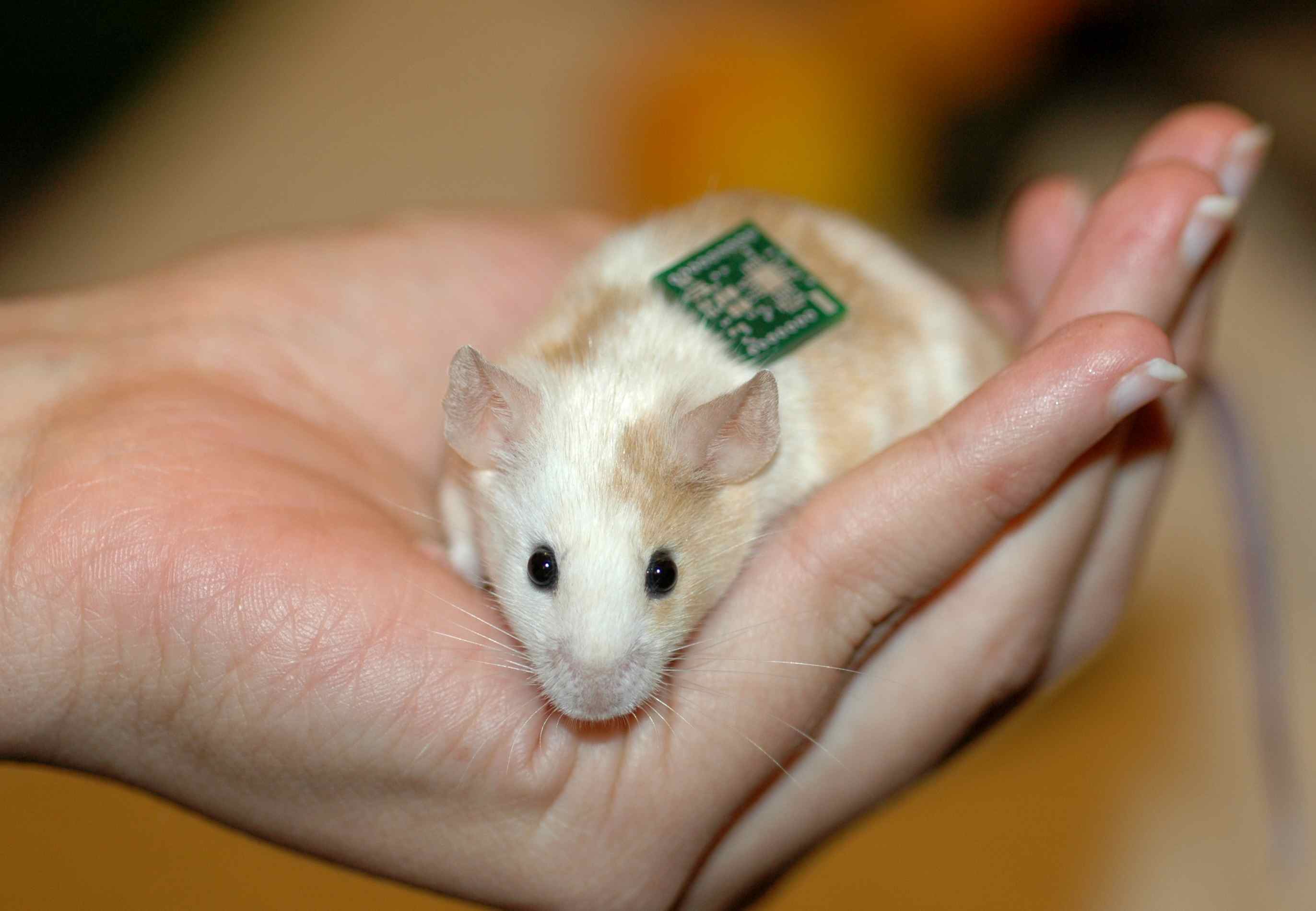
A few months ago, my labmates who study chipmunks enlisted the help of one of my pet mice to test-run a chipmunk-monitoring device that they are hoping to use in the field this summer. That went well, and now they’re calling on another one of my mice for a simpler test: to see how long the glue they’re planning to use will keep their device attached to rodent fur. They want glue that will stay attached long enough for them to get good data, but not so long that the monitor becomes a permanent part of a chipmunk’s life.

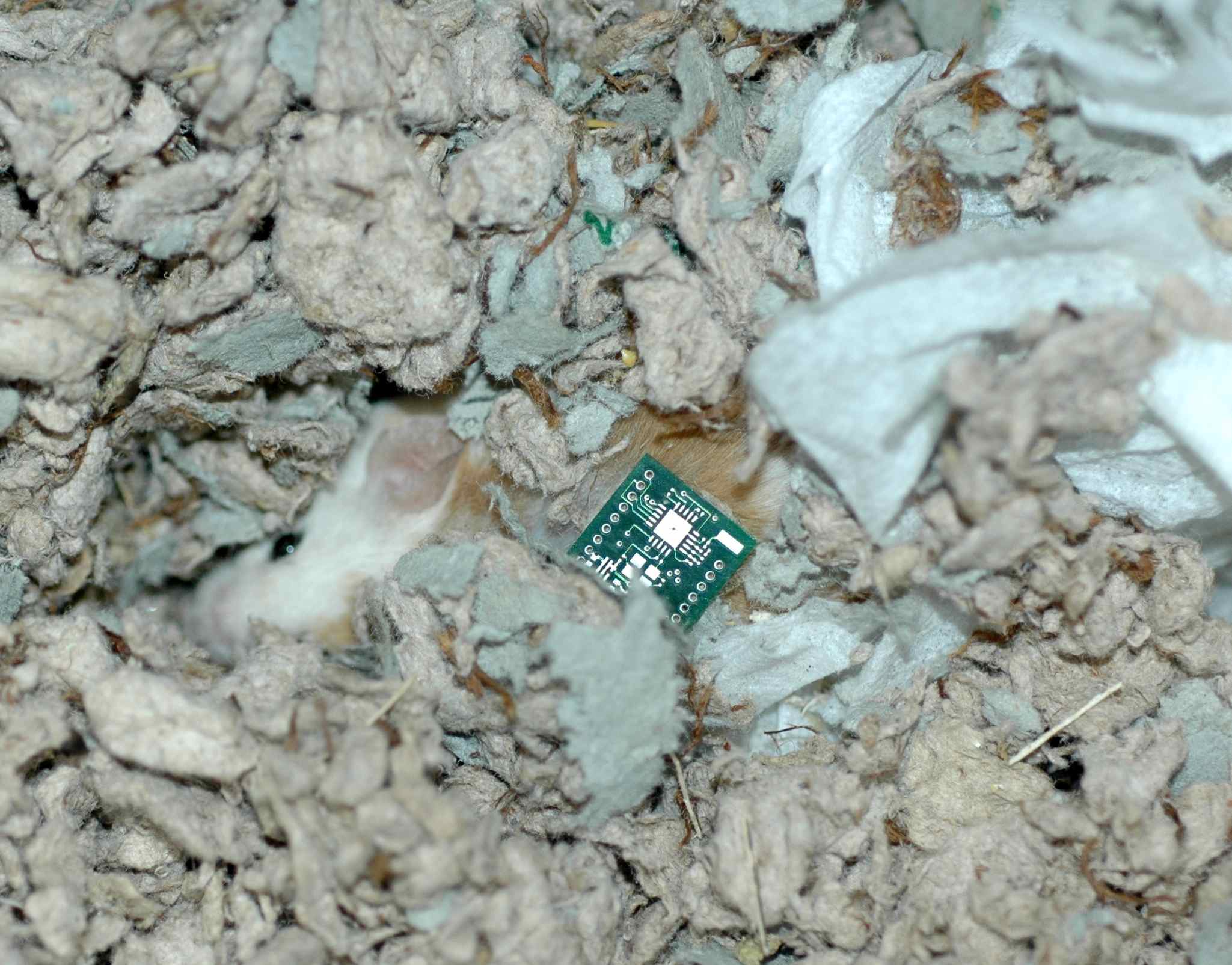
Since chipmunks spend a lot of time in burrows, we chose my most burrow-loving mouse, who likes to spend all of his time hiding underneath things. He was not pleased to be forced out into the open.

Porter with the test chip glued to his back

Porter with the test chip glued to his fur

So far he hasn’t seemed to care a bit about the chip. However, he is quite annoyed that I now dig him up daily to check whether it is still attached. He’s not really a people mouse.

PLEASE just leave me alone.

PLEASE just leave me alone.

Much better.

Much better.

The incredible story of the Black Robin

This is the Black Robin (Petroica traversi), a species found only in the Chatham Islands, New Zealand:

Black Robin. Photo originally by schmechf, modified by Wikimedia Commons.

Black Robin. Photo originally by schmechf, modified by Wikimedia Commons.

This was the total world population of Black Robins in 1980:

black_robin5

Five birds. That’s not great—and it gets worse. Guess how many of those were adult females?

One.

Almost any conservationist would tell you that this was a hopeless situation. You can’t restart a species from one female—especially when that female is a whopping eight years old already, in a species that generally lives four years.

Continue reading

Dinosaurs probably looked just as awesome as you think they should have

When you’re little, you play with toy dinosaurs all bright red or blue or painted spotted with many colors. You fill coloring books with purple velociraptors taking down plaid apatosaurs. Then you get older and learn about camouflage; and you watch nature documentaries of brown felines taking down brown gazelles in tall brown grass; and—zebras notwithstanding—you start to think that probably dinosaurs weren’t plaid after all.

Well, buck up! They—at least some of them—probably did look really awesome.

Continue reading

Research is personal (two quotes)

Quote 1 – preface to reviews accompanying the rejection of my application for a grant

“In reading the reviews, please keep in mind that the reviews are… [not addressed] to you, the investigator… Some reviews may contain irrelevant, non-substantive, erroneous or ad hominem statements.”

I love that last sentence – it’s both horrible and hilarious. I would probably find it less hilarious if there had actually been any ad hominem attacks in the reviews I received, but my reviewers were all professional. I can easily imagine how there might be less professionally objective reviews, however.

"This applicant is, personally, the sole reason why we haven't solved deforestation and climate change! Not only shouldn't we give her money, we should actually steal money from her when she isn't looking! Come on, Review Committee, who's with me?"

“This applicant is, personally, the sole reason why we haven’t solved deforestation and climate change! Not only shouldn’t we give her money, we should actually steal money from her when she isn’t looking! Come on, Review Committee, who’s with me?”

Continue reading

Learning how to eat like a bird

When you’re an altricial baby bird, life is either great or over. If it isn’t over—that is, assuming you aren’t eaten by a mouse, chipmunk, snake, slug, coyote, etc.—then your life is sitting still in the warm and having food shoved in your face. Excellent.

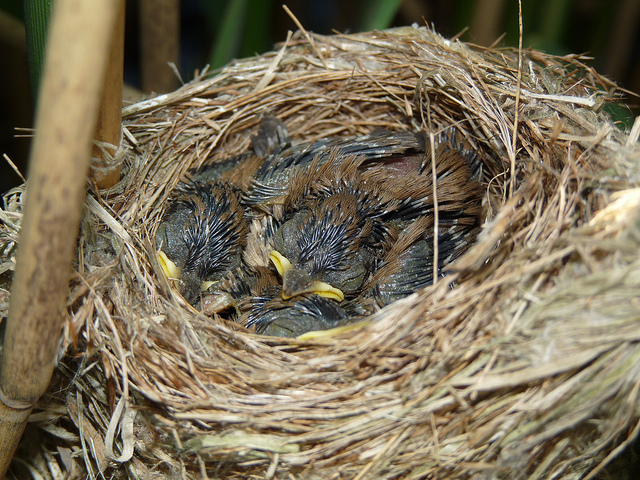
Reed Warbler chicks. This is the life.Photo by nottsexminer

Reed Warbler chicks. This is the life.
Photo by nottsexminer

But that doesn’t last. After you fledge, your parents keep feeding you, but soon they start feeding you less. You can follow them around begging, but soon even that doesn’t do any good. You have to face it: you need to learn how to catch your own food. But that food flies and crawls and runs away!

Doesn't matter. I can catch it.Photo by David Mikulin

Doesn’t matter. I can catch it.
Photo by David Mikulin

We tend to think of wild animals as “instinctually” being able to do everything they do, but in fact, a lot of those skills have to be learned and practiced. Two of my favorite scientific papers looked at how fledgling birds developed their foraging skills. As adults, they were the expert bug-catchers you see all the time; but as fledglings, they did—well, about as well as the four-year-old child of a champion fisherman would do, the first time you handed her the fishing rod.

Continue reading

Avian flight I: built for flight

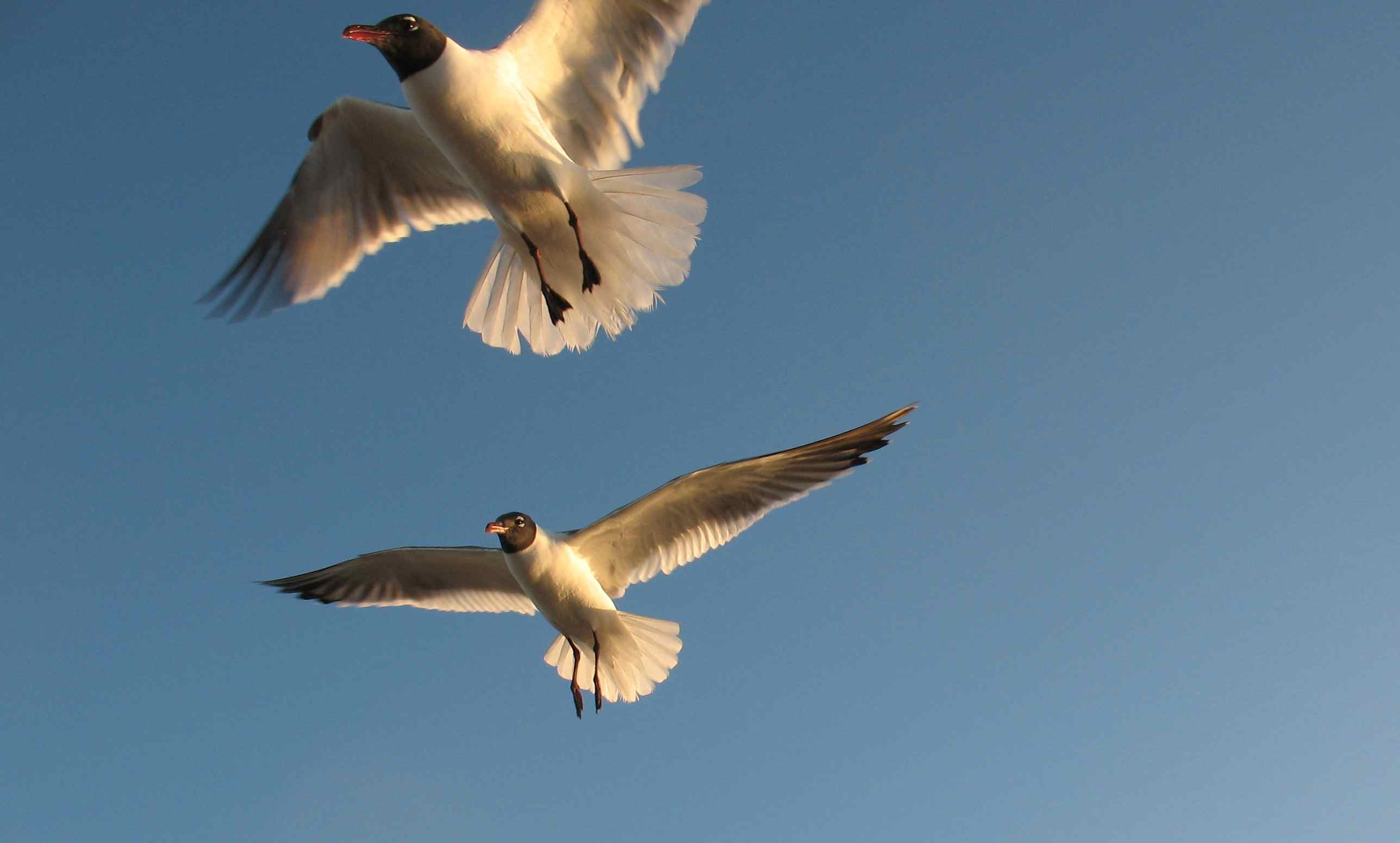
Laughing Gulls in flight

Laughing Gulls in flight

Everything about avian morphology has been shaped by the requirements of flight. Flight is hard. Animals are heavy, being largely composed of water, and air is not dense; you have to work hard to generate any force by manipulating air. The problem for any flying animal is to be light yet powerful – and to still be a viable animal, capable of eating and storing energy and making babies. A hypothetical weak but extremely light animal – think an air-jellyfish – might be able to fly, but would probably starve. While the ocean is filled with floating particles that real jellyfish can catch simply by passively floating, the air is not so bountiful. (You could argue that web spiders filter-feed in air, but… all right, I don’t know if air-jellyfish are impossible. I think we’re getting off-topic here.)

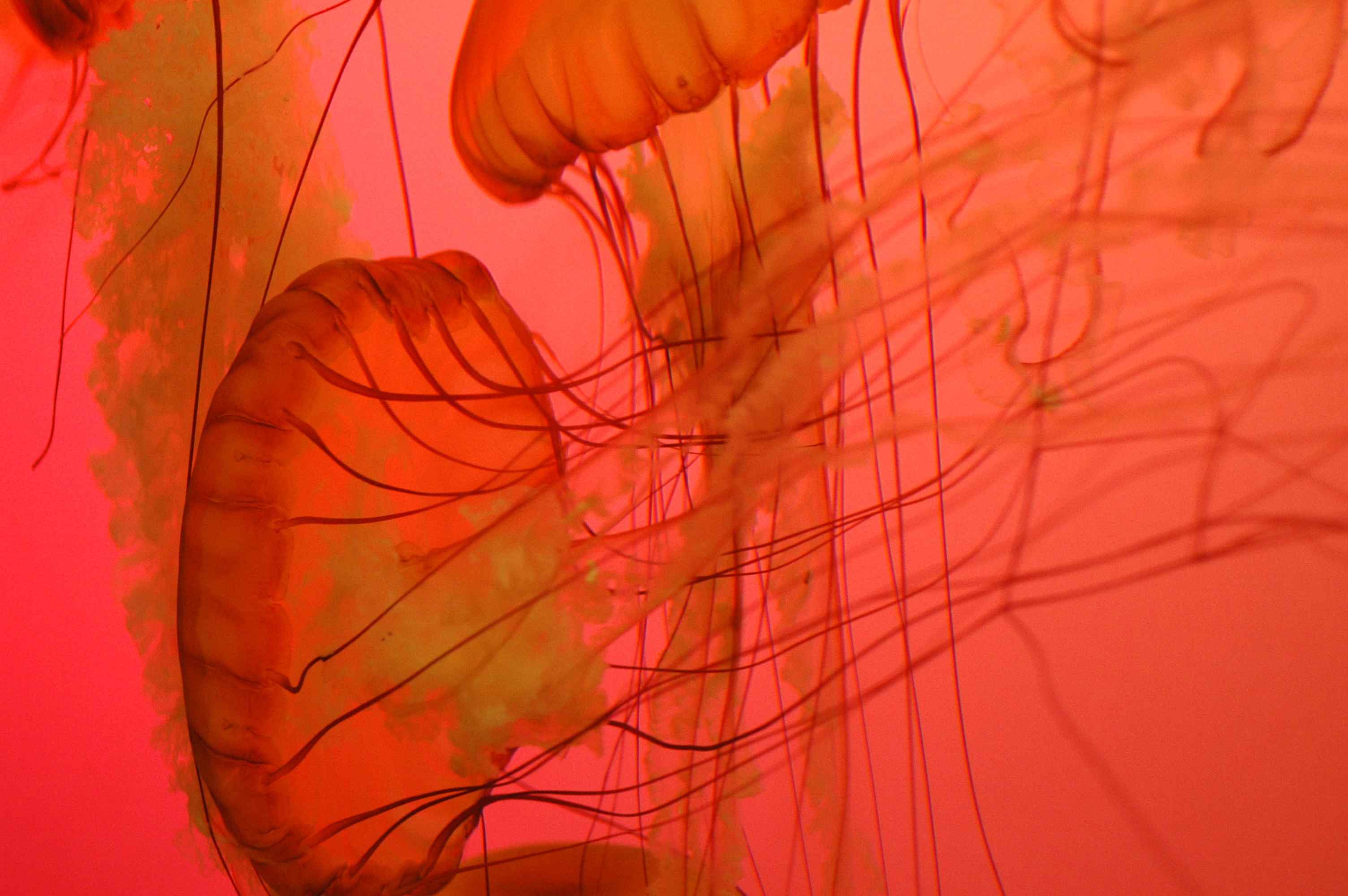
Air-jellyfish floating in a pink sunset.(Or, Northeast Pacific sea nettle in an artistically-lit tank at the Shedd Aquarium.)

Air-jellyfish wafting through a pink sunset.
(Or, Northeast Pacific sea nettle in an artistically-lit tank at the Shedd Aquarium.)

In any case, birds didn’t start out as light, thin, filmy creatures. They started out as small raptor-y dinosaurs. Natural selection acts only on the traits that are present: massive change to the shape of an organism is hard. (Not impossible! But comparatively rarer.) Birds started out with backbones, four limbs, a head, two eyes, etc., and they evolved flight from that initial morphology.

But how do you make a dinosaur that can fly? Dinosaurs are strong, yes, but they are heavy. Bones are heavy; muscle is heavy; fat is heavy; teeth are heavy.

Continue reading