Unprecedented bycatch

Recently we caught, as bycatch, two birds from two orders that we had never caught before. (Order being a high hierarchical level of organization of species relatedness, as in kingdom-phylum-class-order-family-genus-species.) Both were simultaneously thrilling and terrifying, although for different reasons.

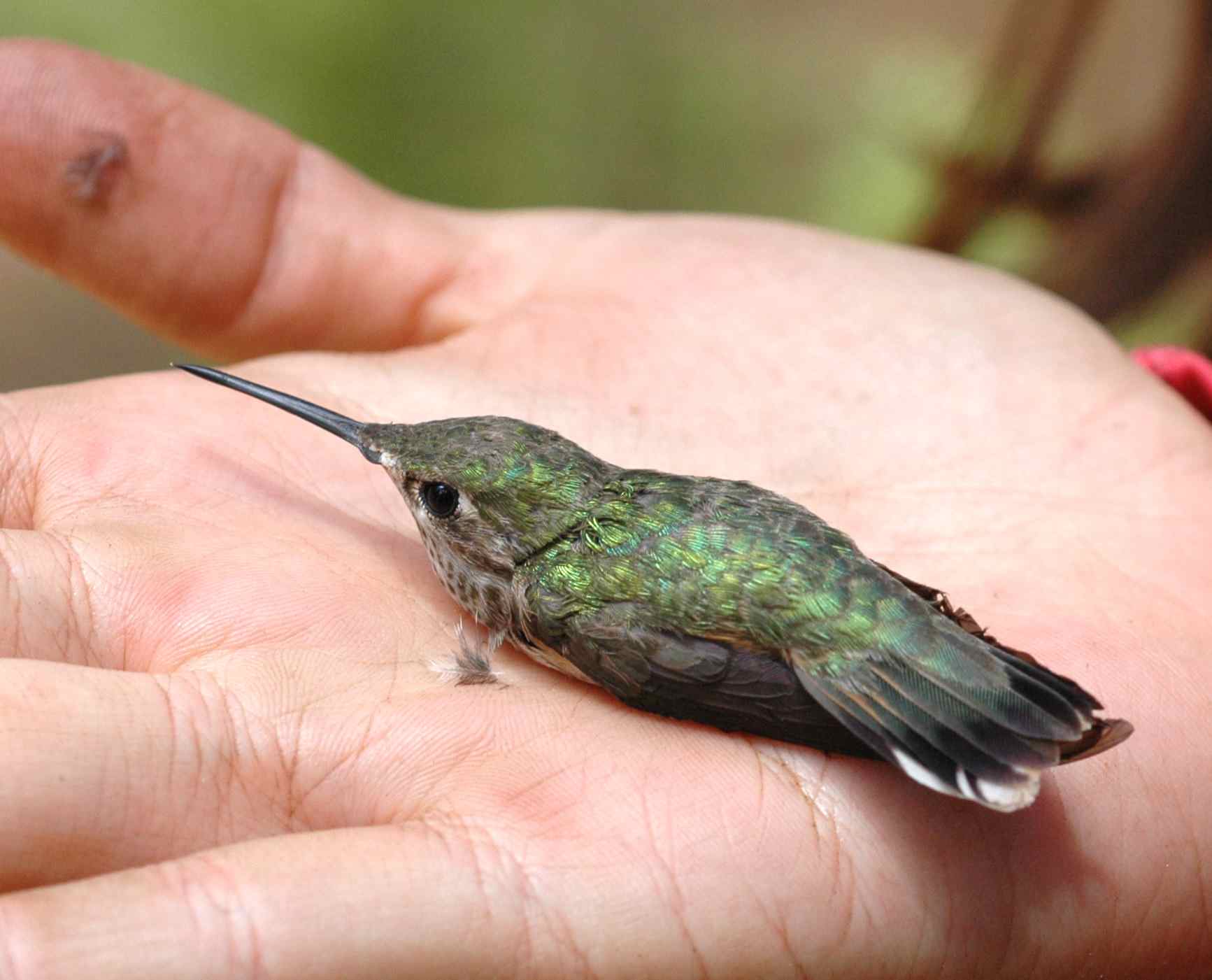
Female Calliope Hummingbird (I think?)

b2013-2_hummingbird

This beautiful bird was terrifying to catch because hummingbirds are very fragile. We don’t expect to catch them in our nets—the mesh size is large enough that in most cases a hummingbird could zoom right through—and in fact we hope not to catch them, since they can be especially stressy little creatures. They are also strange birds to handle, not permitting any of the usual bird grips: bander’s grip, a very secure and safe grip, puts your fingers around a bird’s neck, but hummingbirds have too-tiny necks for it; photographer’s grip relies on grasping the bird’s thighs, and hummingbirds’ thighs are much too short.

Fortunately I was able to quickly extract our hummingbird from the net. She rested on my palm for about thirty seconds, then—just after this next picture was taken—zoomed off high into the canopy.
b2013-2_hummingbird2

Continue reading

Return of the bycatch

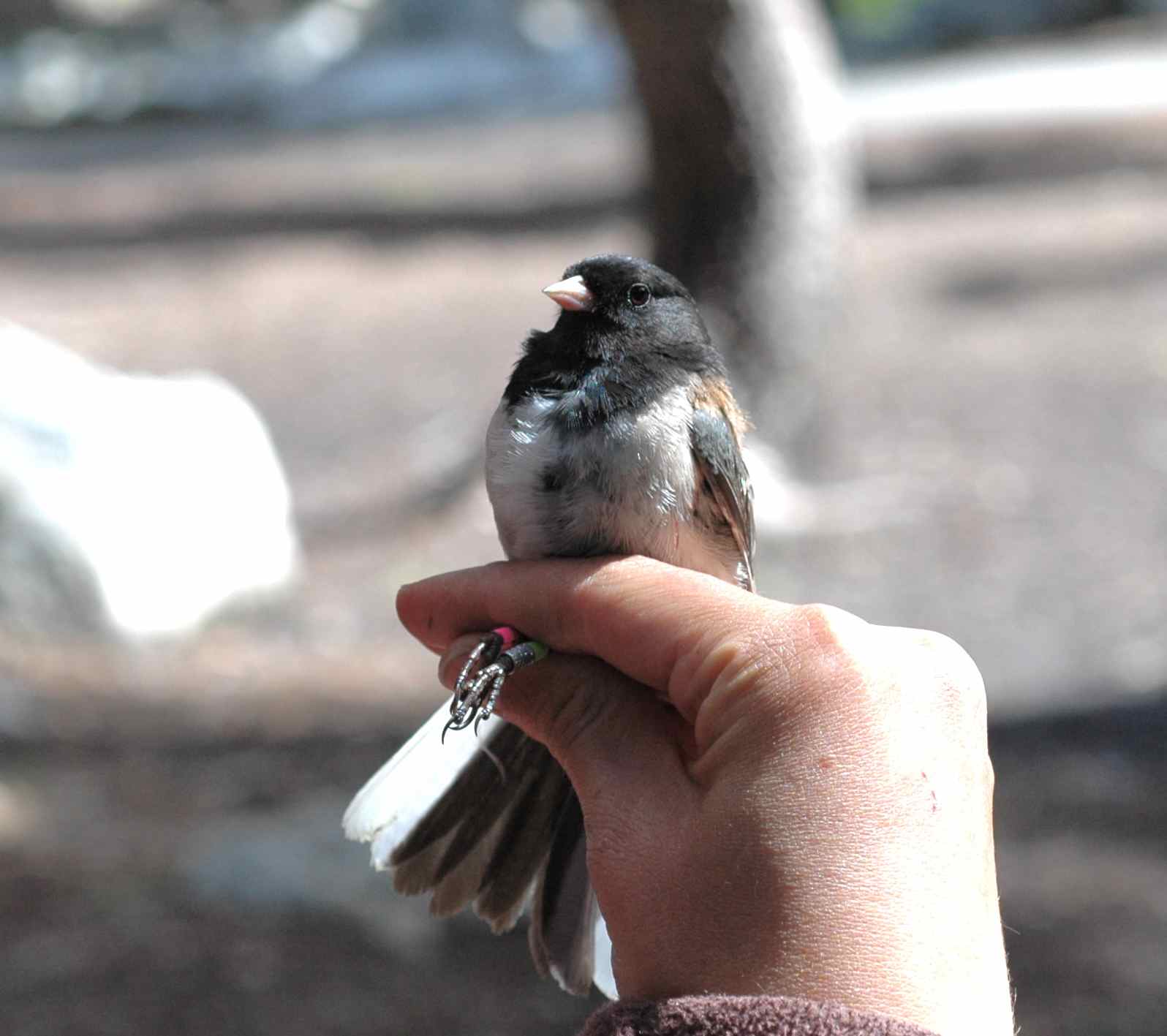
We only try to catch juncos, but when you have nets up in good habitat, some accidental capture of other species seems to be inevitable. These other species—our “bycatch”—are quickly extracted from the nets and released, although not without a few photos first.

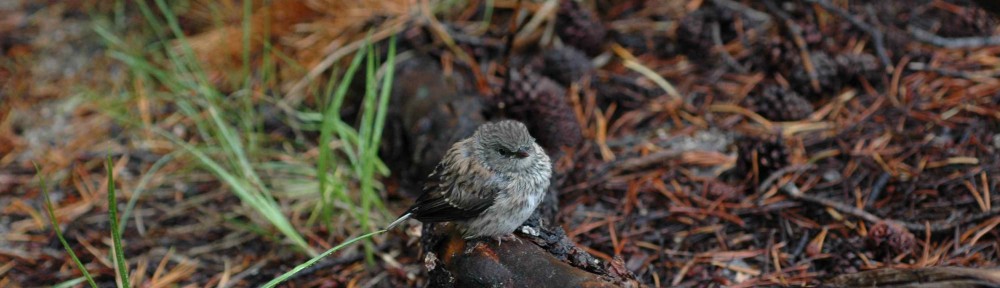
Fox Sparrow

Do you know who I am?

Do you know who I am?

Unhand me at once!

Unhand me at once!

Continue reading

Damaged feet, but still hopping

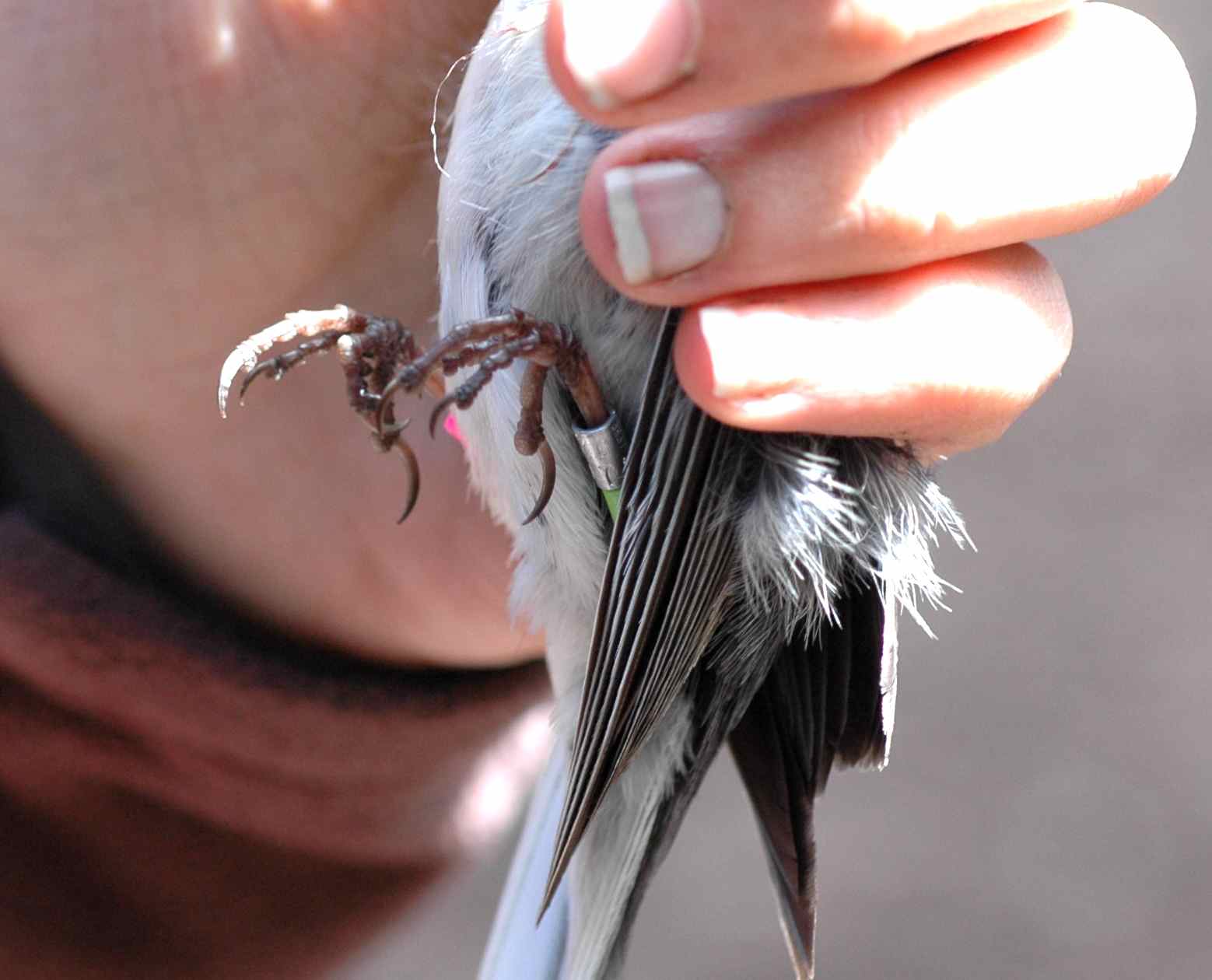
Juncos use their feet more than many birds, not just to perch but to hop about while feeding. Their legs and feet, viewed close, are a contradiction: incredibly slender and fragile-seeming, but also covered in a hard, scaly, tough surface. You hope for their sake that the fragility is the illusion and the toughness reality, but of course each is a little true.

LANK has a permanently bent toe on his right foot. When he perches, his weight rests on what should be the top of the toe, and I imagine the same is true when he stands on the ground.

LANK

LANK

The bent toe is the left-most top toe on his right foot

The bent toe is the left-most top toe on his right foot.

2013-feet_LANK

View from the other side, for comparison with his healthy left foot.

Continue reading

What bird colors can tell you

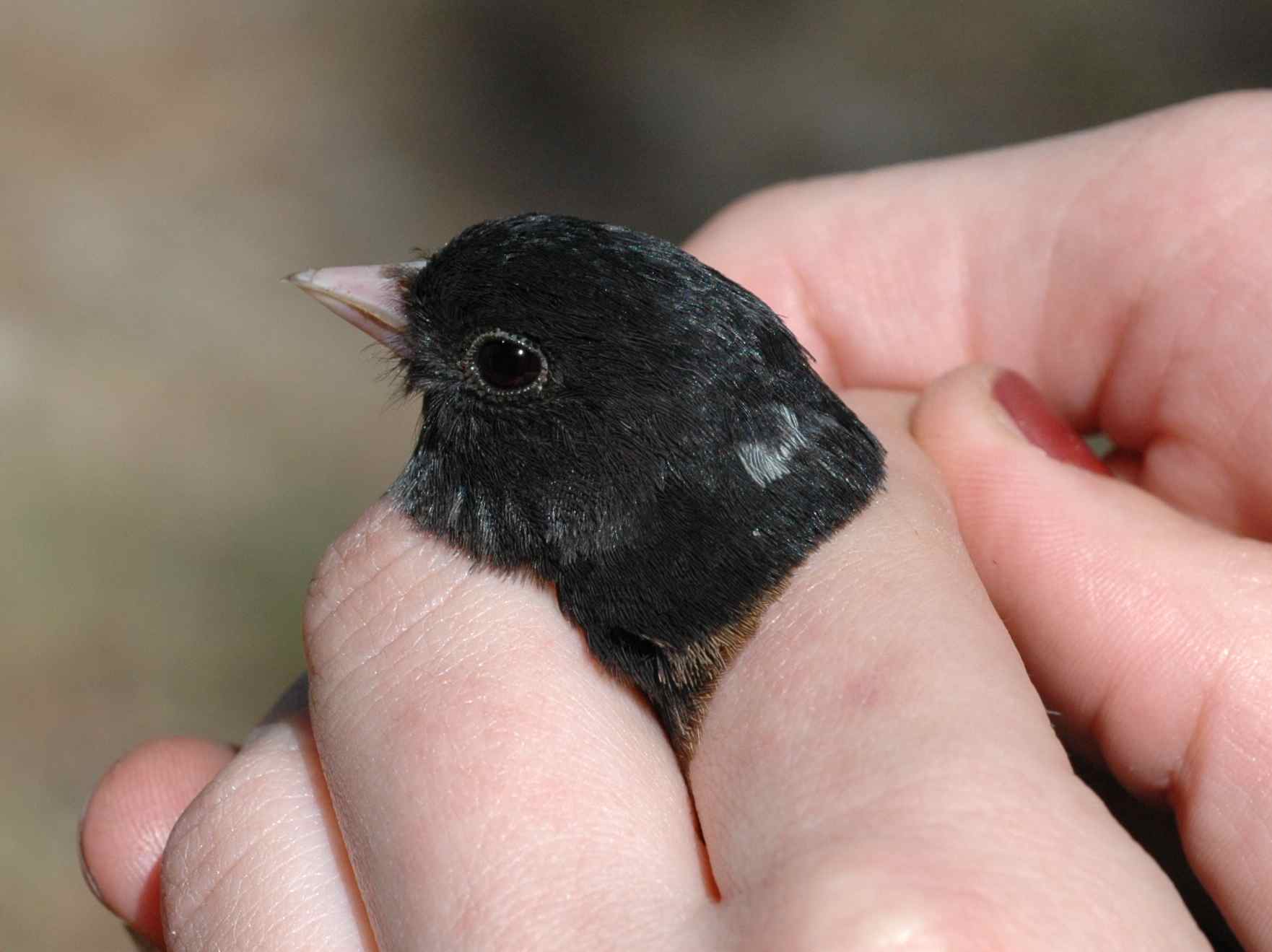
Birds need to know a lot about each other. They need to know things like who will be the best parent; who will pass on the best genes; who could defeat them in a fight; and which offspring is worth investing in the most. One of the ways that birds can perceive such information about each other is by observing each other’s color signals—and the more researchers study these, the more it becomes clear that birds can tell a lot from color alone.

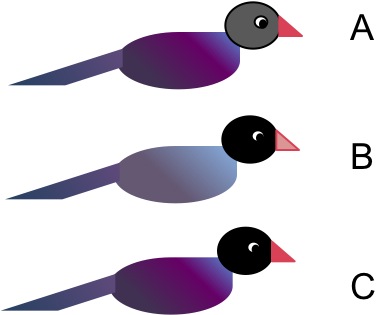
Let’s make up a bird species – the Superb Junco. This imaginary species has a black hood and pink bill like the Oregon Junco, but its body and tail are iridescent blue-violet. Here is an illustration of three individuals of this species:

superb_juncosThese individuals are clearly different: A has a paler head, B has a paler bill and is less brightly shiny, and C is brightly colored in all aspects. But what does that tell us?

Continue reading

One hundredth junco

I forgot to mention in the last post: I banded my one hundredth junco a few days ago. (Well, I didn’t band him; I’m training field assistants to be able to band, so one of them banded him. But I caused him to be banded.)

Me with RROA, my hundredth junco.

Me with RROA, my hundredth junco.

We banded him RROA, which is a combination with a history: in my previous work on House Wrens, RROA was a male wren who managed to breed for three years, which was much longer than any of our other wrens. He was a bit of a celebrity. Here’s hoping that the combination brings such luck to junco RROA too.

First juncos of the 2013 field season!

I got back from our first bout of field work yesterday, and I can say that if things keep going the way they did, we’re going to be banding a lot of juncos this year. That is excellent: the more we band, the more we can identify individually by sight, allowing us to observe the behavior of each. It’s much more informative to be able to say “KARL chased RRAY” than “one junco chased another junco”. Too, when we band them we also take measurements and pictures, so we can relate their behavior to things like condition and size.

Male GILA. The bands on his legs are read top-left, bottom-left, top-right, bottom-right: he has Green, shrImp, Lime, Aluminum, hence GILA.

Male GILA. The bands on his legs are read top-left, bottom-left, top-right, bottom-right: he has Green, shrImp, Lime, Aluminum, hence GILA.

GILA had an unusual white feather on the back of his head.

GILA had an unusual white feather on the back of his head.

Continue reading

A heartwarming story, sort of

A few weeks ago, one of my officemates and I were discussing how dangerous it is to be a baby bird when he mentioned that among the creatures that will eat young birds—rodents, deer, ants, slugs—are Western Scrub Jays. “I’ve seen them hunt down and eat young fledglings,” he said. So when, this weekend, I saw a scrub jay pecking at something small and cheeping, I dropped my grocery bags and ran.

The victim was a young fledgling, probably no more than a day or two out of the nest. He cowered on the ground when I reached him. I looked around for his parents, but although there were many spectators peering down from the branches—European Starlings, Chestnut-backed Chickadees, Bushtits—none of them seemed upset. They were there to watch a show, not defend a baby. And although I wasn’t sure what species the fledgling was, I could tell he was too big to be a chickadee or a Bushtit, and he lacked the long-faced look of young starlings.

Scrub jays are smart birds, and I knew if I left the fledgling there, he would go right back on the menu. Too, from the way he huddled and didn’t move, I worried that he was injured. I took him home.

Rescued fledgling

Rescued fledgling

Continue reading

Higgledy piggledy, zoologistically

Recently my mom sent me this link to a collection of “higgledy piggledy” (or “double dactyl”) poems. These poems are a bit like limericks, in that they are short, catchy, and usually silly. Since several of the poems were science-y, I thought I’d write some zoologically themed ones of my own. (I didn’t follow the form perfectly, but I did my best.)

Also: fear not, this does not mark the beginning of this becoming Katie’s Nature Poetry Blog. Tough Little Birds’ regular scientific programming will resume shortly.

————————————–

Chrysopelea

High-soaring leglessness

floating through canopy:

fast transportation with

no way to brake.

Aerodynamically

he’s a mere glider but

anyway we say he’s

“flying,” this snake.

Continue reading

In praise of Canada Geese

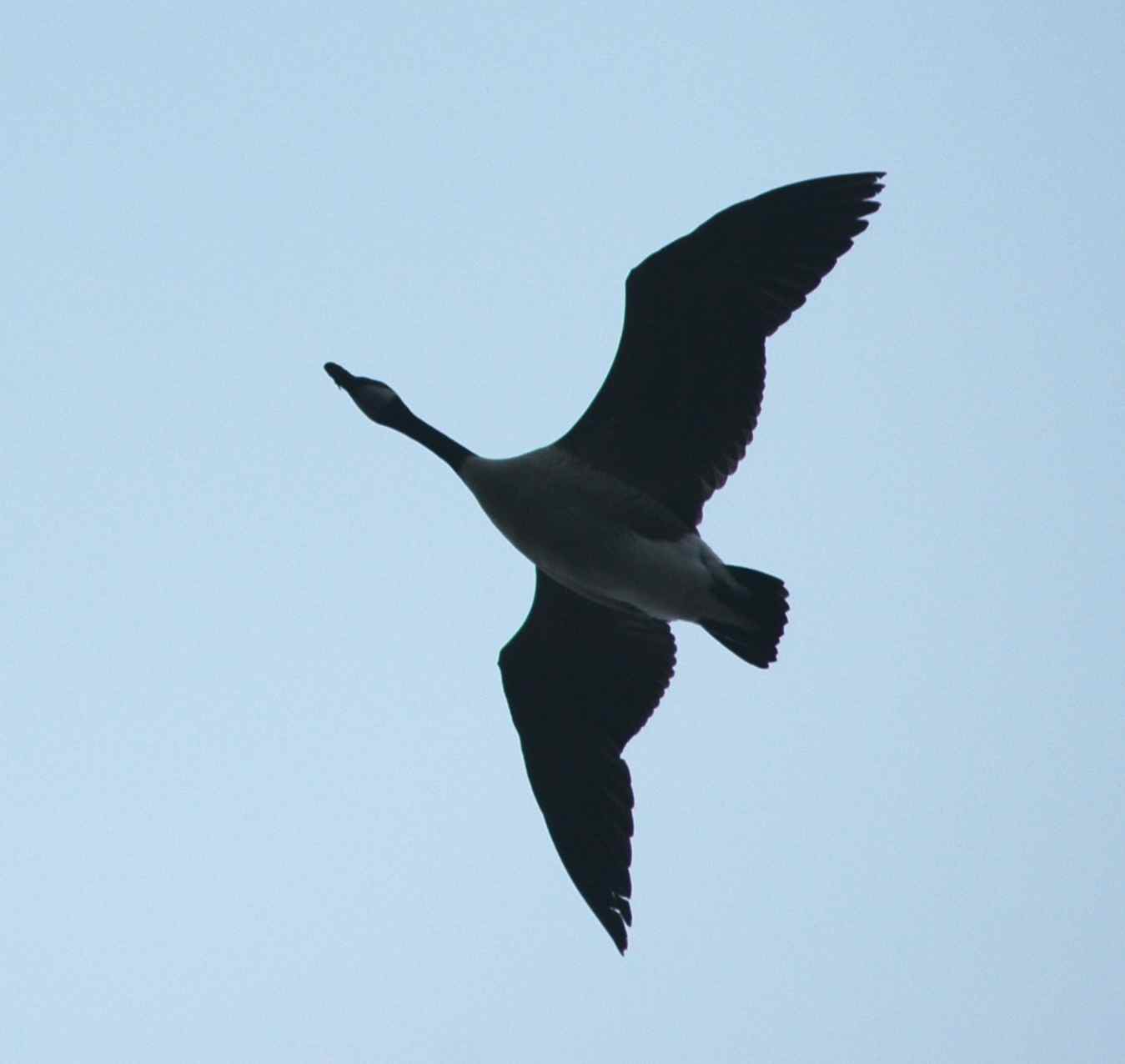
Canada Goose in flight.

Canada Goose in flight.

I volunteer with an education program at a prison. Clear sight lines from the guard towers being essential in a prison, there isn’t much cover, so there aren’t many birds. I’ve seen House Sparrows and Mallards and pigeons. The inmates report that seagulls are prone to getting caught in the barbed wire that tops the fences. The inmates don’t have much sympathy for the seagulls, since they’ve had to try to protect Mallard ducklings from marauding seagulls in the past, generally unsuccessfully.

Recently I saw a Red-winged Blackbird and a Common Starling both trying to claim the same bit of fence as their own. I can’t imagine why they wanted the fence (perhaps so that they could listen in on our class and learn how to solve “3 is 60% of what?”, too?), but it was exciting to see them. Serious birders have state bird lists; I don’t have that, but I do have a mental prison bird list, and both of those species were firsts.

Continue reading

Birds who can see what we can’t

Seeing in the ultraviolet

Even in the visible spectrum, birds can discriminate more subtle color distinctions than we can, thanks to their at-least-five functional cone photoreceptor types (we only have three). But it’s in the ultraviolet (UV) part of the spectrum where they literally can see what we can’t.

Somewhat disappointingly, birds don’t generally have secret UV patterns the way that, for example, some flowers do (Andersson 1996). Instead, they seem to use UV to augment signals we can already see: bluebirds turn out to reflect UV, as do the spots on some thrushes, and so on. But the UV can still contain information invisible to our eyes. In the Alpine Swift and the European Starling, better-fed chicks reflect more UV from their skin; their parents can use this information to give more food to scrawny chicks in good times, or to cut their losses and favor the healthiest chicks in lean times (Bize et al. 2006).

Starling adult and fledglings - who may be too old and feathered to reflect much UV from their skin now, but are definitely still hungry. Photo by Tina S. White.

Starling adult and fledglings – who may be too old and feathered to reflect much UV from their skin now, but are definitely still hungry.
Photo by Tina S. White.

Continue reading