The amazing fox domestication experiment; or, how your puppy got floppy ears and a waggly tail

More than fifty years ago, Russian scientists began an experiment in domestication. At that time, silver foxes had been raised for fur for about 100 years already, so their care and breeding was well known. The scientists began their project like this: they would approach the cage of a silver fox and note its response. The fox would crouch, ears flattened, snarling in fear, or else back away as far as it could until its body was vertical against the back wall of the cage. All of the foxes were frightened of the humans—but some less than others. The scientists chose the foxes that showed the least fear of humans, and bred them. Then they did the same with the pups, raising up and breeding the least-frightened of them; and so on and so on.

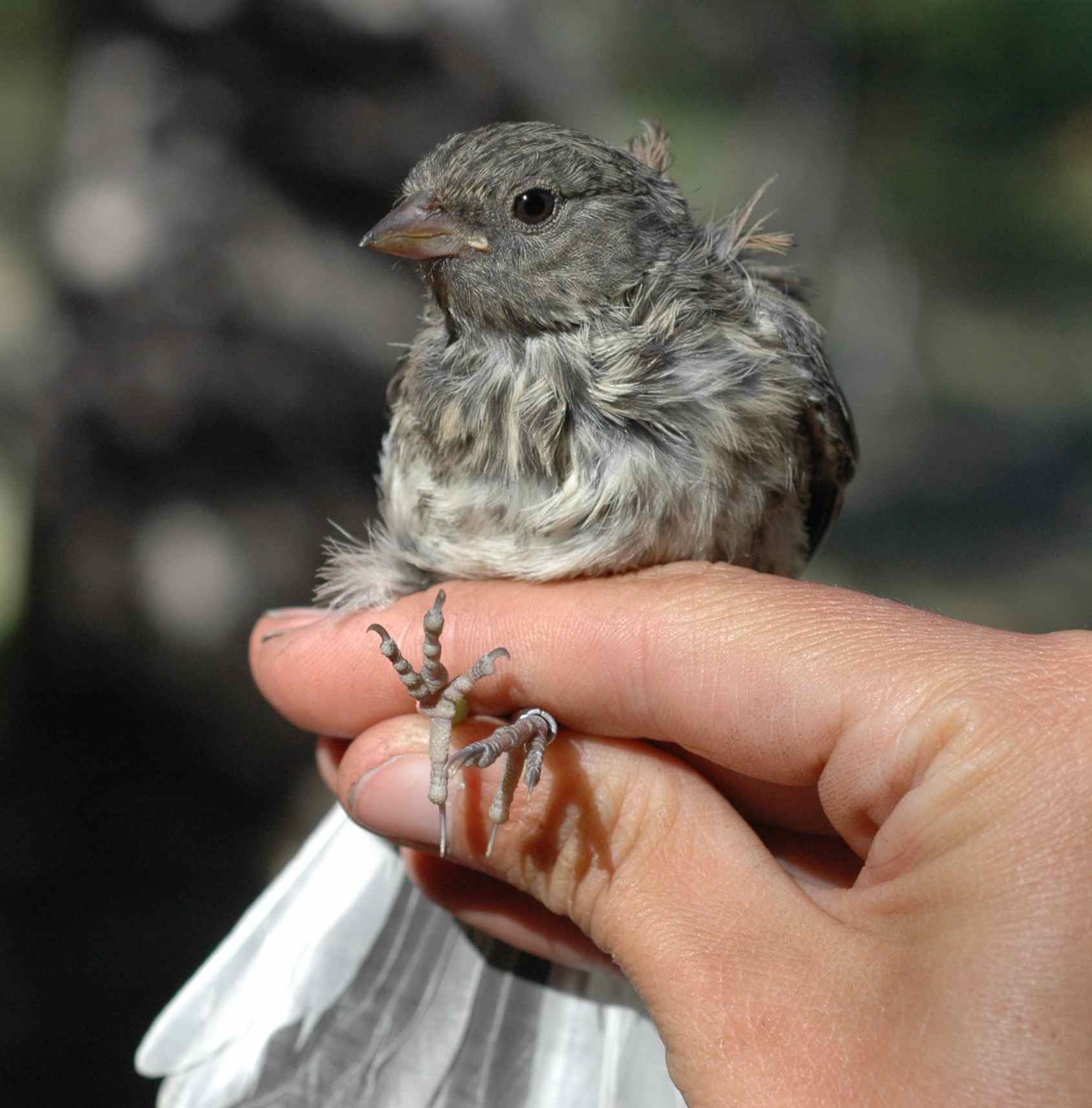
Young wild silver fox. Photo by Matt Knoth

Young wild silver fox. Photo by Matt Knoth*

The original foxes were as close to wild animals as anything can be after being bred for fur for a century. Their descendants, after many generations of selection for just one thing—tameness, a liking of humans—look and act like dogs. They seek out humans, they whine and lick your face, they wag their tails. They even look like dogs—mostly, like border collies.

Fox kit showing the white markings characteristic of domestication. Photo by Luz Rovira

Fox kit showing the white markings characteristic of domestication. Photo by Luz Rovira*
Continue reading

Update on The Nest That Came Back

We banded the chicks from The Nest That Came Back From The Dead. They were all a bit small, looking about a day younger than their actual age; that might be because of their pinecone encounter, but it also might simply be that they aren’t getting much food. They hatched pretty late in the season, so there aren’t as many insects out now, and we’ve only ever seen one parent feeding them. Their “single mom” may be having trouble finding enough food for the three of them.

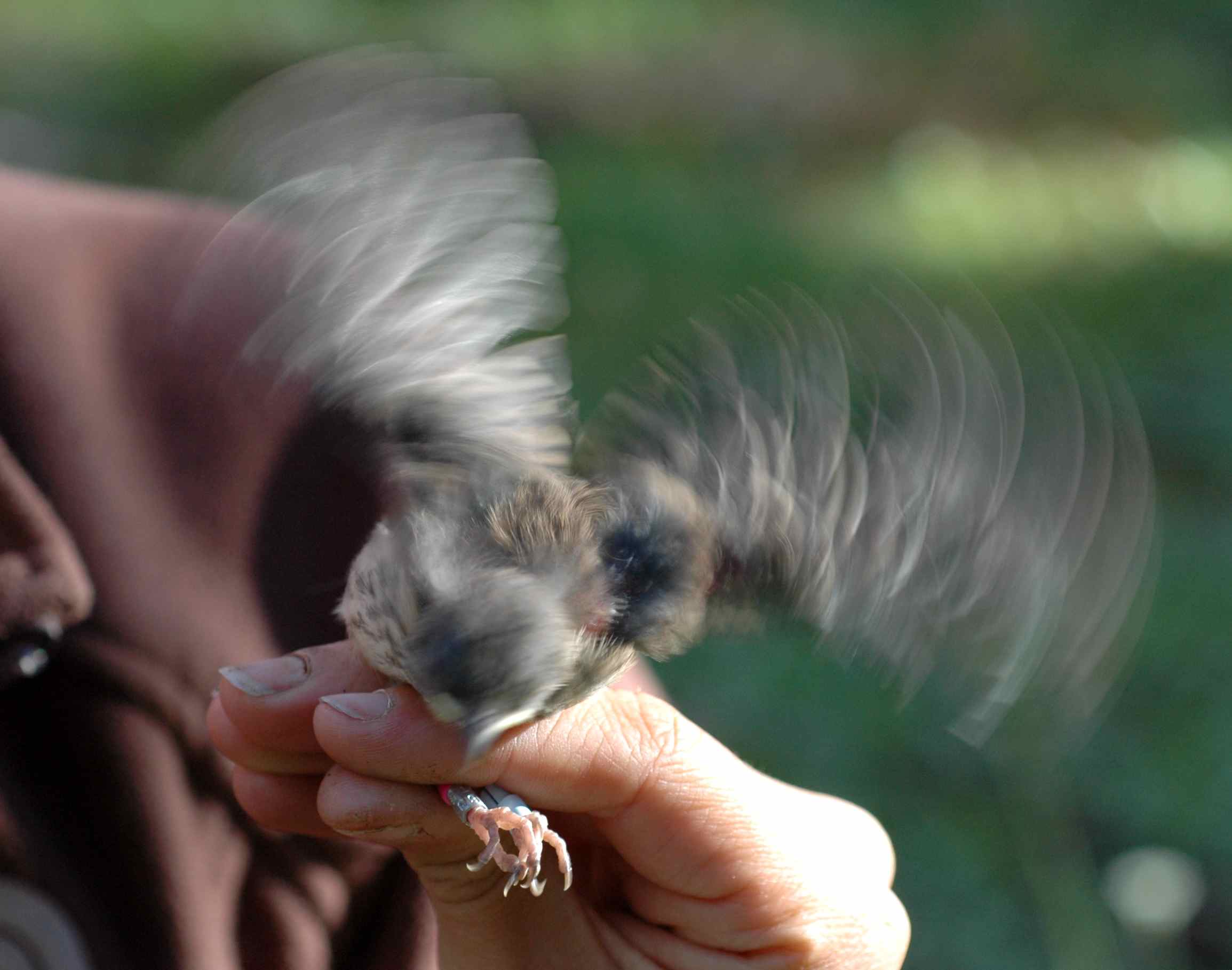
That may not sound great, but the important thing is that they’re alive. If they can make it another two weeks, they’ll be flighted and fattening themselves on fall’s plentiful seeds. The biggest of the chicks, ROAN, clearly can’t wait to be flying:

Big sister ROAN

Big sister ROAN

I can do it!!

I can do it!!

Continue reading

The fleeting beauty of the fall molt

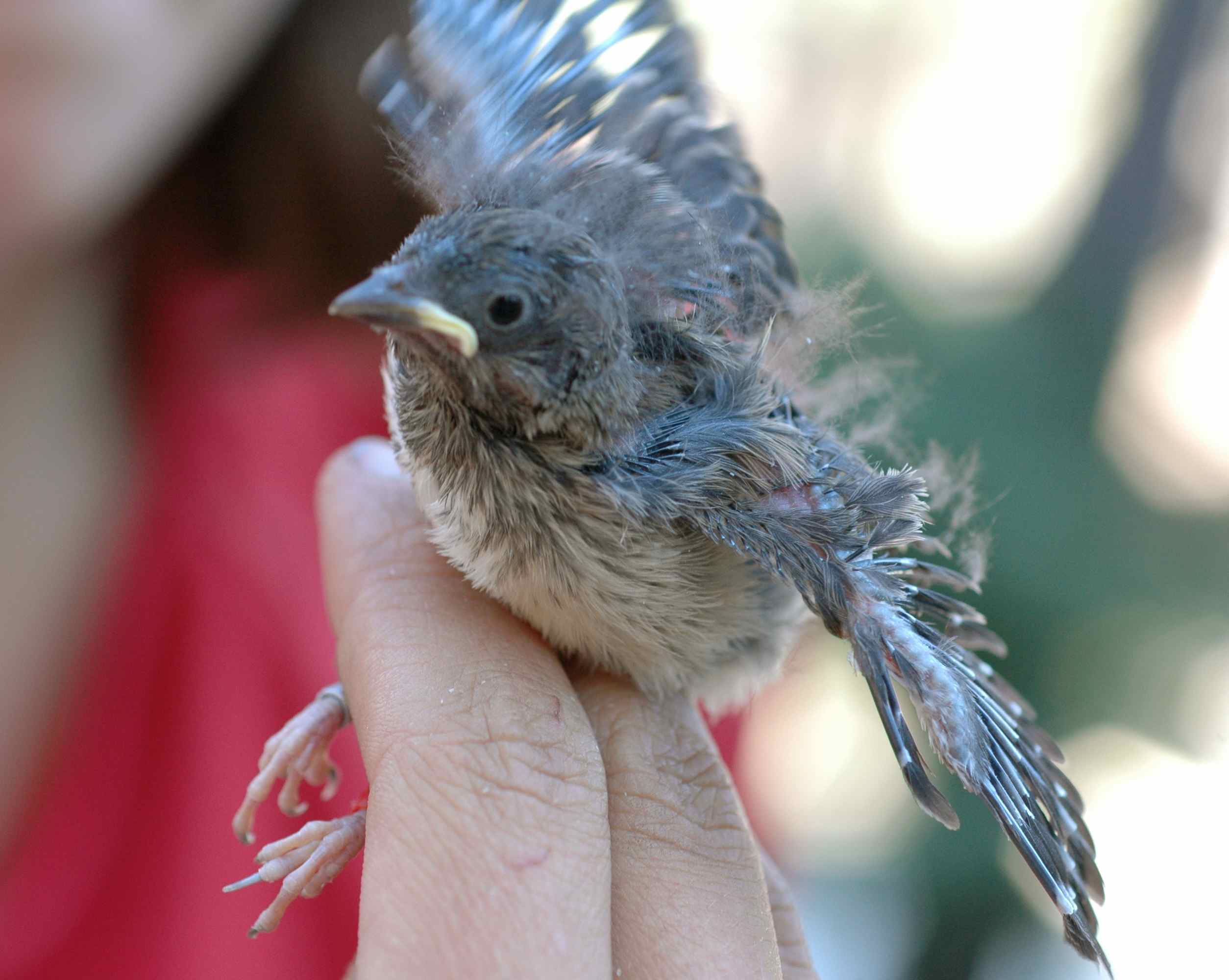
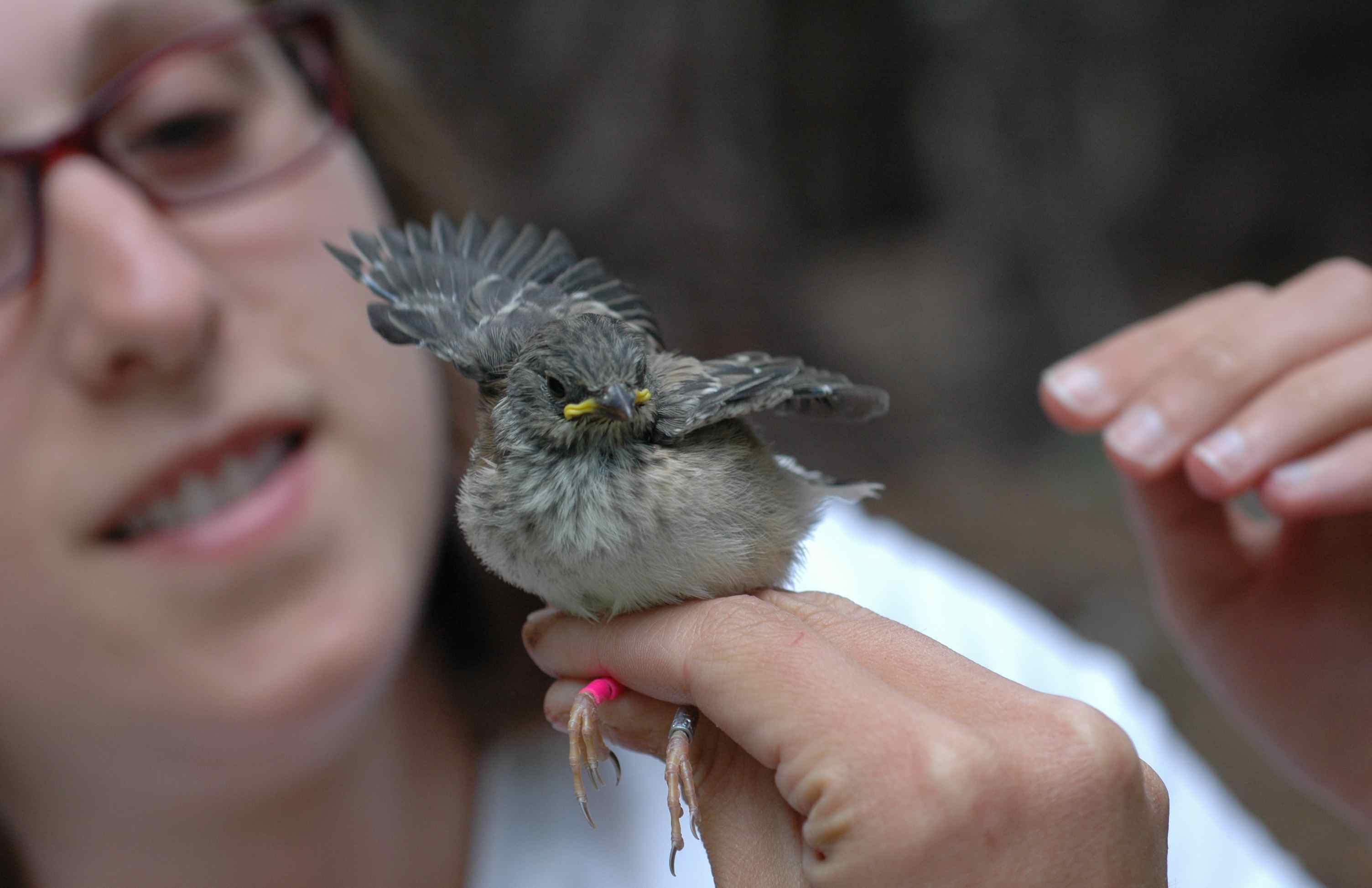
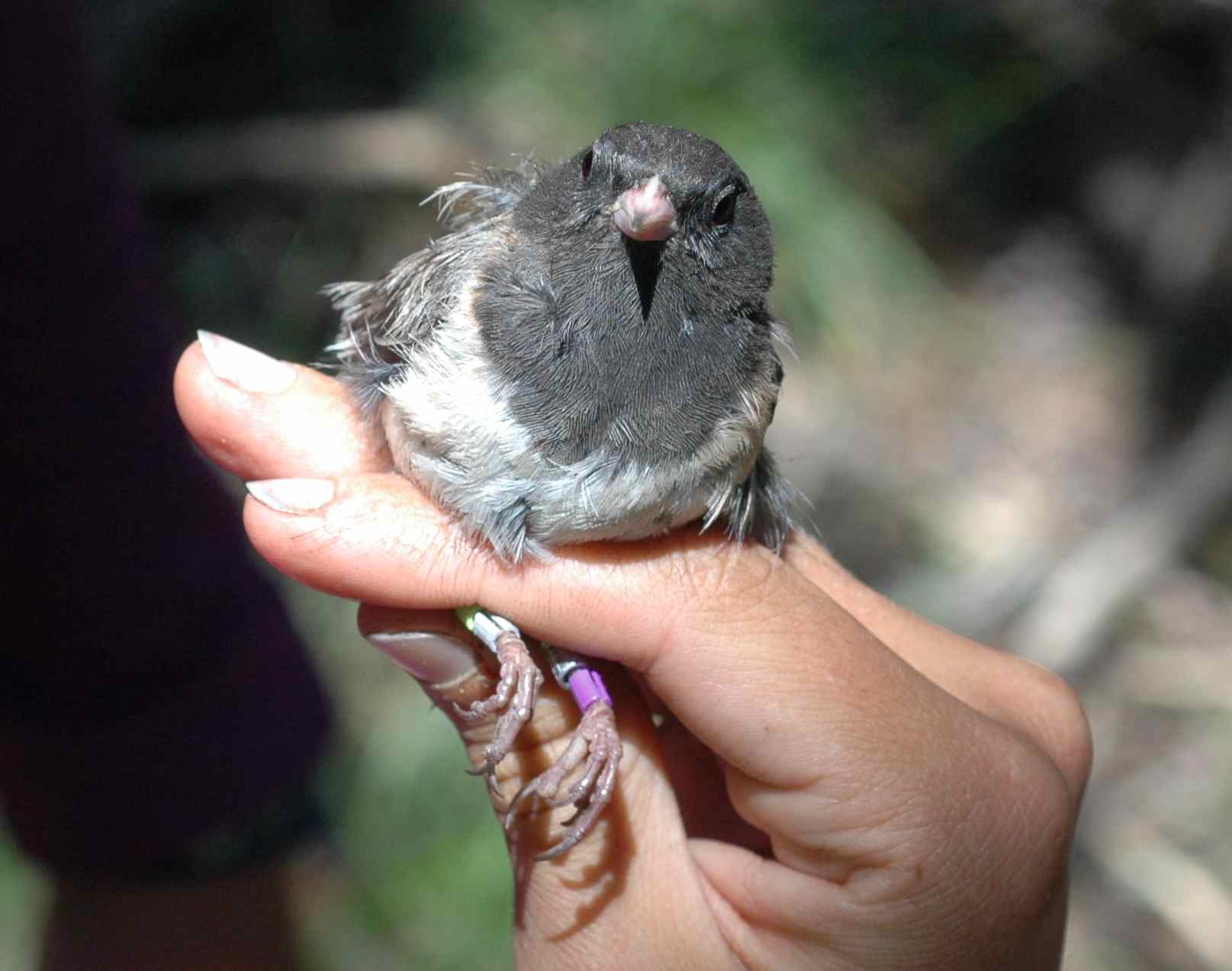
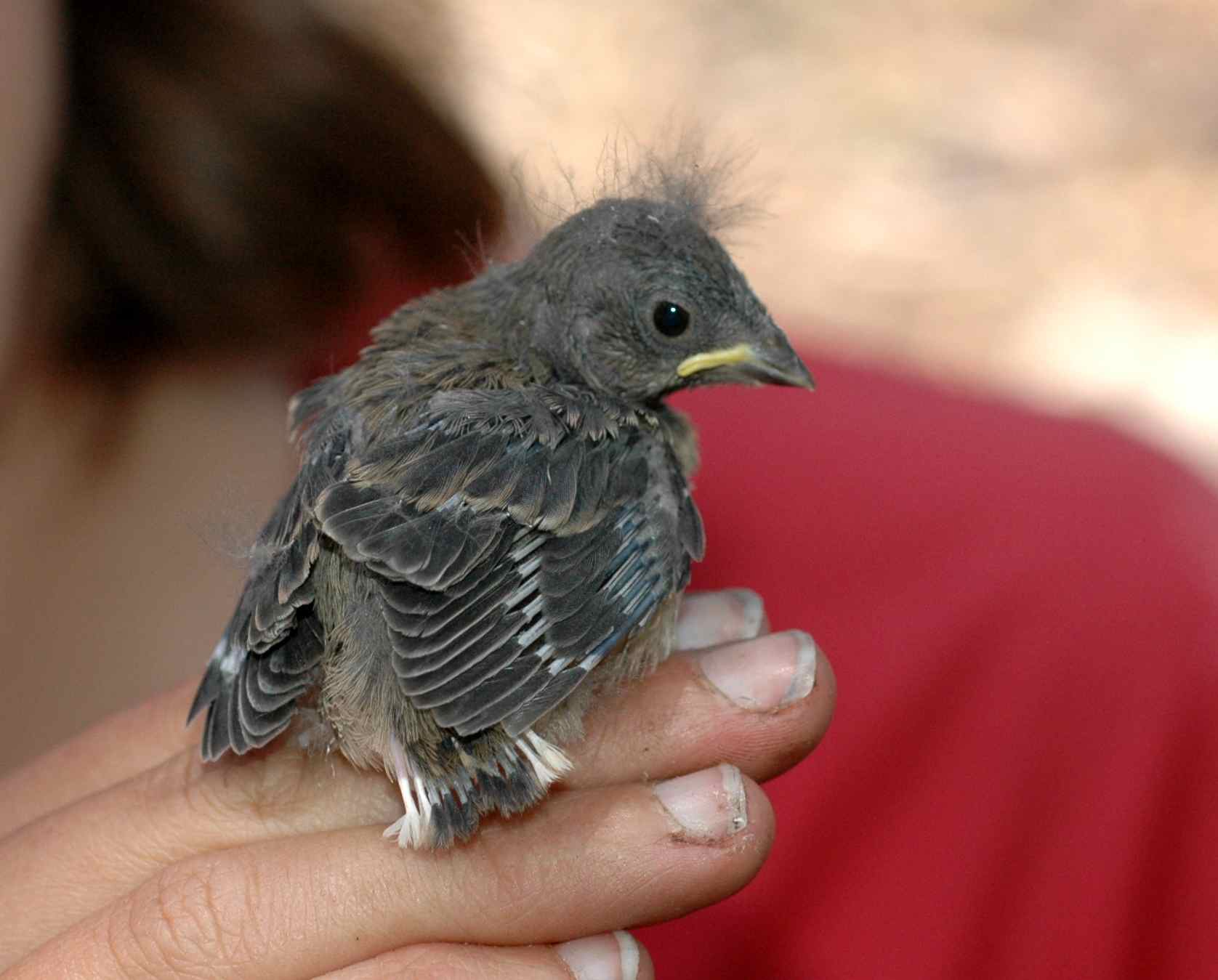
As fledglings undergo their fall molt (the Prebasic I molt), their appearance changes from obvious-youngster to apparent-adult. In the middle of that transition, they look a little… wild. It’s a strange and fleeting look, here-today-and-gone-in-two-weeks. We’ve caught enough molting fledglings that I’ve been able to put together a series of photos showing the transition.

Fledgling juncos start out a streaky light brown, with dark bills and yellow gapes.

Young fledgling GRAS

Young fledgling GRAS

As they get older, the yellow gape shrinks.

Older fledgling KALI. Note the remnant of yellow gape at the edge of the bill.

Older fledgling KALI. Note the remnant of yellow gape at the edge of the bill.

Continue reading

What happens to the animals when there is a fire?

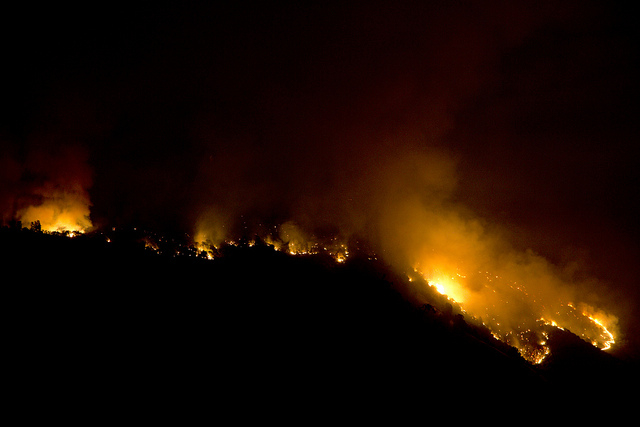
Rim Fire. Photo by Steve Ryan

Rim Fire.
Photo by Steve Ryan

You have (I hope!) seen news lately about the Rim Fire, which has been burning in Stanislaus National Forest next to Yosemite National Park. It began near the “Rim of the World” scenic viewpoint off Highway 120, and has been making Yosemite visitors and residents of Groveland quite nervous. It has burned over 200,000 acres and is reportedly 32% contained. A collection of pretty incredible photos of the fire is here.

First: no, this year’s juncos are not currently on fire. My field sites this year are in Stanislaus National Forest, but considerably further north. We have, however, seen smoke and had bits of white ash falling around us.

But of course, even if my juncos aren’t in the fire, other juncos are. And Chipping Sparrows, and American Robins, and mice, and gopher snakes… So what does wildlife do when the world starts burning around it? Are all the animals in that 200,000+ acres doomed?

Continue reading

The nest that came back from the dead

This summer we have lost nests to logging, cows, and natural junco predators. None of those shocked me. A pinecone as death-dealer, however, was a surprise.

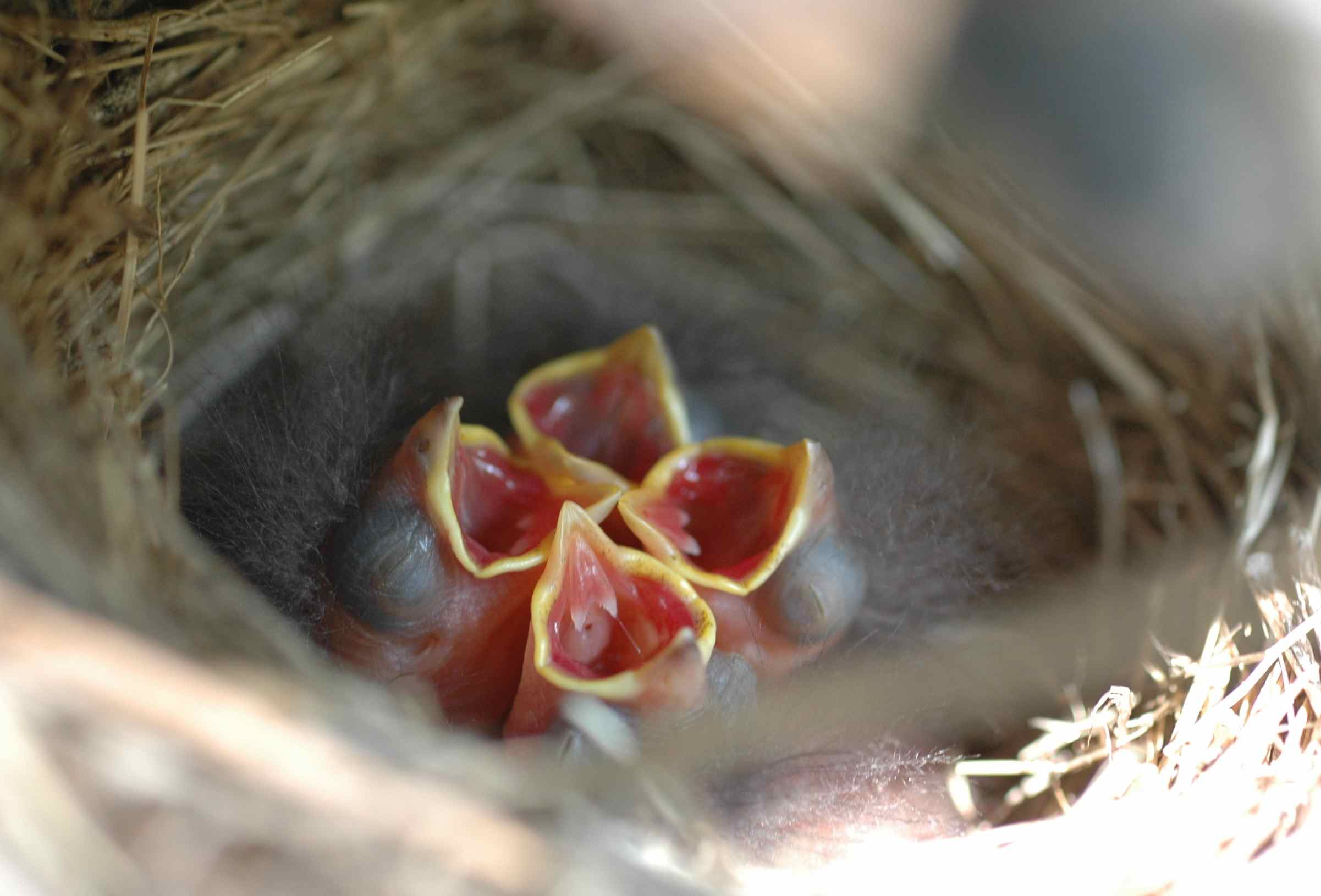
2013_NCB1When I took this picture, I thought that this nest was dead. The chick you see was completely motionless and stone cold. The pinecone—which was not supposed to be in the nest—had (we think) prevented the female from warming her chicks up, and without their mother’s warmth these very young, naked chicks quickly got too cold.

But when I took the pinecone out to count chick bodies, one of the bodies moved. My field assistant and I took the chicks—there were three, all as cold as the morning mountaintop air—in our warm hands. I still thought they were probably dead: recently dead things may twitch when disturbed.

But as the tiny bodies began to feel less chilly, they squirmed more and more.

2013_NCB2 Continue reading

On the recent sparsity of posts

Hi TLB readers! First, let me apologize for the recent lack of posts, and especially for the lack of the lengthier science-y posts. I’ve been trying my best to keep up, but as I’m in the field about 4 out of every 5 days, it’s hard—and the field work has to come first.

Second, let me assure you that the state of affairs will improve in the (relatively) near future. Hang in there! Once the field work settles down I will have more time for in-depth posts on topics like color and parental care, or brood parasitism strategies.

In the mean time, I hope you don’t mind the shorter here’s-some-photos-of-birds style posts. And (because I’d hate to have a post without photos) here are some photos of junco chicks who think they can fly already—despite, you know, not entirely having feathers yet:

SSKA

SSKA

IREA

IREA

OAKK

OAKK

OAKK trying really hard

OAKK trying really hard

AMLE is watching you

Not that I have favorites, but AMLE (Amelie) is my new favorite junco. Most juncos get a bit dejected by the end of the banding process (don’t worry—as soon as they realize we’re letting them go, they perk up), but she was sharp the entire time. When it was time to take pictures, she glared daggers at us.

2013_AMLE5When I lowered her to get a better shot of the top of her head, she held her gaze—and her head—steady. Her body went down but her head stayed up.

2013_AMLE4

Continue reading

Encounters with baby mammals: sometimes they run, sometimes you run

On our last trip, we had two very different encounters with baby mammals. The first happened when we were searching for nests in some rather strange habitat: the area had been previously logged, then—like all of my sites, rather unfortunately—used for cattle pasture. The cattle presence here had been so intense that the area not only was covered in cow pies, but smelled distinctly like cow. (Ah, nature!) The corn lilies there, usually lush tall green plants, were ragged and brown.2013_mammals_landscapeAnd the whole place was hopping with tiny tree frogs.

2013_mammals_frog

Continue reading

More baby pictures

Recently I found this nest, belonging to female MABY (named in honor of Arrested Development, if you’re wondering) and male ARKM.

2013_morebabiesI couldn’t see clearly how many chicks there were, so I nudged them with my finger to try to get a better look—and they all thought one of their parents was waking them up with food.

2013_morebabies2

Continue reading