Do birds have a sense of smell?

Not too long ago, the generally-accepted answer to this question would have been: “Not really—a few birds do, but most don’t.” This was largely based on the observation that most birds have very small olfactory bulbs in their brain relative to their overall brain size. As we observe bird behavior, however, we are are increasingly realizing that most birds can and do use smell regularly, often for very important things.

Let’s begin with the birds that have been known for a long time to use smell. Kiwi birds are unique in having their nostrils on the end of their bills, rather than close to the base of the bill like all other birds. Kiwis stick that long bill into the soil and use their nostrils to sniff for insects and worms.

Brown Kiwi chick. Photo by Smithsonian's National Zoo*

Brown Kiwi chick.
Photo by Smithsonian’s National Zoo*

It makes a lot of sense that kiwis have a good sense of smell, even if you think that birds in general don’t, because kiwis seem to have evolved to be the avian version of a small fuzzy mammal. Kiwis evolved on the islands of New Zealand, where the only mammals were bats. The small-brown-fuzzy-nocturnal-snuffling-in-the-dirt-for-worms niche was open for the taking, and kiwis—flightless, nocturnal, and covered in long thin feathers that are highly reminiscent of hair—took it. A good sense of smell goes with that niche.


Continue reading

The beauty and the beast; or, a tale of two moles

The Beauty

Technically, golden moles are not true moles—they are more closely related to tenrecs than they are to true moles—but golden moles are small, burrowing, insect-eating mammals that, with their streamlined heads and powerful digging claws, have converged to look a lot like true moles.

With at least one key difference: golden moles shine. They shimmer. They iridesce.

Juliana's golden mole. Photo from ARKive.

Juliana’s golden mole. It’s a bit hard to see the iridescence in photographs, but it’s there. Photo from ARKive.

The hairs on a golden mole reflect light in such a way to give the animal a sheen, ranging in color from gold to green to purple. In the museum where I work, we have some preserved specimens of golden moles, and they are remarkable to see: their fur shines and shimmers like the coat of a child’s stuffed toy unicorn.

Continue reading

Seeing song: an interview with a partially deaf ornithologist who studies bird song

Alma Schrage is a recent graduate of UC Berkeley and a research assistant in the Bowie lab in the Museum of Vertebrate Zoology. Over several years I have watched her become an ornithologist. In this interview she discusses her research on bird song and how it has been affected—or not—by being partially deaf.

Alma in the field. Photo courtesy of Alma Schrage.

Alma in the field. Photo courtesy of Alma Schrage.

Why study bird song?

It’s interesting on several different levels. If you’re interested in cognition and behavior, bird song provides so many different things to study. You can also study how vocalizations tie in with genetics, morphology and such to help provide a fuller picture of the bird, or you can study the factors that drive development of bird song such as different acoustic environments, and selective forces on calls and songs.

Continue reading

Featured paper: five warblers, lots of tornadoes, and a mystery

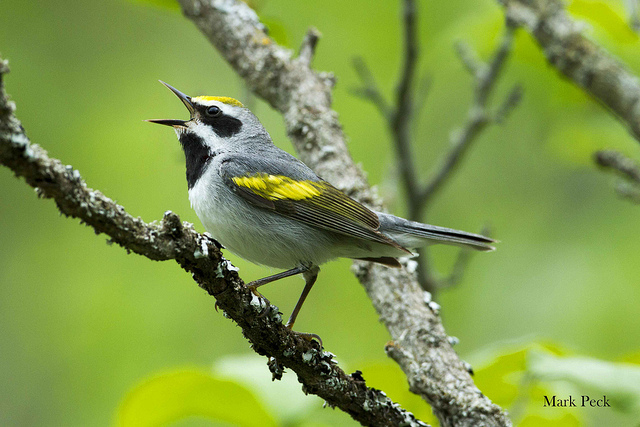
Male Golden-winged Warbler. Photo by Mark Peck*

Male Golden-winged Warbler. Photo by Mark Peck*

This story begins when Streby et al. (2015) decided to track Golden-winged Warblers during their annual migration. We know that lots of birds migrate, but for most of them, we know surprisingly few details about that migration. Often we know generally where they go (to a specificity of, say, “somewhere in South America”) but not exactly where; rarely do we know what paths they take to get between wintering and breeding grounds. This kind of information is especially important for birds of conservation concern, since to protect a migratory population, you need to protect its wintering grounds and migration route as well as its breeding grounds.

The researchers relied on technology to tell them where the warblers went when they migrated. There are several different ways to track animal movements; in this case, researchers used light-level geolocators, which record the amount of light hitting the geolocator. Collected over time, these light intensity measurements allow researchers to calculate where the geolocator was, based on things such as day length. This location information isn’t as accurate as the data you would get from a GPS logger, but the light-level geolocators have a big advantage over GPS loggers: they can be much smaller, so you can put them on tiny birds like Golden-winged Warblers. A Golden-winged Warbler attached to a heavy, clunky GPS logger would not be migrating anywhere.

Continue reading

Bats are cool (and generous, and selfish, and fuzzy)

I’ve become more-than-usually interested in bats recently, for extremely serious scientific reasons.

Okay, no. It’s because of this video:

But bats aren’t just cute (and really, what animal wouldn’t be cute wrapped up like a burrito? I challenge you to think of one; even a cockroach would look big-eyed and winning). They are also intelligent, social, and adept hunters.

Continue reading

Does food taste the same to animals as it does to us?

Every day, I feed my cat small, round, hard pellets that look about as appetizing as old gravel, and she gets so excited about them. I tasted one (for you, dear readers!) and I would describe the taste as falling somewhere between the meh of cardboard and the bleh of rancid fish. Not recommended. For her part, the cat flinches if I consume an orange anywhere near her; you can tell she thinks I am disgusting for eating them. It seems pretty clear that she and I have different tastes in food. Are such differences simply matters of individual preference, or is there a biological basis for them?

As in all things, I am right and you are wrong about this.

As in all things, I am right and you are wrong about this.

It’s hard to know what something tastes like to someone else. My personal experience of peanut butter (disgusting) is likely to differ from yours (mmm, yum), despite our belonging to the same species. However, we can say with some certainty that both of us can taste peanut butter, and that it will not taste like lemons to either of us. Humans have five major types of taste receptors: sweet, umami, bitter, sour, and salty. Sugar is sweet, hamburgers and mushrooms are umami, coffee and India pale ales are bitter, lemons are sour, and salt is salty.

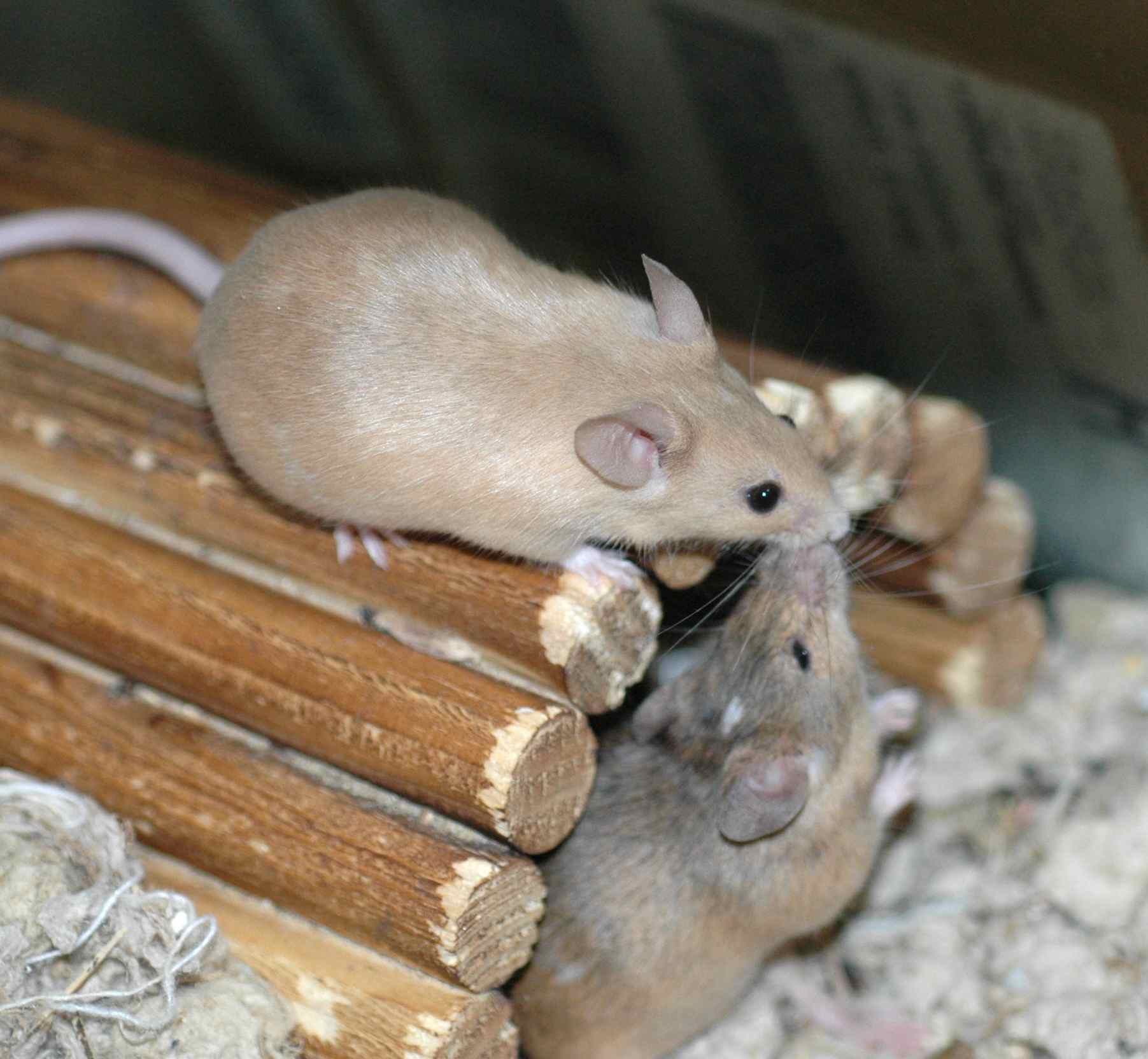
And mice are micey.

And mice are micey.

Continue reading

Let’s talk about bird tongues

Ferruginous Hawk. Photo by Nathan Rupert*

Ferruginous Hawk. Photo by Nathan Rupert*

You don’t have to look at many birds to realize that they are very variable in appearance: hawks look different from hummingbirds, and both look different from peacocks. You can spend a lot of time looking at birds, though, before you realize that they are hiding a lot of variation inside their mouths: long tongues, short tongues, spiky tongues, curly tongues, forked tongues, frayed tongues, brush-like tongues.

Like bird bills, bird tongues are specialized to each particular bird’s way of feeding. Birds that feed on nectar have tongues specifically adapted to nectarivory, often with many little protrusions at the tip of the tongue, giving it a frayed or brush-like appearance. This brushiness increases the surface area of the tongue, making it better at picking up nectar.

Rainbow Lorikeet. Photo by Alan (Kaptain Kobold)*

Rainbow Lorikeet using its brush-like tongue to feed on flowers. Photo by Alan (Kaptain Kobold)*

Continue reading

Vampire birds

The vampire strikes again! Photo by Ian White*

The vampire strikes again!
Photo by Ian White*

In honor of Halloween, let’s talk about vampire birds.

I am using “vampire” loosely here, the same way people do when they talk about “vampire” bats. These vampire birds are hematophagic (blood-eating!), but do not follow other items of vampire lore: they have reflections in mirrors, can enter your house without an invitation, do not shape-shift, are mortal, and do not sparkle in the sunlight.

Sharp-beaked Ground Finch, Geospiza difficilus

This is one of the famous Darwin’s Finches of the Galápagos Islands. This species is a vampire only on two of the islands, Wolf and Darwin; everywhere else it eats bugs and seeds like a regular finch. Even on Wolf and Darwin, it mostly eats bugs and seeds, but sometimes it craves something a little… richer…

Dum-dum-DUMMMM. (Sharp-beaked Ground Finch. Photo by budgora*)

Dum-dum-DUMMMM.
(Sharp-beaked Ground Finch. Photo by budgora*)

Continue reading

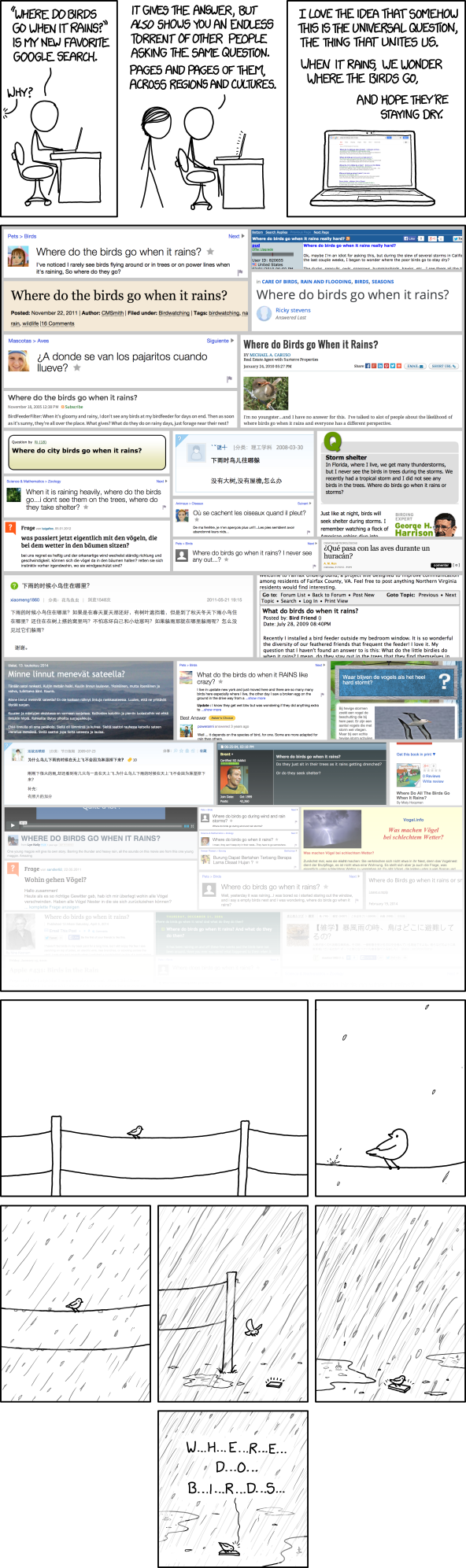
What do birds do when it rains?

I’ve been meaning to write about this topic for a while—now xkcd has beaten me to it:

Oh, well. Since the comic doesn’t actually answer the question, I’m hoping you’re all still interested! (Also, at the end there will be a bonus discussion of ant rain. Yes, ant rain. You won’t find that on xkcd!)

Continue reading

Featured paper: cheating Common Yellowthroats, or, the world is more complex than you think

There is a thing that happens a lot in biology, especially in animal behavior: one set of researchers finds an interesting relationship, like, say, “Birds prefer to eat bugs off of cows with lots of spots, and don’t like to eat bugs off of cows with no spots.” (This is a made-up example.)

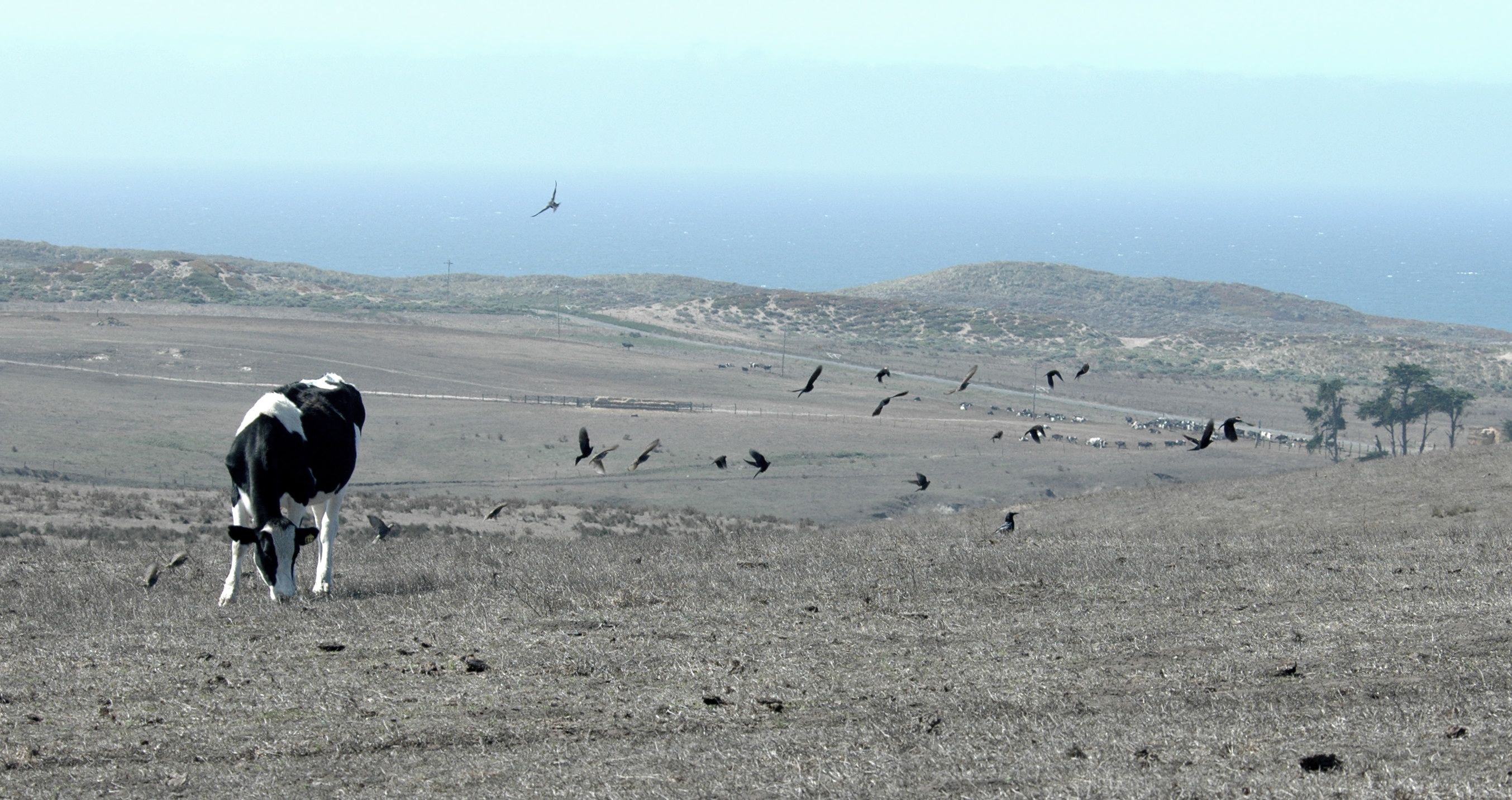
Starlings flying near a cow; Pt Reyes, CA.

Blackbirds flying near a cow, Pt Reyes, CA.

Then, some other researchers do a study and say, “Hey, our birds prefer to eat bugs off of cows with no spots! That’s the opposite!”

Then still different researchers do another study and say, “Our birds don’t care at all about the number of spots, they just care whether the spots make a shape like a smiley face. You guys must all have made a mistake. The Smiley Face Rule is the new Lek Paradox! #nobelplease”

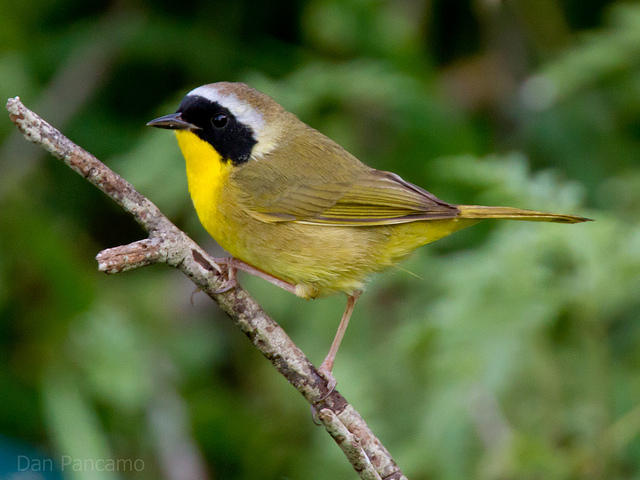
To put it less ridiculously: scientists get different results sometimes, and it can be hard to figure out why. Did someone make a mistake? Who is right? Today’s featured paper takes an example of this confusing scientific disagreement and elegantly makes sense of everything, with the help of this handsome little bird:

Common Yellowthroat (male). Photo by Dan Pancamo*

Common Yellowthroat (male).
Photo by Dan Pancamo*

Continue reading