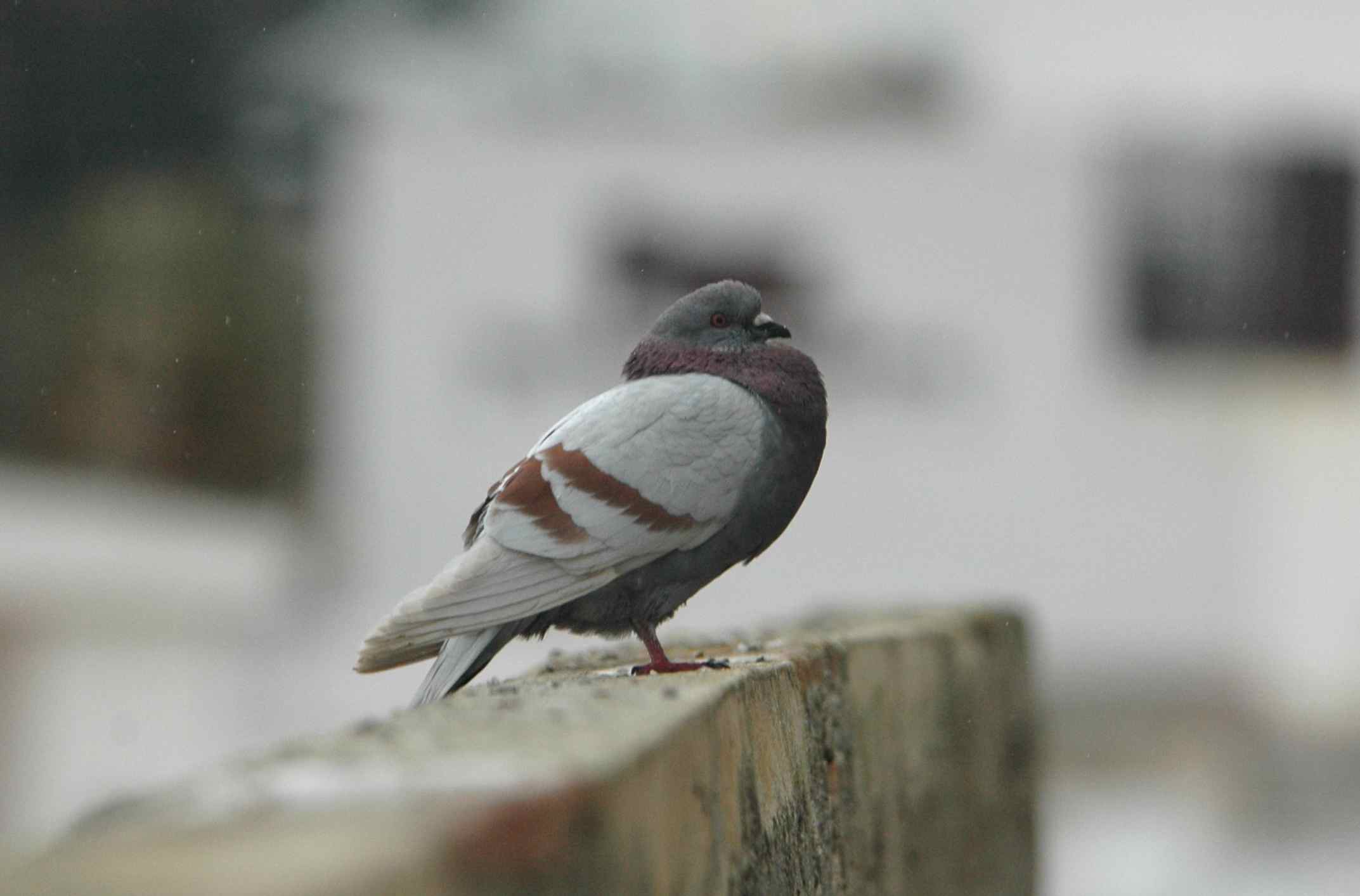
A pigeon walks into an art museum…

Consider the pigeon. Among birds, they are distinguished by their abilities to drink water through their nostrils and to raise their babies on a diet of human trash. It might surprise you, then, to learn that a number of scientific studies have focused on pigeons’ taste in art.

This abstract work, in feces and found lamppost, really captures the satisfaction of finding a good place to perch.

This abstract work, in feces and found lamppost, really captures the satisfaction of finding a good place to perch.

To be fair, these studies aren’t aimed at divining pigeons’ preferences so that museums can better appeal to the aesthetics of critical tastemaker pigeons; the goal is to understand how animals perceive images. Pigeons are easily raised and trained, so they are a good model to look at visual processing in birds. And why use art? “Discrimination of visual arts is an extreme example of higher visual cognition” (Watanabe 2011). So there is logic to this. But it still produces papers with titles like “Van Gogh, Chagall and pigeons.”
Continue reading

Why do pigeons court all the time?

Most of our familiar birds court potential mates only at specific times of year. This is why spring is such a melodious season in many places: the male songbirds are all singing for their mates. Male pigeons, however, seem to court all the time. It’s below freezing and snowing? Why, what a great time to puff up and bow and coo at the ladies!

Well... yeah. What's your point?

Well… yeah. What’s your point?

This seems strange because we expect courting birds to breed soon after a successful courtship. Yet pigeons court in weather that seems like it would be terrible for breeding. What are these pigeons up to? Are the males really trying to convince the females to lay eggs in mid-winter?

Continue reading

Is that a friendly (woolly, stingy) face I see?

Humans see faces everywhere. We see a face in the craters of the moon, in wall sockets, sideways in punctuation :-) and just about anywhere else two dots and a line are arranged in even approximately the same positions as two eyes and a mouth.

Don't those drawings of outlets look like faces?

Don’t those drawings of outlets look like faces?

Once we recognize something as a face, we process it differently from other visual stimuli. Certain parts of the brains are triggered preferentially by faces. We are especially good at perceiving faces: we can pick out matching faces faster than matching abstract patterns, and distinguish non-matching faces more easily than other images. This only works, however, when our brains recognize the faces as faces: if you flip faces upside-down, they no longer trigger the “face” switch for us, and we become much worse at distinguishing them. The same thing happens if you digitally scramble facial features, so that there’s an ear in the middle and an eye on the chin and a mouth slanting across the forehead, or any other mix-up that makes the face no longer be arranged like a face. Our brains are specialized to perceive face-shaped patterns much better than other patterns.

Continue reading

Do birds have a sense of smell?

Not too long ago, the generally-accepted answer to this question would have been: “Not really—a few birds do, but most don’t.” This was largely based on the observation that most birds have very small olfactory bulbs in their brain relative to their overall brain size. As we observe bird behavior, however, we are are increasingly realizing that most birds can and do use smell regularly, often for very important things.

Let’s begin with the birds that have been known for a long time to use smell. Kiwi birds are unique in having their nostrils on the end of their bills, rather than close to the base of the bill like all other birds. Kiwis stick that long bill into the soil and use their nostrils to sniff for insects and worms.

Brown Kiwi chick. Photo by Smithsonian's National Zoo*

Brown Kiwi chick.
Photo by Smithsonian’s National Zoo*

It makes a lot of sense that kiwis have a good sense of smell, even if you think that birds in general don’t, because kiwis seem to have evolved to be the avian version of a small fuzzy mammal. Kiwis evolved on the islands of New Zealand, where the only mammals were bats. The small-brown-fuzzy-nocturnal-snuffling-in-the-dirt-for-worms niche was open for the taking, and kiwis—flightless, nocturnal, and covered in long thin feathers that are highly reminiscent of hair—took it. A good sense of smell goes with that niche.

Continue reading

The beauty and the beast; or, a tale of two moles

The Beauty

Technically, golden moles are not true moles—they are more closely related to tenrecs than they are to true moles—but golden moles are small, burrowing, insect-eating mammals that, with their streamlined heads and powerful digging claws, have converged to look a lot like true moles.

With at least one key difference: golden moles shine. They shimmer. They iridesce.

Juliana's golden mole. Photo from ARKive.

Juliana’s golden mole. It’s a bit hard to see the iridescence in photographs, but it’s there. Photo from ARKive.

The hairs on a golden mole reflect light in such a way to give the animal a sheen, ranging in color from gold to green to purple. In the museum where I work, we have some preserved specimens of golden moles, and they are remarkable to see: their fur shines and shimmers like the coat of a child’s stuffed toy unicorn.

Continue reading

Bats are cool (and generous, and selfish, and fuzzy)

I’ve become more-than-usually interested in bats recently, for extremely serious scientific reasons.

Okay, no. It’s because of this video:

But bats aren’t just cute (and really, what animal wouldn’t be cute wrapped up like a burrito? I challenge you to think of one; even a cockroach would look big-eyed and winning). They are also intelligent, social, and adept hunters.

Continue reading

Does food taste the same to animals as it does to us?

Every day, I feed my cat small, round, hard pellets that look about as appetizing as old gravel, and she gets so excited about them. I tasted one (for you, dear readers!) and I would describe the taste as falling somewhere between the meh of cardboard and the bleh of rancid fish. Not recommended. For her part, the cat flinches if I consume an orange anywhere near her; you can tell she thinks I am disgusting for eating them. It seems pretty clear that she and I have different tastes in food. Are such differences simply matters of individual preference, or is there a biological basis for them?

As in all things, I am right and you are wrong about this.

As in all things, I am right and you are wrong about this.

It’s hard to know what something tastes like to someone else. My personal experience of peanut butter (disgusting) is likely to differ from yours (mmm, yum), despite our belonging to the same species. However, we can say with some certainty that both of us can taste peanut butter, and that it will not taste like lemons to either of us. Humans have five major types of taste receptors: sweet, umami, bitter, sour, and salty. Sugar is sweet, hamburgers and mushrooms are umami, coffee and India pale ales are bitter, lemons are sour, and salt is salty.

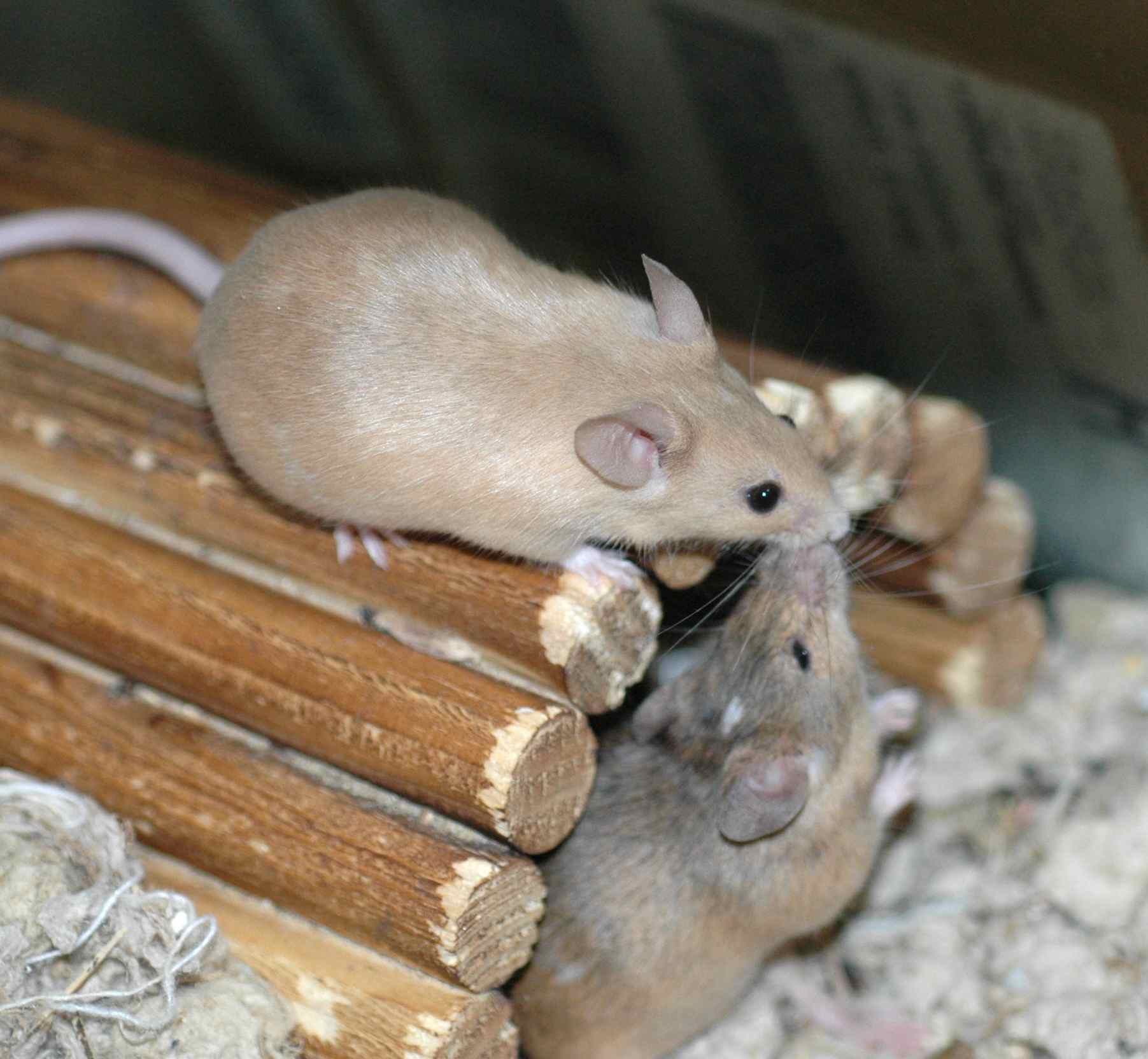
And mice are micey.

And mice are micey.

Continue reading

Let’s talk about bird tongues

Ferruginous Hawk. Photo by Nathan Rupert*

Ferruginous Hawk. Photo by Nathan Rupert*

You don’t have to look at many birds to realize that they are very variable in appearance: hawks look different from hummingbirds, and both look different from peacocks. You can spend a lot of time looking at birds, though, before you realize that they are hiding a lot of variation inside their mouths: long tongues, short tongues, spiky tongues, curly tongues, forked tongues, frayed tongues, brush-like tongues.

Like bird bills, bird tongues are specialized to each particular bird’s way of feeding. Birds that feed on nectar have tongues specifically adapted to nectarivory, often with many little protrusions at the tip of the tongue, giving it a frayed or brush-like appearance. This brushiness increases the surface area of the tongue, making it better at picking up nectar.

Rainbow Lorikeet. Photo by Alan (Kaptain Kobold)*

Rainbow Lorikeet using its brush-like tongue to feed on flowers. Photo by Alan (Kaptain Kobold)*

Continue reading

Vampire birds

The vampire strikes again! Photo by Ian White*

The vampire strikes again!
Photo by Ian White*

In honor of Halloween, let’s talk about vampire birds.

I am using “vampire” loosely here, the same way people do when they talk about “vampire” bats. These vampire birds are hematophagic (blood-eating!), but do not follow other items of vampire lore: they have reflections in mirrors, can enter your house without an invitation, do not shape-shift, are mortal, and do not sparkle in the sunlight.

Sharp-beaked Ground Finch, Geospiza difficilus

This is one of the famous Darwin’s Finches of the Galápagos Islands. This species is a vampire only on two of the islands, Wolf and Darwin; everywhere else it eats bugs and seeds like a regular finch. Even on Wolf and Darwin, it mostly eats bugs and seeds, but sometimes it craves something a little… richer…

Dum-dum-DUMMMM. (Sharp-beaked Ground Finch. Photo by budgora*)

Dum-dum-DUMMMM.
(Sharp-beaked Ground Finch. Photo by budgora*)

Continue reading

What do birds do when it rains?

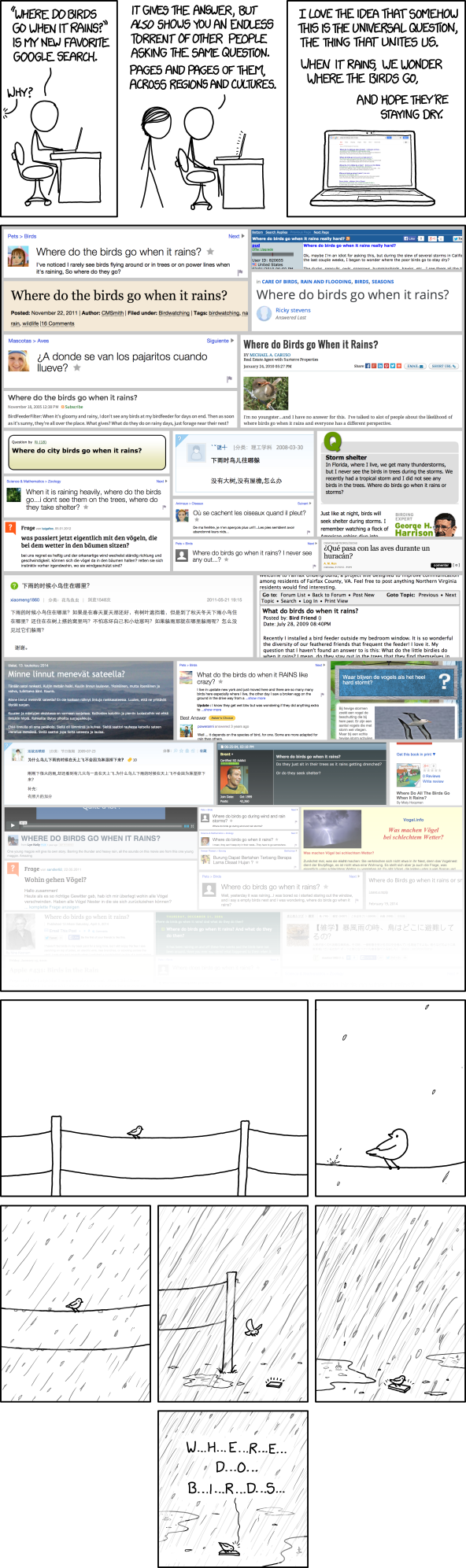
I’ve been meaning to write about this topic for a while—now xkcd has beaten me to it:

Oh, well. Since the comic doesn’t actually answer the question, I’m hoping you’re all still interested! (Also, at the end there will be a bonus discussion of ant rain. Yes, ant rain. You won’t find that on xkcd!)

Continue reading