Whoops – I forgot to post these for a while. Here are some photos from last summer of dragonflies and spiders: charismatic, often beautiful, and highly-effective hunters that make me glad I am much bigger than they are.
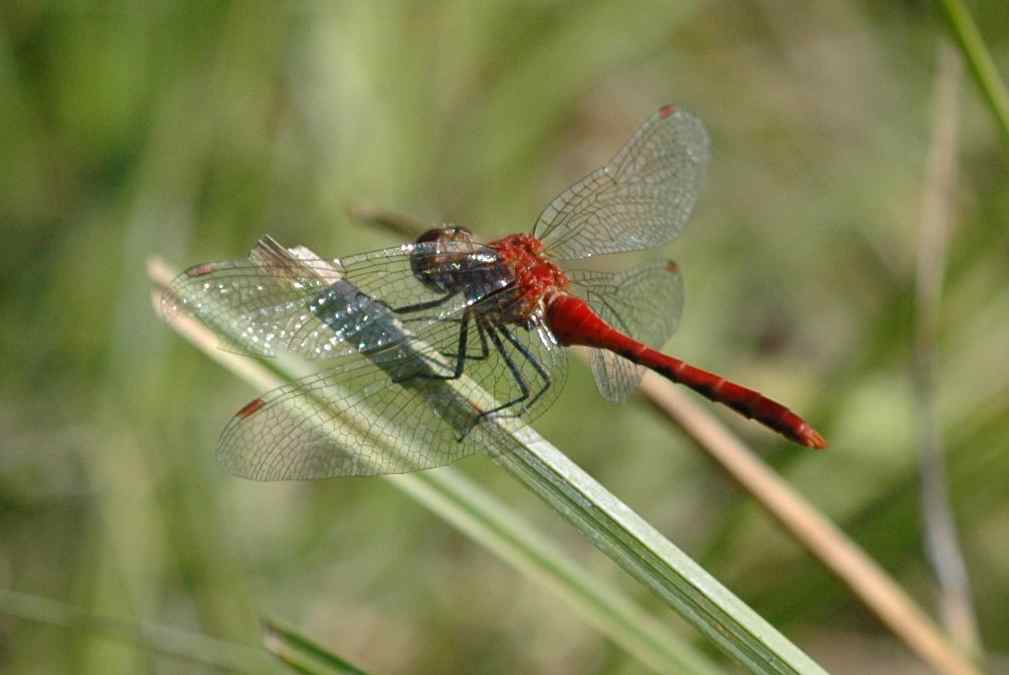
Male white-faced meadowhawk


Whoops – I forgot to post these for a while. Here are some photos from last summer of dragonflies and spiders: charismatic, often beautiful, and highly-effective hunters that make me glad I am much bigger than they are.
Male white-faced meadowhawk

Ferruginous Hawk. Photo by Nathan Rupert*
You don’t have to look at many birds to realize that they are very variable in appearance: hawks look different from hummingbirds, and both look different from peacocks. You can spend a lot of time looking at birds, though, before you realize that they are hiding a lot of variation inside their mouths: long tongues, short tongues, spiky tongues, curly tongues, forked tongues, frayed tongues, brush-like tongues.
Like bird bills, bird tongues are specialized to each particular bird’s way of feeding. Birds that feed on nectar have tongues specifically adapted to nectarivory, often with many little protrusions at the tip of the tongue, giving it a frayed or brush-like appearance. This brushiness increases the surface area of the tongue, making it better at picking up nectar.

Rainbow Lorikeet using its brush-like tongue to feed on flowers. Photo by Alan (Kaptain Kobold)*
IDs always welcome! I do not have the field guides to identify these lepidopterans; let me know if you recognize anyone.
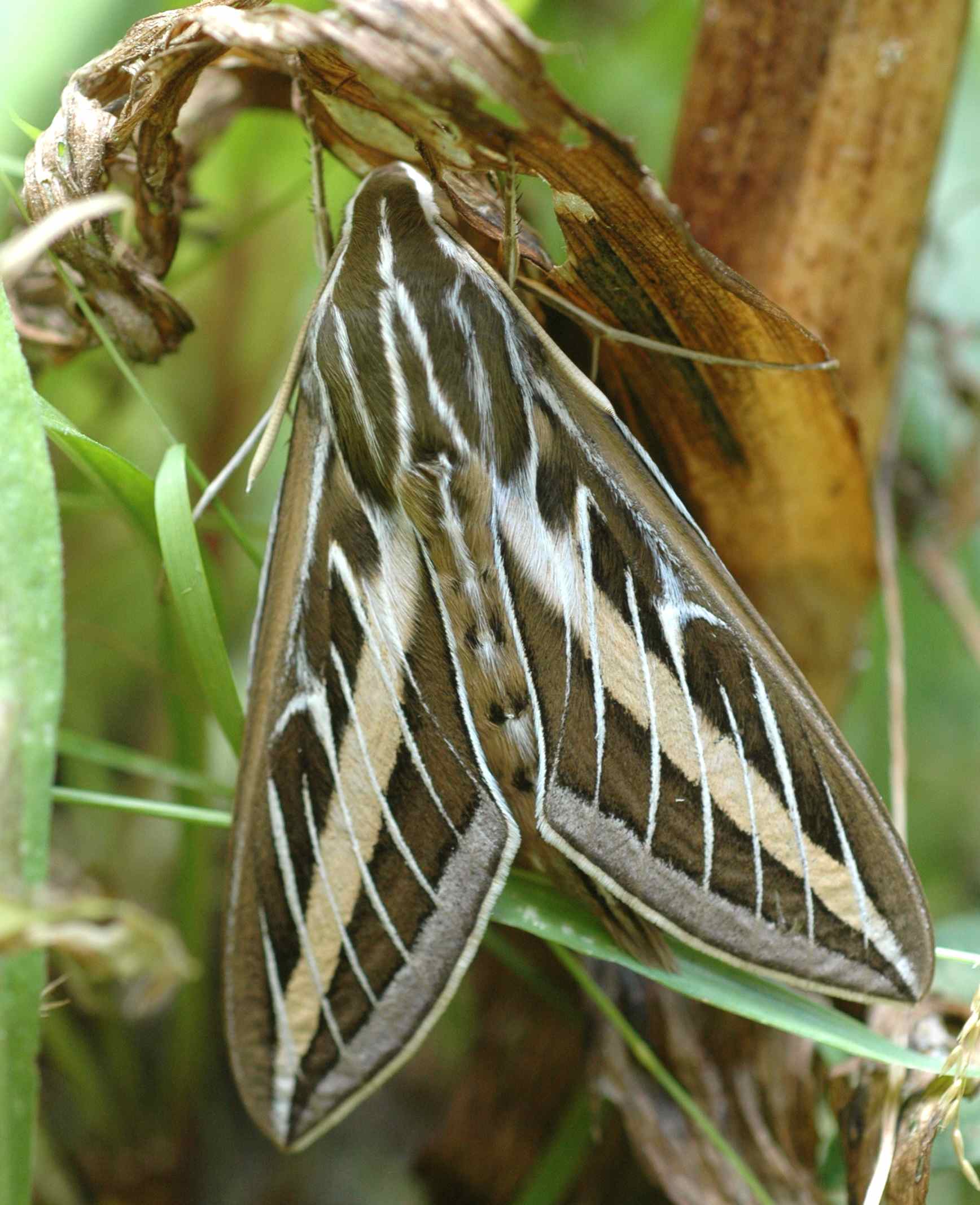
Of all the moths I have encountered, this one, found clinging to the stem of a corn lily, is my favorite. Look at that lovely pattern! Look how fuzzy he is!
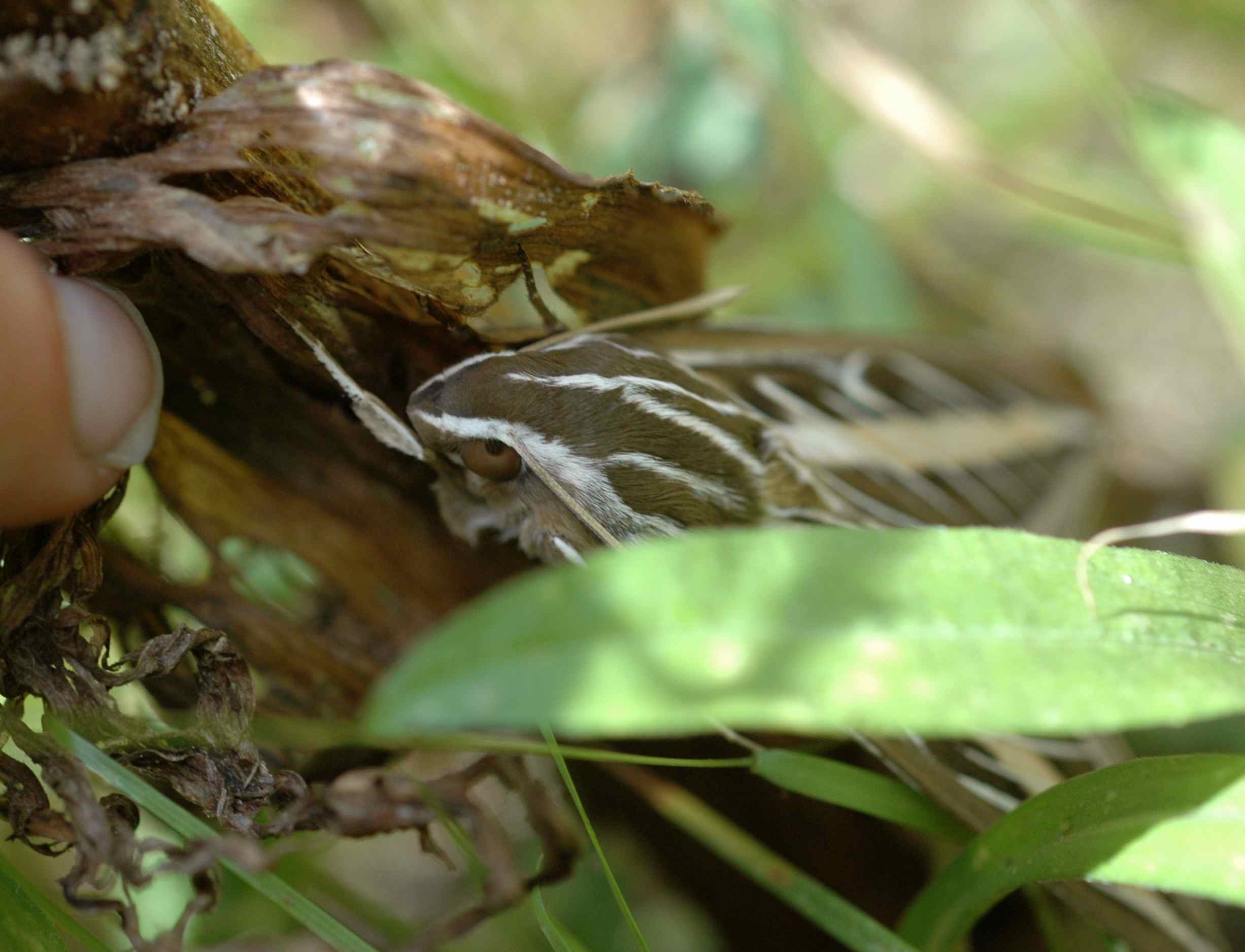
Look at that face!

The vampire strikes again!
Photo by Ian White*
In honor of Halloween, let’s talk about vampire birds.
I am using “vampire” loosely here, the same way people do when they talk about “vampire” bats. These vampire birds are hematophagic (blood-eating!), but do not follow other items of vampire lore: they have reflections in mirrors, can enter your house without an invitation, do not shape-shift, are mortal, and do not sparkle in the sunlight.
Sharp-beaked Ground Finch, Geospiza difficilus
This is one of the famous Darwin’s Finches of the Galápagos Islands. This species is a vampire only on two of the islands, Wolf and Darwin; everywhere else it eats bugs and seeds like a regular finch. Even on Wolf and Darwin, it mostly eats bugs and seeds, but sometimes it craves something a little… richer…

Dum-dum-DUMMMM.
(Sharp-beaked Ground Finch. Photo by budgora*)
I’ve been meaning to write about this topic for a while—now xkcd has beaten me to it:
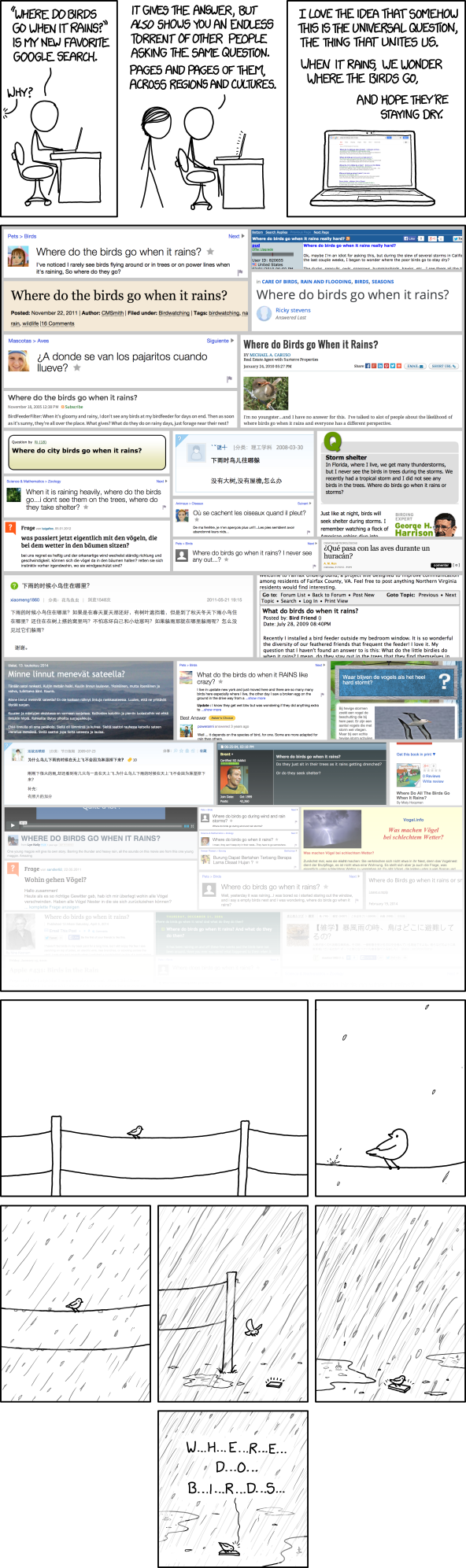
Oh, well. Since the comic doesn’t actually answer the question, I’m hoping you’re all still interested! (Also, at the end there will be a bonus discussion of ant rain. Yes, ant rain. You won’t find that on xkcd!)
Today I submitted the Big Grant Proposal that I’ve been working on for a while. To celebrate this, because I am a normal person, I dissected some owl pellets.

Now that’s what I call a party.
These particular owl pellets were from Great Horned Owls—these ones, in fact:
 When an owl eats something, it doesn’t digest the whole thing. The hard-to-digest parts—bones, fur, exoskeleton—get smooshed into a pellet in the gizzard and then regurgitated. These pellets are a record of what the bird has eaten.

This is my “How is it your business what I’ve eaten?” look.

Mammals—including us—use facial muscles to communicate, by, say, smiling or frowning. Reptiles and birds don’t do that: they don’t have the right muscles for it. If you think a bird looks grumpy, or angry, or has any similar human-type facial expression, you’re projecting your human perceptions onto an animal that really doesn’t work like that. (Now, whether the bird actually is grumpy is a different matter; I’m just saying that you can’t tell if it is by looking at its face.)
So the appearance that all these junco chicks have of possessing some serious attitude is merely an entertaining illusion.
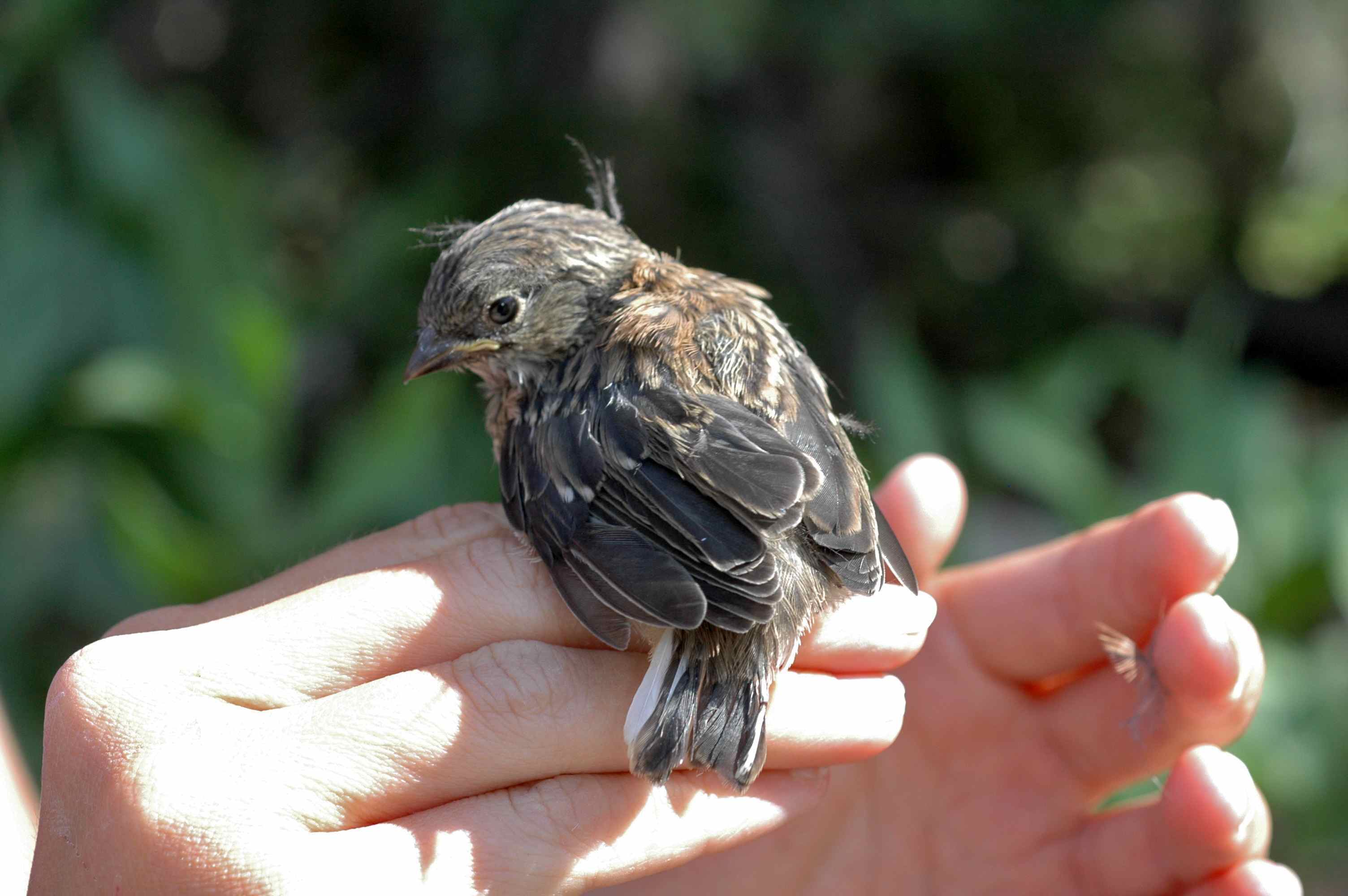
What are you looking at?
They were strewn all along the beach, these transparent, tripartite things. At first glance they looked like plastic trash, but they felt organic in my fingers.

Fortunately I happened to be beachcombing with a world expert on marine invertebrates. “Ooh,” he said, “Velella!”
Velella velella, or by-the-wind sailor: a living sailboat, a jellyfish on a stiff frame. In their preferred state, i.e. when not washed up on beaches, these animals float on the ocean surface with their tentacles just below the water, to catch food, and their upright sails above the water, to catch the wind.

It was well past dark when I first heard it: around 2 in the morning, it woke me in my tent. I lay awake for what felt like a long time, listening, trying—and failing—to classify the noise definitively as not a danger so I could go back to sleep. At the same time, I tried to think of what it sounded like, so that I could describe it the next morning. A large animal roar. A metal chair scraping across the floor. A death-metal chord. A train whistle.
Whatever it was, it neglected to devour me that night, and in the morning I was relieved to find that one of my field assistants had also been woken by the noise and shared my bewilderment. We agreed that it was primarily a cross between the bellow of some large mammal and the scrape of something mechanical, and so it was dubbed “the robot bear.”

The robot bear
The robot bear called most nights after that. Sometimes I thought it must be a noise of pain, or maybe rage—the tearing roughness in it sounded like strong emotion. Sometimes I was sure it was distant machinery; but we were surrounded by forest, and why would anyone be running machinery in the middle of the night?
 Tough Little Birds