Hoping for no more than moderate success

For this next trip, I’m in the strange position of having to hope not to catch more than 23 juncos.

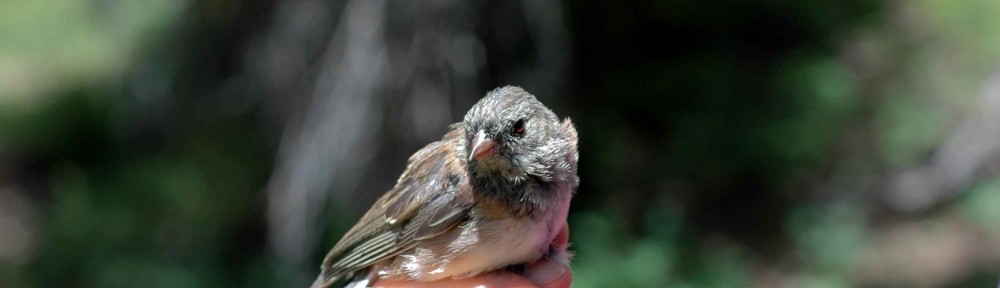
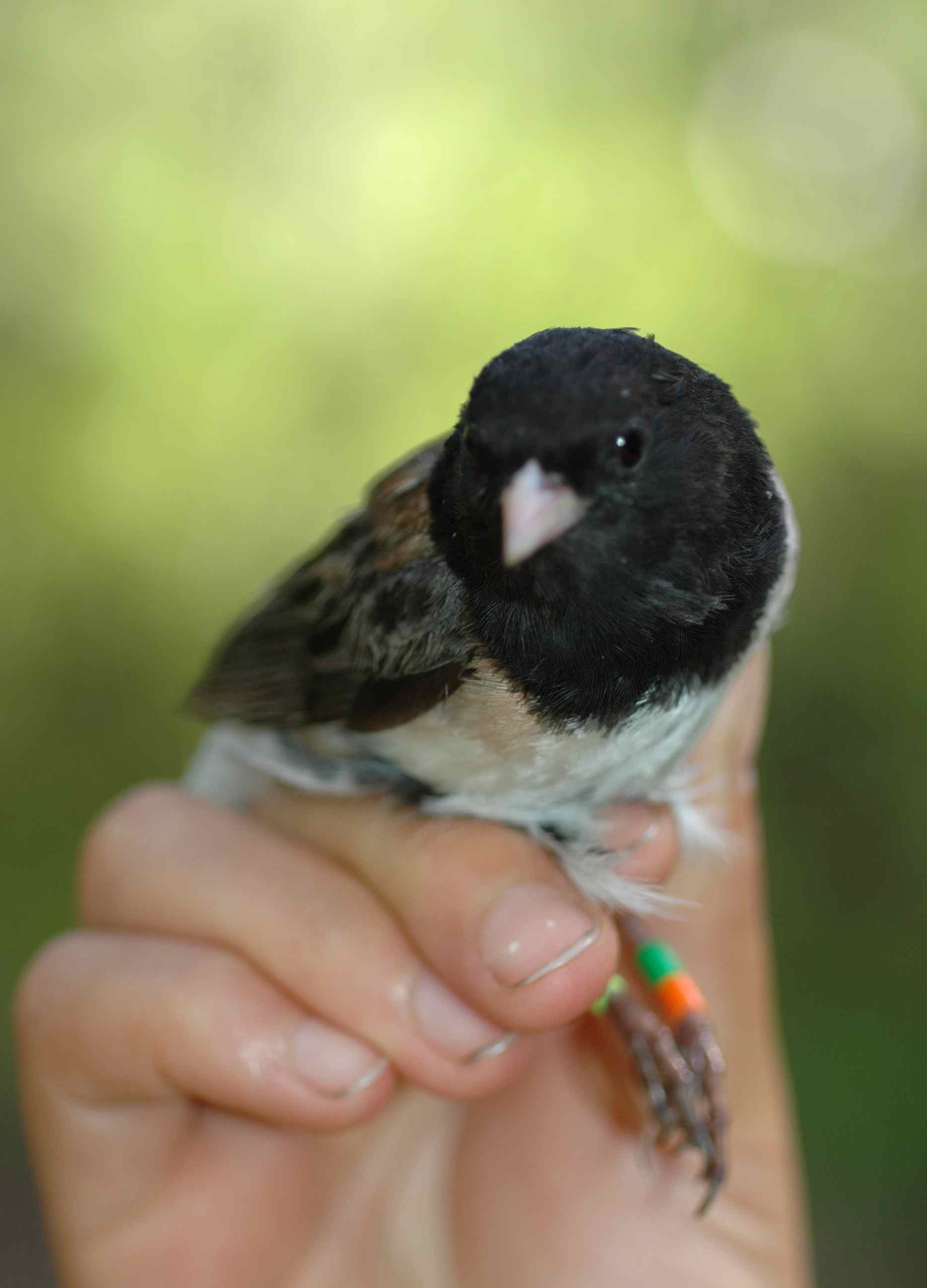
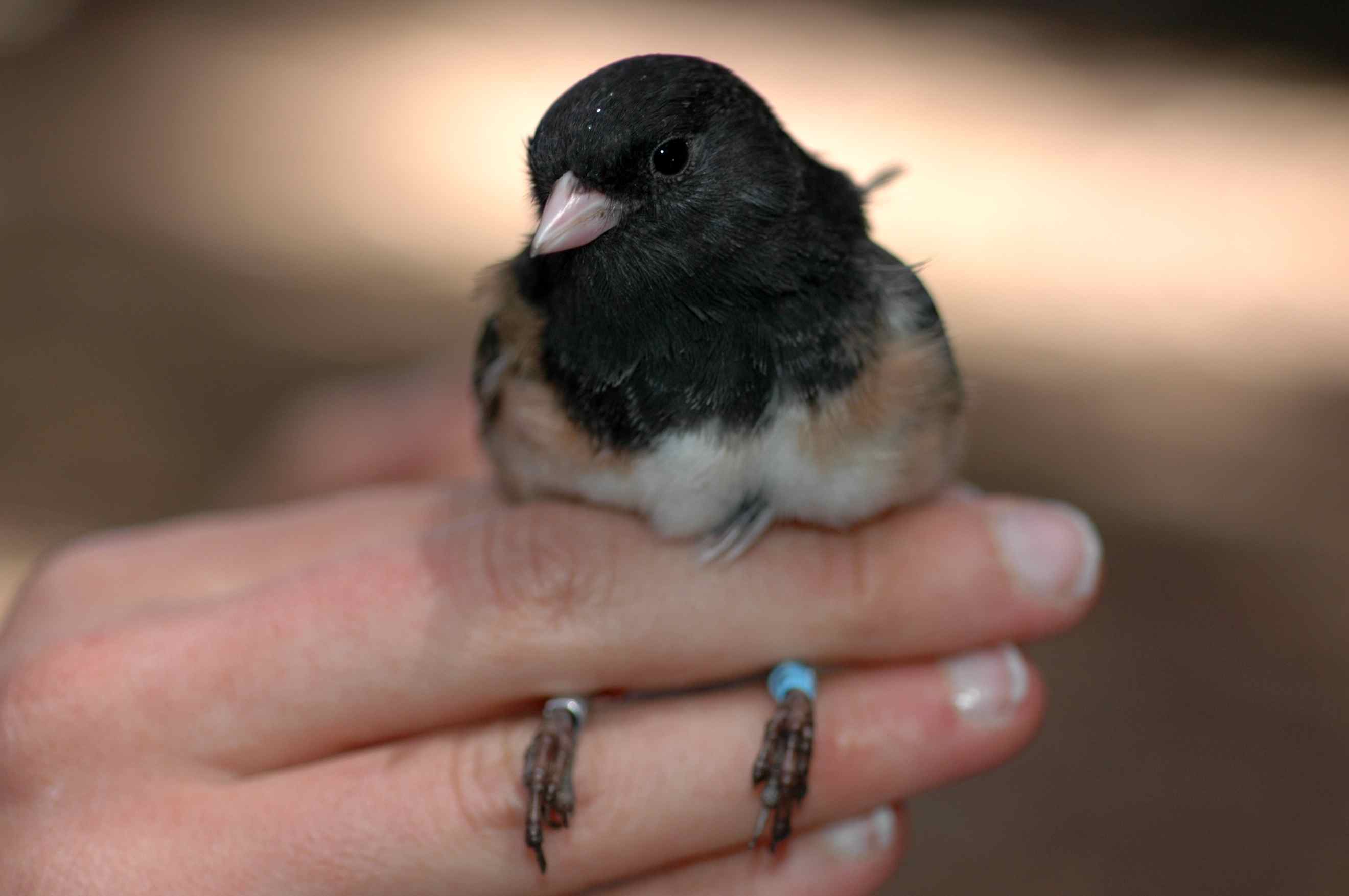
This has to do with those colored leg bands we put on the juncos in order to tell them apart. It seems that there is a general shortage of these: many colors are either entirely unavailable or backordered for an unknown amount of time. For the field season so far I have been limited to fewer colors than I expected, and I have been catching juncos faster than anticipated. By the end of our last trip, I was nearly out of color bands, not to mention distinguishable color combinations.
Continue reading

Junco-induced bipolarity

So far this season we’ve caught at least one bird every day. Most days we catch two or three; our best days have been our three five-junco days. This season is going really well.

Yet, at least every other day I find myself thinking, “This is it—the beginning of the juncos’ ceasing to respond to us, the moment where we lose our mist netting mojo.” It’s amazing how crushing it can be to go hours not catching a bird. Never mind how many you caught yesterday—this is the turning point, the day it all stopped working.

Then you catch a junco, finally, and everything is great!

Continue reading

A bird in the hand

What happens when we catch a junco:

We band it with the uniquely numbered US Fish & Wildlife band. This is the first priority because once the bird has this on, we can identify it later even if it escapes. Then we add the three colored leg bands so that we can identify it later even from a distance.

GOAL with his leg bands

Continue reading

Bycatch

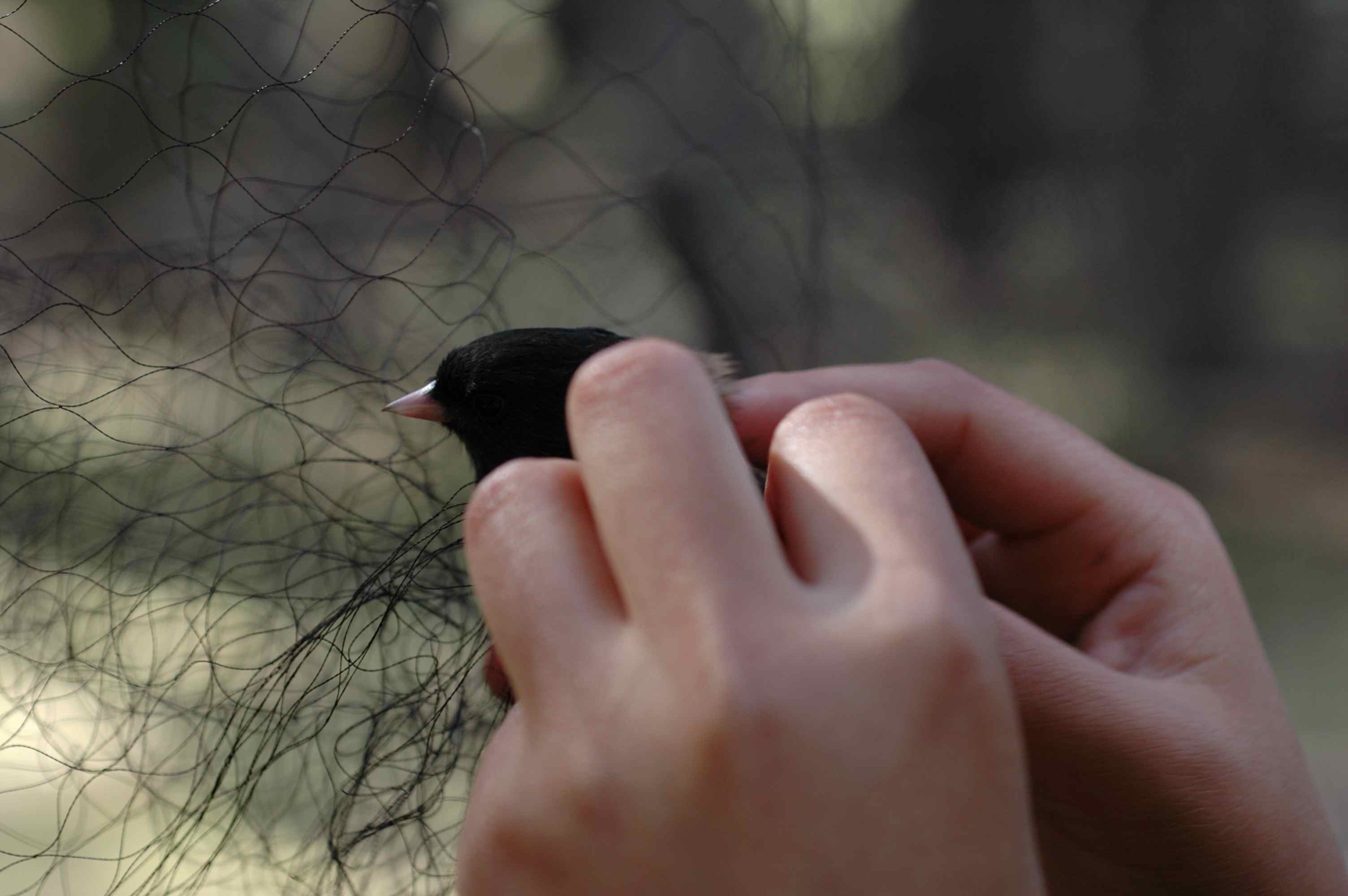
When you’re target netting, as we are, you use just a few nets and play the song of the bird species you want to catch to lure them into the nets. Even so, sometimes you accidentally catch other things.

The bycatch we dreaded was the stinging insects: we caught two bees and three wasps last week. We did get all of them freed, but it was very time-consuming, and was more time spent closer to these stinging guys than I really ever wanted. Lots of disentangling one body part and then flinching back, disentangling another and flinching back…

It’s hard not to like avian bycatch, though. We extract them from nets and simply release them—I don’t have a permit to do anything with any species besides juncos—but still it’s fun to handle other bird species, and to see them up close. Continue reading

We caught juncos

The first field expedition was a success! Almost exclusively thanks to the ingenuity, good mist netting sense, and all around awesomeness of my three field assistants. Over three sites we banded a total of 18 juncos. And there are many, many juncos still to go!

Since I’m on field time – wake up at 5:30, go to bed at 9:00 – I’m ready to crash, so I’ll leave you with some photos for now, with more info to come in the future.

SSOA, the first junco we banded

ELEA, unintentionally recaptured

Extracting ELEA from the net

OGAG

Legal! And scrambling

I got my state permit! I am now legally allowed to catch and band juncos in my low elevation sites. (My high elevation sites have an additional permit I’m still waiting on.) Yay!

I could band him

I could band her

Less awesomely, some equipment that I expected to have by now is backordered, so I’m going to have to improvise a little. But I’m fortunate that it’s nothing I can’t improvise. I’ve spent the last few days scrambling to get things that I really couldn’t do without, and it seems like all of that has been successful, so I’m happy.

Auxiliary marking permit all set!

I just got confirmation that one of my permits – to put colored leg bands on the juncos – is approved! This is awesome. Putting colored leg bands on birds allows researchers to tell individuals apart, since we can put unique combinations of colors on each bird. For example, here are the color bands of RROA, a male House Wren who lived in Ithaca:

Image

RROA = Red Red Orange Aluminum, with the aluminum band being the official US Fish & Wildlife band; this band has a unique number engraved on it, and all information about the bird is associated with that number. However, you have to be holding the bird in your hand to read its USF&W number, so researchers use color bands to be able to tell who is who without capturing the bird. We could identify RROA just by looking at his color bands with our binoculars – we didn’t even have to disturb him. RROA bred in our field site for three years, the longest of any House Wren there. (And yes, we called him RROA – pronounced Roe-uh.)