Conferences everywhere

This is the first summer in several years that I’ve decided to prioritize something other than field work. This year, I’m focusing on going to conferences and writing up my work—as well as some field work, fear not: there will be photos of baby juncos this year.

Here's a Mew Gull chick to tide you over in the meantime.

Here’s a Mew Gull chick to tide you over in the meantime.

Conferences are a strange combination of things. They are a chance to meet new people and spark collaborations: hey, you do that thing and I do this thing, we should do things together! But they are also a chance to size up the competition, to try to gauge where your work falls on the spectrum of research quality. Scientists naturally see each other as resources and potential collaborators, but occasionally we have to remember that we are all competing for the same limited pot of research funding, of post-doctoral positions, of jobs.

Sometimes fish, too.

Sometimes fish, too.

Given that reality, I’m always proud of how little we behave like competitors: we edit each other’s grant applications and give suggestions on each other’s job talks, even while we know that we too need grants and jobs.

Continue reading

Puffins taking baths

I always thought of puffins as fairly dignified birds. They look sleek and posed in the photos you usually see, like statues of themselves. Recently, however, I discovered that to get that sleek, clean look, puffins take on some poses that would be quite hard to capture in a statue.

Just preening in a photogenic way....

Just preening in a photogenic way….

SPLOOSH!

SPLOOSH!

Continue reading

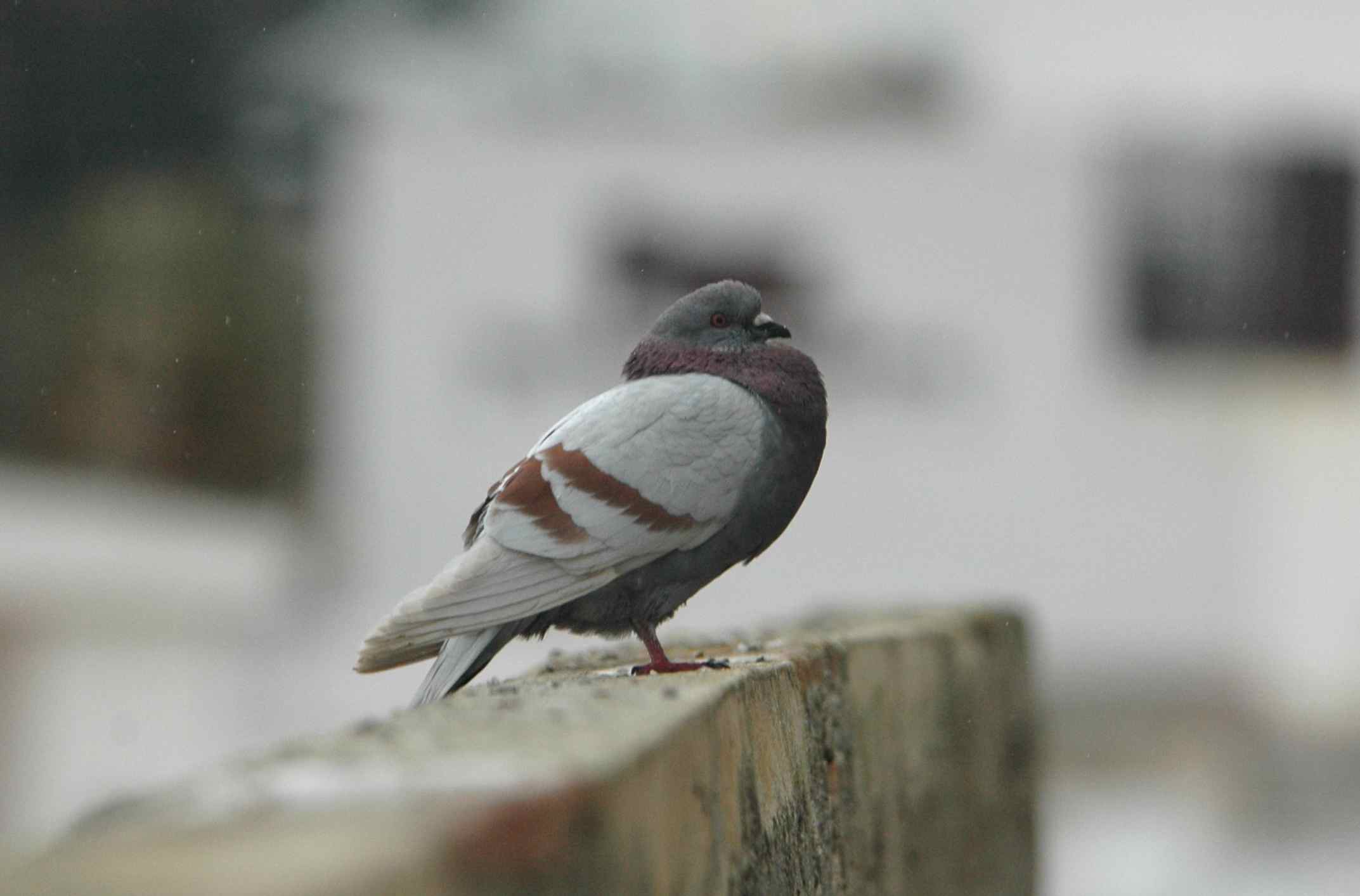
Why do pigeons court all the time?

Most of our familiar birds court potential mates only at specific times of year. This is why spring is such a melodious season in many places: the male songbirds are all singing for their mates. Male pigeons, however, seem to court all the time. It’s below freezing and snowing? Why, what a great time to puff up and bow and coo at the ladies!

Well... yeah. What's your point?

Well… yeah. What’s your point?

This seems strange because we expect courting birds to breed soon after a successful courtship. Yet pigeons court in weather that seems like it would be terrible for breeding. What are these pigeons up to? Are the males really trying to convince the females to lay eggs in mid-winter?

Continue reading

Who let me have a smartphone?

I held off getting a smartphone for a long time. I frustrated friends who tried to text my ancient flip phone internet links and baffled people by actually getting lost and having to phone for directions. (Who gets lost these days? Everyone has Google Maps in their back pocket now.)

But I’m going to two conferences in unfamiliar places this summer, and I don’t particularly want to get lost in Alaska or Brazil. So I got a smartphone. And now I have a camera in my back pocket all the time.

Not surprisingly, in my hands this has mostly yielded pictures of birds.

Owl Finches at the local pet store.

Owl Finches at the local pet store.

Display of birds at Cal Day, the one day a year (today!) that the museum opens its doors to the public.

Display of birds at Cal Day, the one day a year (today!) that the museum opens its doors to the public.

Continue reading

Double rain

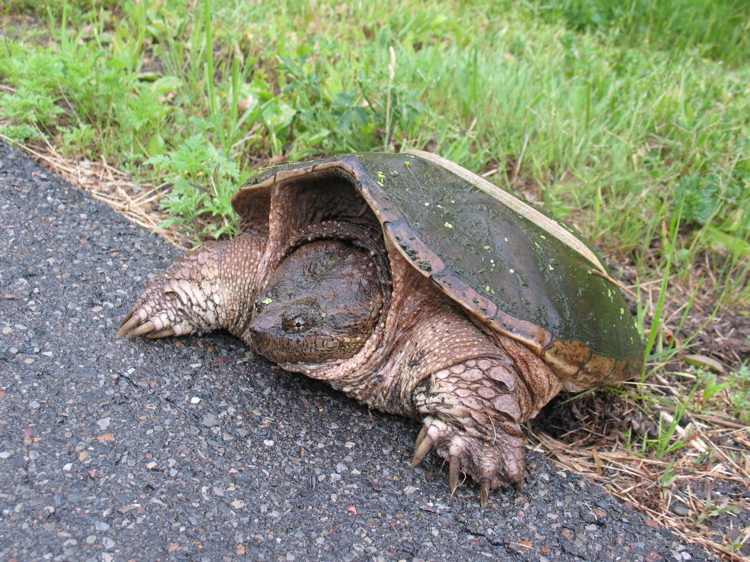
Before I studied juncos in California, I studied House Wrens in New York. Most days in the spring and summer I biked from my basement apartment to my field site, which had the no-nonsense label Unit One. The bike ride was an adventure in itself: I prepped for the field season by relearning how to stay on a bike, which I hadn’t done since childhood. (Contrary to the popular saying, it appears I can forget how to ride a bike.) On my way to Unit One I often came upon large snapping turtles stumping deliberately across the road, on the turtle-slow prowl for places to lay their eggs.

snapping_turtle

Unit One was primarily a field site for studying Tree Swallows. The front half of it was short grass broken up by regular rectangular ponds, over which the swallows stooped and swirled. House Wren territory lay past the manicured domain of the swallows, in forest dense with brush and mosquitoes. At the start of the field season I feared getting lost in it: the paths were overgrown, and I have a poor natural sense of direction.

Continue reading

Find the nest

Juncos nest on the ground, which might seem dangerous: ground nests are more accessible to predators than nests in trees. However, a nest in a tree is certain to be, well, somewhere in a tree; a nest on the ground could be anywhere. The ground of a forest or meadow or even a campground is a complex surface, with lots and lots of places where a junco nest could be, only a very tiny fraction of which actually contain a junco nest.

In this series of “Find the nest” posts, I’m going to try to share with you the challenge of looking at a habitat and guessing where a junco nest might be, and the excitement of finding a well-hidden nest. Each post will have a slide show of photos, beginning with a zoomed-out image of a fairly large area, and progressively zooming in to eventually reveal the junco nest. All of the photos are from my field work and are of real wild junco nests.

Use the back and forward arrows and the pause button to navigate the slide show.

This slideshow requires JavaScript.

Do birds have a sense of smell?

Not too long ago, the generally-accepted answer to this question would have been: “Not really—a few birds do, but most don’t.” This was largely based on the observation that most birds have very small olfactory bulbs in their brain relative to their overall brain size. As we observe bird behavior, however, we are are increasingly realizing that most birds can and do use smell regularly, often for very important things.

Let’s begin with the birds that have been known for a long time to use smell. Kiwi birds are unique in having their nostrils on the end of their bills, rather than close to the base of the bill like all other birds. Kiwis stick that long bill into the soil and use their nostrils to sniff for insects and worms.

Brown Kiwi chick. Photo by Smithsonian's National Zoo*

Brown Kiwi chick.
Photo by Smithsonian’s National Zoo*

It makes a lot of sense that kiwis have a good sense of smell, even if you think that birds in general don’t, because kiwis seem to have evolved to be the avian version of a small fuzzy mammal. Kiwis evolved on the islands of New Zealand, where the only mammals were bats. The small-brown-fuzzy-nocturnal-snuffling-in-the-dirt-for-worms niche was open for the taking, and kiwis—flightless, nocturnal, and covered in long thin feathers that are highly reminiscent of hair—took it. A good sense of smell goes with that niche.

Continue reading

Seeing song: an interview with a partially deaf ornithologist who studies bird song

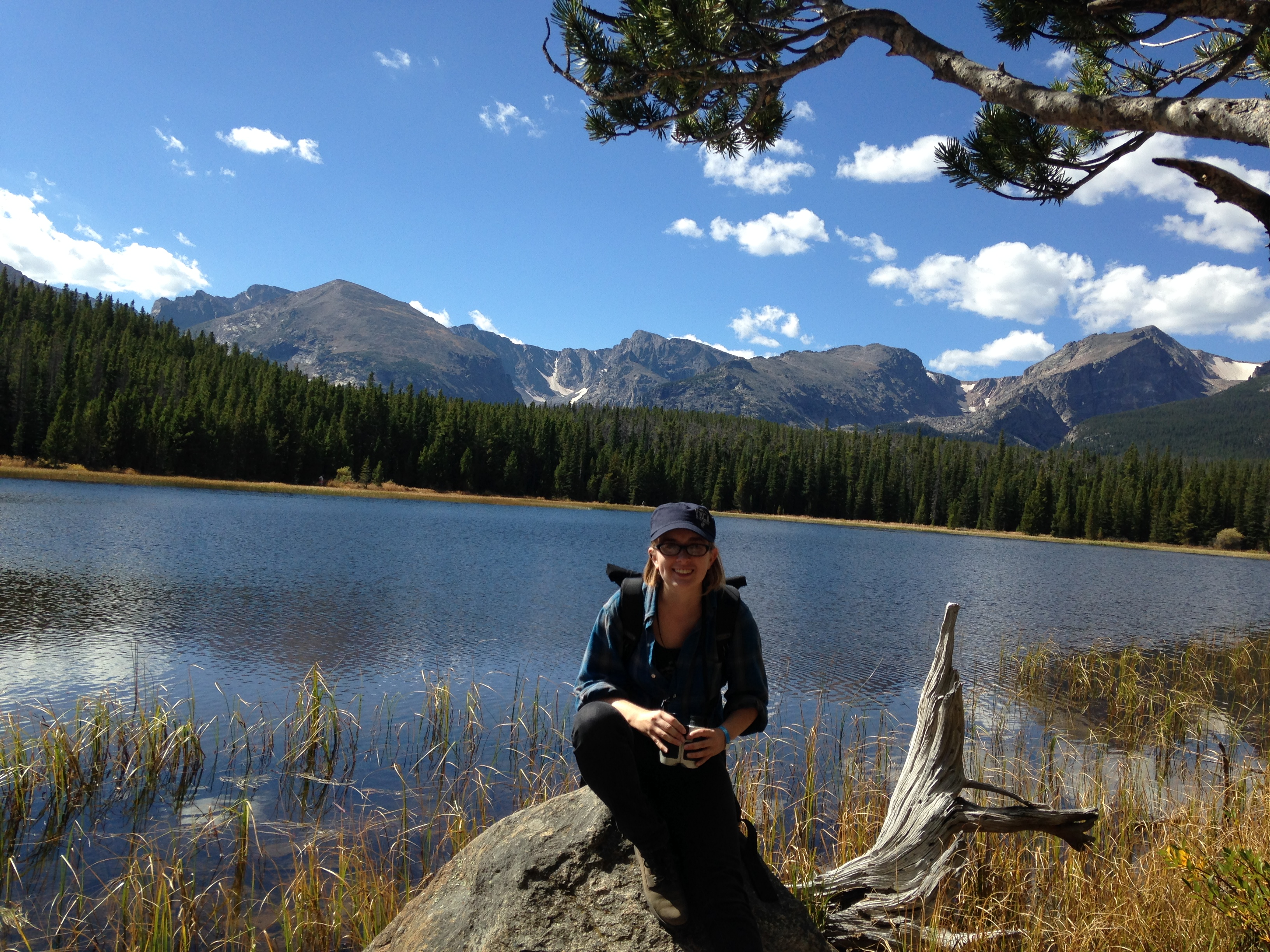
Alma Schrage is a recent graduate of UC Berkeley and a research assistant in the Bowie lab in the Museum of Vertebrate Zoology. Over several years I have watched her become an ornithologist. In this interview she discusses her research on bird song and how it has been affected—or not—by being partially deaf.

Alma in the field. Photo courtesy of Alma Schrage.

Alma in the field. Photo courtesy of Alma Schrage.

Why study bird song?

It’s interesting on several different levels. If you’re interested in cognition and behavior, bird song provides so many different things to study. You can also study how vocalizations tie in with genetics, morphology and such to help provide a fuller picture of the bird, or you can study the factors that drive development of bird song such as different acoustic environments, and selective forces on calls and songs.

Continue reading

Featured paper: five warblers, lots of tornadoes, and a mystery

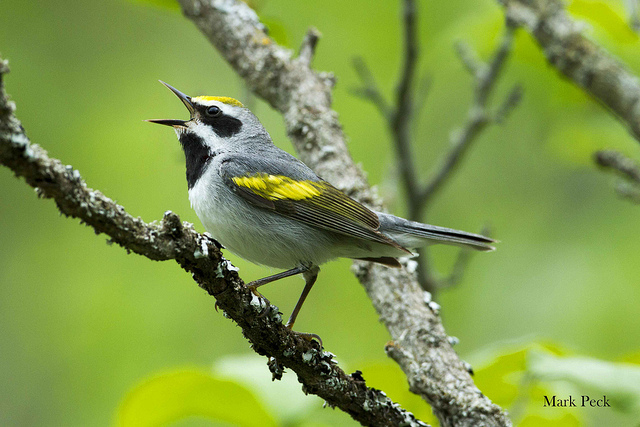
Male Golden-winged Warbler. Photo by Mark Peck*

Male Golden-winged Warbler. Photo by Mark Peck*

This story begins when Streby et al. (2015) decided to track Golden-winged Warblers during their annual migration. We know that lots of birds migrate, but for most of them, we know surprisingly few details about that migration. Often we know generally where they go (to a specificity of, say, “somewhere in South America”) but not exactly where; rarely do we know what paths they take to get between wintering and breeding grounds. This kind of information is especially important for birds of conservation concern, since to protect a migratory population, you need to protect its wintering grounds and migration route as well as its breeding grounds.

The researchers relied on technology to tell them where the warblers went when they migrated. There are several different ways to track animal movements; in this case, researchers used light-level geolocators, which record the amount of light hitting the geolocator. Collected over time, these light intensity measurements allow researchers to calculate where the geolocator was, based on things such as day length. This location information isn’t as accurate as the data you would get from a GPS logger, but the light-level geolocators have a big advantage over GPS loggers: they can be much smaller, so you can put them on tiny birds like Golden-winged Warblers. A Golden-winged Warbler attached to a heavy, clunky GPS logger would not be migrating anywhere.

Continue reading