A bird in the hand

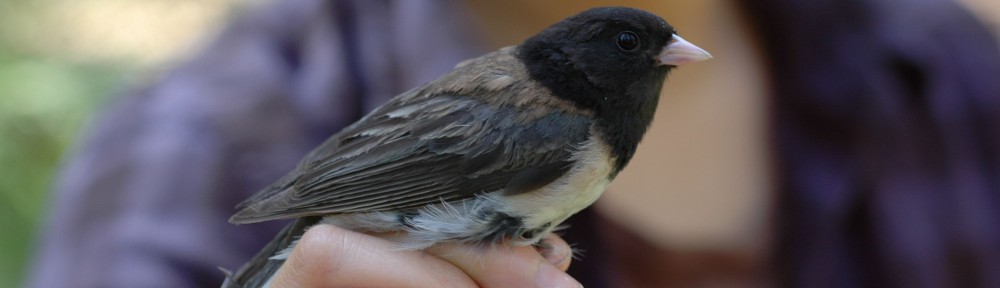
What happens when we catch a junco:

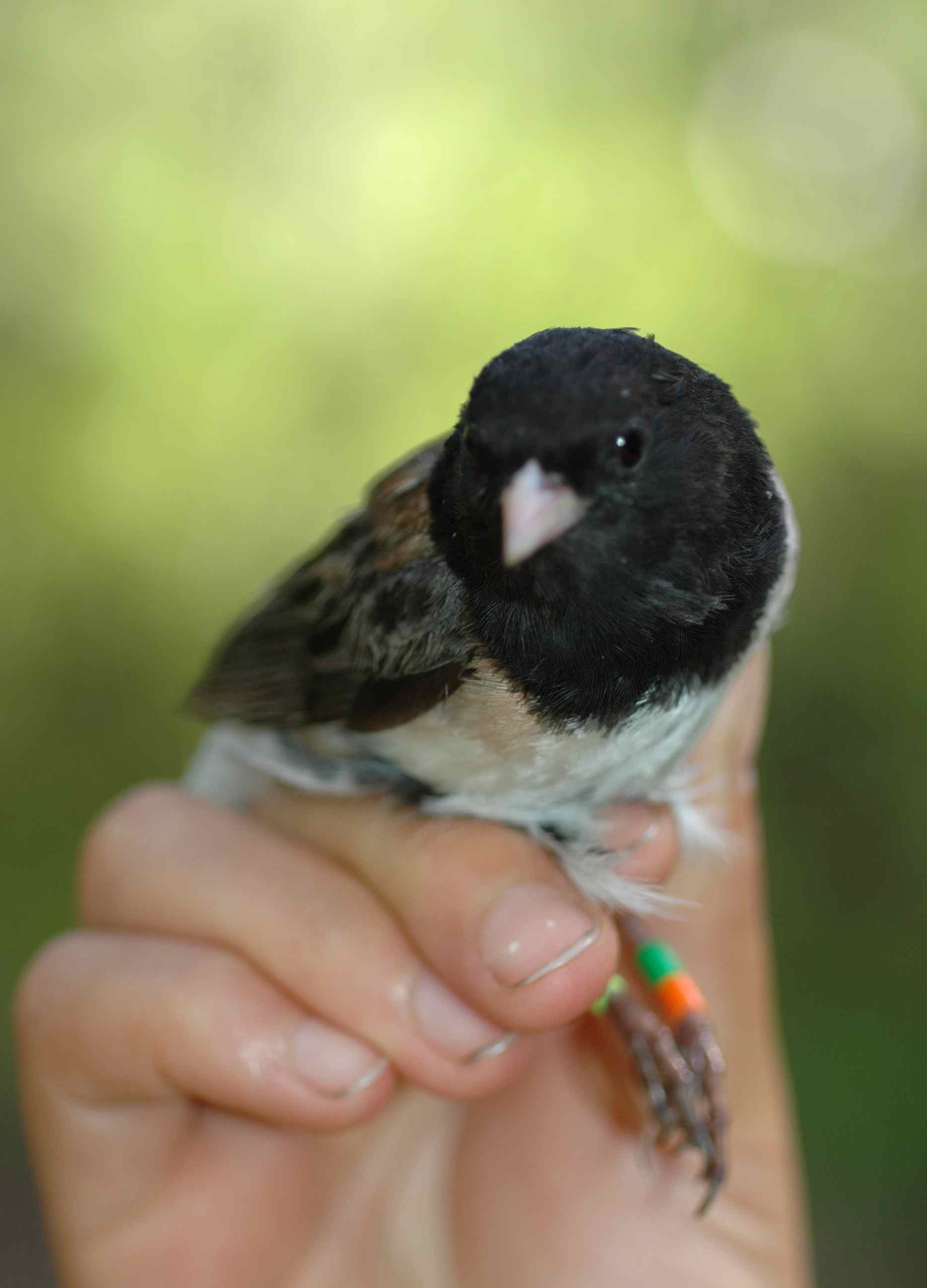
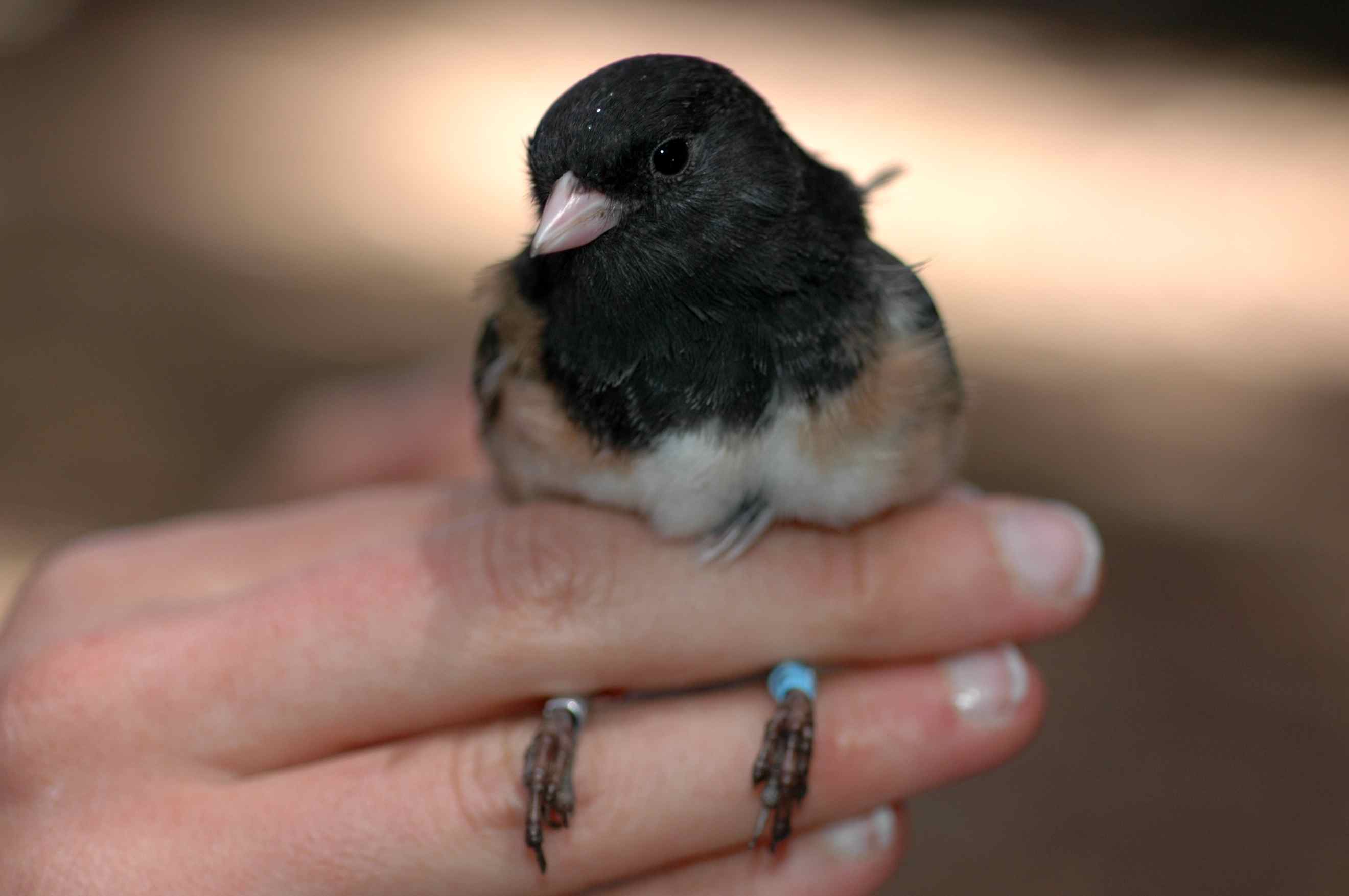
We band it with the uniquely numbered US Fish & Wildlife band. This is the first priority because once the bird has this on, we can identify it later even if it escapes. Then we add the three colored leg bands so that we can identify it later even from a distance.

GOAL with his leg bands

Continue reading

Bycatch

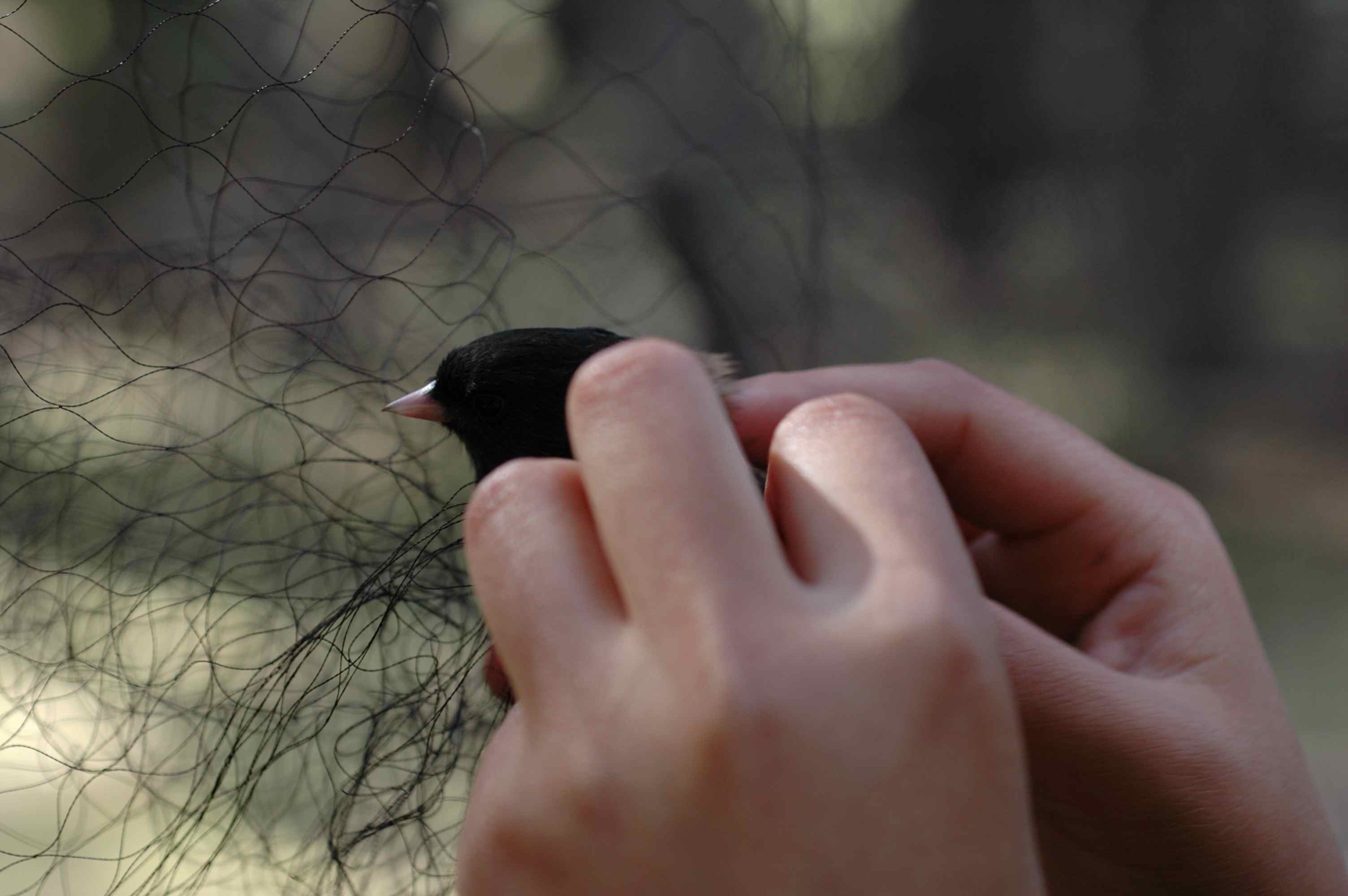
When you’re target netting, as we are, you use just a few nets and play the song of the bird species you want to catch to lure them into the nets. Even so, sometimes you accidentally catch other things.

The bycatch we dreaded was the stinging insects: we caught two bees and three wasps last week. We did get all of them freed, but it was very time-consuming, and was more time spent closer to these stinging guys than I really ever wanted. Lots of disentangling one body part and then flinching back, disentangling another and flinching back…

It’s hard not to like avian bycatch, though. We extract them from nets and simply release them—I don’t have a permit to do anything with any species besides juncos—but still it’s fun to handle other bird species, and to see them up close. Continue reading

We caught juncos

The first field expedition was a success! Almost exclusively thanks to the ingenuity, good mist netting sense, and all around awesomeness of my three field assistants. Over three sites we banded a total of 18 juncos. And there are many, many juncos still to go!

Since I’m on field time – wake up at 5:30, go to bed at 9:00 – I’m ready to crash, so I’ll leave you with some photos for now, with more info to come in the future.

SSOA, the first junco we banded

ELEA, unintentionally recaptured

Extracting ELEA from the net

OGAG

Featured paper: nest predation

Corey Tarwater. 2008. Predators at nests of the Western Slaty Antshrike (Thamnophilus atrinucha). The Wilson Journal of Ornithology, volume 120(3): pp 620-624.

Nest predation is a major worry for most birds. Chicks in the nest are essentially helpless, and parents usually can’t do much to stop predators, although they will try. Losing broods to predation is common. In this study, 79% of nests were lost to predation. If you’re a Western Slaty Antshrike, you can expect 4 out of every 5 broods of chicks you have to get eaten!

Yet actually seeing these—or any—predation events is extremely rare. Dr. Tarwater describes five nest predation events on Western Slaty Antshrikes (small, cryptic brownish birds) in Panama, one she observed in person and the rest of which she caught on video.

Continue reading

Featured paper: fledging House Wrens are funny

(This will be a regular feature: blurbs about papers I like.)

Today’s paper: “The process and causes of fledging in a cavity-nesting passerine bird, the House Wren (Troglodytes aedon)” by L. Scott Johnson, Robin L. Rauch, and Sara N. Dellone. Published in 2004 in Ethology 110, pages 693-705.

Fledging is the act of leaving the nest for the first time. In birds with altricial (helpless, naked, dependent) young, this is a big step: the chicks go from sitting in a nest to flying around like adult birds. Or trying to fly around, anyway. Fledglings often aren’t very good at flying at first.

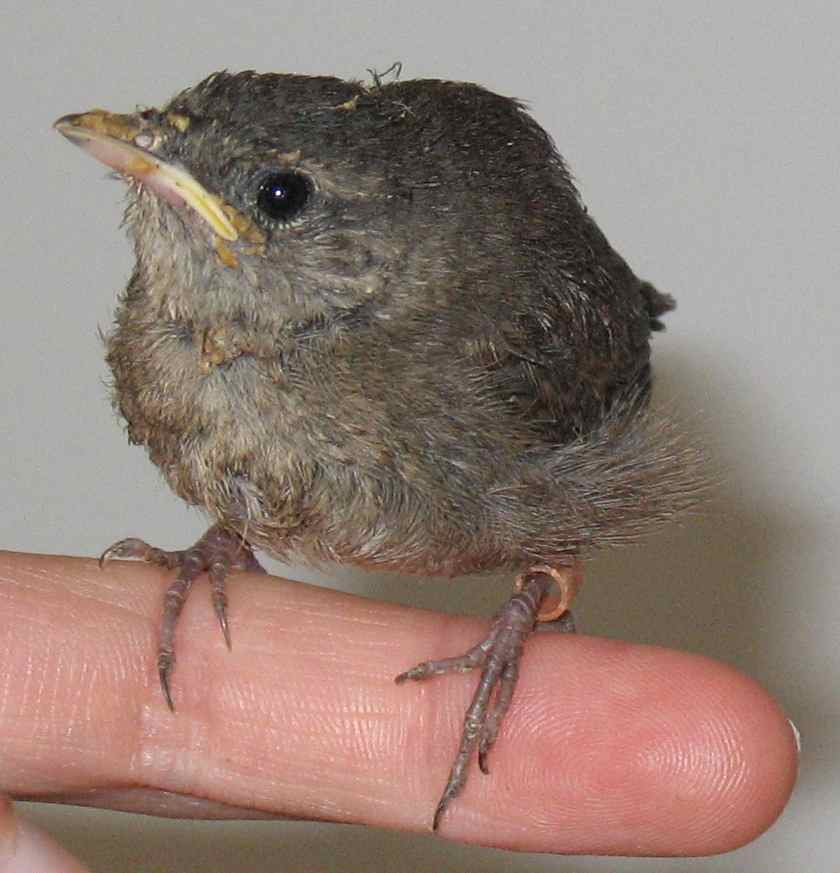
A rehabbed House Wren nestling (and messy eater) nearly ready to fledge

Continue reading

Follow-up: almost nobody understands mirrors

Since several people have contacted me to defend junco intelligence after the mirror post yesterday, I thought I might talk a bit more about birds and mirrors.

Very, very few species understand mirrors, and an enormous majority of them behave as if the mirrored images are real, as the junco did. The list of birds that do not recognize themselves in the mirror is long: Budgerigar; House Sparrow; Kea; Black-capped Chickadee; Zebra Finch; Cedar Waxwing; Glaucous-winged Gull; Blue Grouse; Peach-faced Lovebird; reviewed in (1). In 1964, Edith Andrews kept an injured junco in a cage with a mirror and observed that it was quieted by the mirror, liked to perch next to it, and “appeared to be smitten with its own image” (2).

Continue reading

Juncos do not understand mirrors

The other day I saw a junco perched on the ledge of the front side window of a parked car. As I watched, he flew at the side-view mirror, a full head-on charge. When that didn’t seem to work, he sat back on his perch on the window, looked at the mirror, and charged again. And again. When some people passing by scared him up into a tree, he waited until they were gone, and then he flew back down and resumed his attack. He was really determined to win this fight against Mr. Uppity Mirror Junco.

I’m hoping this was a fluke. No one wants to think that their study species is dumb.