If you’re impatient for the New Year’s fireworks displays, here are some explosions of color in bird form.

Nicobar Pigeon. Photographed at Lincoln Park Zoo in Chicago.

If you’re impatient for the New Year’s fireworks displays, here are some explosions of color in bird form.
Nicobar Pigeon. Photographed at Lincoln Park Zoo in Chicago.
I just noticed that I forgot to post the last bycatch of the season. Whoops! Here it is—only about three months late.
Adult Green-tailed Towhee
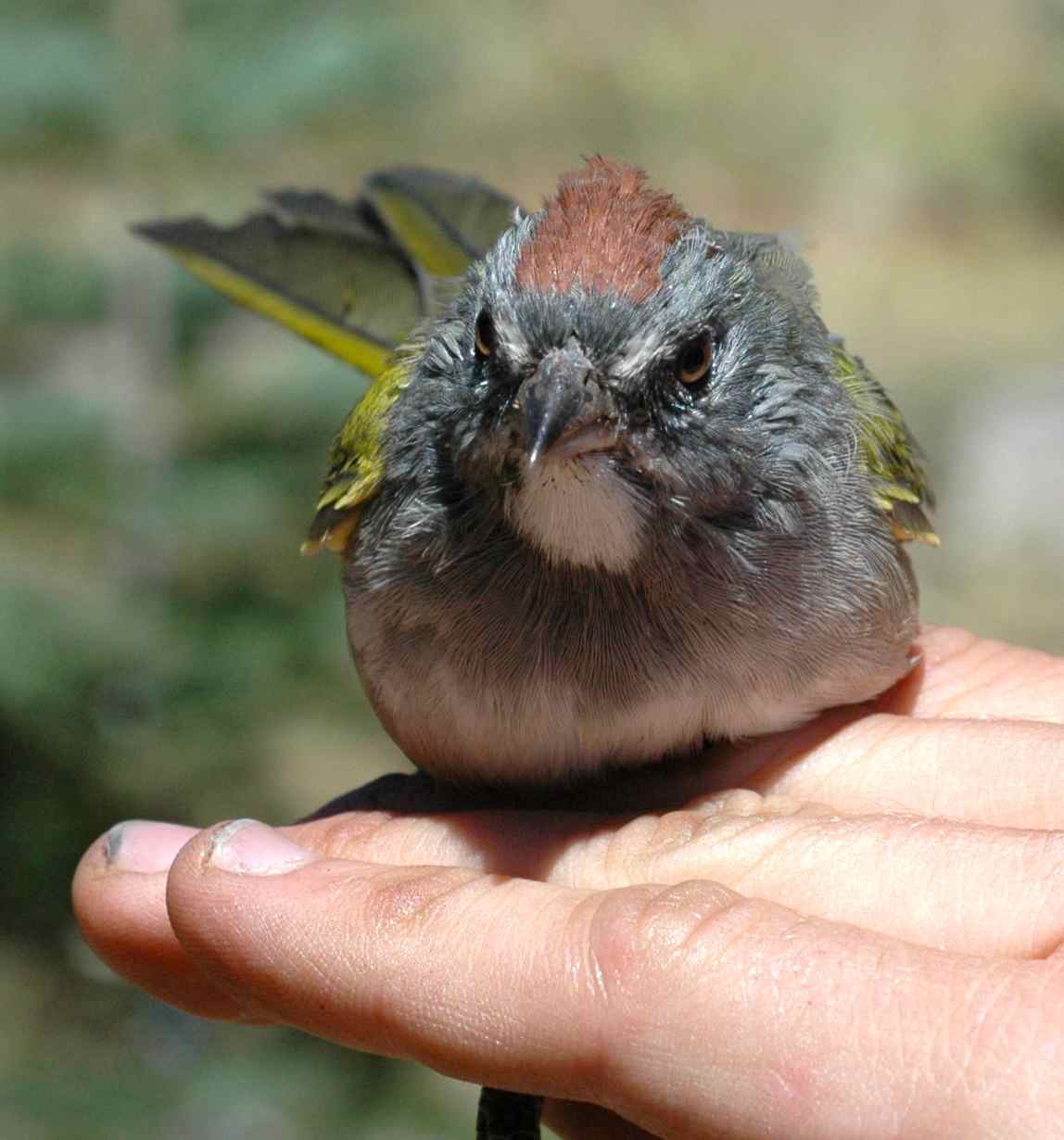 When I saw my first Green-tailed Towhee, I had only just moved to California and was not at all familiar with western birds. I remember looking through my binoculars at the bird singing from the top of a tuft of sagebrush, memorizing traits in order to look it up in my bird guide, and thinking “No way am I going to find this. This is going to be one of those birds that I’m seeing in a weird light so that I’ll never be able to ID it, and I’ll tell people, ‘I swear it was green with a red cap!’ and they’ll never believe me.” But then there it was in my Sibley’s: green with a red cap. I love these birds.

In general, we understand red birds thusly: the brighter the red, the better the bird. (Why? See this post.) The better the bird, the better his genes/parental care/mate, and the better his reproductive success.
But sometimes it’s more complex—and interesting—than that.

Red male House Finch. Photo by M. LaBarbera.

Yellow and orange male House Finches.
Photo by Ken-ichi Ueda.
At the Lincoln Park Zoo in Chicago recently, I got the chance to see some particularly charismatic birds, including a colony of squabbling flamingos, and Sophia the young Cinereous Vulture. Abandoned as an egg, Sophia was raised by humans—with a vulture puppet—until she was old enough to rejoin her parents.
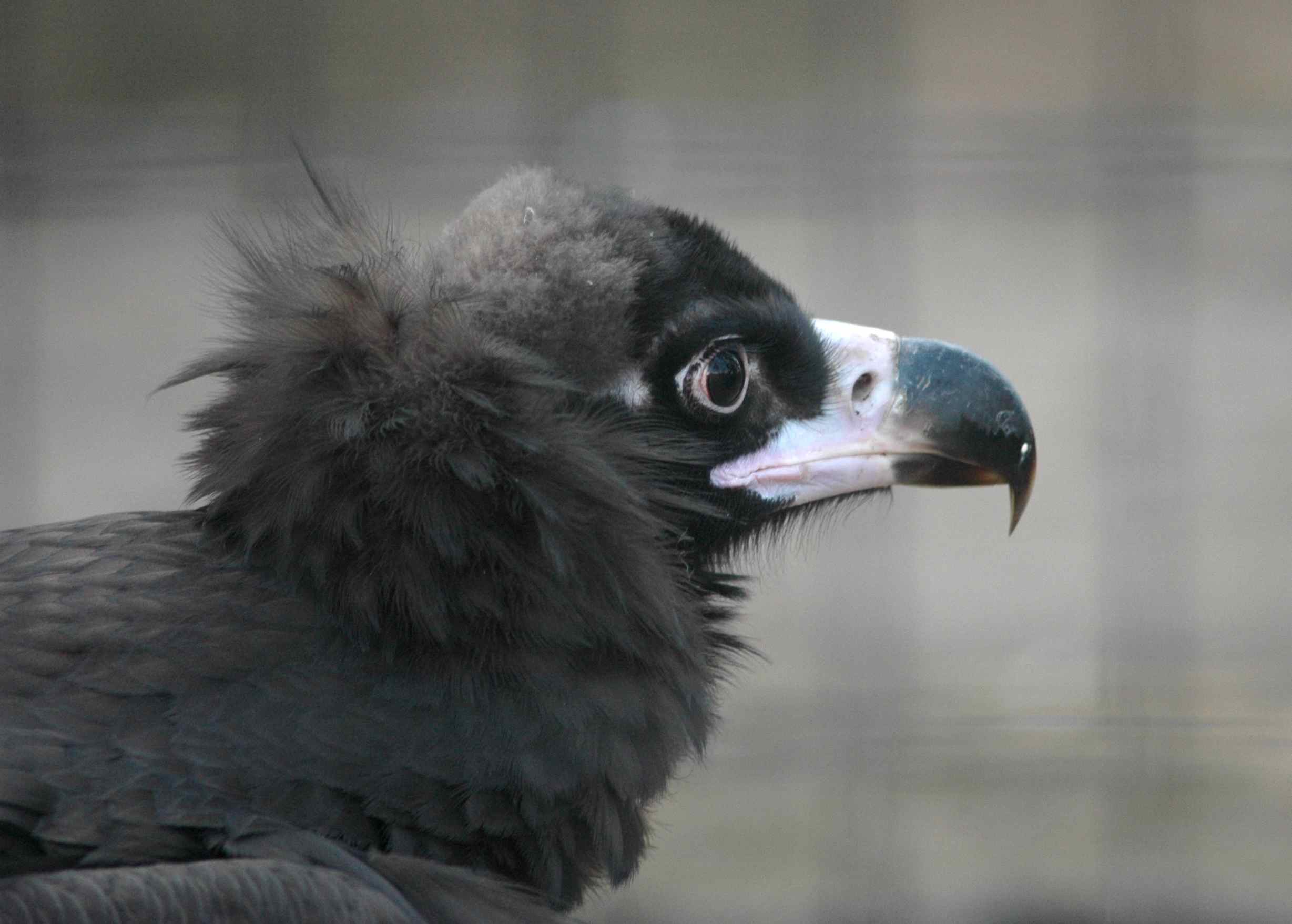
Sophia the Cinereous Vulture, at the Lincoln Park Zoo in Chicago.
The morning I saw her was overcast and cold, but she was in high spirits: a man was raking her enclosure, and while her parents mostly ignored him, Sophia was fascinated. She chased the rake; he shooed her away; she stalked it. “I helped to raise her,” the man said; then, rolling his eyes, “It’s impossible to get anything done with her around.” Eventually he dropped the rake, and Sophia got to investigate.
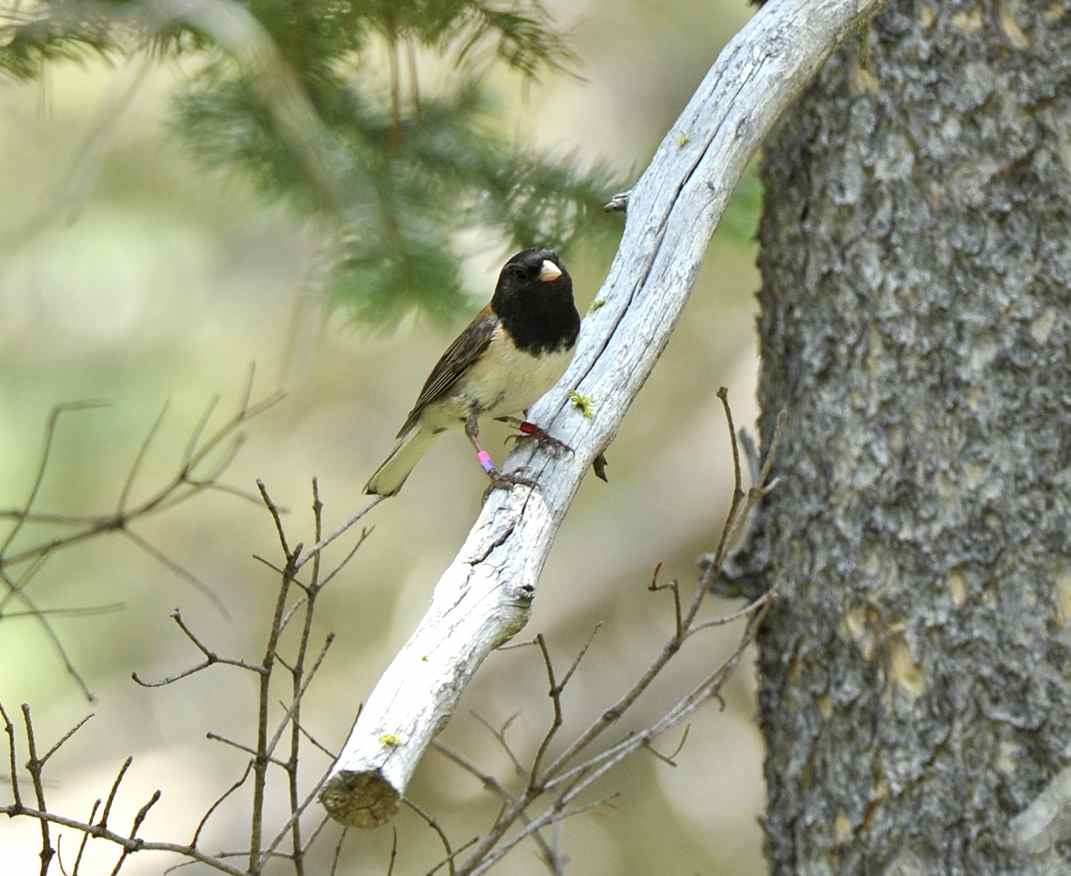
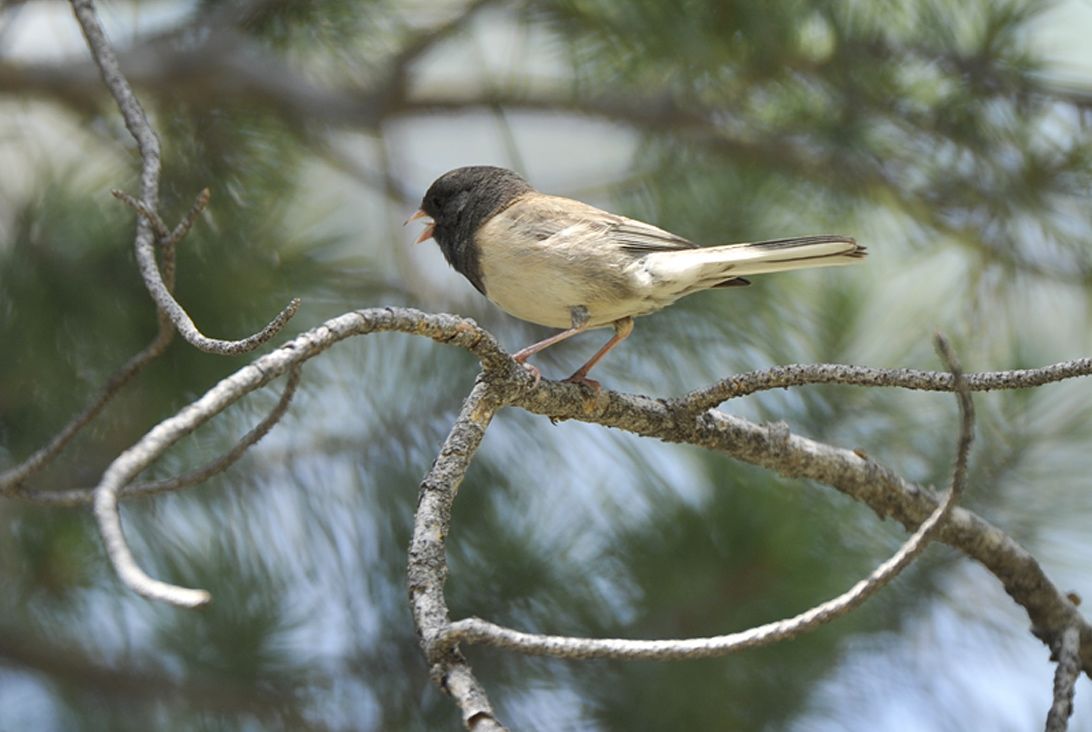
ARKM the Dark-eyed Junco showing off his perfect birdiness.
Photo by M. LaBarbera
I think we can all agree that the junco is pretty much the Ideal Bird. Ask any small child. Brownish, feathers all over, small round body, short neck, cute twiggy legs, little triangle for a bill: that’s what a bird looks like.
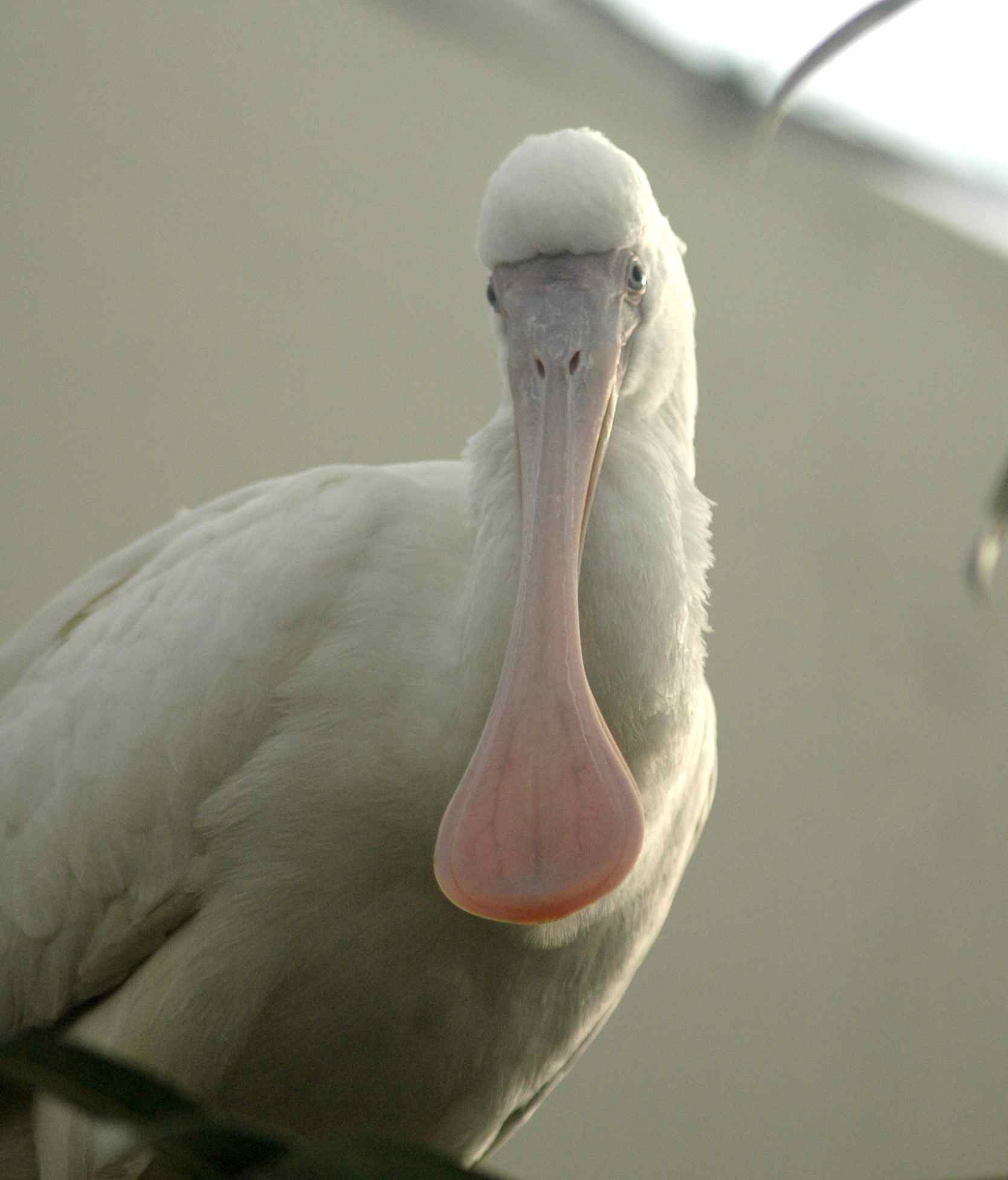
Um…
Or not. None of the following birds look like a small child’s quintessential Bird, because these birds—with their spoonbills, mustaches, and scary dinosaur feet—are awesome weirdos.
It’s rare that I have photos of the process of banding a nest, since usually everyone is holding a chick and we don’t have any extra hands for photographic documentation. For a few nests, however, I was lucky enough to have my father with us, and boy does he like to photograph things! Thanks to him I can show you what it looks like when we band a nest.
EDIT: If you click on these (or any photos on this blog) you can see them bigger.

The nest, tucked next to the clump of plants in the center. If you look closely you can see Mom sitting on it.

Me taking the chicks from the nest, with Kyle ready to catch any runners.
Photo by M. LaBarbera

Often when you approach the nest, the female will flare her tail and spread her wings and run around on the ground to try to draw your attention away from the nest. This is a tail-on view of Mom doing that.
Photo by M. LaBarbera
Mom, angrily chipping at us.
Photo by M. LaBarbera
Nesting moms, are you having trouble fitting all your babies into one nest? Your troubles are over! We’ve got photos to inspire you to fit all those babies into one nest in an elegant, orderly way. A successful breeding season doesn’t have to mean clutter anymore!

These eggs are a mess. Look at that one shoved under the others. Don’t let this be your nest!
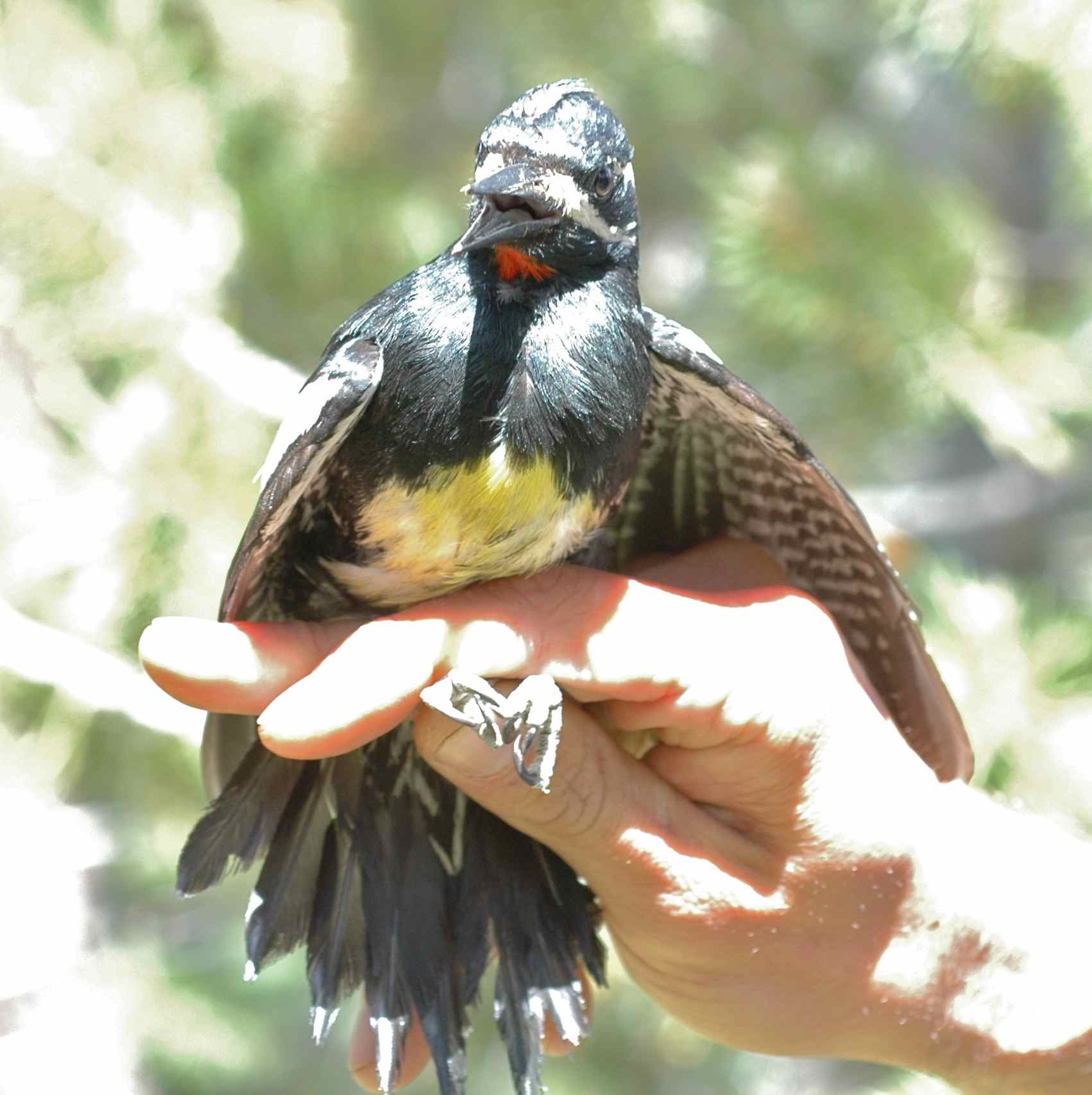
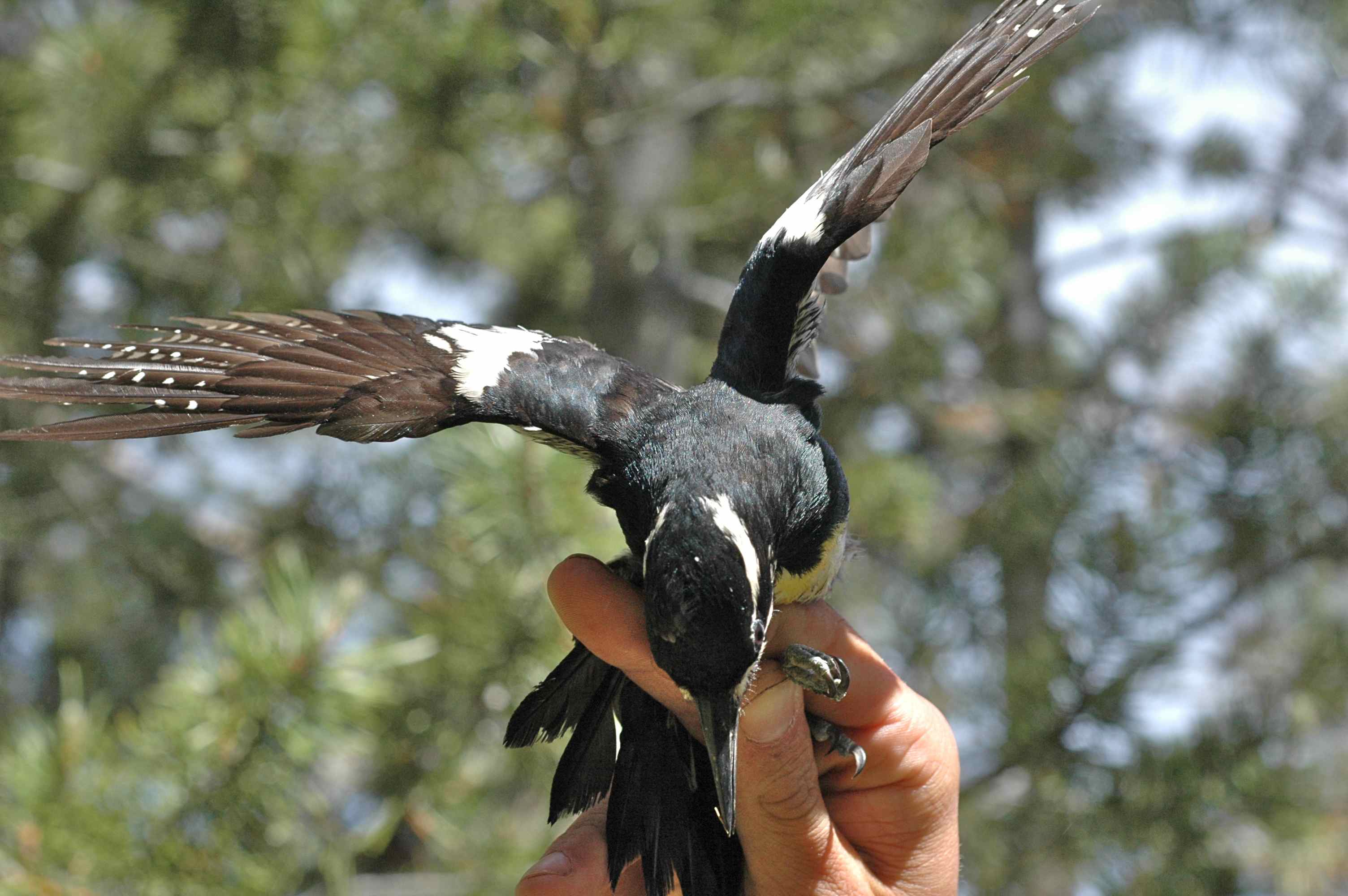
After I made such a fuss about catching a sapsucker and a hummingbird early in the season, of course, we caught another sapsucker and another hummingbird. These guys are no longer quite so unprecedented—although they were novel species for me—but they are still awesome.
Male Williamson’s Sapsucker
First, if you haven’t seen it yet, watch this chicken video. Yes, it’s an ad, but it’s completely worth it.
What are those chickens doing? And more importantly, can you learn to do it in time for your next dance party?
There are a few easy ways for baby juncos to distinguish me from their parents. For example, their parents have feathers and dark heads and are about their size, while I am a gigantic fabric-draped Godzilla monster. However, hungry chicks seem to not always be alert to such nuance, so I’ve accumulated quite a few photographs of the view down the gullets of baby juncos.

SEAL and NORA’s chicks
In the above photo you can see how the bright pink/red of the mouth, surrounded by the yellow bill outline, makes an obvious target for a parent with food.
Mostly, though, I just like how these photos make the chicks look even more like crazy pink alien beings than usual.
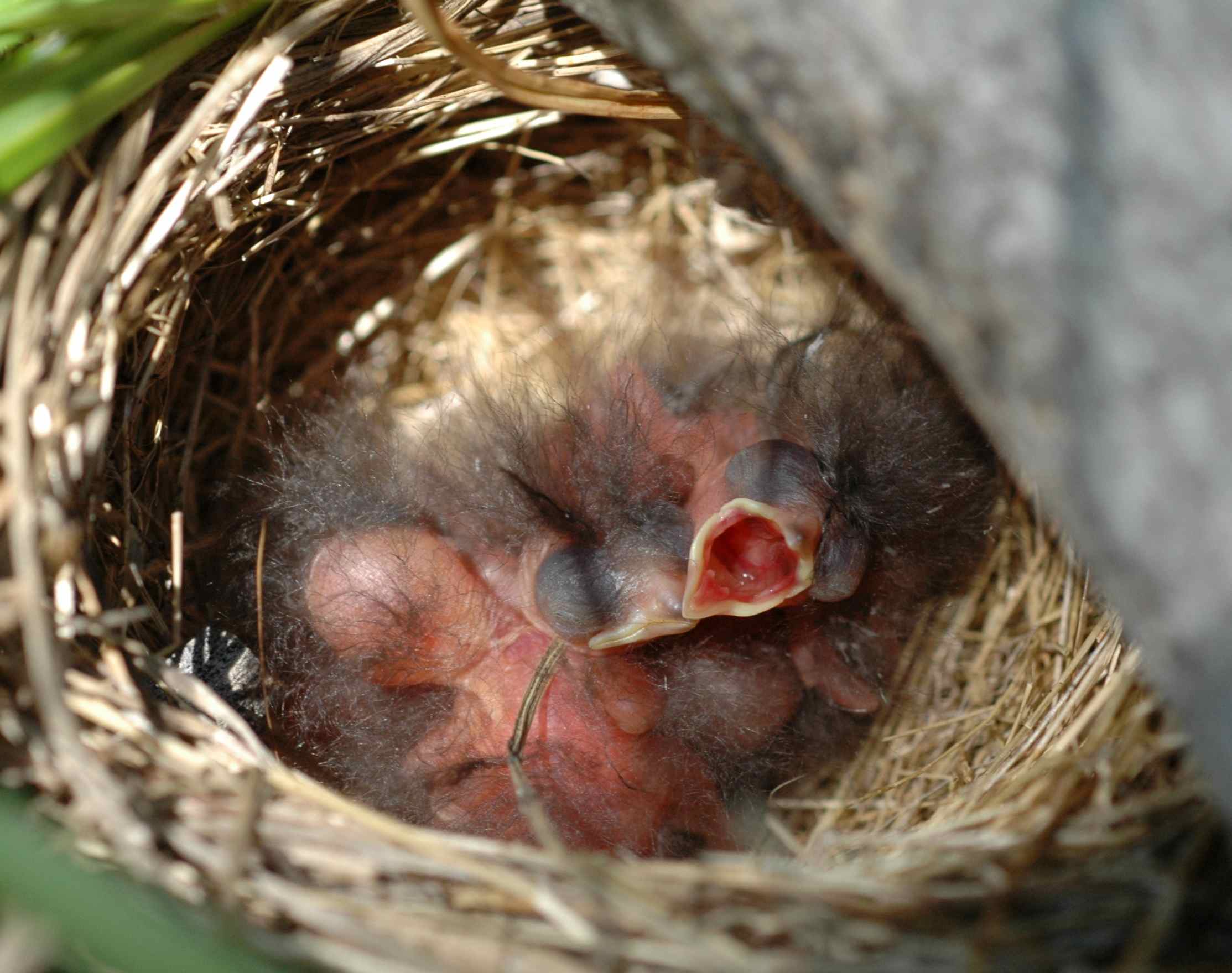
INGA’s chicks
 Tough Little Birds