Think like a scientist: clever Hans

Clever Hans was a horse. He lived in the early 1900s, had an article written about him in the New York Times (“Berlin’s Wonderful Horse: He Can Do Almost Everything but Talk“), and has a scientific phenomenon named after him: the Clever Hans Effect.

Why was Hans clever? He could do math – even fractions! He could tell time! He could use a calendar! He could recognize currency! He could tell the difference between musical tones! He could identify people from photographs! He could not only understand German but read and spell it! Basically, clever Hans was smarter than your Honor Roll student. And he was a horse.

That seems plausible, right?

Right?

Extremely historically accurate depiction of clever Hans doing math

Many animals are highly intelligent. For example, I have no doubt that psychologist Irene Pepperberg’s late, great African Grey Parrot Alex could have performed most of clever Hans’ tasks. But, sad to say, clever Hans was a fraud.

Continue reading

Scary birds

In honor of Halloween: some birds you would not want to meet in a dark alley at night. (Warning: first two sections contain photos of predation.)

Shrikes

Loggerhead Shrike. Photo by Jeff Jones.

Shrikes are medium-sized birds—the Northern Shrike is slightly smaller than an American Robin—and, upon first glance, fairly unassuming. Perhaps you notice the somewhat raptor-like bill; perhaps the extra notch on that bill, the tomial tooth; perhaps not. But it is only because you are much, much bigger than a shrike that you can afford to be so careless of this fearsome predator.

Continue reading

Think like a scientist: correlation

Correlation does not equal causation. Done!

Just kidding. It isn’t enough simply to state that classic phrase because in the real world, we’re often still stuck with using correlations. If you want to know how lifelong exercise habits affect lifespan, you can’t take two groups of people and force one group to exercise and the other not to (“GET BACK IN THAT CHAIR! That is TOO MUCH walking to the corner store for one day!”), while keeping everything else exactly the same between the groups (“I don’t care if you’re not hungry, everyone eats one cupcake on Tuesdays!”), for their entire lives. Even if you didn’t mind knowing that you, too, would be dead before the study was over, it would be completely unethical. Instead, you study people’s natural exercise habits, and try to correlate them with lifespan. Continue reading

Think like a scientist: sample size

Science is not just for scientists. The methods of thought that underlie science are useful in all sorts of everyday contexts. Most obviously, everyone needs to be able to think like a scientist in order to interpret scientific results—you know, those newspaper headlines like “PAPER CLIP USE MAY LOWER IQ IN PREGNANT WOMEN!!” In that spirit, I’m going to write about some key concepts for thinking like a scientist. Today: sample size.

Pop quiz! You read this (totally made up) report: “Two groups of ten age- and health-matched men were monitored for heart disease. One group was given pet ferrets, while the other was not. The ferret-owning men were 8% less likely to develop heart disease over a five year period.” So: is it time to run out and get a ferret for the sake of your heart health?

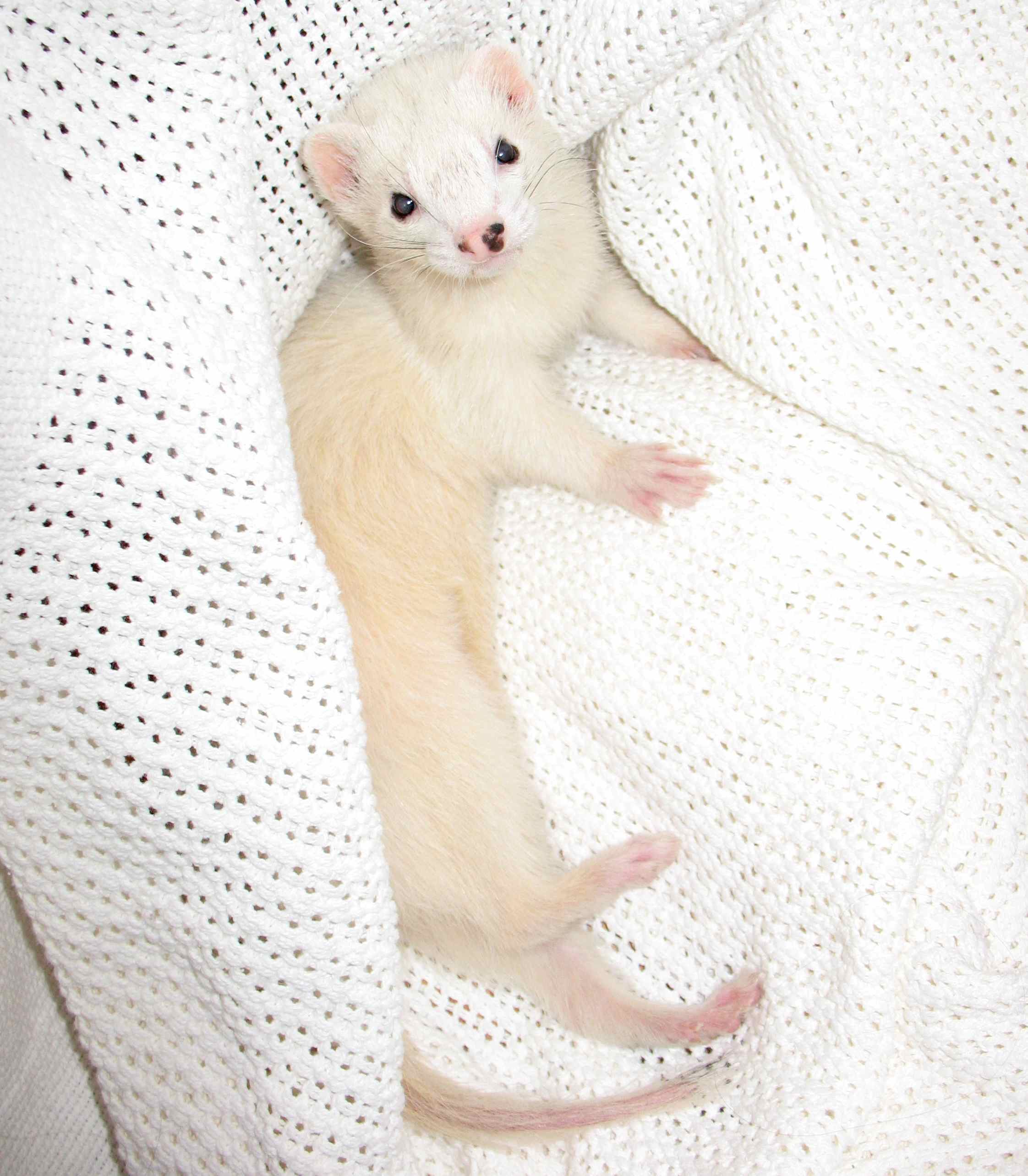
You should get a ferret regardless, because ferrets are wonderful. This is my awesome old ferret Zap.

Continue reading

What the chickadees are saying behind your back

Black-capped Chickadees may be the easiest birds to identify by ear. Chick-a-dee-dee-dee, they sing, telling you exactly who they are. (I’ve heard that towhees do this too, but the towhees I’ve heard always seem to be saying twee or taree, from which I would not be able to get “towhee” unassisted.)

Don’t you know who I am? I’m Chick-a-dee-dee!
[A Mountain Chickadee, not a black-cap, but I don’t have any photos of black-caps.]

Of course, the chick-a-dee sounds like a vocal nametag to us only because someone had the good sense to name chickadees after their call. But it serves as an identifier among the chickadees too. The “chick-a-dee call complex” consists of four note types (the A, B, C, and D notes in a row might be transcribed as chick-k-ka-dee) that can be given in various combinations. Each note type itself can vary in frequency and duration. The chickadees thus have a lot of potential variation to work with, and they do. The D (dee) notes alone indicate both the identity of the individual bird calling, and the flock it belongs too—rather the same way that an Englishman saying “Hello, my name is George,” might indicate to compatriots both his own identity (George) and, in his accent, the region he is affiliated with. When captive chickadees are put into new flocks, the calls of the new flock members change, converging on each other, to indicate their new flock membership.

Continue reading

Why birds don’t need GPS

Imagine you’re an albatross, a large seabird that spends months aloft over the open ocean. Now it’s the breeding season: time to head back to your favorite island, do some amusing courtship dances, and lay an egg. But you’re in the middle of the vast, featureless open ocean. How do you find your way back?

Homing pigeons, taken from their roosts and driven up to 800 km away, can fly home. (Several pigeons have received the animal version of the medal of honor for doing this while carrying messages in wartime.) Arctic shorebirds like the Red Knot will fly from the Arctic to southern South America, over 13,000 km, twice a year. Birds are very good at navigation. How do they do it?

Continue reading

What do birds see?

Another great question from James:

When certain birds (not owls) look out at you from their left eye, they can’t see you with their right eye on the other side of its head. So what do birds with eyes on both sides of the head actually see? Two different scenes? Or some sort of panorama distillation?

What does LAGG see?

Continue reading

What to do if you find a baby bird; plus, baby Steller’s Jay

Recently I’ve noticed that people are being referred to Tough Little Birds by searching things like “what to do when junco chicks fall out of the nest”—and, of course, finding this blog totally unhelpful. Whoops! I’m fixing that now.

Continue reading