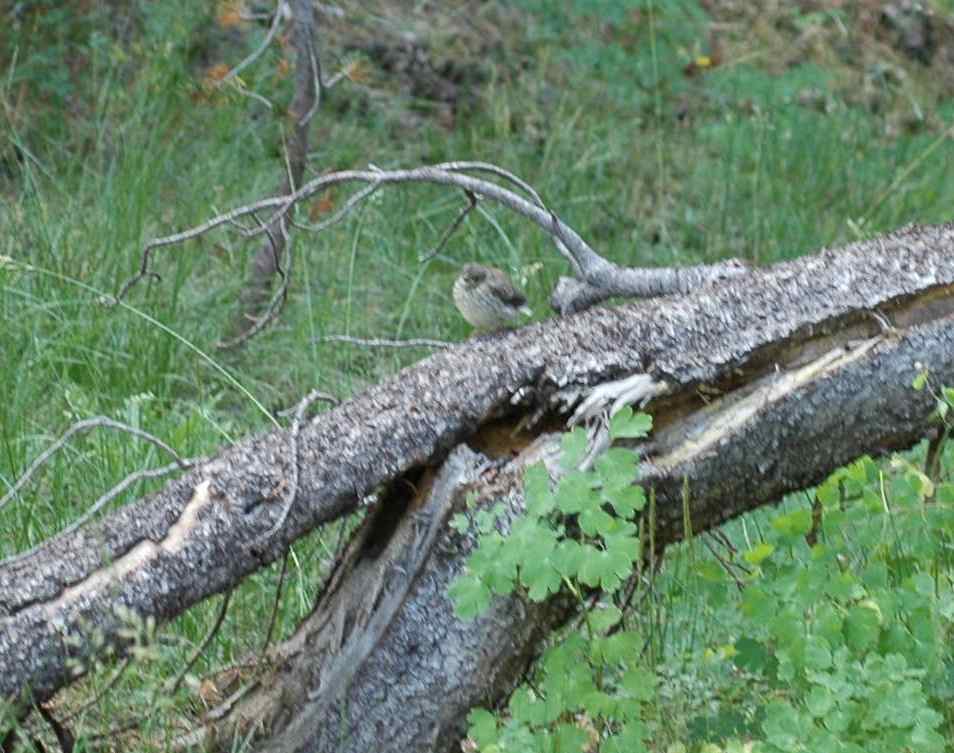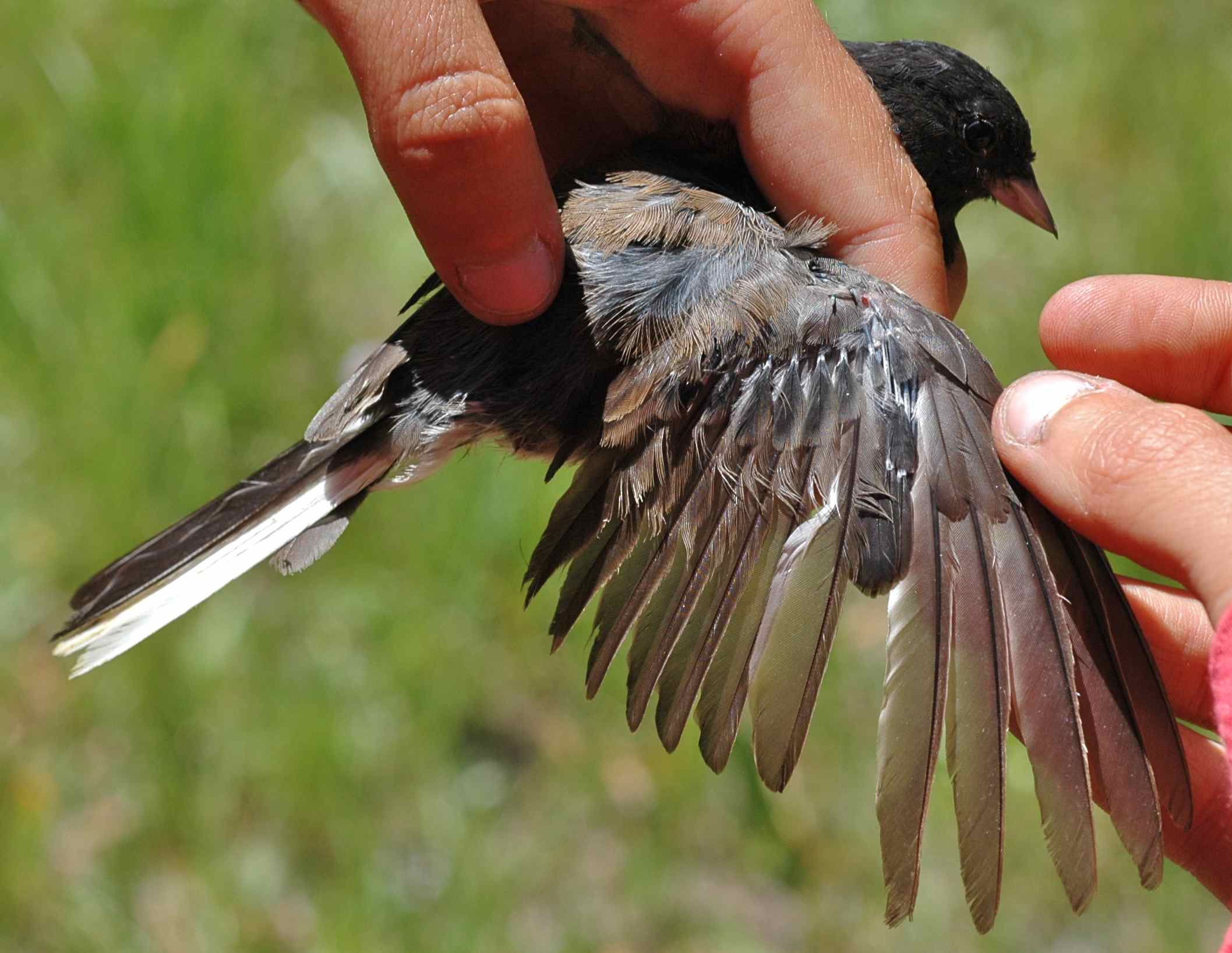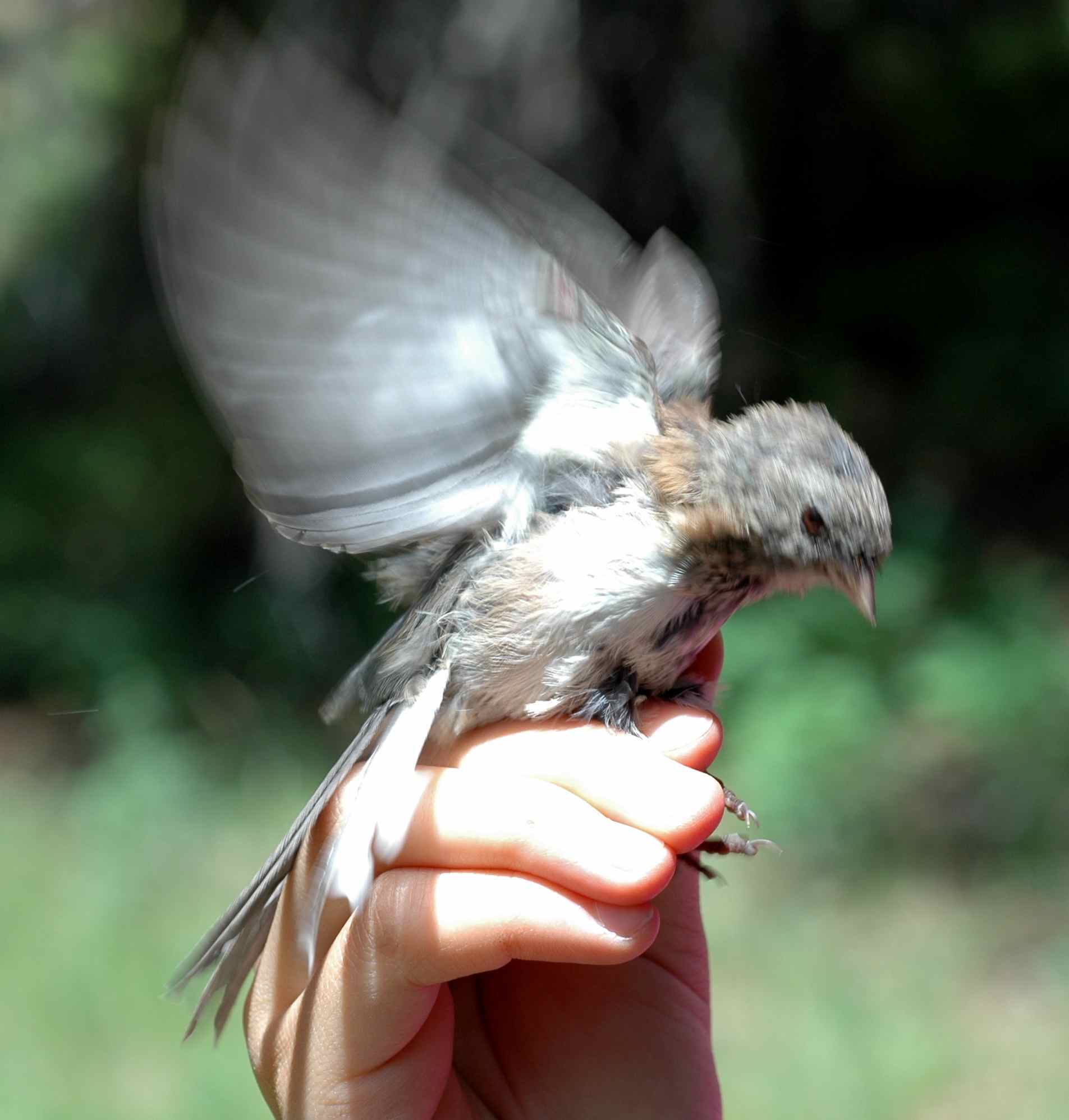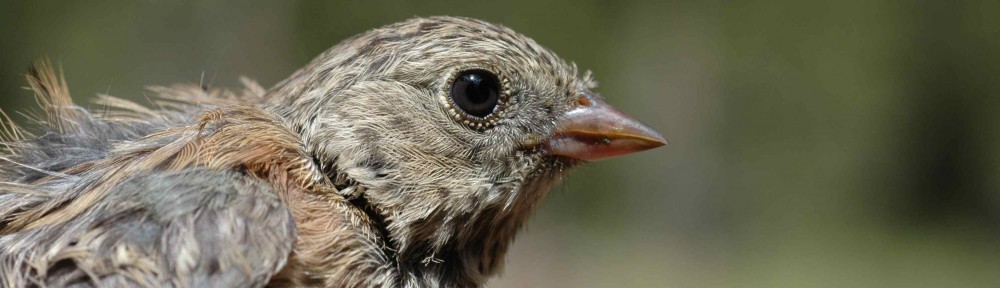
First juncos of the 2013 field season!

I got back from our first bout of field work yesterday, and I can say that if things keep going the way they did, we’re going to be banding a lot of juncos this year. That is excellent: the more we band, the more we can identify individually by sight, allowing us to observe the behavior of each. It’s much more informative to be able to say “KARL chased RRAY” than “one junco chased another junco”. Too, when we band them we also take measurements and pictures, so we can relate their behavior to things like condition and size.

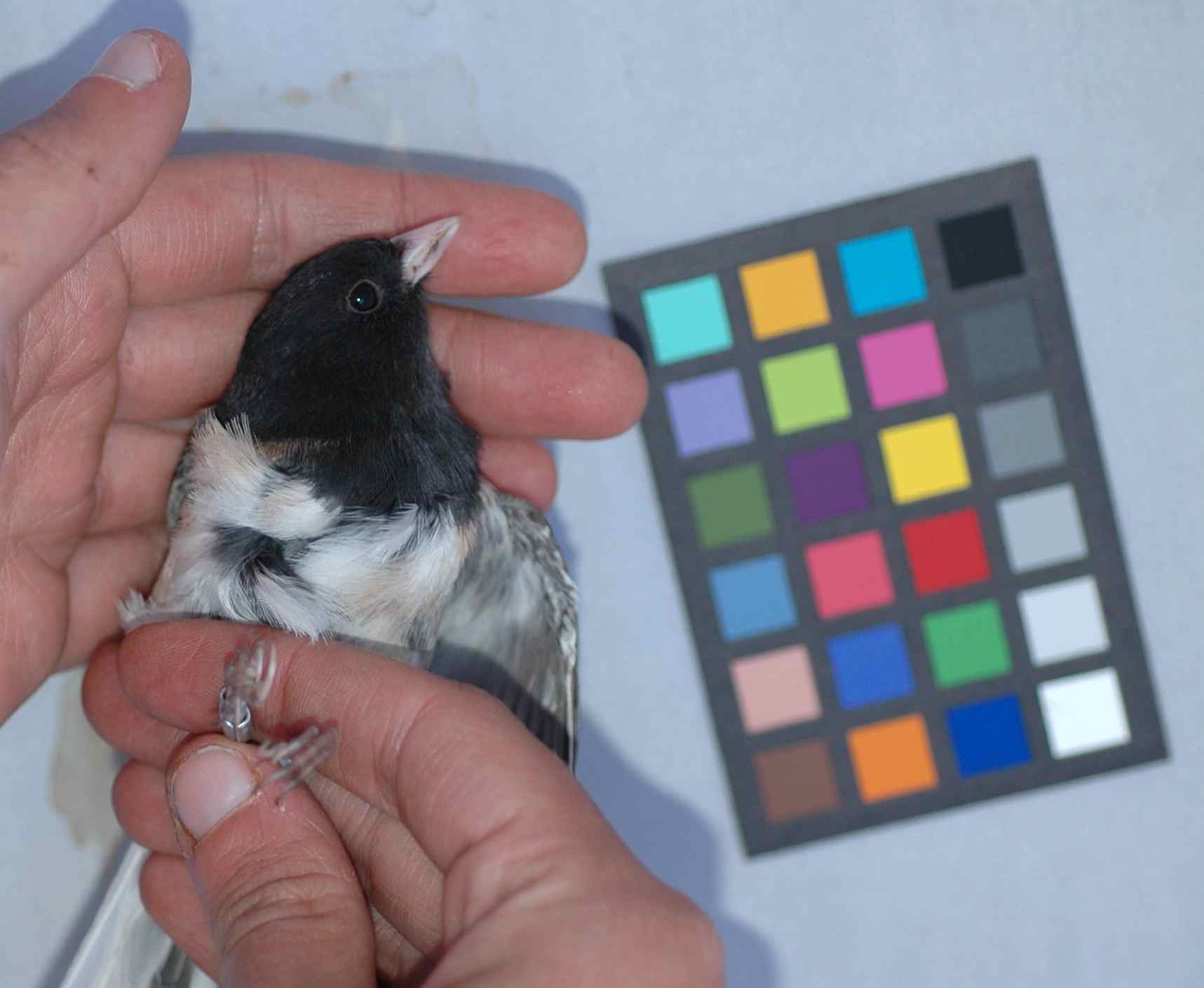
Male GILA. The bands on his legs are read top-left, bottom-left, top-right, bottom-right: he has Green, shrImp, Lime, Aluminum, hence GILA.
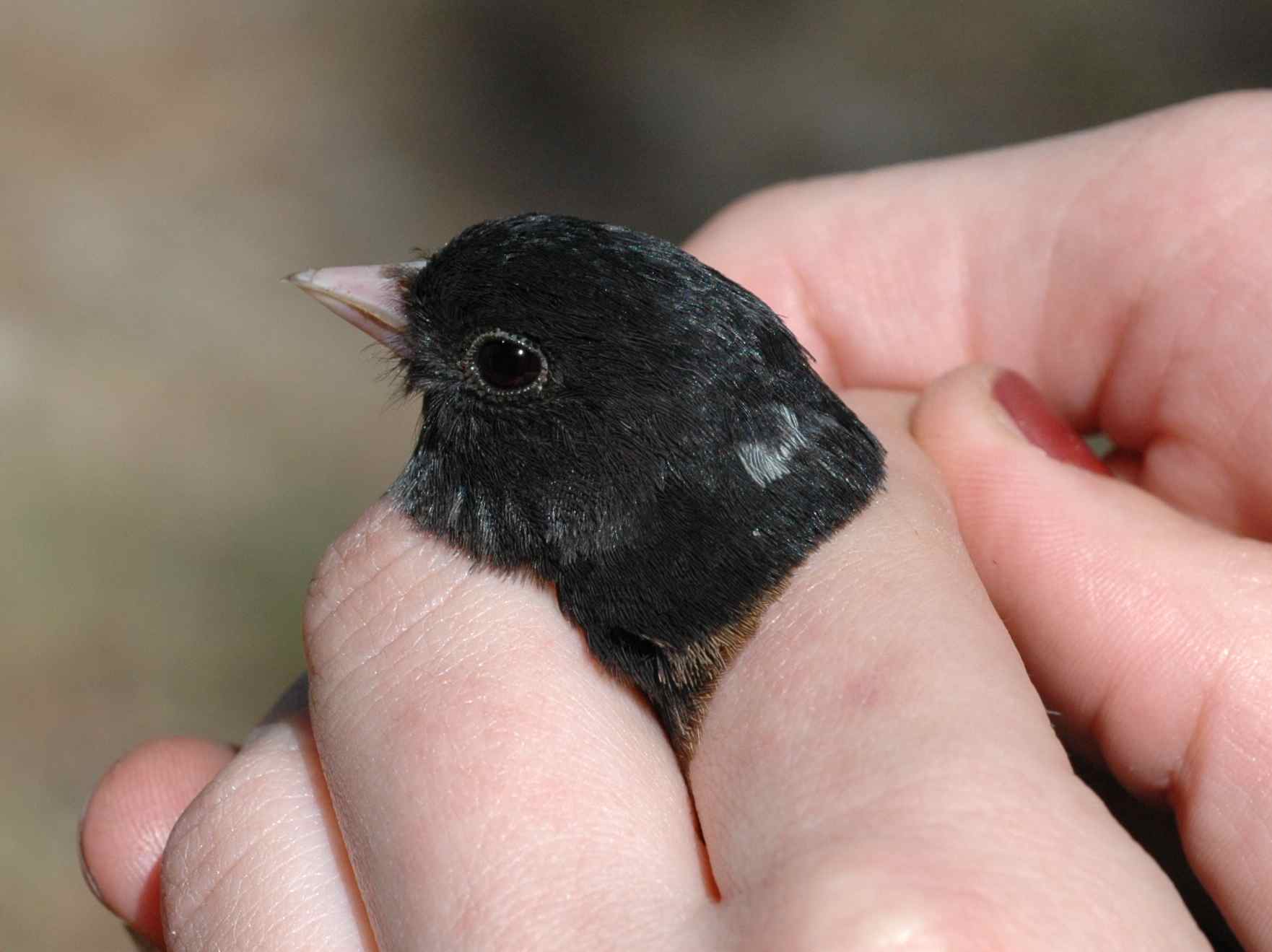
Male GILA. The bands on his legs are read top-left, bottom-left, top-right, bottom-right: he has Green, shrImp, Lime, Aluminum, hence GILA.

GILA had an unusual white feather on the back of his head.
GILA had an unusual white feather on the back of his head.

Continue reading

The local juncos, mutant and otherwise

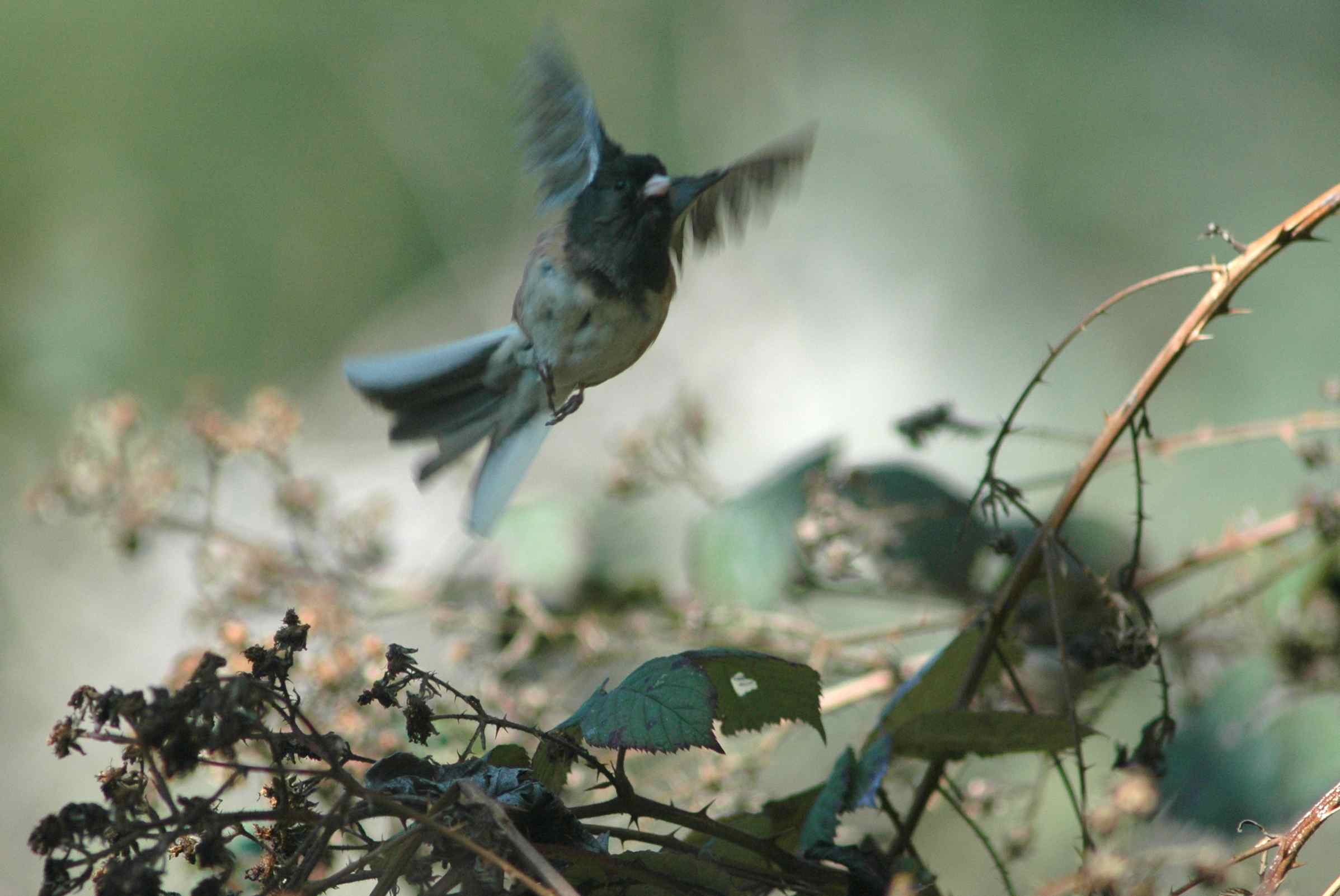
After mentioning my local mutant junco here several times, I figured I owed you a photo, so I went stalking him today. In searching for him I also found lots of normal-looking juncos. I did eventually find my white-splashed bird, so read on to see this unusual junco – after first admiring the regular juncos, because every junco is awesome.

cj_flight

Continue reading

Three specimens

In the course of my junco specimen bill measuring – I’ve measured 561 so far – I’ve handled ratty specimens and fine ones, old and not-quite-so-old. (Most of the specimens are from before 1950, so they’re all fairly old.) It’s fun to see how much variation there is even among individuals from the same subspecies and the same state. Here are my three favorite specimens:

This male has lovely red-brown spots on his head.

This male has lovely red-brown spots on his head.

Continue reading

One-eye ROYA, pirate mom

[Wrote this back in August and forgot to post it—oops.]

ROYA weighs just 16.1 grams, and her right eye is bloodshot and kept mostly closed.

ROYA

That’s bad, but ROYA is one tough little bird. You would never know that she is one-eyed from watching her: she flies, she forages, and she feeds her chick—who is in his young-fledgling, über-needy stage—nonstop. If she can keep it up for another week, he’ll be able to fend for himself, and she will have successfully raised a brand new junco.

ROYA’s young fledgling

I really wanted to band her fledgling, but while he seemed dopy (he cheeped nonstop, letting us know exactly where he was, and let us get maddeningly almost within arms’ reach of him), he knew when to fly, and he never flew into the net either. ROYA is doing a good job.

October in the mountains

The field season is mostly over. My field assistants are back in classes; my mist nets are packed away. (Many thanks to the people who kept us fed and equipped by donating a total of $1450 to this field season!) It’s grant-writing, lab work, and data analysis season now.

Well, almost. I really want to know what the juncos do when summer ends. Our working assumption is that they migrate down the mountains to escape the worst of the winter weather, but we don’t know how far they go, or when, or, really, if they do that at all. So this week I went back to look for them.

SOSA, photographed on his territory earlier this year, was nowhere to be found. Photo by M. LaBarbera.

Continue reading

Last chick of the season

If you get too close to a nest or a young fledgling, the parent juncos will often give a repeated, angry chip call. I don’t understand how this could possibly be adaptive—I would understand a snake-like hiss, or a tiger roar, but no one’s scared of “chip”—but as silly as it is for the parents to broadcast, effectively, “My nest is here, don’t come find it!” I do appreciate the help.

On our last trip we noticed SNAE and his unbanded mate chipping insistently.

SNAE. I photograph all the juncos I catch from several angles like this; the color standard card you see in the background lets me compare colors among pictures, to look at color differences among the juncos.

Continue reading

Fledglings!

On our last trip, finally, we managed to catch some fledglings. We had been seeing them around for weeks, but as they didn’t seem to respond to playback, and they never flew the right direction when we tried to chase them into the net, we’d caught none.

On this last trip something had changed. No longer were all of the fledglings attended by their parents; instead, they formed foraging flocks of parents, attended fledglings, and apparently-independent fledglings. Attended fledglings are hard to catch because their parents lead them away from danger. Independent fledglings, it turns out, aren’t so careful. We set up the net where we observed the flock foraging, and within ten minutes the juncos drifted back into the area and resumed foraging.

BOAR was the first fledgling we caught.

BOAR

Continue reading