Little creeper and creeping bycatch

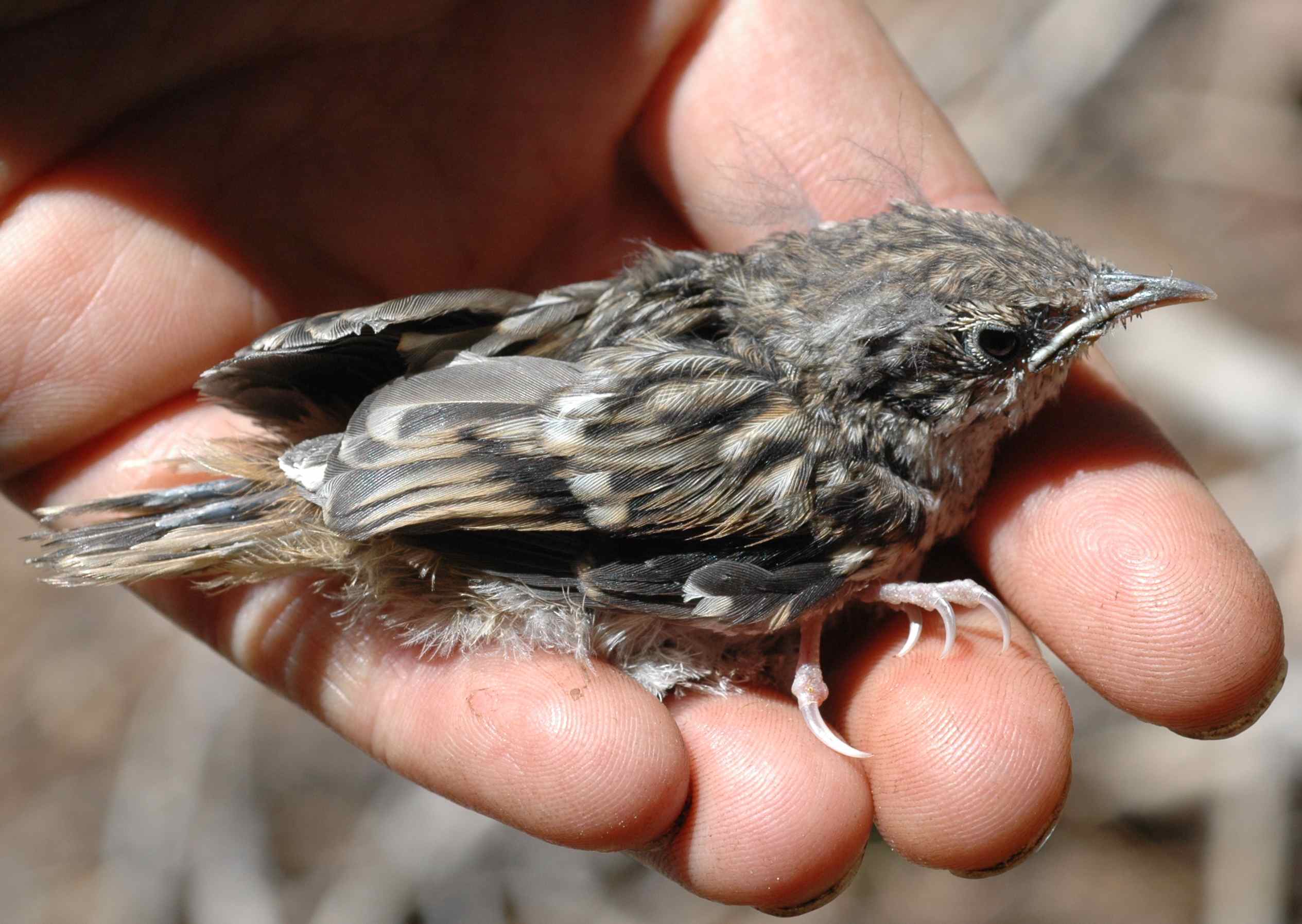
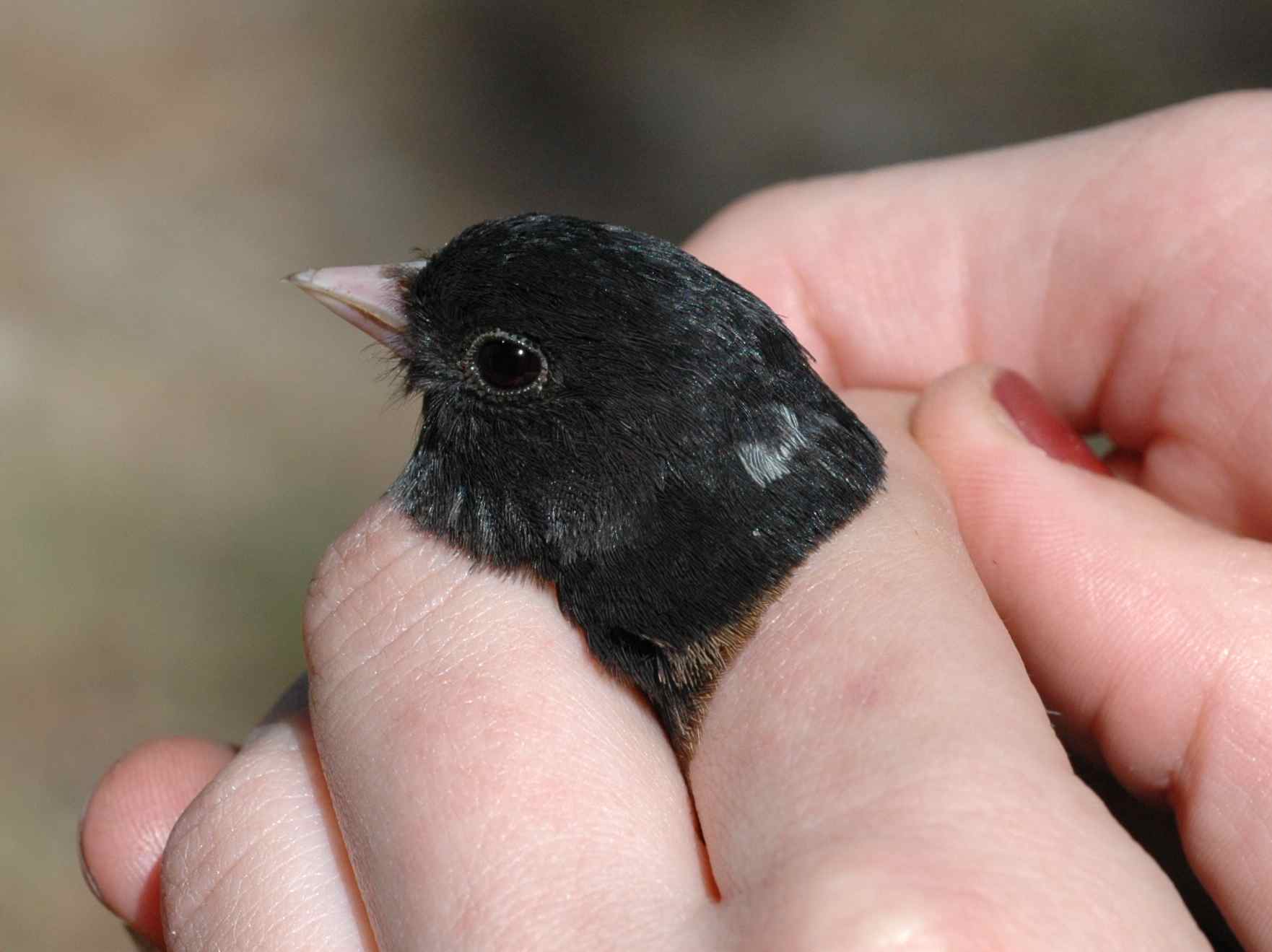
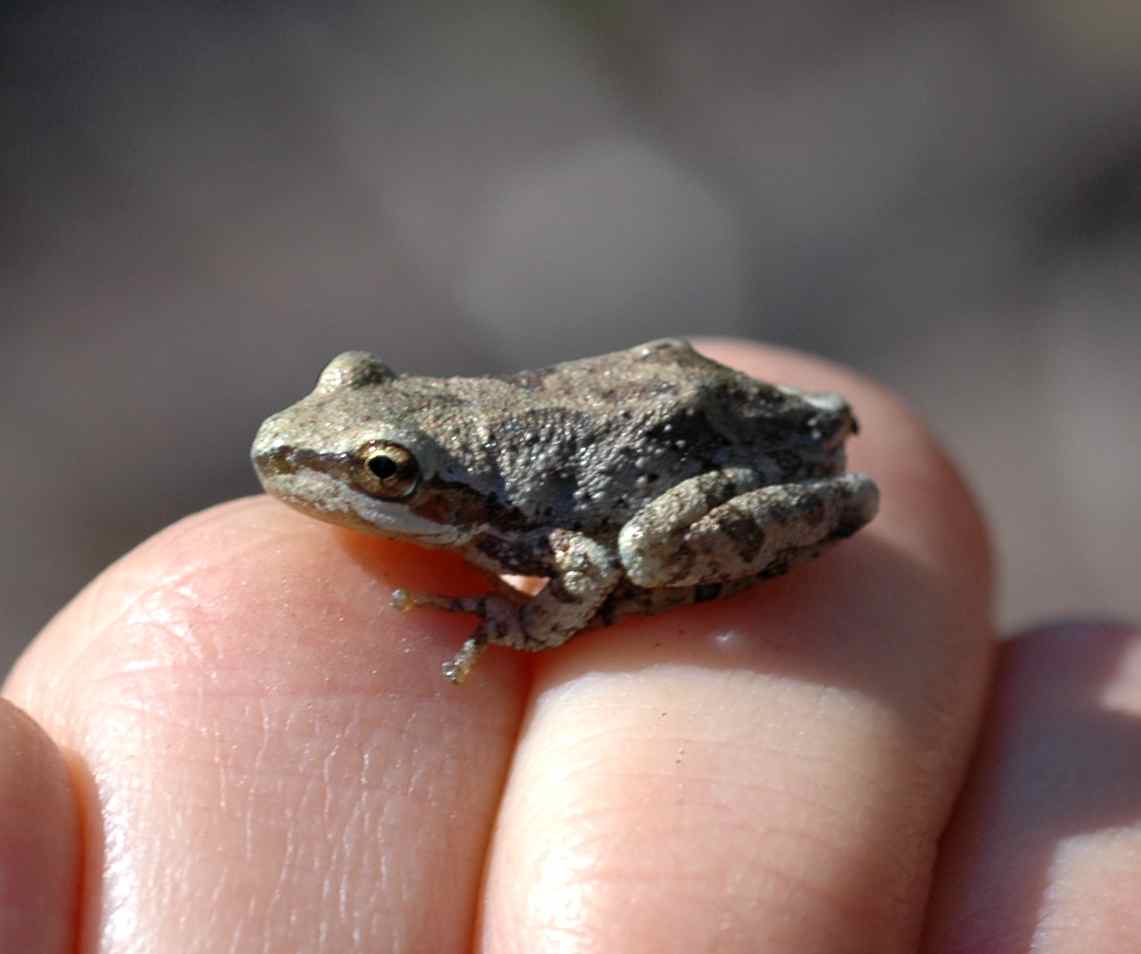
It’s fledgling season, and not just for juncos. The other week we ran into this guy:

2013_creeper1

Fledgling Brown Creeper

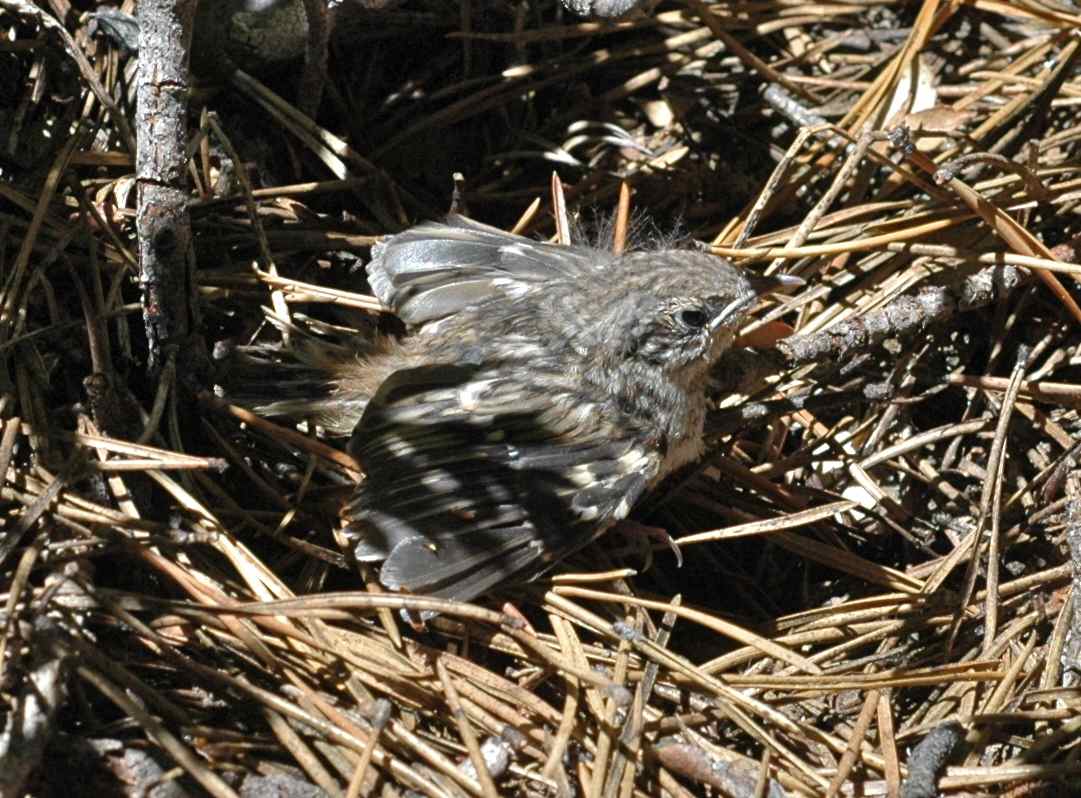
In fact we nearly stepped on him. We picked him up to put him in a nearby bush, where he might be safer, but he had other plans: he hopped right back to the ground.

2013_creeper2He then fluttered and scrambled his way over sticks and even a fallen log to the base of a tree, which he crept up like the Brown Creeper he was—although much more slowly than an adult. Still, it was an impressive thing to watch from such a young bird.

Continue reading

Unprecedented bycatch

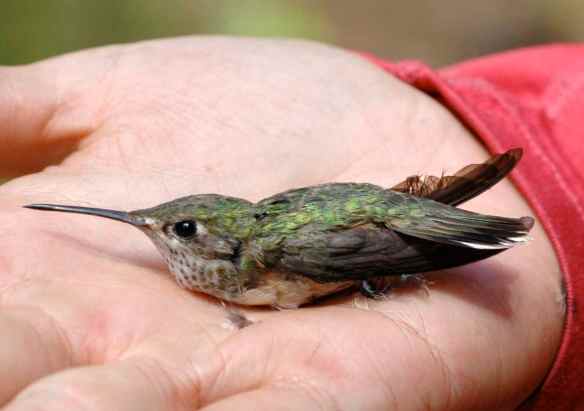
Recently we caught, as bycatch, two birds from two orders that we had never caught before. (Order being a high hierarchical level of organization of species relatedness, as in kingdom-phylum-class-order-family-genus-species.) Both were simultaneously thrilling and terrifying, although for different reasons.

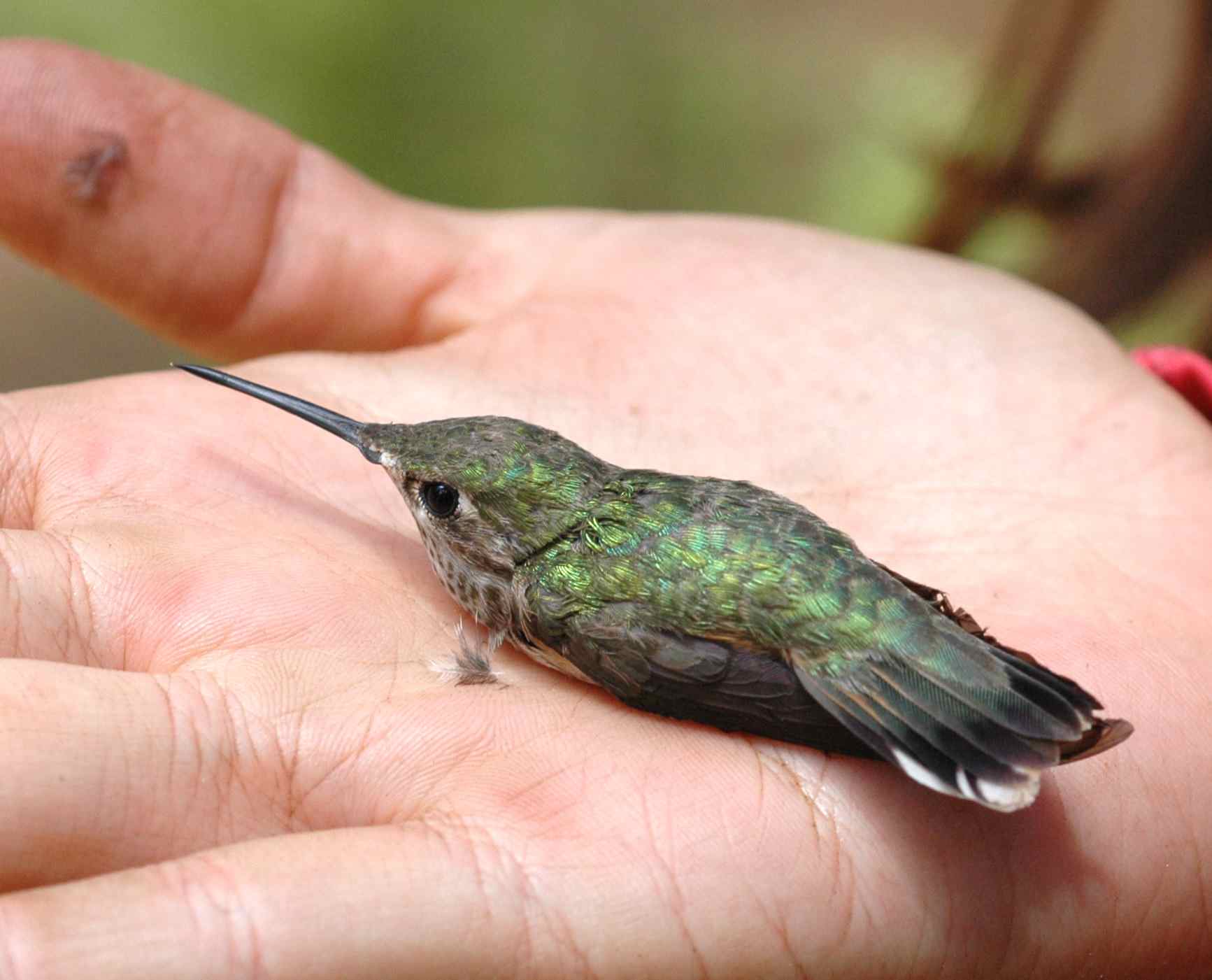
Female Calliope Hummingbird (I think?)
b2013-2_hummingbird

This beautiful bird was terrifying to catch because hummingbirds are very fragile. We don’t expect to catch them in our nets—the mesh size is large enough that in most cases a hummingbird could zoom right through—and in fact we hope not to catch them, since they can be especially stressy little creatures. They are also strange birds to handle, not permitting any of the usual bird grips: bander’s grip, a very secure and safe grip, puts your fingers around a bird’s neck, but hummingbirds have too-tiny necks for it; photographer’s grip relies on grasping the bird’s thighs, and hummingbirds’ thighs are much too short.

Fortunately I was able to quickly extract our hummingbird from the net. She rested on my palm for about thirty seconds, then—just after this next picture was taken—zoomed off high into the canopy.
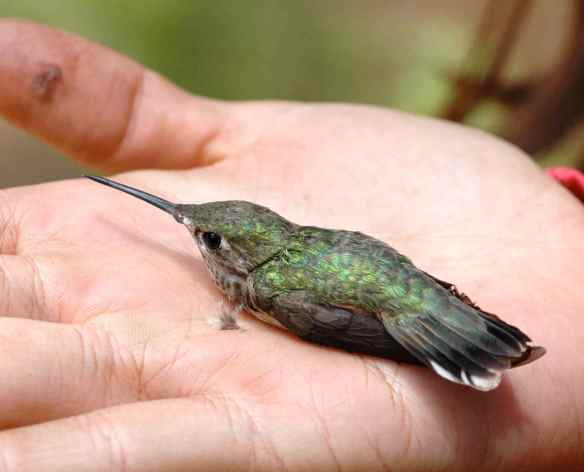
b2013-2_hummingbird2

Continue reading

KKRA, thunderbird

Two weeks ago, it rained on us for a solid 22 hours. (Which, I discovered, is exactly the time it takes for puddles to start forming inside my tent.) So when it got grey and thundery at the beginning of last week, I jumped: “We’ve got to process this junco quickly! Take down the nets! We have to get back to camp to cover the firewood!”

Of course, it didn’t rain. The next time it got grey and thundery, I jumped less: “Let’s take down one net and keep this one. Tell me if you see lightning.” It didn’t rain.

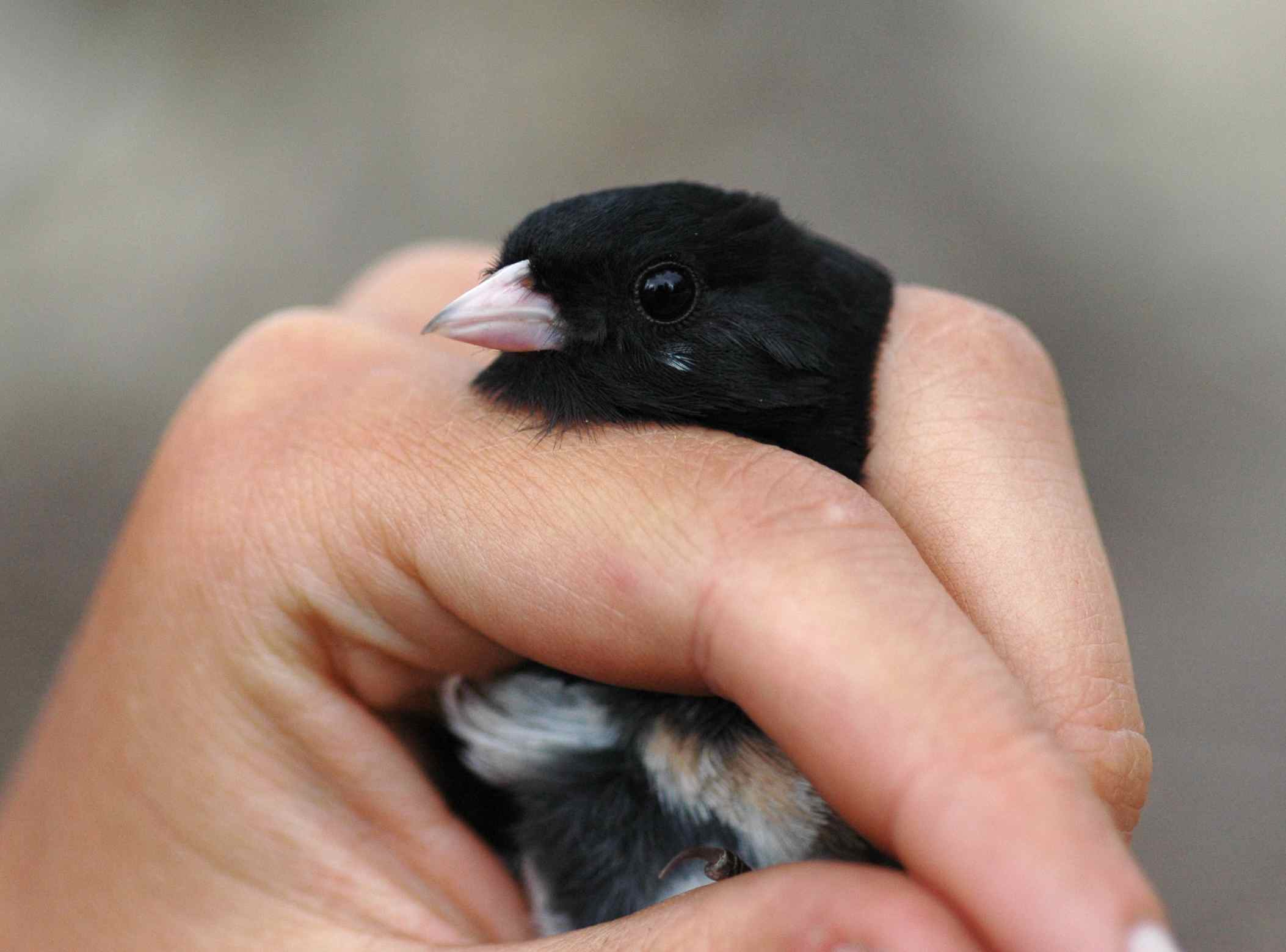
The third time it got grey and thundery, I didn’t jump at all. Then it actually started raining—but I really wanted another junco. So we caught a male in (very light) rain and banded him under a tree, naming him KKRA, which sounds a bit like the thunder that was rolling in the distance.

KKRA

KKRA, who has one white feather on his cheek

Continue reading

Return of the bycatch

We only try to catch juncos, but when you have nets up in good habitat, some accidental capture of other species seems to be inevitable. These other species—our “bycatch”—are quickly extracted from the nets and released, although not without a few photos first.

Fox Sparrow

Do you know who I am?

Do you know who I am?

Unhand me at once!

Unhand me at once!

Continue reading

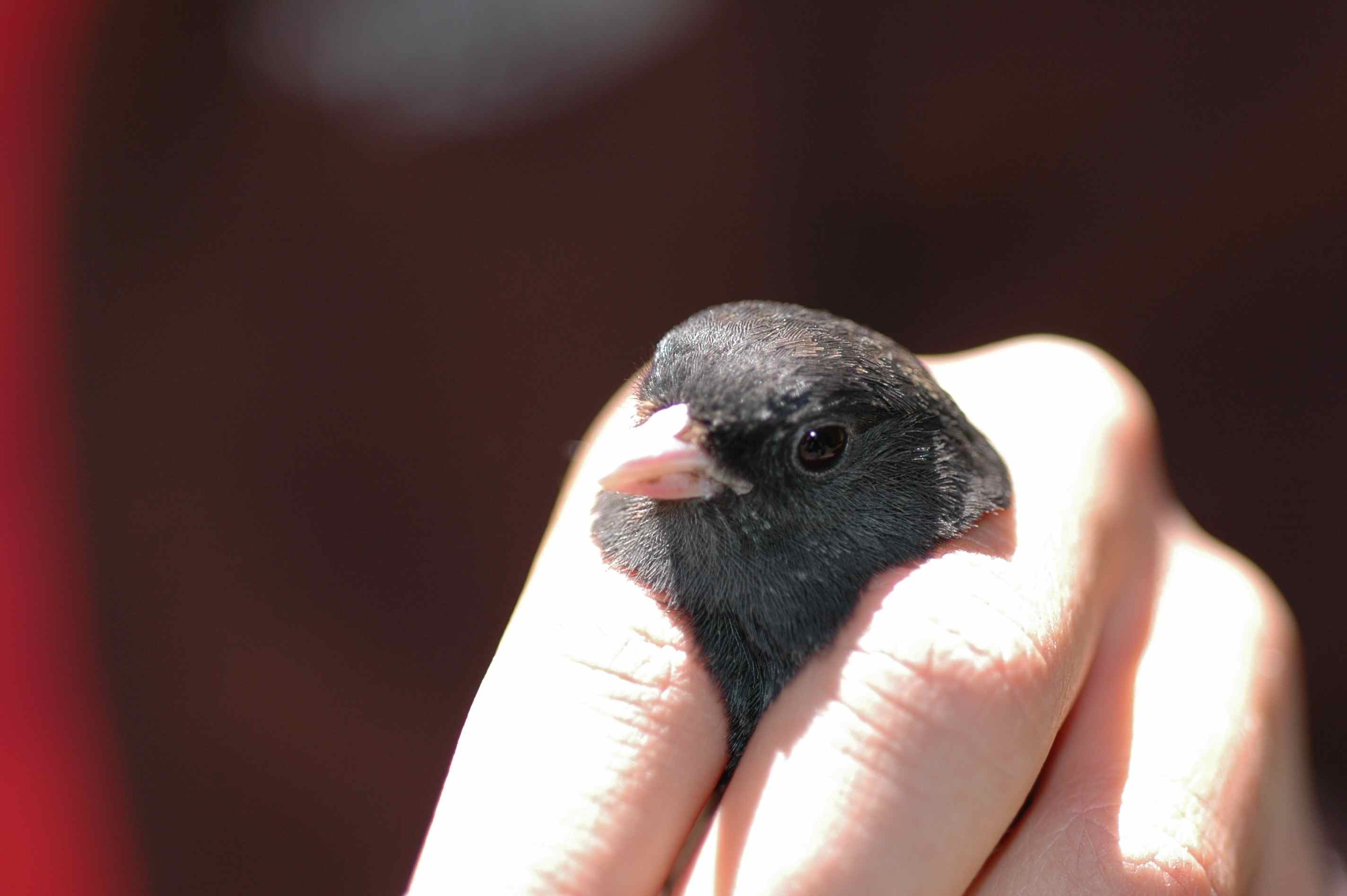
First juncos of the 2013 field season!

I got back from our first bout of field work yesterday, and I can say that if things keep going the way they did, we’re going to be banding a lot of juncos this year. That is excellent: the more we band, the more we can identify individually by sight, allowing us to observe the behavior of each. It’s much more informative to be able to say “KARL chased RRAY” than “one junco chased another junco”. Too, when we band them we also take measurements and pictures, so we can relate their behavior to things like condition and size.

Male GILA. The bands on his legs are read top-left, bottom-left, top-right, bottom-right: he has Green, shrImp, Lime, Aluminum, hence GILA.

Male GILA. The bands on his legs are read top-left, bottom-left, top-right, bottom-right: he has Green, shrImp, Lime, Aluminum, hence GILA.

GILA had an unusual white feather on the back of his head.

GILA had an unusual white feather on the back of his head.

Continue reading

Scouting: snow, fog, and little red spiders

I’m switching up my field sites a bit this year, using some from 2012 but also adding new ones. I’ve known the general area where they would go, but this week I went scouting the area to figure out exactly where I’ll be observing juncos this summer. Here are the highlights, in photograph form. (The quality of the animal photos isn’t great because I brought my taking-pictures-of-mountains camera instead of my taking-pictures-of-birds camera.)

scout_snow+tree

Continue reading

Color bands: check

Last year, I waited to order color leg bands (for banding the juncos) until spring. This turned out to be a mistake, since everyone else ordered their leg bands at the same time, so all the good colors got backordered and I spent the first half of the field season banding my birds in just orange, lime, green, light blue, brown, and grey. If you’re wondering whether brown or grey bands show up on a junco leg: well, no, they don’t.

I learned my lesson. I’ll have a full arsenal of colors for this field season:

bands1


I think this is the least dignified photo of Limpet I have ever taken

I think this is the least dignified photo of Limpet I have ever taken

Junco withdrawal

I miss the juncos. I see juncos around campus, but it’s not the same: they have no bands, so I don’t know who they are. (Except for the weird white-splattered junco, who doesn’t need bands to be distinctive. I was delighted to see him last week.)

I miss those warm, fragile bodies in my hand. I miss going back and finding them again and again.

NOLA

Continue reading