A bird in the hand

What happens when we catch a junco:

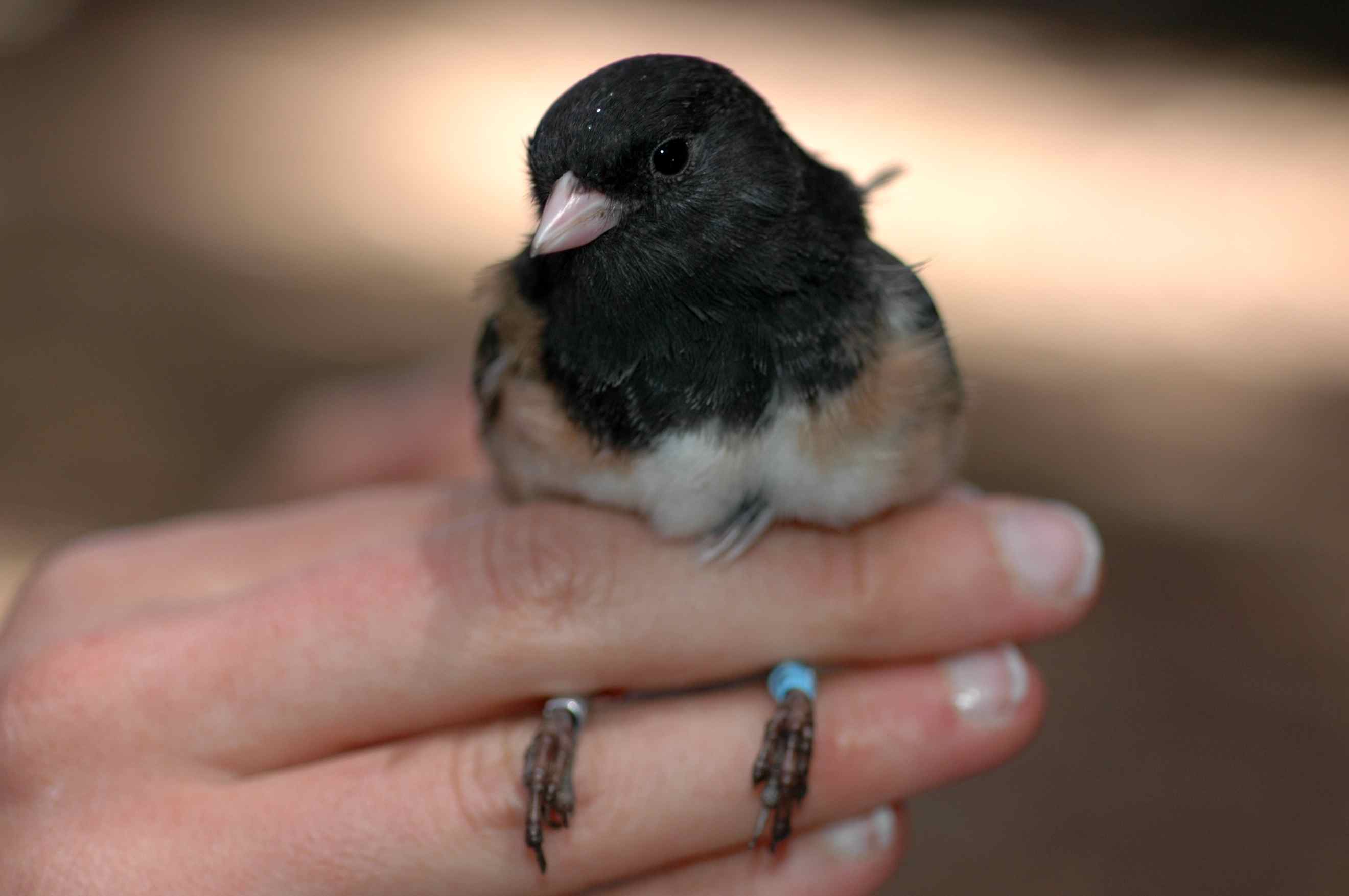
We band it with the uniquely numbered US Fish & Wildlife band. This is the first priority because once the bird has this on, we can identify it later even if it escapes. Then we add the three colored leg bands so that we can identify it later even from a distance.

GOAL with his leg bands

Continue reading

We caught juncos

The first field expedition was a success! Almost exclusively thanks to the ingenuity, good mist netting sense, and all around awesomeness of my three field assistants. Over three sites we banded a total of 18 juncos. And there are many, many juncos still to go!

Since I’m on field time – wake up at 5:30, go to bed at 9:00 – I’m ready to crash, so I’ll leave you with some photos for now, with more info to come in the future.

SSOA, the first junco we banded

ELEA, unintentionally recaptured

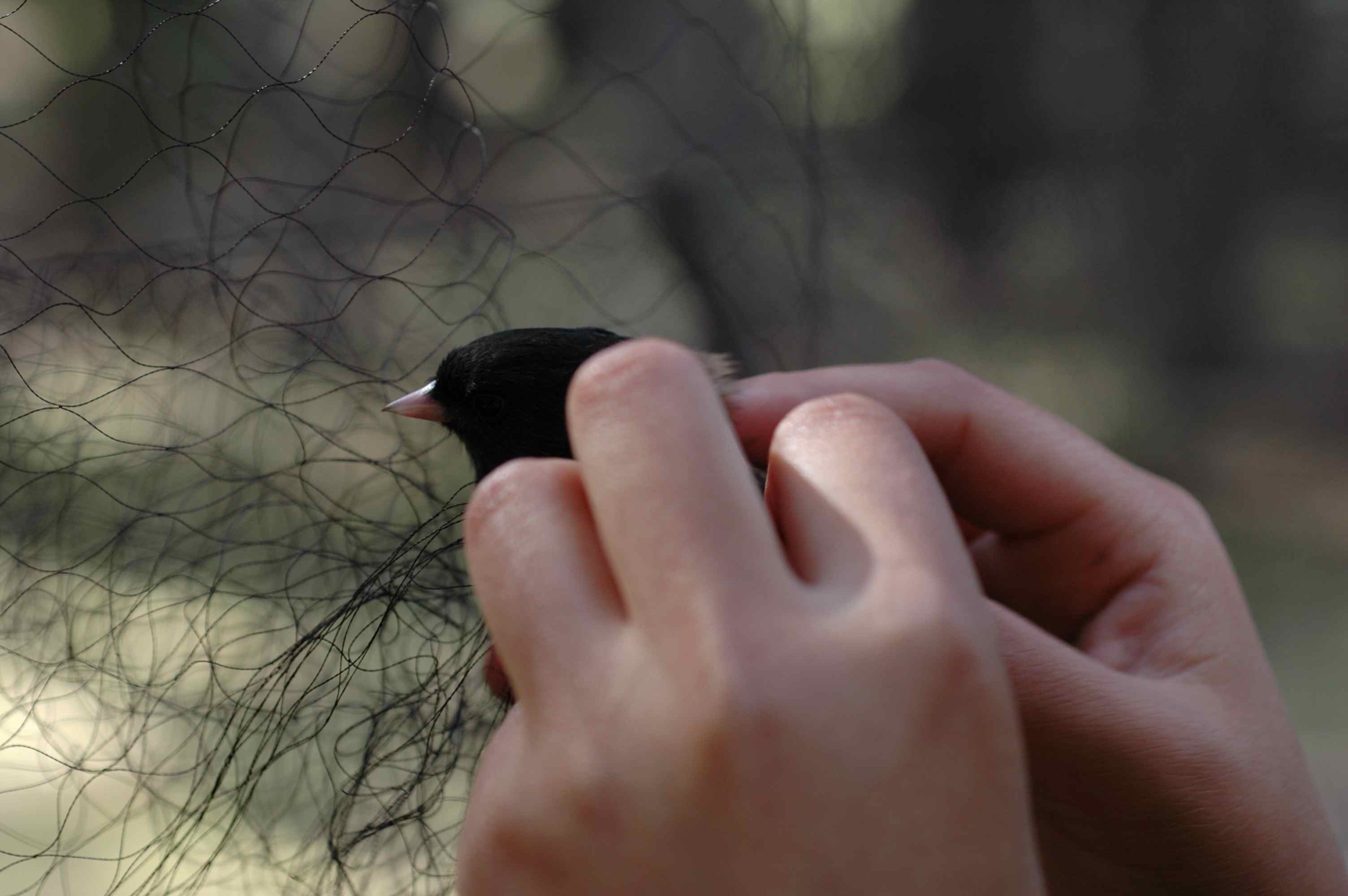
Extracting ELEA from the net

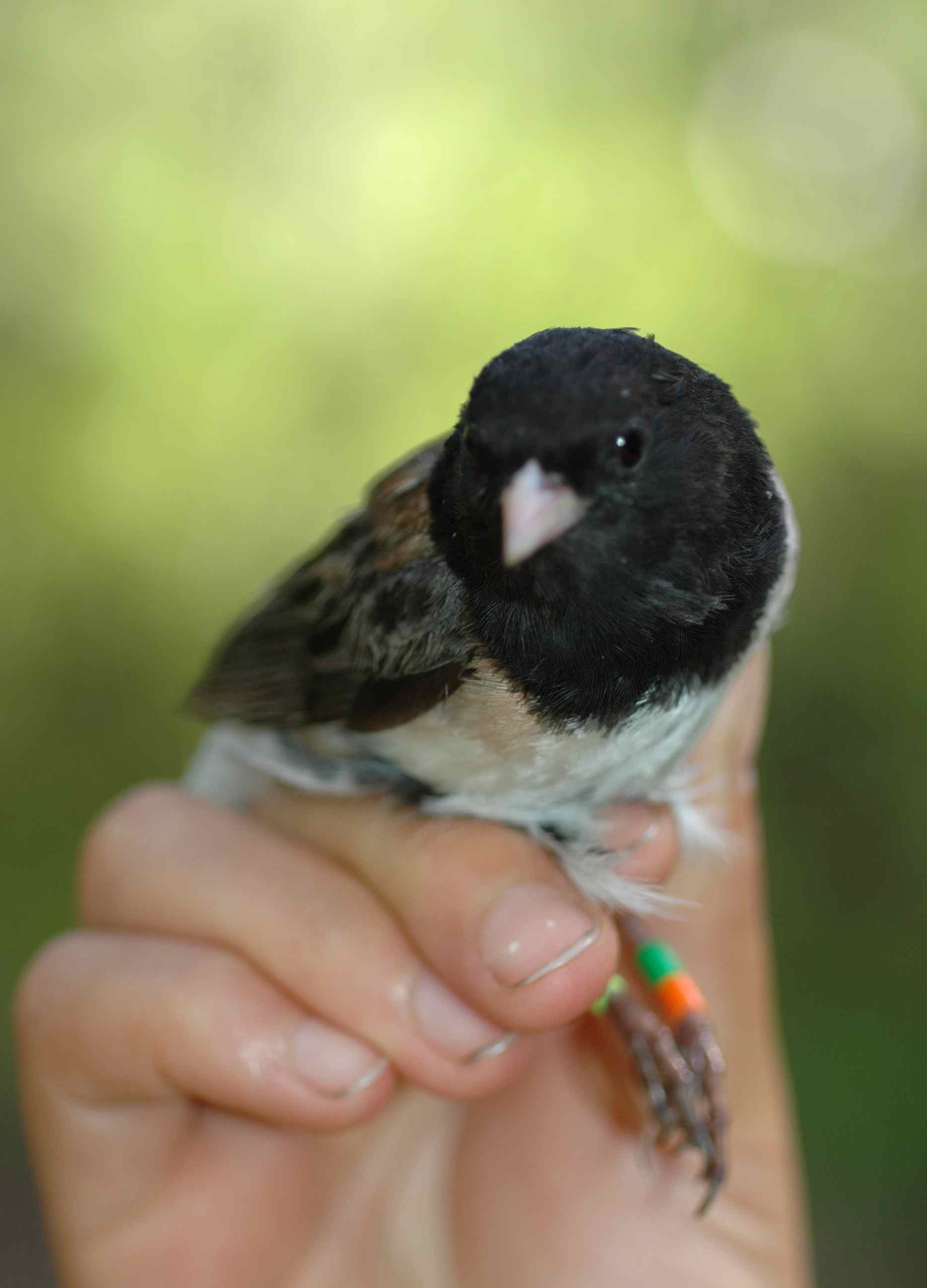
OGAG

Where were the juncos?

The total junco count for my field site scouting last week was… one. Where were the juncos?

I suspect that they weren’t yet there. Juncos seem to winter at low elevations, then migrate to higher elevations as the weather improves enough to permit breeding. I wasn’t sure exactly when this would happen—that’s why I was scouting. Given that there was frost on the ground, leaves were just emerging from buds, and the bluebirds were collecting nesting material, it doesn’t surprise me that the junco breeding season was not yet in full swing.

This is actually great for me. My field assistants are undergraduates and don’t get out of school for another few weeks. If the juncos haven’t yet arrived, then it looks like by the time they start defending territories, attracting mates, and generally doing interesting things, my field assistants will be free and I’ll be at full researchy strength.

I’m here now and I have awesome spotted legs and sticky toes, research me!

Follow-up: almost nobody understands mirrors

Since several people have contacted me to defend junco intelligence after the mirror post yesterday, I thought I might talk a bit more about birds and mirrors.

Very, very few species understand mirrors, and an enormous majority of them behave as if the mirrored images are real, as the junco did. The list of birds that do not recognize themselves in the mirror is long: Budgerigar; House Sparrow; Kea; Black-capped Chickadee; Zebra Finch; Cedar Waxwing; Glaucous-winged Gull; Blue Grouse; Peach-faced Lovebird; reviewed in (1). In 1964, Edith Andrews kept an injured junco in a cage with a mirror and observed that it was quieted by the mirror, liked to perch next to it, and “appeared to be smitten with its own image” (2).

Continue reading

Juncos do not understand mirrors

The other day I saw a junco perched on the ledge of the front side window of a parked car. As I watched, he flew at the side-view mirror, a full head-on charge. When that didn’t seem to work, he sat back on his perch on the window, looked at the mirror, and charged again. And again. When some people passing by scared him up into a tree, he waited until they were gone, and then he flew back down and resumed his attack. He was really determined to win this fight against Mr. Uppity Mirror Junco.

I’m hoping this was a fluke. No one wants to think that their study species is dumb.