Scary birds

In honor of Halloween: some birds you would not want to meet in a dark alley at night. (Warning: first two sections contain photos of predation.)

Shrikes

Loggerhead Shrike. Photo by Jeff Jones.

Shrikes are medium-sized birds—the Northern Shrike is slightly smaller than an American Robin—and, upon first glance, fairly unassuming. Perhaps you notice the somewhat raptor-like bill; perhaps the extra notch on that bill, the tomial tooth; perhaps not. But it is only because you are much, much bigger than a shrike that you can afford to be so careless of this fearsome predator.

Continue reading

Think like a scientist: correlation

Correlation does not equal causation. Done!

Just kidding. It isn’t enough simply to state that classic phrase because in the real world, we’re often still stuck with using correlations. If you want to know how lifelong exercise habits affect lifespan, you can’t take two groups of people and force one group to exercise and the other not to (“GET BACK IN THAT CHAIR! That is TOO MUCH walking to the corner store for one day!”), while keeping everything else exactly the same between the groups (“I don’t care if you’re not hungry, everyone eats one cupcake on Tuesdays!”), for their entire lives. Even if you didn’t mind knowing that you, too, would be dead before the study was over, it would be completely unethical. Instead, you study people’s natural exercise habits, and try to correlate them with lifespan. Continue reading

Featured paper: side-blotched lizards play rock-paper-scissors

B Sinervo and CM Lively. 1996. The rock-paper-scissors game and the evolution of alternative male strategies. Nature vol. 380, pp. 240-243.

(Side note: I don’t want to feature-paper too many Science or Nature papers, since those journals are so high-profile that you’re likely to hear about the work elsewhere, and part of the point of this feature is that papers in “lesser” journals can be awesome too; but this paper is classic and fun, so I’ll make an exception.)

Male side-blotched lizards come in three flavors colors: orange-throated, blue-throated, and yellow-throated. Orange males are highly aggressive and defend large territories. Blue males are less aggressive, defending smaller territories. Yellow males look like females and don’t defend territories at all. All three colors compete to mate with females and have offspring. Throat color is highly heritable: orange males have orange sons, blue males have blue sons, yellow males have yellow sons.

Continue reading

Blood secrets

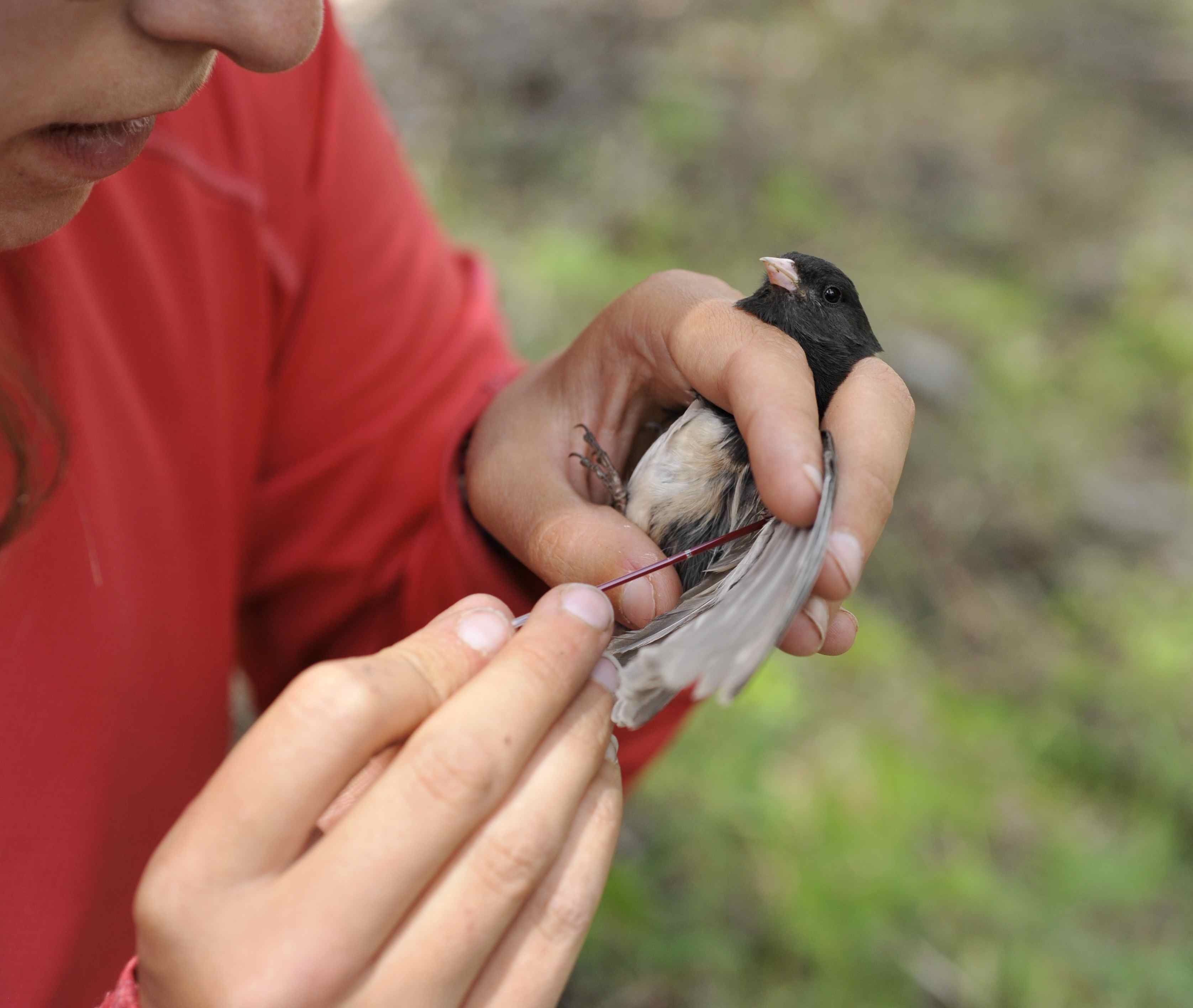
Sometimes doing science feels like doing magic. Take a fantastical witch brewing eye of toad and nightshade flower in a cauldron, substitute a 1.5 ml tube for the cauldron, AW1 Buffer for the nightshade flower, and blood of junco for the eye of toad, and that’s me.

(And that “eye of ___” thing happens in science too: a few of my herpetologist colleagues have been talking lately about what you can learn from preserved lizard eyes.)

One of the things I do when I capture a junco is to collect a blood sample. I use a sterile needle, collect very little blood, and don’t let the bird go until I’m sure the bleeding has stopped. The birds usually don’t even flinch. They act much more upset when I blow on their chests to look for brood patches (I think it feels cold to them) than they do when I take blood.

Me collecting blood from GRAY. The blood moves up the tiny capillary tube on its own. Photo by M. LaBarbera.

Continue reading

Think like a scientist: sample size

Science is not just for scientists. The methods of thought that underlie science are useful in all sorts of everyday contexts. Most obviously, everyone needs to be able to think like a scientist in order to interpret scientific results—you know, those newspaper headlines like “PAPER CLIP USE MAY LOWER IQ IN PREGNANT WOMEN!!” In that spirit, I’m going to write about some key concepts for thinking like a scientist. Today: sample size.

Pop quiz! You read this (totally made up) report: “Two groups of ten age- and health-matched men were monitored for heart disease. One group was given pet ferrets, while the other was not. The ferret-owning men were 8% less likely to develop heart disease over a five year period.” So: is it time to run out and get a ferret for the sake of your heart health?

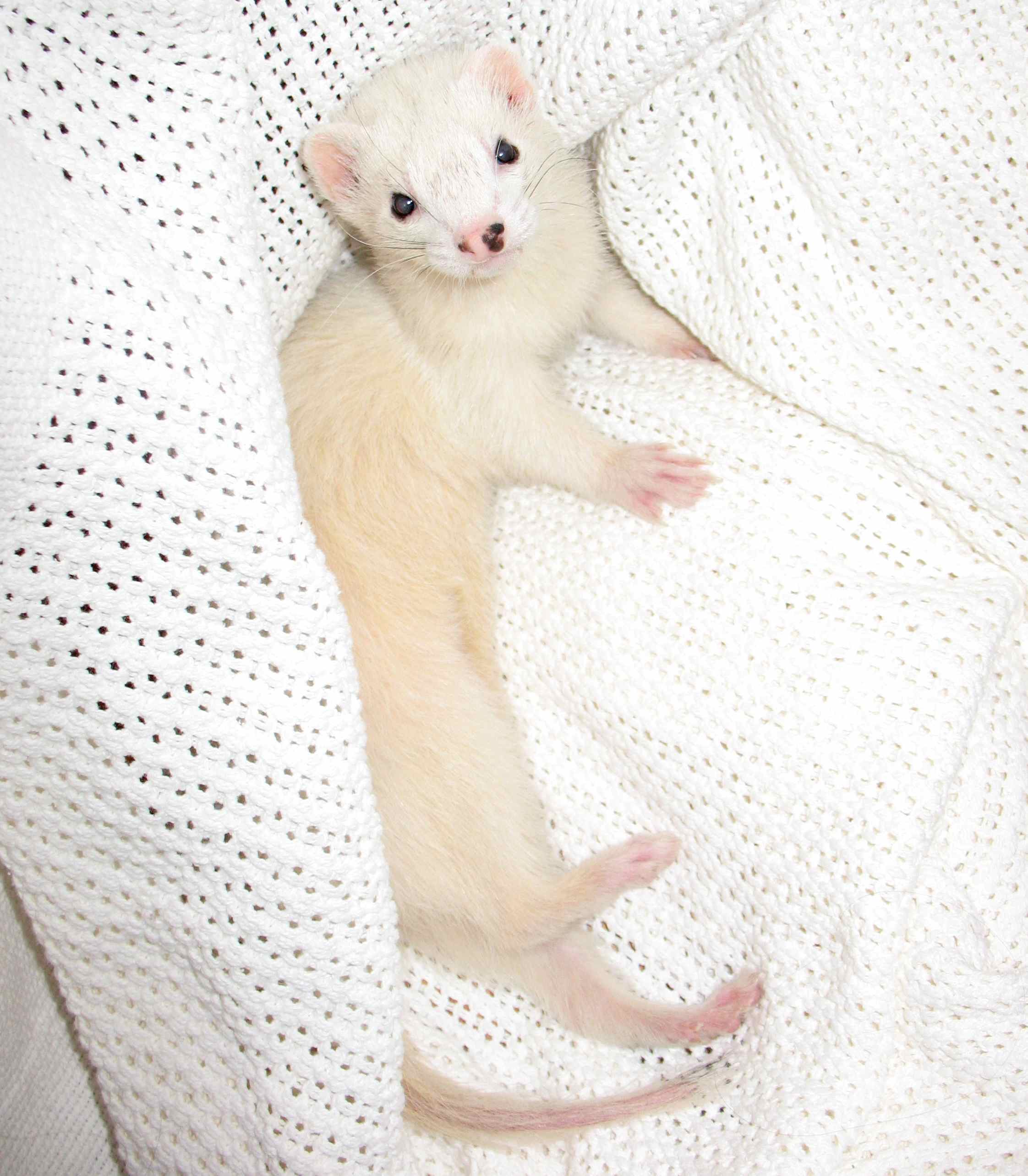
You should get a ferret regardless, because ferrets are wonderful. This is my awesome old ferret Zap.

Continue reading

October in the mountains

The field season is mostly over. My field assistants are back in classes; my mist nets are packed away. (Many thanks to the people who kept us fed and equipped by donating a total of $1450 to this field season!) It’s grant-writing, lab work, and data analysis season now.

Well, almost. I really want to know what the juncos do when summer ends. Our working assumption is that they migrate down the mountains to escape the worst of the winter weather, but we don’t know how far they go, or when, or, really, if they do that at all. So this week I went back to look for them.

SOSA, photographed on his territory earlier this year, was nowhere to be found. Photo by M. LaBarbera.

Continue reading

What the chickadees are saying behind your back

Black-capped Chickadees may be the easiest birds to identify by ear. Chick-a-dee-dee-dee, they sing, telling you exactly who they are. (I’ve heard that towhees do this too, but the towhees I’ve heard always seem to be saying twee or taree, from which I would not be able to get “towhee” unassisted.)

Don’t you know who I am? I’m Chick-a-dee-dee!
[A Mountain Chickadee, not a black-cap, but I don’t have any photos of black-caps.]

Of course, the chick-a-dee sounds like a vocal nametag to us only because someone had the good sense to name chickadees after their call. But it serves as an identifier among the chickadees too. The “chick-a-dee call complex” consists of four note types (the A, B, C, and D notes in a row might be transcribed as chick-k-ka-dee) that can be given in various combinations. Each note type itself can vary in frequency and duration. The chickadees thus have a lot of potential variation to work with, and they do. The D (dee) notes alone indicate both the identity of the individual bird calling, and the flock it belongs too—rather the same way that an Englishman saying “Hello, my name is George,” might indicate to compatriots both his own identity (George) and, in his accent, the region he is affiliated with. When captive chickadees are put into new flocks, the calls of the new flock members change, converging on each other, to indicate their new flock membership.

Continue reading

White gloves, strange rooms

One of the things I like about what I do is the strangeness of my everyday situations. There’s more of the boring old Sitting At A Computer Situation than I would like, but the Measuring Baby Birds On A Mountaintop Situation helps make up for that.

Now that field work is (mostly) over for the season, my situations are different, but not really less strange.

Strange Room #1

In order to look at the genetics of the juncos, I’ve been doing lab work in the Museum’s Evolutionary Genetics Lab. Lab work was my introduction to ornithology as an undergrad, and I’ve always liked it, despite the bleach and the potentially-toxic chemicals and the way my nose always itches and I can’t scratch it because I’ve got latex gloves on. The colors, noises, and vocabulary of lab work are specialized and surreal: the stacks of plastic racks in bright red, yellow, blue; the whirr of centrifuges starting up, like tiny revving plane engines; aliquot, vortex, elution buffer. I like the contrariness of refrigerators and microwaves with NO FOOD scolded across them. The concentration required to pipette the right amounts of the right reagents into the right tubes again and again and again makes it a kind of meditation.

Continue reading

Field assistants make the world go ’round

By far the biggest reason that this field season has gone as well as it has is that I have had absolutely fantastic field assistants. Field assistants do much more than simply “assisting”—although that alone is important: I could not take my color-standard photographs alone, I would have trouble setting up a mist net alone, and it would take me much longer to process each junco alone, meaning more stress for the bird.

Jennifer recording data as I measure SSOA

Anthony being a human mist net support where the ground was too hard to put stakes in

Continue reading