On the recent sparsity of posts

Hi TLB readers! First, let me apologize for the recent lack of posts, and especially for the lack of the lengthier science-y posts. I’ve been trying my best to keep up, but as I’m in the field about 4 out of every 5 days, it’s hard—and the field work has to come first.

Second, let me assure you that the state of affairs will improve in the (relatively) near future. Hang in there! Once the field work settles down I will have more time for in-depth posts on topics like color and parental care, or brood parasitism strategies.

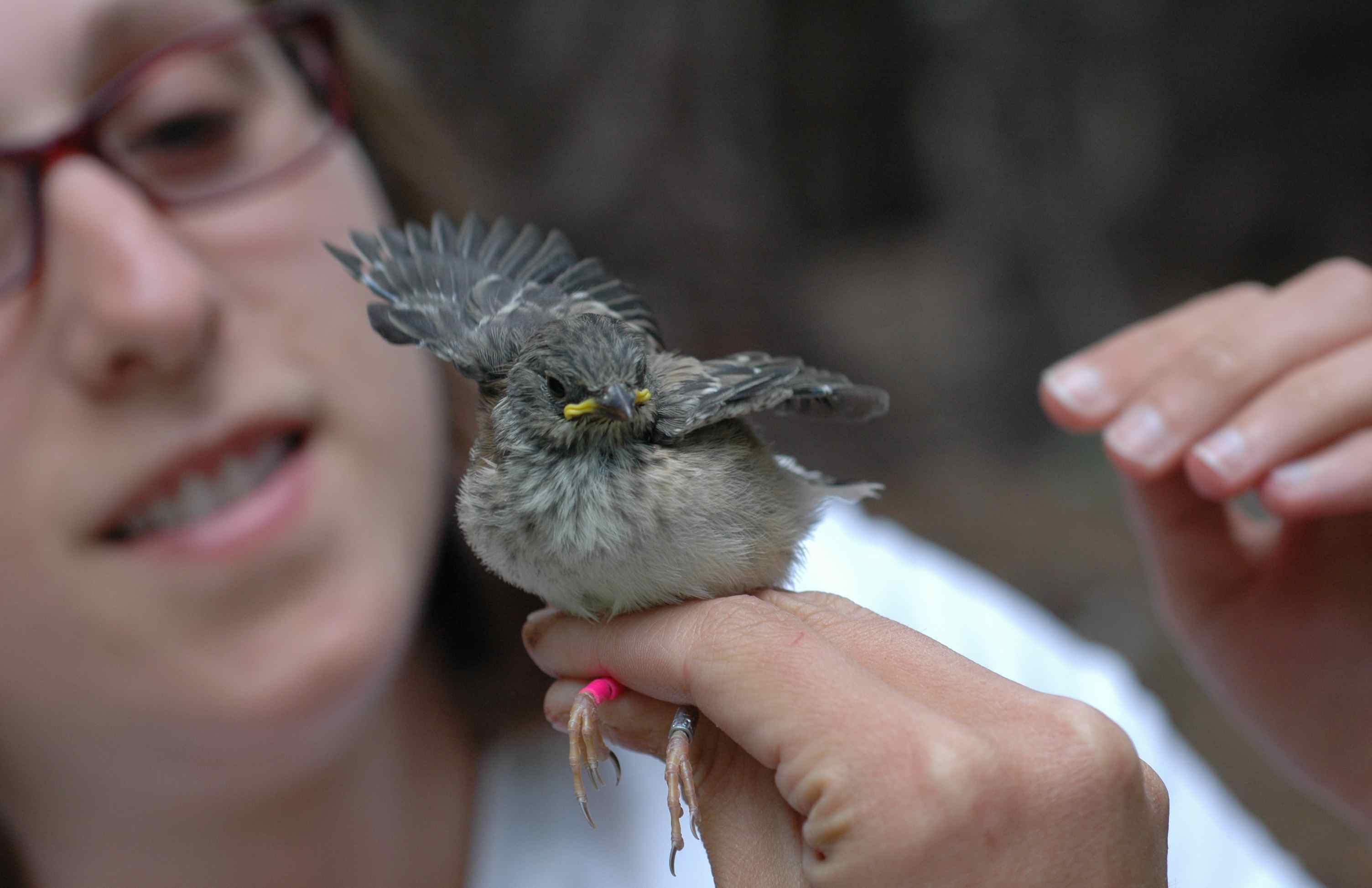
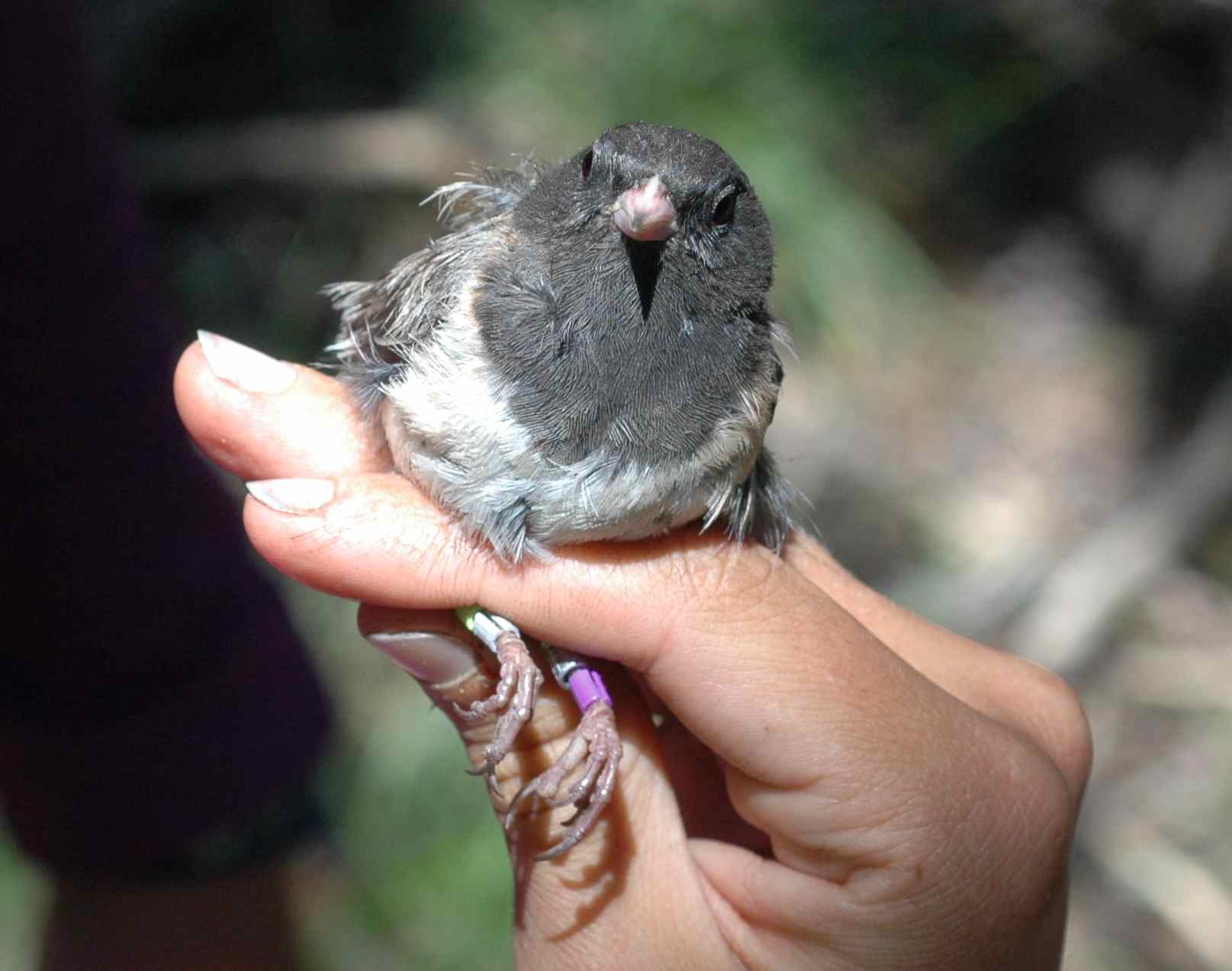
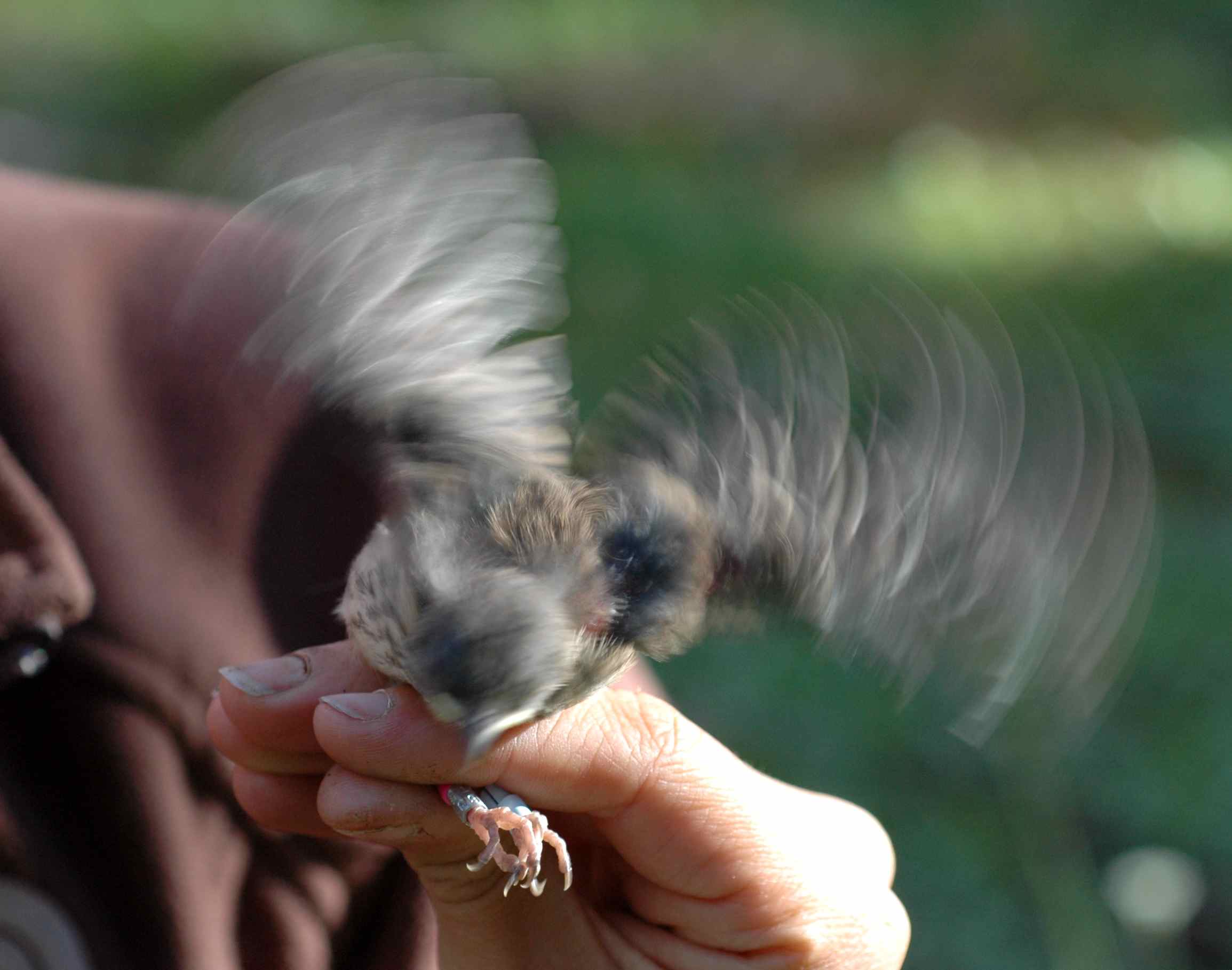
In the mean time, I hope you don’t mind the shorter here’s-some-photos-of-birds style posts. And (because I’d hate to have a post without photos) here are some photos of junco chicks who think they can fly already—despite, you know, not entirely having feathers yet:
SSKA
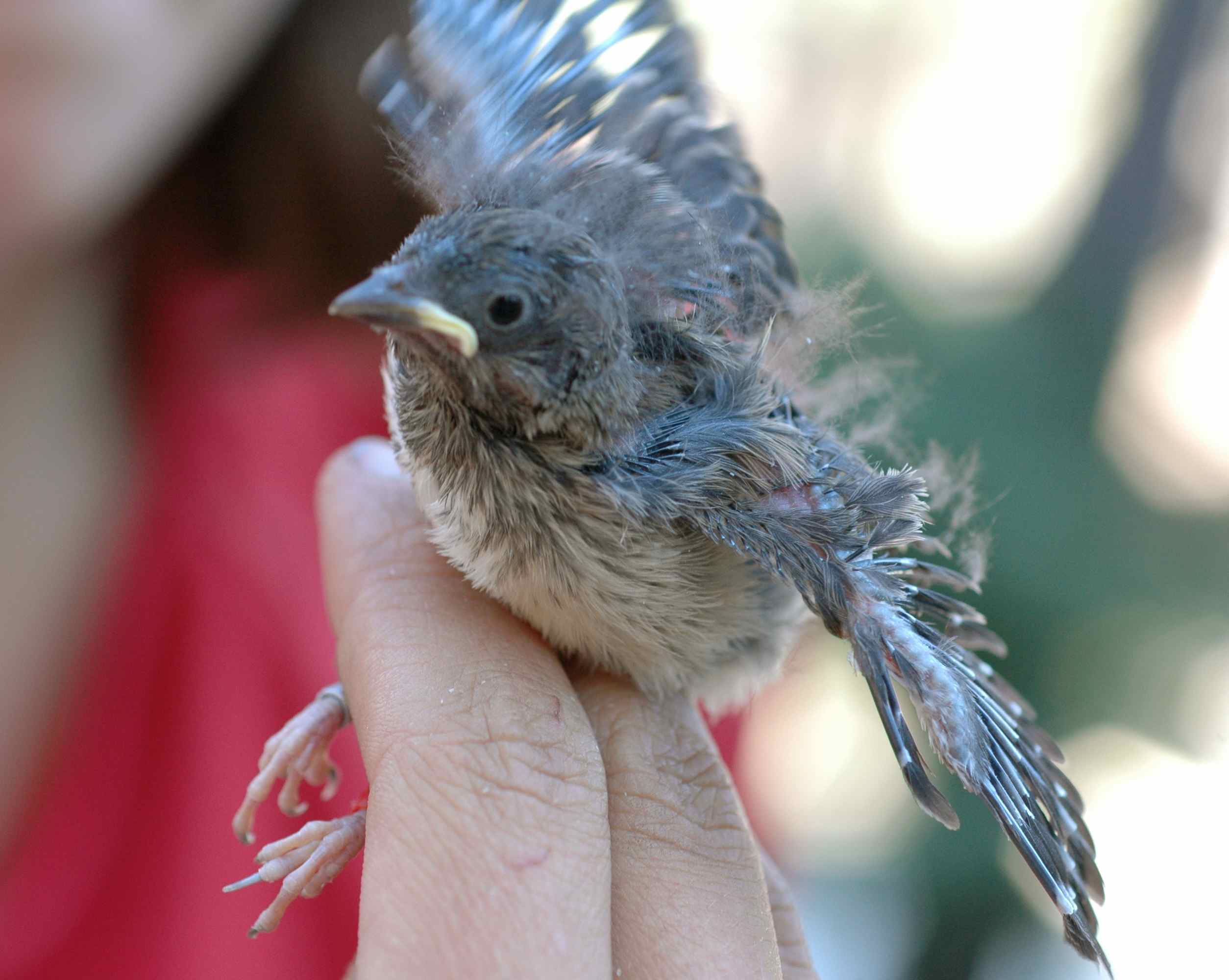
SSKA

IREA

IREA

OAKK

OAKK

OAKK trying really hard
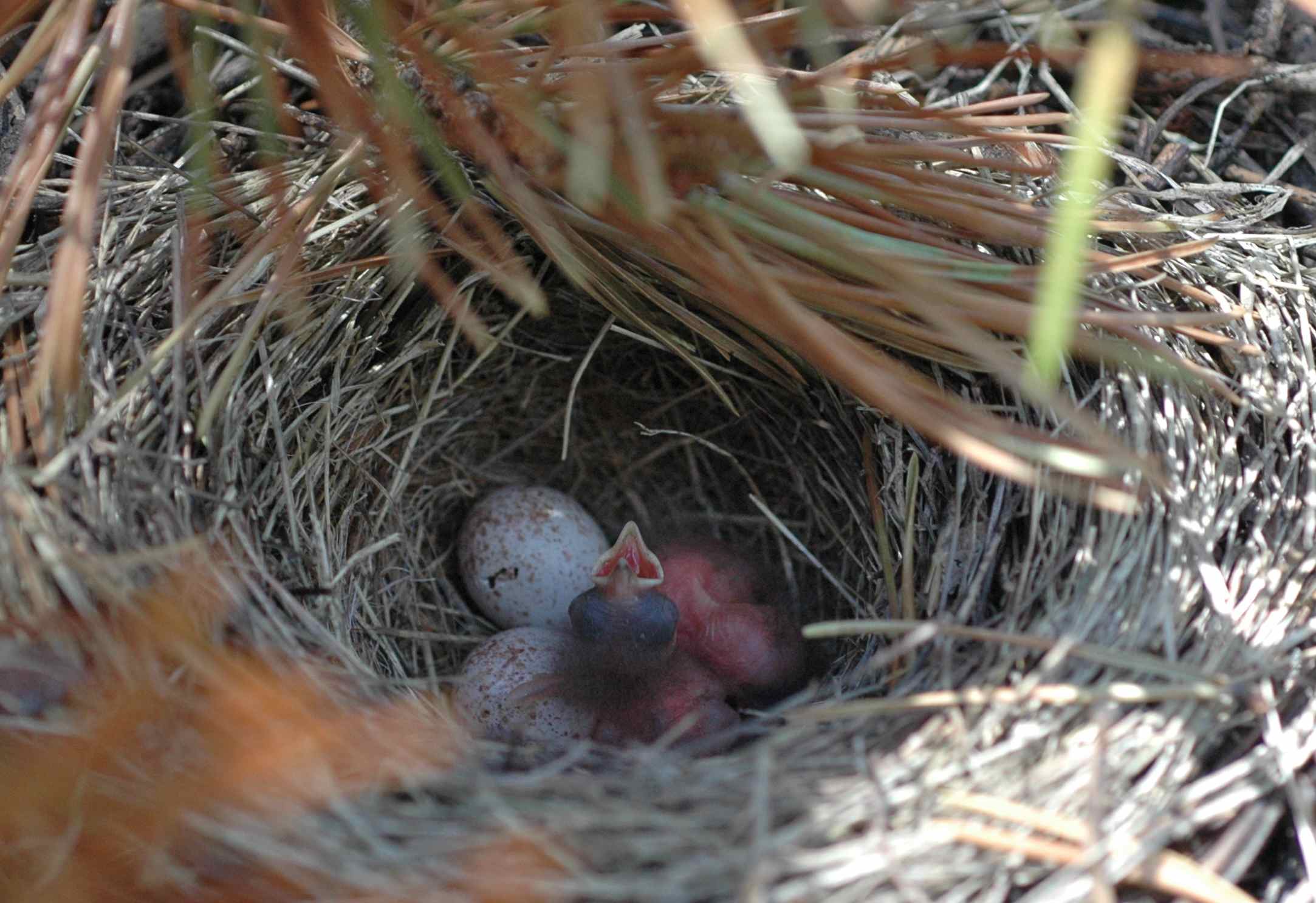
OAKK trying really hard

AMLE is watching you

Not that I have favorites, but AMLE (Amelie) is my new favorite junco. Most juncos get a bit dejected by the end of the banding process (don’t worry—as soon as they realize we’re letting them go, they perk up), but she was sharp the entire time. When it was time to take pictures, she glared daggers at us.

2013_AMLE5When I lowered her to get a better shot of the top of her head, she held her gaze—and her head—steady. Her body went down but her head stayed up.

2013_AMLE4

Continue reading

More baby pictures

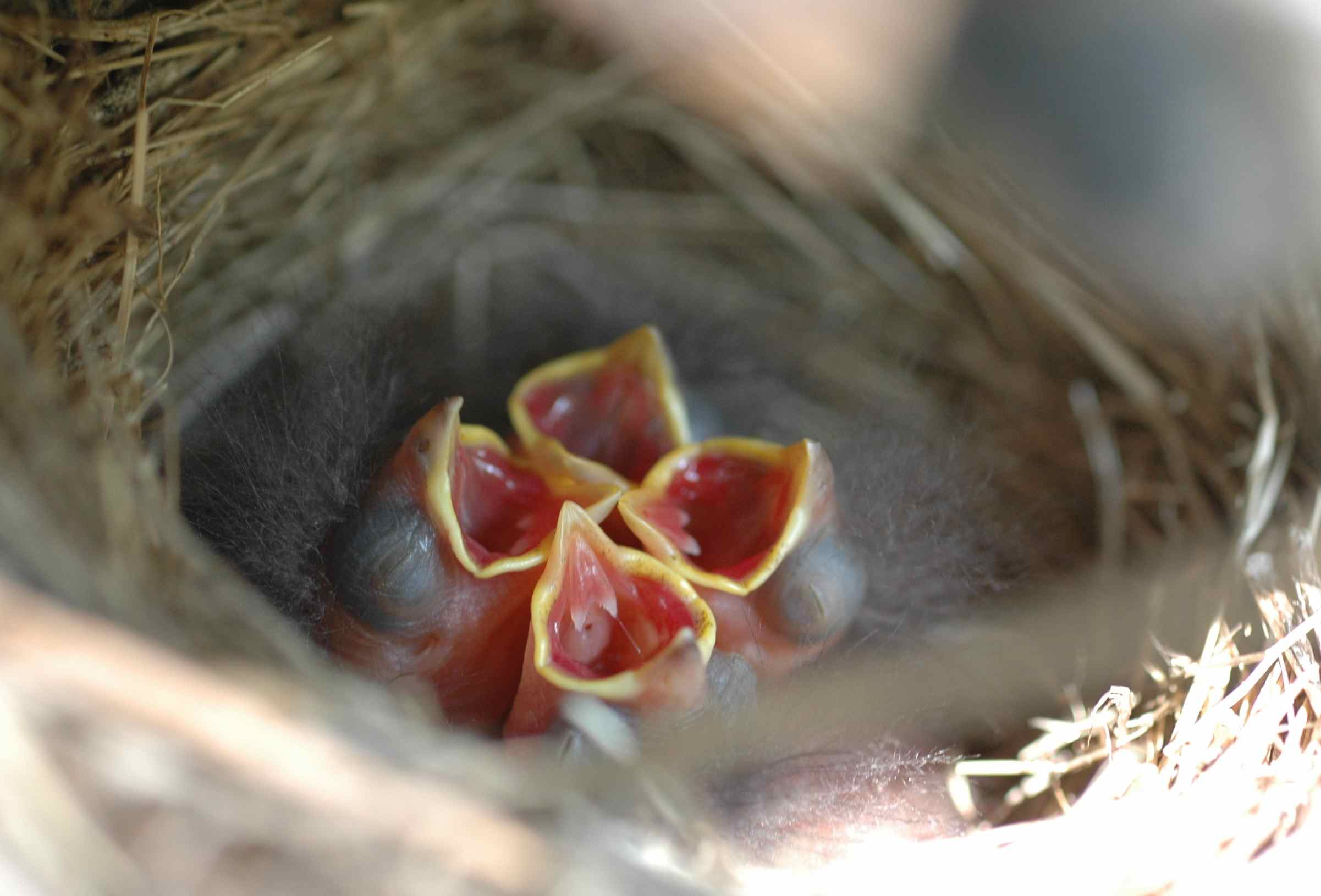
Recently I found this nest, belonging to female MABY (named in honor of Arrested Development, if you’re wondering) and male ARKM.

2013_morebabiesI couldn’t see clearly how many chicks there were, so I nudged them with my finger to try to get a better look—and they all thought one of their parents was waking them up with food.

2013_morebabies2

Continue reading

The fledgling problem

EDIT 5/26/2016: If you found this post because you have a baby bird and are wondering what to do with it, please see this post instead; it will be more useful.

———————————————

Being a fledgling—a chick that has left the nest—is awkward.

Junco fledgling MAII illustrates the awkwardness via interpretive dance.

Junco fledgling MAII illustrates the awkwardness via interpretive dance.

Fledglings are at one of the most dangerous time in their lives, facing an average mortality rate of 42% over just a week or two. Most of that mortality happens early, just after the little guys have left the nest. New fledglings have almost no skills: they can’t feed themselves, can’t fly well (or, in many cases, at all) and can’t do anything to defend themselves if something terrifying like a weasel, snake, crow, or even chipmunk decides to eat them.

Continue reading

KKRA, thunderbird

Two weeks ago, it rained on us for a solid 22 hours. (Which, I discovered, is exactly the time it takes for puddles to start forming inside my tent.) So when it got grey and thundery at the beginning of last week, I jumped: “We’ve got to process this junco quickly! Take down the nets! We have to get back to camp to cover the firewood!”

Of course, it didn’t rain. The next time it got grey and thundery, I jumped less: “Let’s take down one net and keep this one. Tell me if you see lightning.” It didn’t rain.

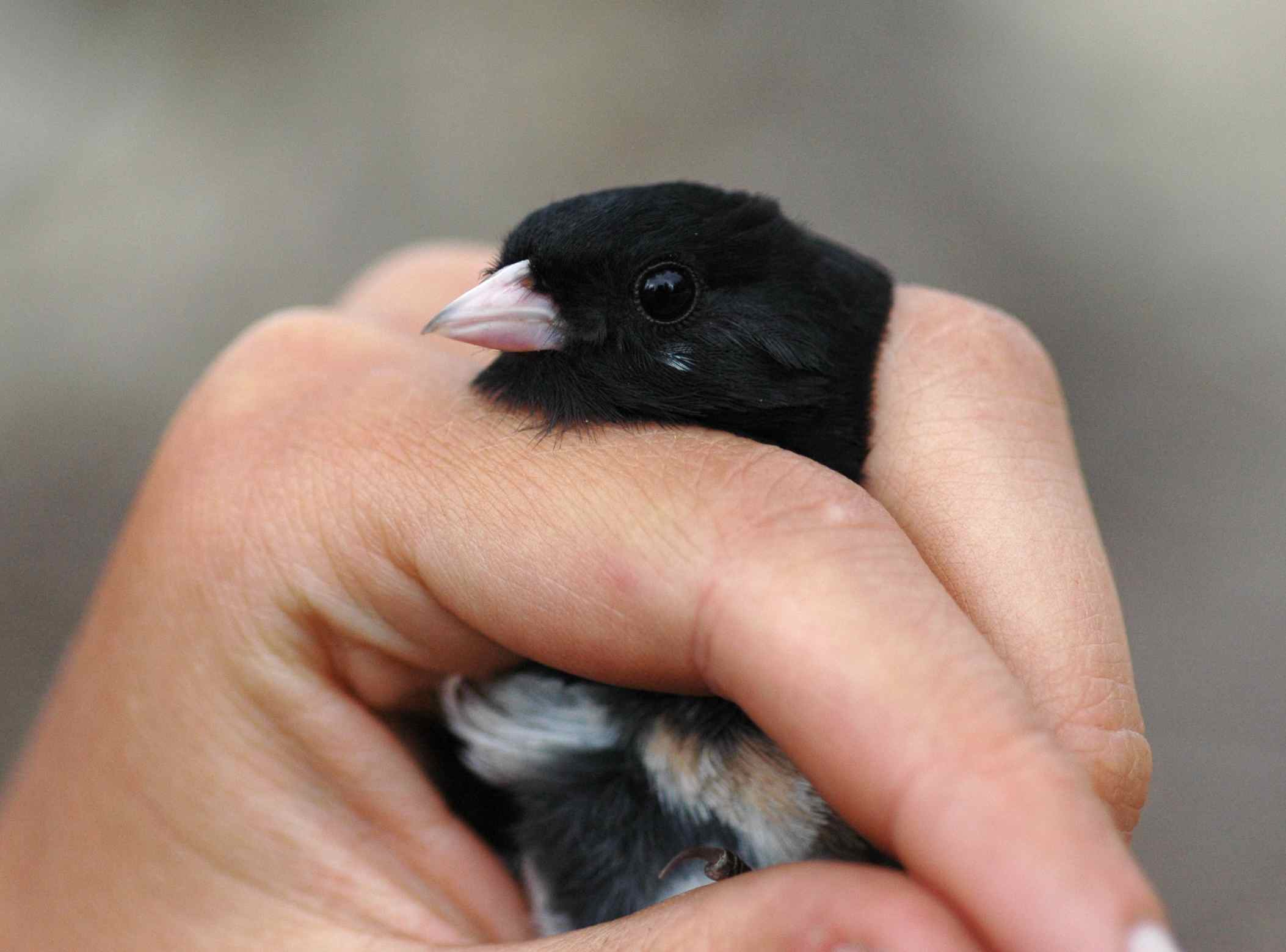
The third time it got grey and thundery, I didn’t jump at all. Then it actually started raining—but I really wanted another junco. So we caught a male in (very light) rain and banded him under a tree, naming him KKRA, which sounds a bit like the thunder that was rolling in the distance.

KKRA

KKRA, who has one white feather on his cheek

Continue reading

Damaged feet, but still hopping

Juncos use their feet more than many birds, not just to perch but to hop about while feeding. Their legs and feet, viewed close, are a contradiction: incredibly slender and fragile-seeming, but also covered in a hard, scaly, tough surface. You hope for their sake that the fragility is the illusion and the toughness reality, but of course each is a little true.

LANK has a permanently bent toe on his right foot. When he perches, his weight rests on what should be the top of the toe, and I imagine the same is true when he stands on the ground.

LANK

LANK

The bent toe is the left-most top toe on his right foot

The bent toe is the left-most top toe on his right foot.

2013-feet_LANK

View from the other side, for comparison with his healthy left foot.

Continue reading

One hundredth junco

I forgot to mention in the last post: I banded my one hundredth junco a few days ago. (Well, I didn’t band him; I’m training field assistants to be able to band, so one of them banded him. But I caused him to be banded.)

Me with RROA, my hundredth junco.

Me with RROA, my hundredth junco.

We banded him RROA, which is a combination with a history: in my previous work on House Wrens, RROA was a male wren who managed to breed for three years, which was much longer than any of our other wrens. He was a bit of a celebrity. Here’s hoping that the combination brings such luck to junco RROA too.

First juncos of the 2013 field season!

I got back from our first bout of field work yesterday, and I can say that if things keep going the way they did, we’re going to be banding a lot of juncos this year. That is excellent: the more we band, the more we can identify individually by sight, allowing us to observe the behavior of each. It’s much more informative to be able to say “KARL chased RRAY” than “one junco chased another junco”. Too, when we band them we also take measurements and pictures, so we can relate their behavior to things like condition and size.

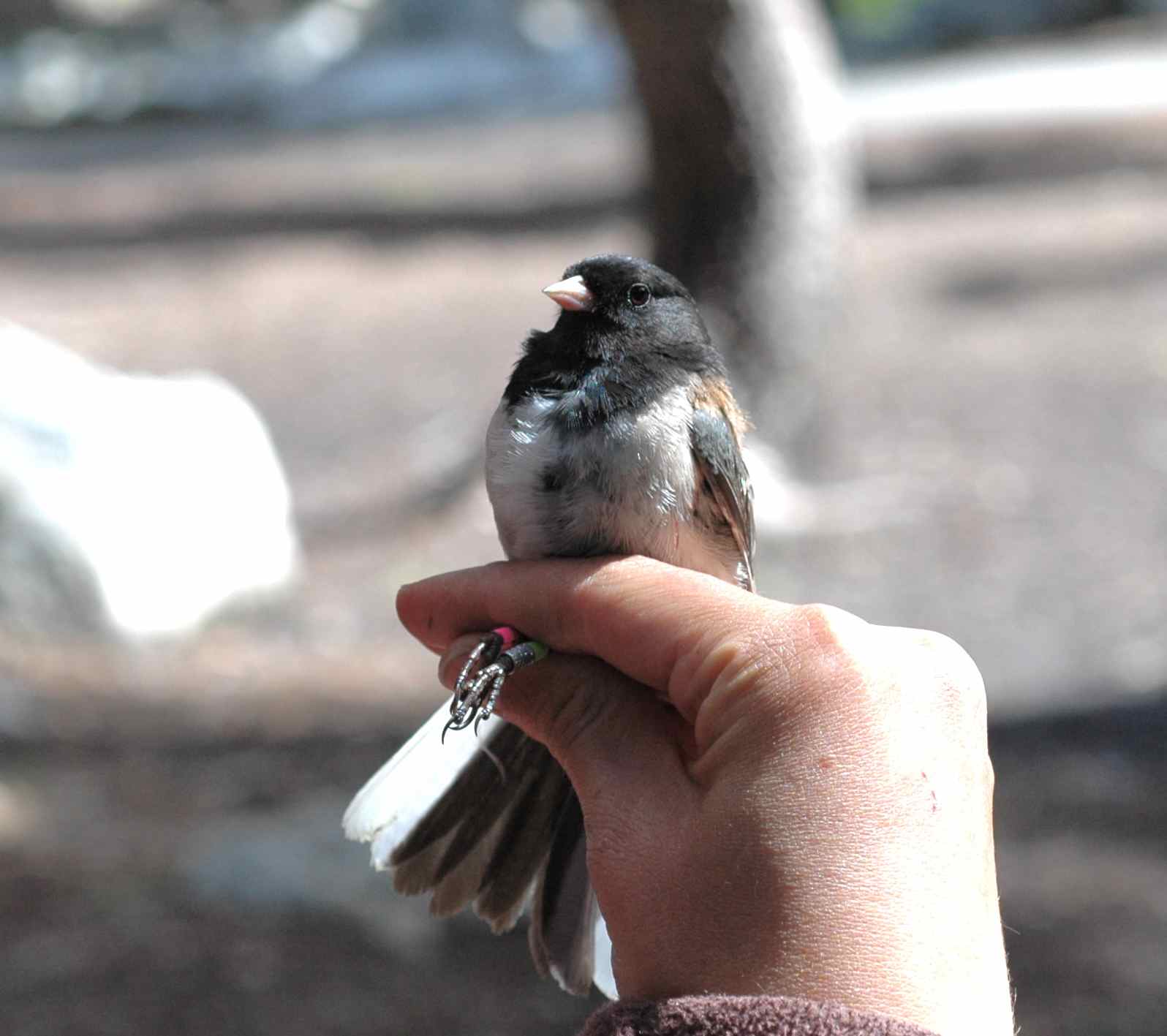
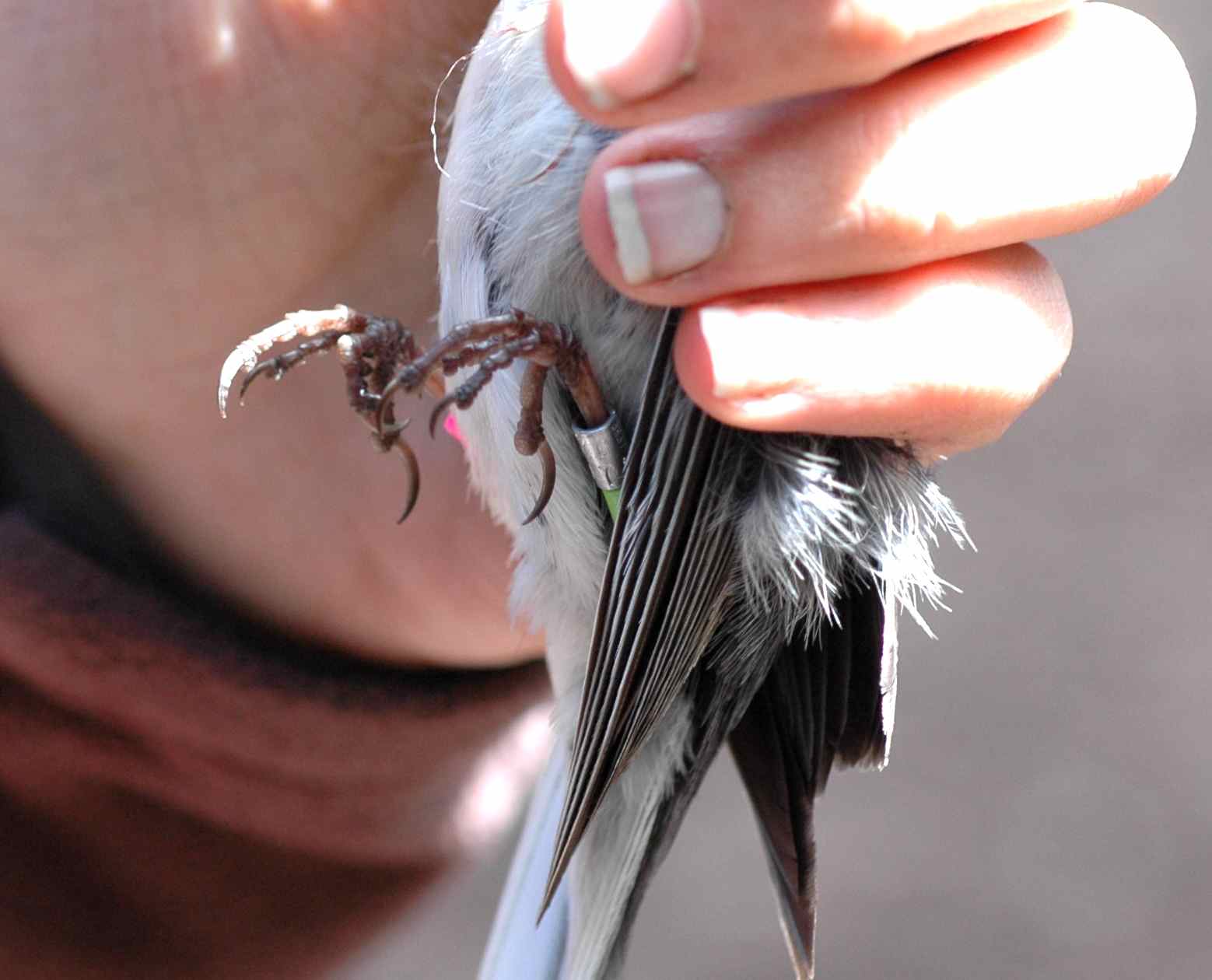
Male GILA. The bands on his legs are read top-left, bottom-left, top-right, bottom-right: he has Green, shrImp, Lime, Aluminum, hence GILA.

Male GILA. The bands on his legs are read top-left, bottom-left, top-right, bottom-right: he has Green, shrImp, Lime, Aluminum, hence GILA.

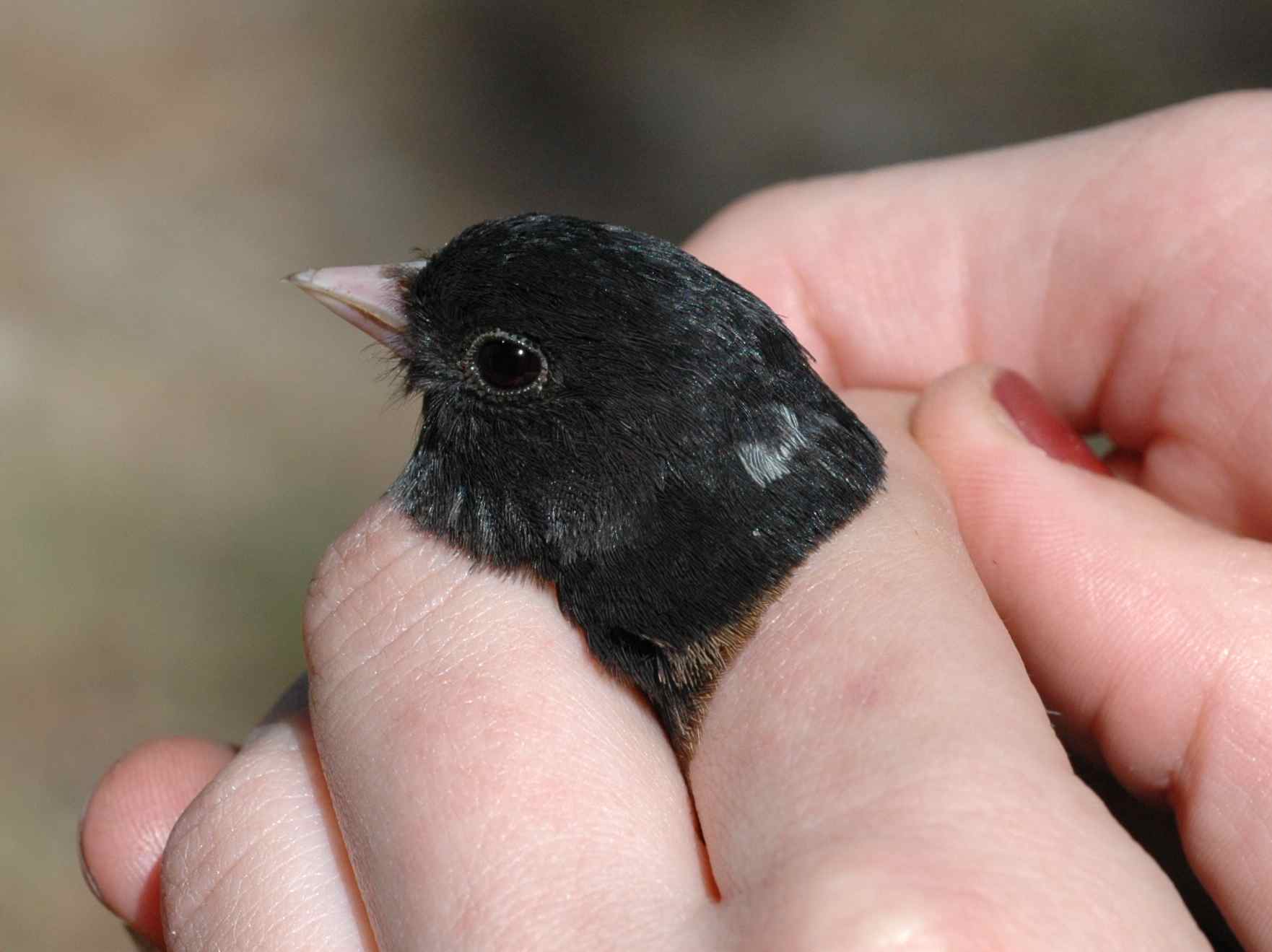
GILA had an unusual white feather on the back of his head.

GILA had an unusual white feather on the back of his head.

Continue reading