We didn’t see very many herps (reptiles and amphibians) this summer, and I managed to get pictures of just three. At least they were all pretty charismatic.
Tree frog

Tiny tree frog
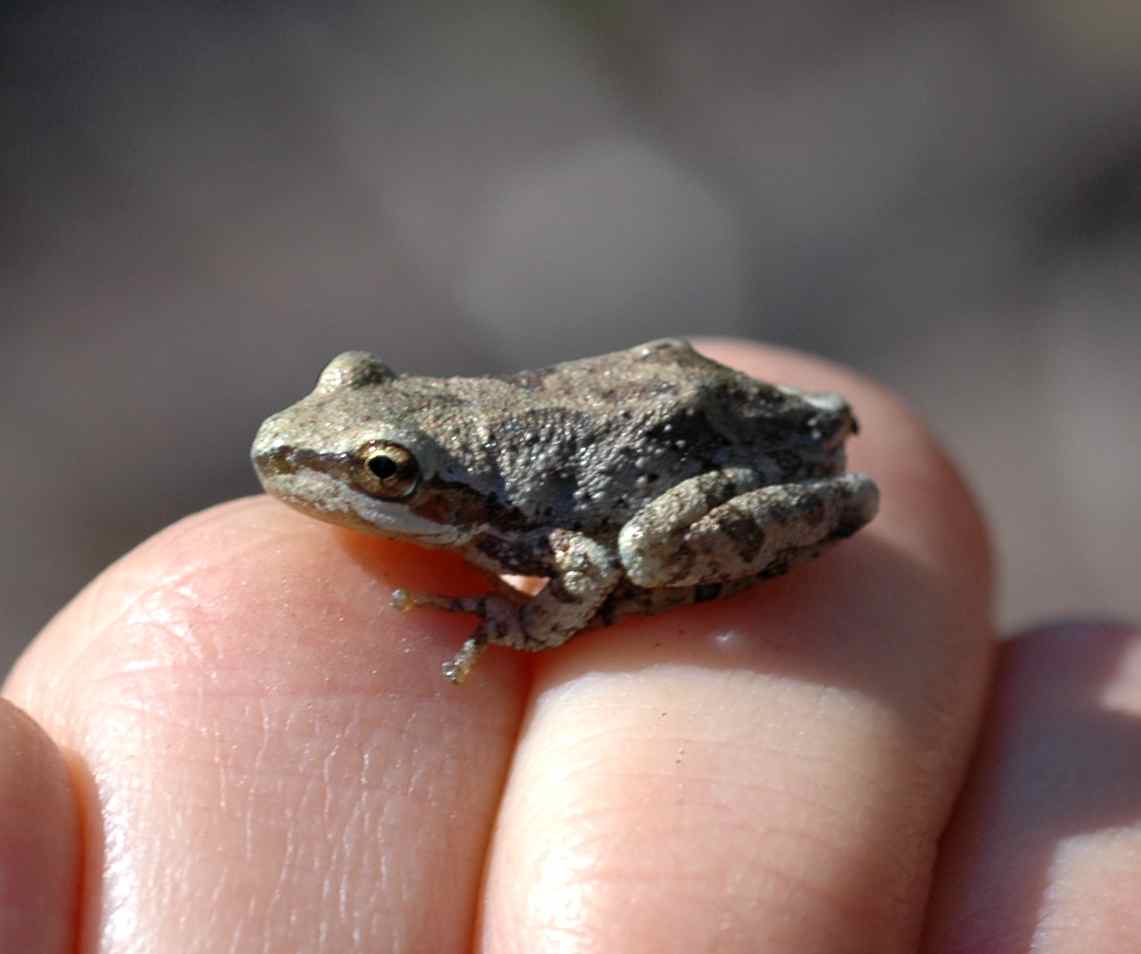

We didn’t see very many herps (reptiles and amphibians) this summer, and I managed to get pictures of just three. At least they were all pretty charismatic.
Tree frog
Tiny tree frog
Sometimes doing science feels like doing magic. Take a fantastical witch brewing eye of toad and nightshade flower in a cauldron, substitute a 1.5 ml tube for the cauldron, AW1 Buffer for the nightshade flower, and blood of junco for the eye of toad, and that’s me.
(And that “eye of ___” thing happens in science too: a few of my herpetologist colleagues have been talking lately about what you can learn from preserved lizard eyes.)
One of the things I do when I capture a junco is to collect a blood sample. I use a sterile needle, collect very little blood, and don’t let the bird go until I’m sure the bleeding has stopped. The birds usually don’t even flinch. They act much more upset when I blow on their chests to look for brood patches (I think it feels cold to them) than they do when I take blood.
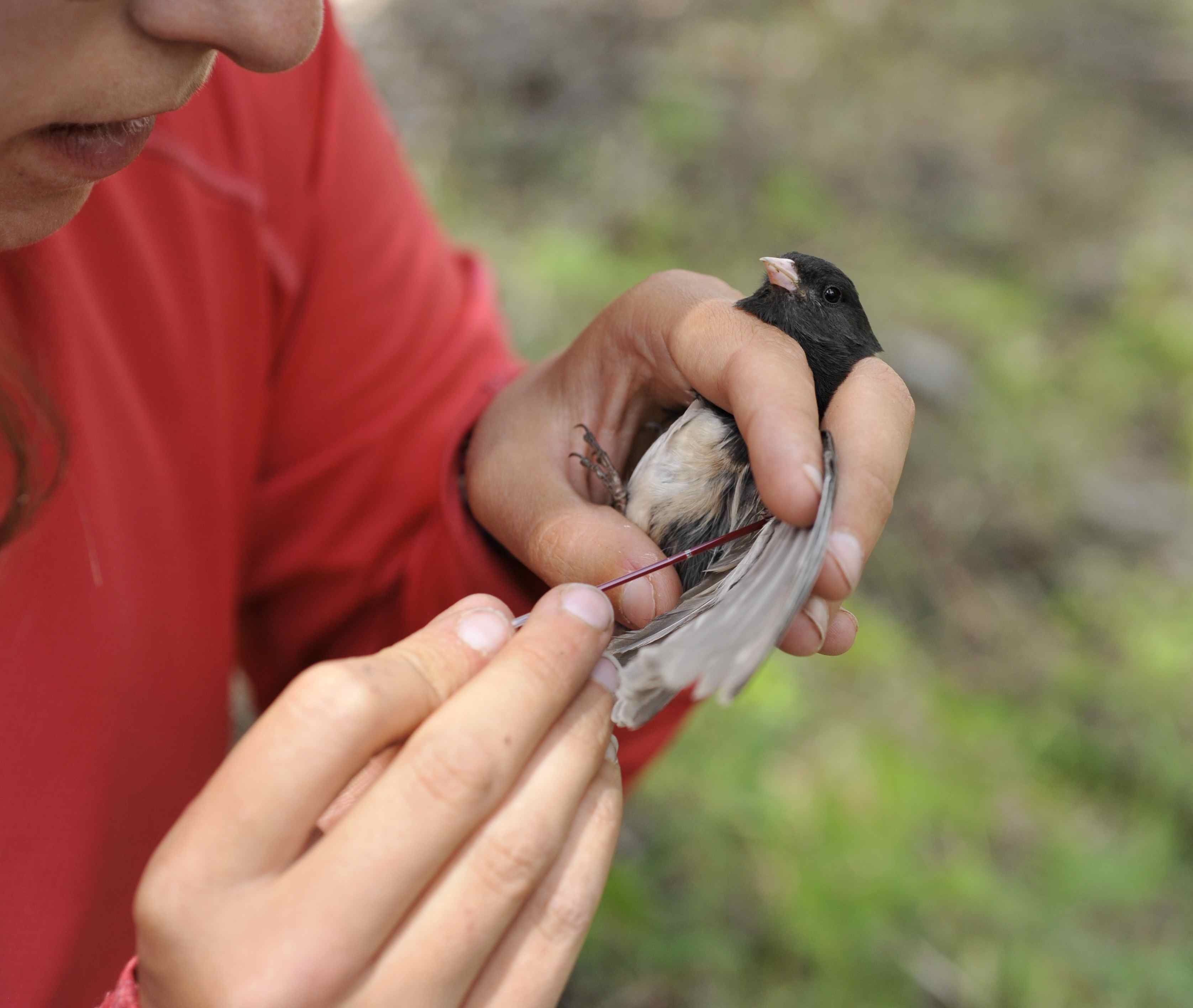
Me collecting blood from GRAY. The blood moves up the tiny capillary tube on its own. Photo by M. LaBarbera.
The Cornell Lab of Ornithology is rolling out a big bird of paradise project this fall, and has put up a sort of teaser trailer for it. Even if you’ve seen bird of paradise videos before, it’s awesome. And if you haven’t, the colors, forms, and dances of these birds will blow your mind.
Several years ago, I found myself in possession of an abandoned baby deer mouse. She was too little to survive on her own, so when it was clear that no mousey help for her was coming, I took her in as a pet.

Garlic Jack the day I found her, snuggling with a warm water bottle wrapped in a sock
[Wrote this back in August and forgot to post it—oops.]
ROYA weighs just 16.1 grams, and her right eye is bloodshot and kept mostly closed.

ROYA
That’s bad, but ROYA is one tough little bird. You would never know that she is one-eyed from watching her: she flies, she forages, and she feeds her chick—who is in his young-fledgling, über-needy stage—nonstop. If she can keep it up for another week, he’ll be able to fend for himself, and she will have successfully raised a brand new junco.
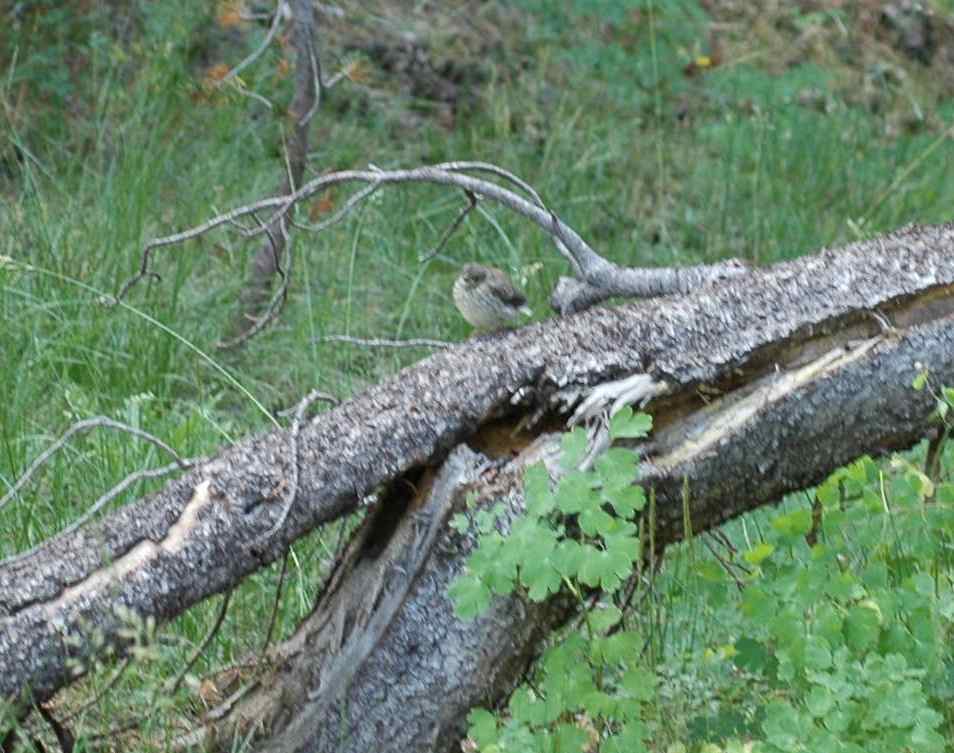
ROYA’s young fledgling
I really wanted to band her fledgling, but while he seemed dopy (he cheeped nonstop, letting us know exactly where he was, and let us get maddeningly almost within arms’ reach of him), he knew when to fly, and he never flew into the net either. ROYA is doing a good job.
Science is not just for scientists. The methods of thought that underlie science are useful in all sorts of everyday contexts. Most obviously, everyone needs to be able to think like a scientist in order to interpret scientific results—you know, those newspaper headlines like “PAPER CLIP USE MAY LOWER IQ IN PREGNANT WOMEN!!” In that spirit, I’m going to write about some key concepts for thinking like a scientist. Today: sample size.
Pop quiz! You read this (totally made up) report: “Two groups of ten age- and health-matched men were monitored for heart disease. One group was given pet ferrets, while the other was not. The ferret-owning men were 8% less likely to develop heart disease over a five year period.” So: is it time to run out and get a ferret for the sake of your heart health?
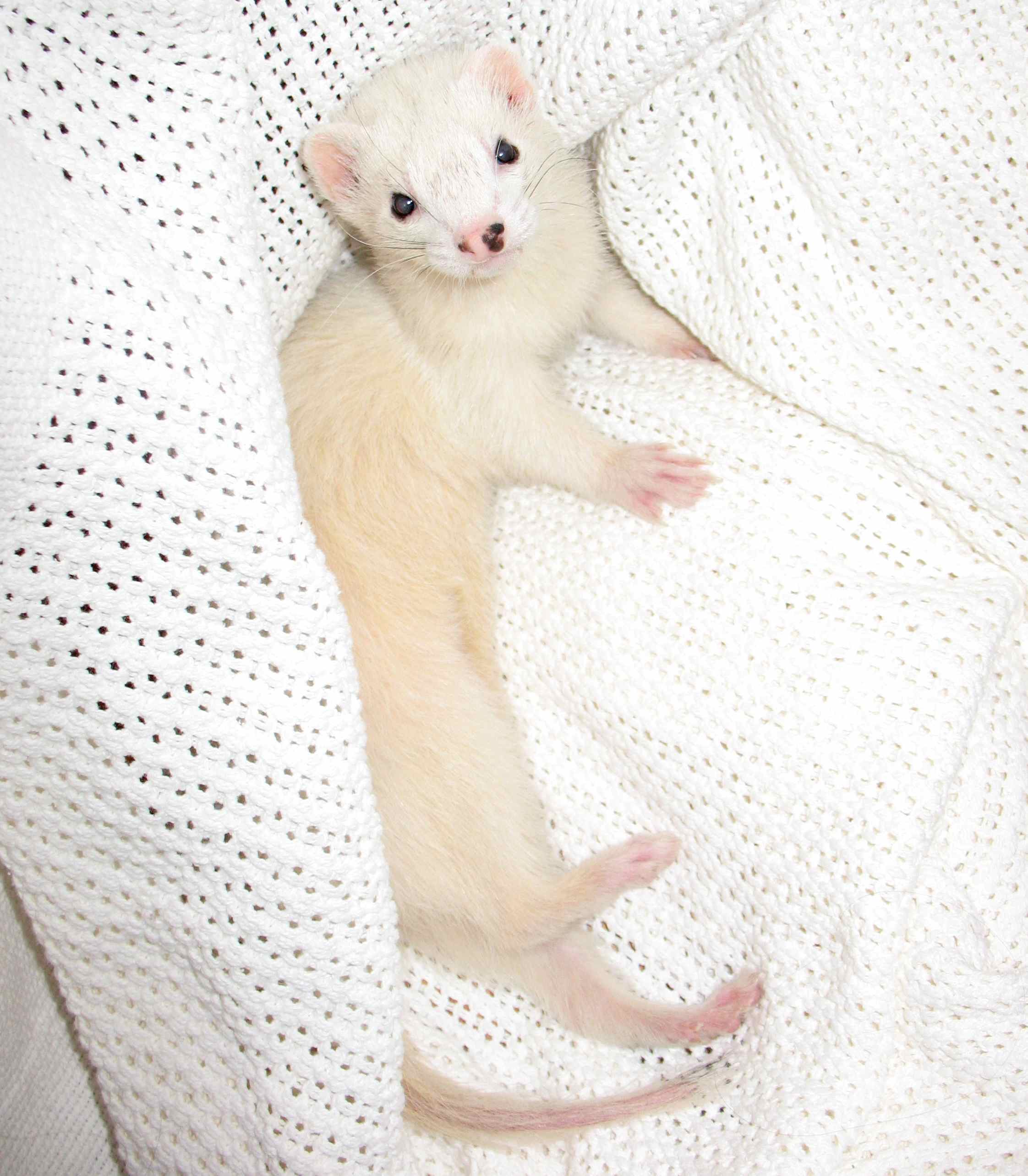
You should get a ferret regardless, because ferrets are wonderful. This is my awesome old ferret Zap.
The field season is mostly over. My field assistants are back in classes; my mist nets are packed away. (Many thanks to the people who kept us fed and equipped by donating a total of $1450 to this field season!) It’s grant-writing, lab work, and data analysis season now.
Well, almost. I really want to know what the juncos do when summer ends. Our working assumption is that they migrate down the mountains to escape the worst of the winter weather, but we don’t know how far they go, or when, or, really, if they do that at all. So this week I went back to look for them.

SOSA, photographed on his territory earlier this year, was nowhere to be found. Photo by M. LaBarbera.
All photos in this post are by M. LaBarbera.
Belding’s ground squirrel
Stand at one of our high-elevation sites, and at any given moment, you will be under surveillance by at least two Belding’s ground squirrels.

You might not see them, but down in the grass and the flowers, they are watching.

From most of the pictures on this blog, you might think that the only animals we saw this summer were the ones that flew into our nets. Not so!

Big red fuzzy moth
Of course, whether I can identify these non-birds is a different matter entirely. If you see anything you recognize, please comment and let me know what these exoskeleton-clad creatures are.
Black-capped Chickadees may be the easiest birds to identify by ear. Chick-a-dee-dee-dee, they sing, telling you exactly who they are. (I’ve heard that towhees do this too, but the towhees I’ve heard always seem to be saying twee or taree, from which I would not be able to get “towhee” unassisted.)

Don’t you know who I am? I’m Chick-a-dee-dee!
[A Mountain Chickadee, not a black-cap, but I don’t have any photos of black-caps.]
 Tough Little Birds
