My next campground was at the bottom of the Tuolumne River valley. I knew that; yet still, seeing the gently rolling forest open up and plunge down before me was a thrill.
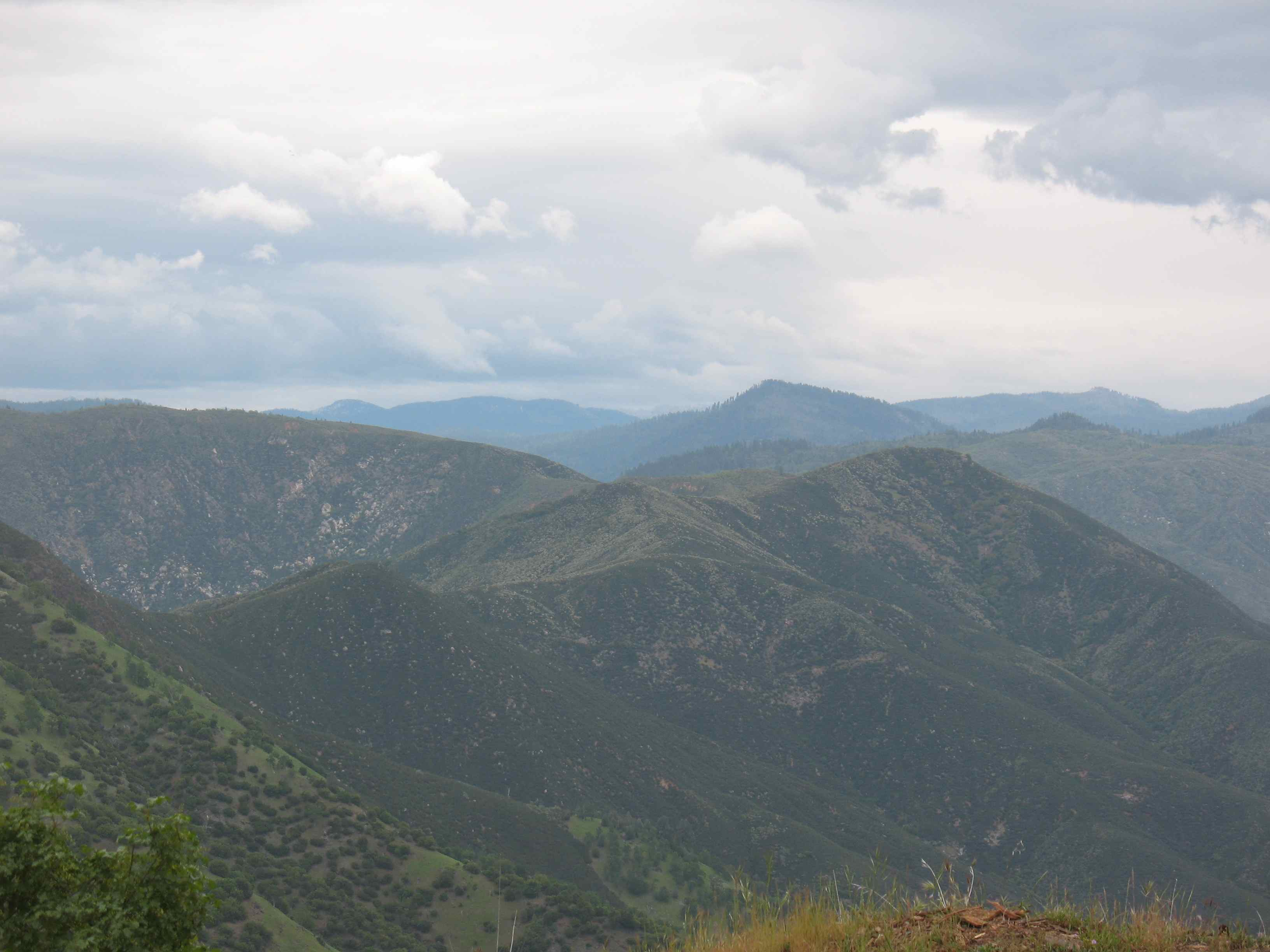
Sudden Valley, anyone?

My next campground was at the bottom of the Tuolumne River valley. I knew that; yet still, seeing the gently rolling forest open up and plunge down before me was a thrill.
Sudden Valley, anyone?
I arrived at my first target campground in Stanislaus National Forest around 4pm on Tuesday, after only minorly getting lost. It was pine and oak forest, with lots of open patches: great junco habitat!

There will be so many juncos here!
I’m heading for the field today! As soon as I find my GPS, or give up on finding it…
This is a scouting trip. I won’t catch any birds (I don’t have the state permit for that yet anyway) but I’ll try to find them, see what breeding stage they’re at, and figure out what sites will be the best to focus on. I’ll start out in Stanislaus National Forest, then head to Sierra National Forest. It’s early enough in the season that most campgrounds are still closed, so I don’t get much choice of where to stay, but I’ll cover as much ground as I can. I’m hoping there won’t be many road closures in the parks but you never know.
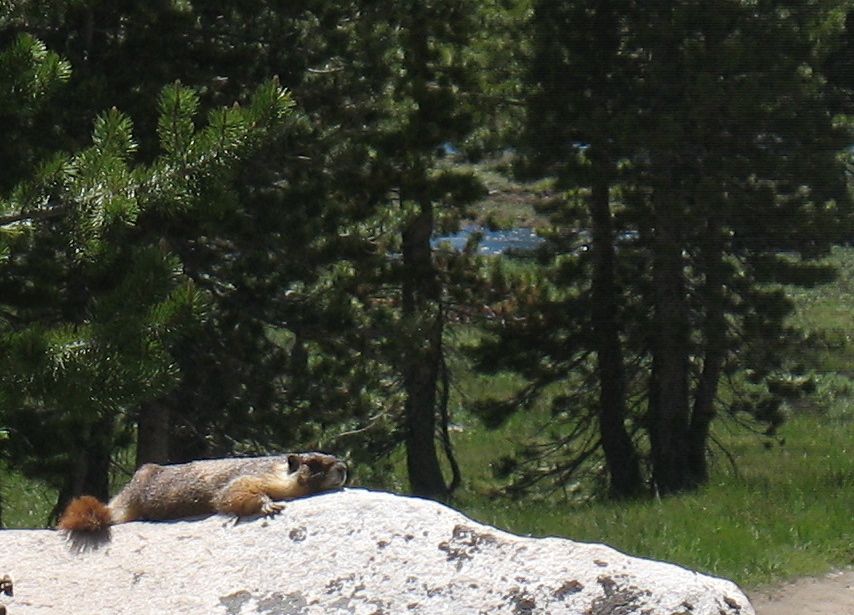
I’ll be back Friday. In the meantime, I’ve scheduled posts (I’ll be “posting from the past,” as Jim Hines put it), and here is a picture of a marmot relaxing:
I just got confirmation that one of my permits – to put colored leg bands on the juncos – is approved! This is awesome. Putting colored leg bands on birds allows researchers to tell individuals apart, since we can put unique combinations of colors on each bird. For example, here are the color bands of RROA, a male House Wren who lived in Ithaca:

RROA = Red Red Orange Aluminum, with the aluminum band being the official US Fish & Wildlife band; this band has a unique number engraved on it, and all information about the bird is associated with that number. However, you have to be holding the bird in your hand to read its USF&W number, so researchers use color bands to be able to tell who is who without capturing the bird. We could identify RROA just by looking at his color bands with our binoculars – we didn’t even have to disturb him. RROA bred in our field site for three years, the longest of any House Wren there. (And yes, we called him RROA – pronounced Roe-uh.)
I’m in field-work-prep mode now, getting ready for the rapidly approaching field season. That means finding field assistants, getting them approved by the university, buying equipment, planning out food… We’ll be camping for much of the field work, so food is a nontrivial issue. It has to be compact enough that you can fit it in a bear barrel or bear locker (to keep the bears from eating it), it has to keep without refrigeration, it has to be cookable over a camp stove, and it has to give you the energy to do field work all day. It also has to be tasty enough that my field assistants don’t mutiny.

I want to eat your food but people are scary so I'm going to wait in this tree for you to go away
The plan is to start field work in the beginning of May—maybe. To do the kind of research where you capture and handle birds, you need permits. At a minimum, you need a federal permit and a state permit; you may also need a permit for the specific location you’re working in. I have my federal permit, but am still waiting on the state permit. Everyone think speedy thoughts at the state permitting people!
(If I don’t get the permit by May, I will go out and nondisruptively observe the heck out of the juncos until I do get the permit. But I would prefer to be able to begin banding them right away.)
 Tough Little Birds