One-eye ROYA, pirate mom

[Wrote this back in August and forgot to post it—oops.]

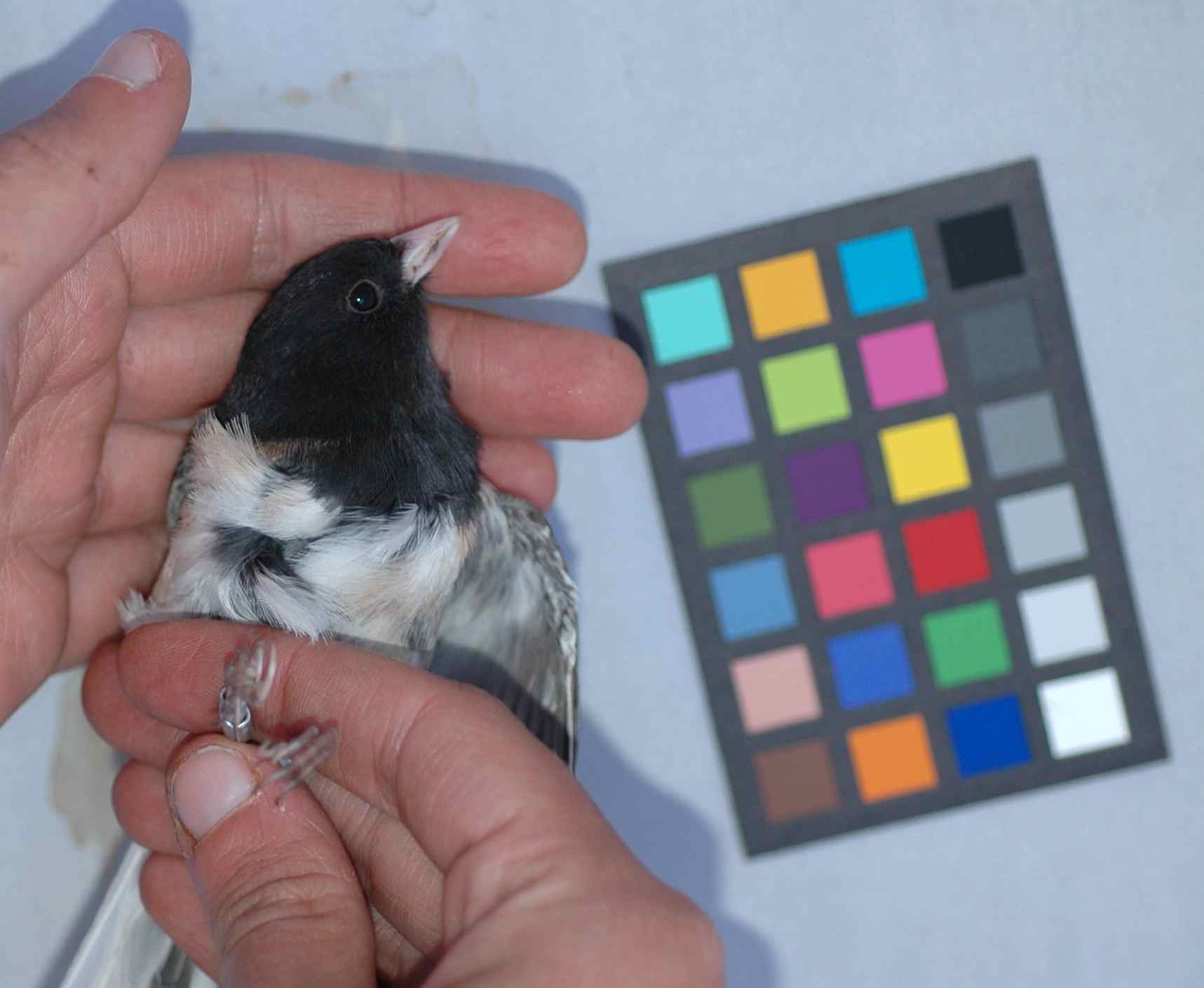
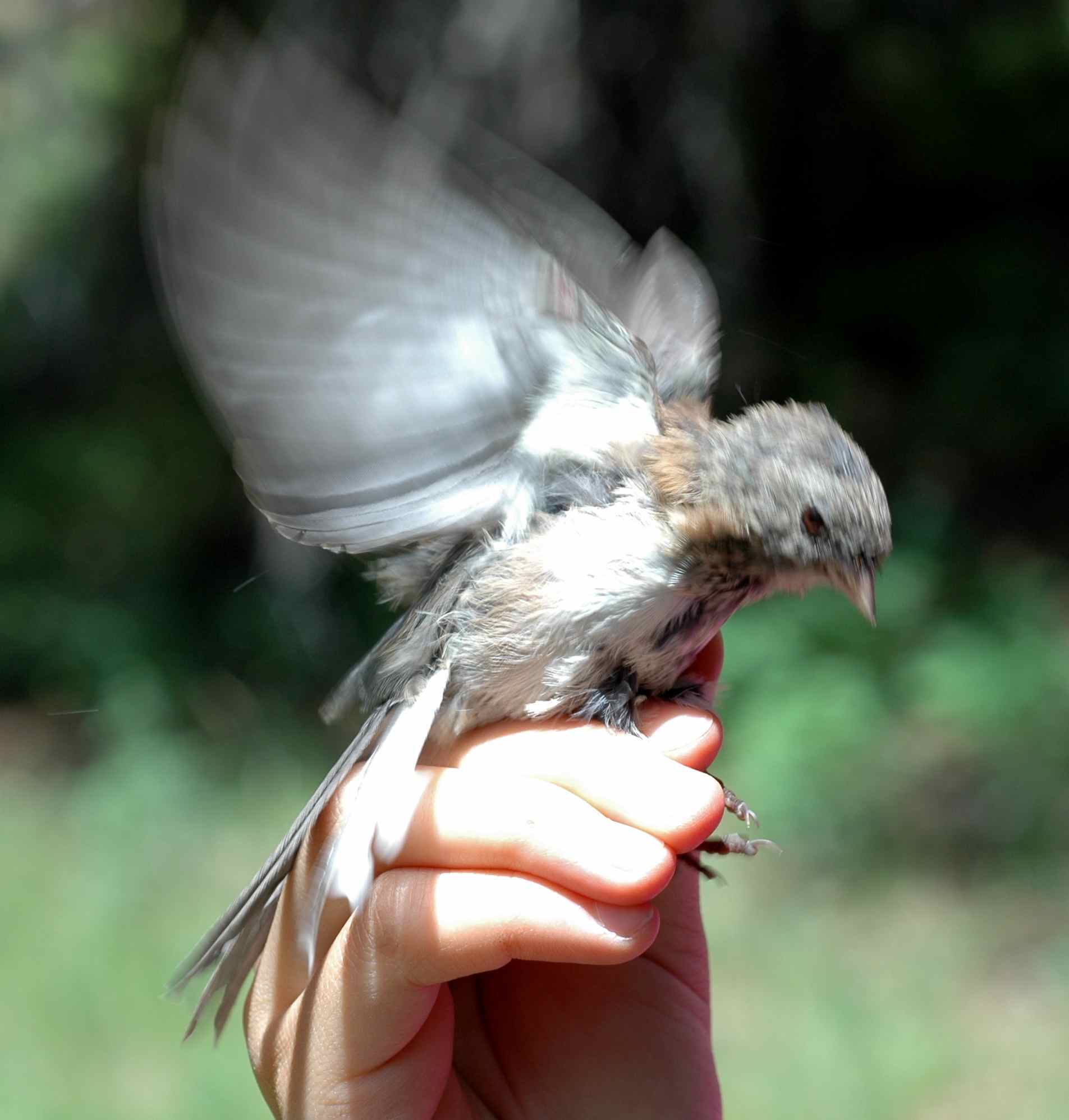
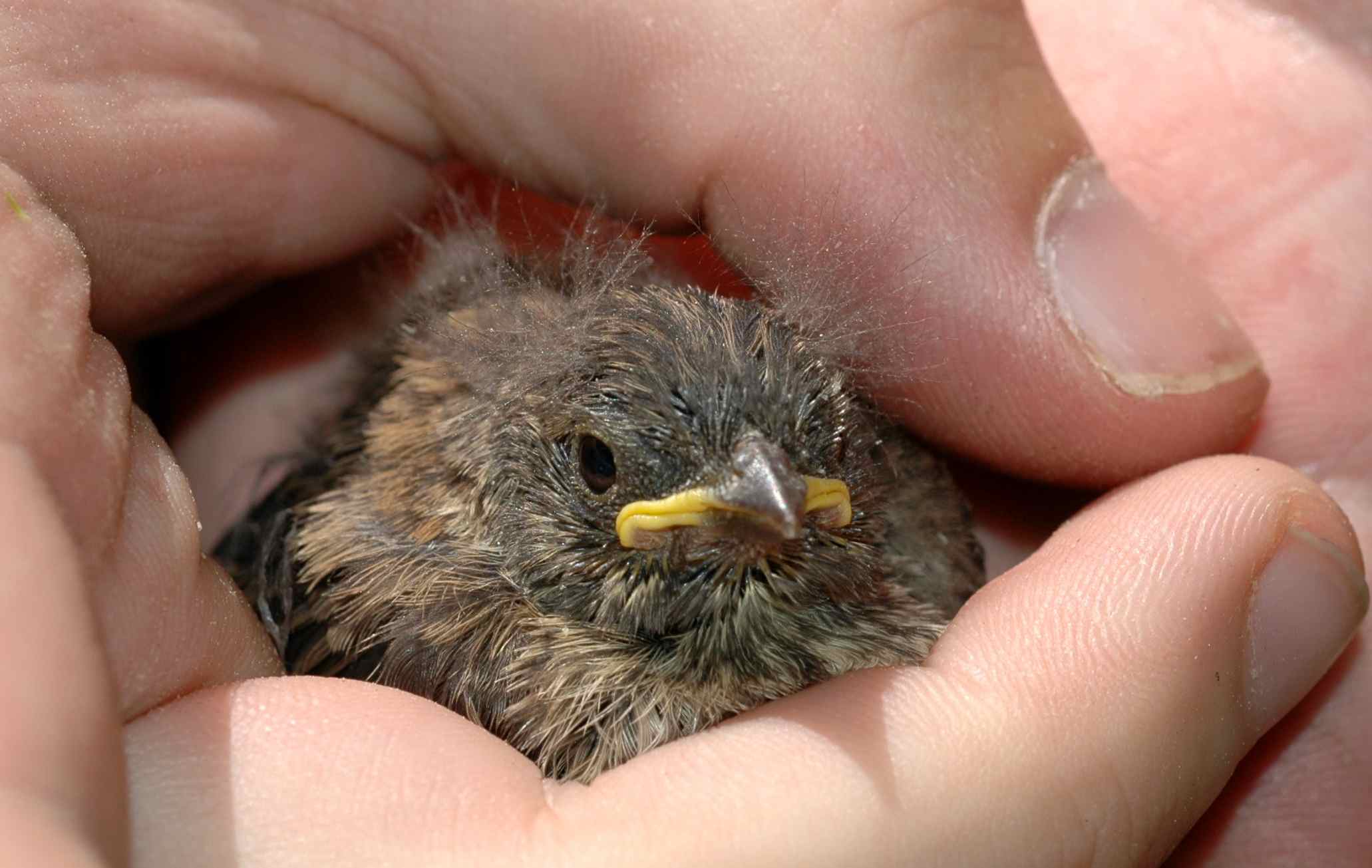
ROYA weighs just 16.1 grams, and her right eye is bloodshot and kept mostly closed.

ROYA

That’s bad, but ROYA is one tough little bird. You would never know that she is one-eyed from watching her: she flies, she forages, and she feeds her chick—who is in his young-fledgling, über-needy stage—nonstop. If she can keep it up for another week, he’ll be able to fend for himself, and she will have successfully raised a brand new junco.
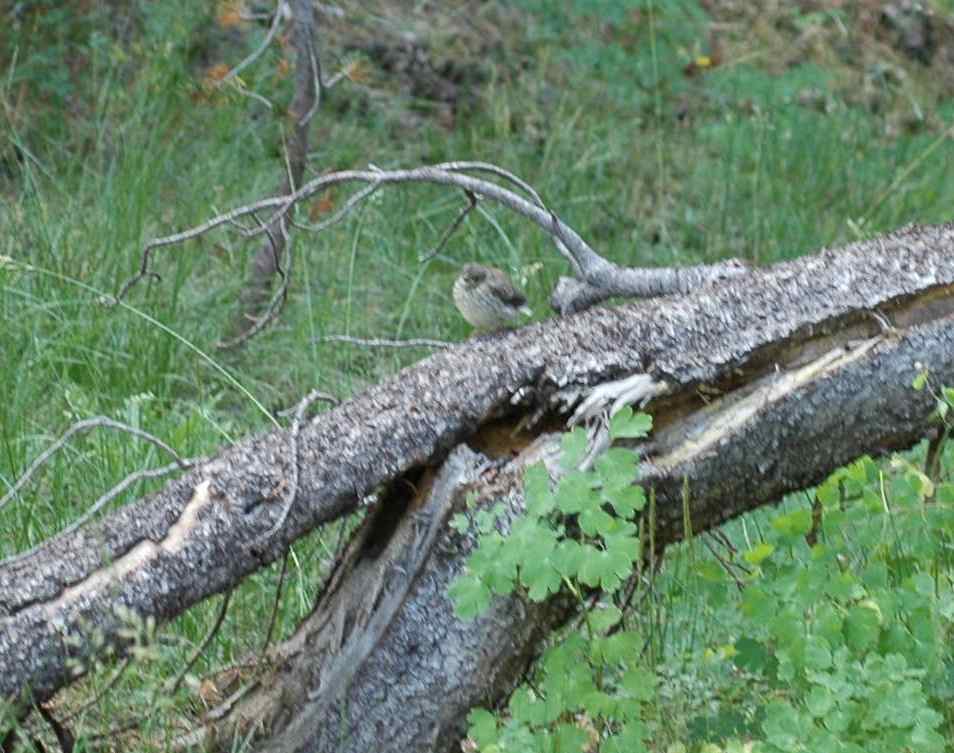
ROYA’s young fledgling

I really wanted to band her fledgling, but while he seemed dopy (he cheeped nonstop, letting us know exactly where he was, and let us get maddeningly almost within arms’ reach of him), he knew when to fly, and he never flew into the net either. ROYA is doing a good job.

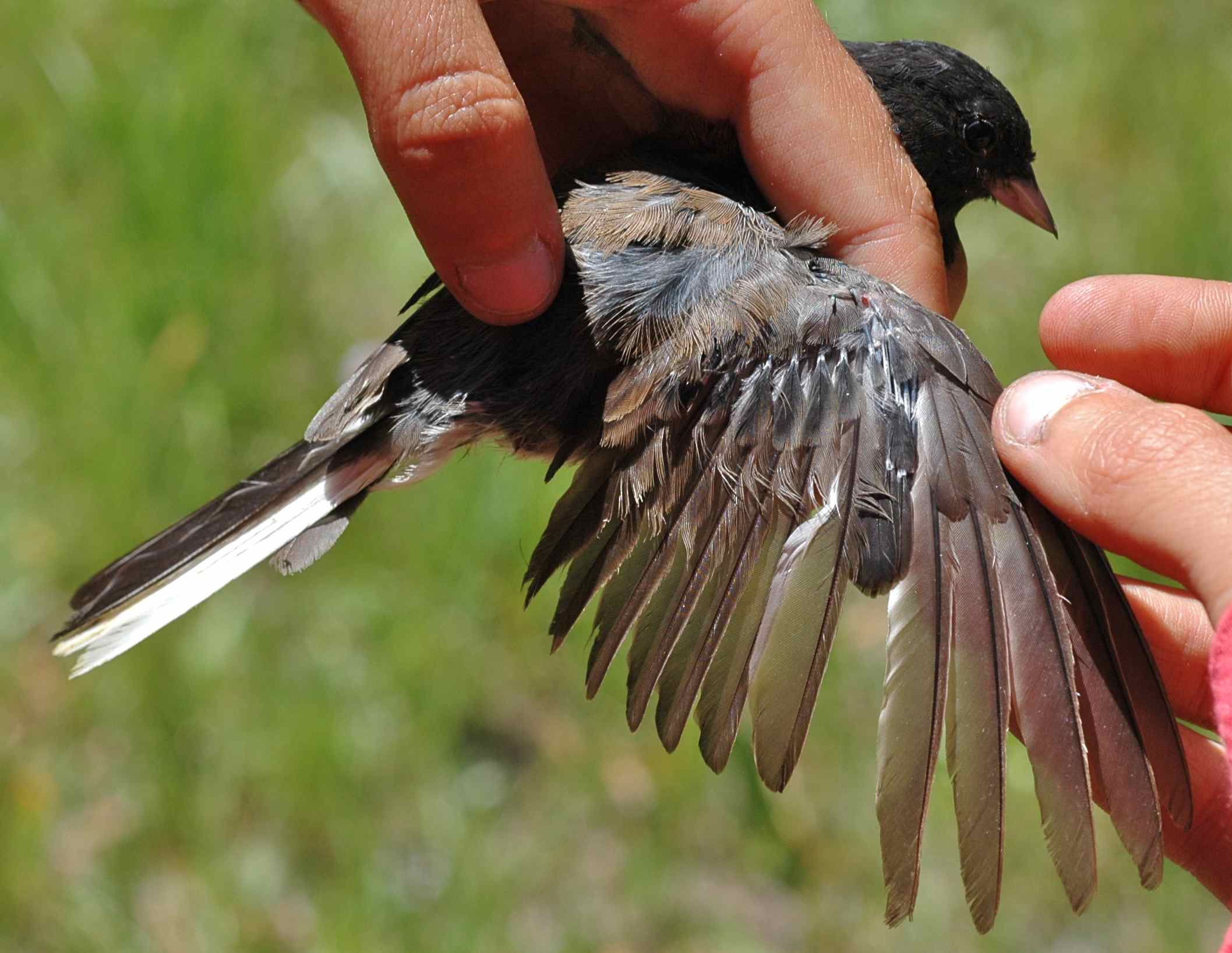
October in the mountains

The field season is mostly over. My field assistants are back in classes; my mist nets are packed away. (Many thanks to the people who kept us fed and equipped by donating a total of $1450 to this field season!) It’s grant-writing, lab work, and data analysis season now.

Well, almost. I really want to know what the juncos do when summer ends. Our working assumption is that they migrate down the mountains to escape the worst of the winter weather, but we don’t know how far they go, or when, or, really, if they do that at all. So this week I went back to look for them.

SOSA, photographed on his territory earlier this year, was nowhere to be found. Photo by M. LaBarbera.

Continue reading

Last chick of the season

If you get too close to a nest or a young fledgling, the parent juncos will often give a repeated, angry chip call. I don’t understand how this could possibly be adaptive—I would understand a snake-like hiss, or a tiger roar, but no one’s scared of “chip”—but as silly as it is for the parents to broadcast, effectively, “My nest is here, don’t come find it!” I do appreciate the help.

On our last trip we noticed SNAE and his unbanded mate chipping insistently.

SNAE. I photograph all the juncos I catch from several angles like this; the color standard card you see in the background lets me compare colors among pictures, to look at color differences among the juncos.

Continue reading

Fledglings!

On our last trip, finally, we managed to catch some fledglings. We had been seeing them around for weeks, but as they didn’t seem to respond to playback, and they never flew the right direction when we tried to chase them into the net, we’d caught none.

On this last trip something had changed. No longer were all of the fledglings attended by their parents; instead, they formed foraging flocks of parents, attended fledglings, and apparently-independent fledglings. Attended fledglings are hard to catch because their parents lead them away from danger. Independent fledglings, it turns out, aren’t so careful. We set up the net where we observed the flock foraging, and within ten minutes the juncos drifted back into the area and resumed foraging.

BOAR was the first fledgling we caught.

BOAR

Continue reading

Jerk juncos

Although the last month has brought nests, chicks, and all the excitement they entail, it has also seen increasingly frustrating field work. In the beginning of the field season, we caught between two and five juncos every day; now we’re down to two, one, or none.

Some of them simply don’t respond to our playback at all. Locations that we know have juncos—because we’ve seen them, darnit, we’ve banded them—appear junco-less, our Radio Shack speaker spewing junco calls with no response. Other juncos respond half-heartedly, distractedly. They sing for a minute, then resume foraging. Or, as I watched GAEL do recently, they sing back softly while preening their feathers.

GAEL ignoring us. Photo by M. LaBarbera.

We spend a lot less time handling birds now, and a lot more time muttering, “Jerk juncos.”

Continue reading

Nest update: OLLA’s fledgling(s)

I stayed away from OLLA’s nest for several days, as I promised, so as not to scare the chicks into fledging early; but finally I just had to know if they had fledged yet. As I approached the nest both OLLA and ALGE scolded me—but the nest was empty. I looked around to see why they were angry at me and caught sight of a fledgling in a nearby tree: BABY! I didn’t see BABY’s siblings, but there were lots of trees around, and fledglings can be cryptic if they stay still. BABY was the smallest of the three so if she is fledged and okay, it’s very likely that YAYN and MAYO are doing well too.

YAYN or BABY, from before she fledged.