Fitting a bird-shaped peg through a tiny hole

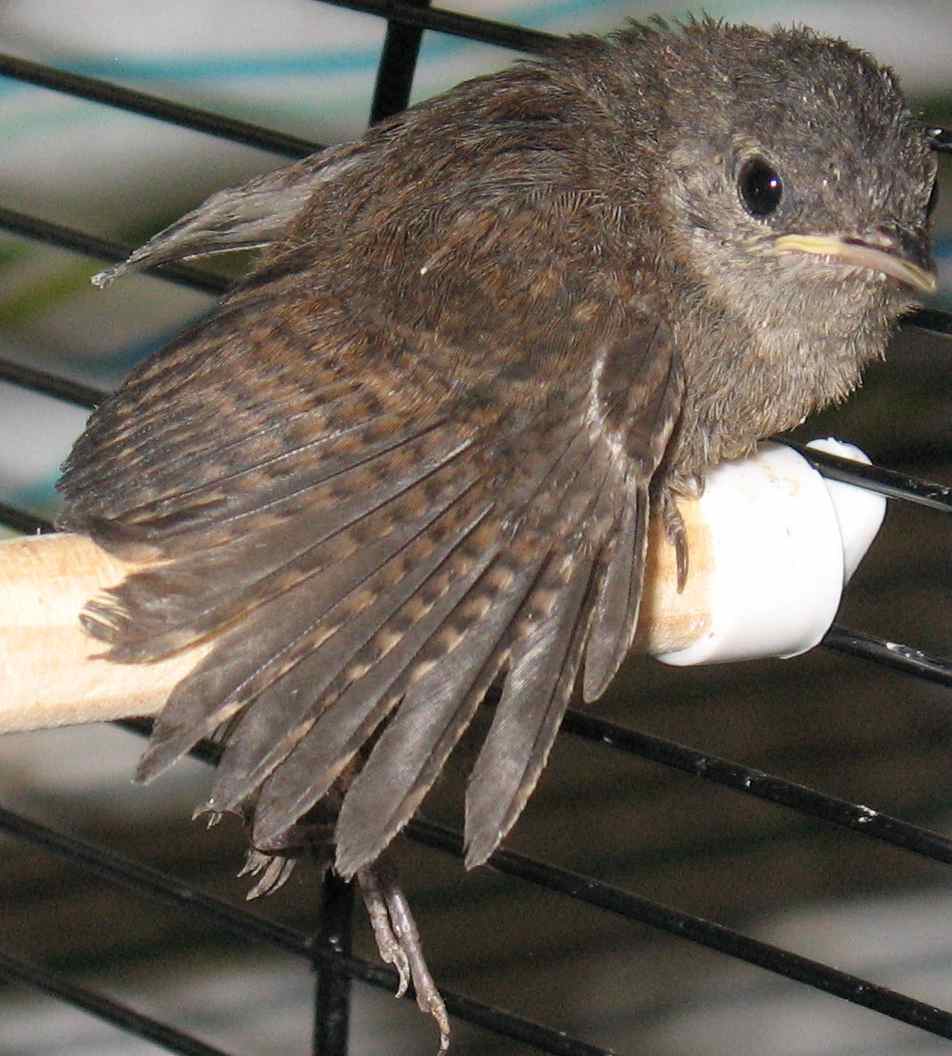
Bird wings come in a variety of shapes, from long and slender to short and rounded. These shapes affect how good the bird is at different types of flight: long and slender wings are good for soaring, while short and rounded wings are good for maneuverability.

House Wrens spend a lot of time flitting around in dense brush, so they need to be very maneuverable.

Short, rounded wing of a House Wren

(They don’t usually hold their wings that way – this was an injured bird I was caring for – but it’s the best wing-shape picture I have.)

Continue reading

Field season 2012 starts… now!

I’m heading for the field today! As soon as I find my GPS, or give up on finding it…

This is a scouting trip. I won’t catch any birds (I don’t have the state permit for that yet anyway) but I’ll try to find them, see what breeding stage they’re at, and figure out what sites will be the best to focus on. I’ll start out in Stanislaus National Forest, then head to Sierra National Forest. It’s early enough in the season that most campgrounds are still closed, so I don’t get much choice of where to stay, but I’ll cover as much ground as I can. I’m hoping there won’t be many road closures in the parks but you never know.

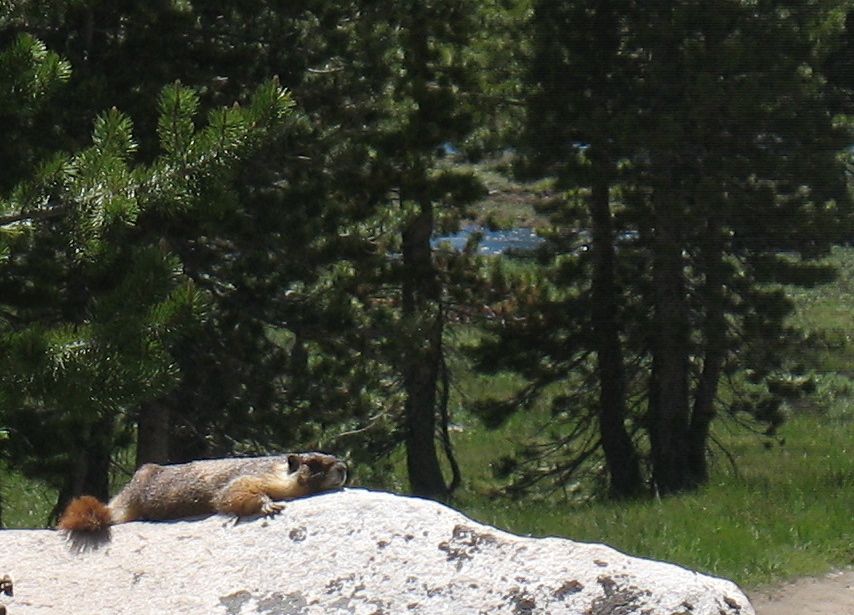
I’ll be back Friday. In the meantime, I’ve scheduled posts (I’ll be “posting from the past,” as Jim Hines put it), and here is a picture of a marmot relaxing:

Angry birds

Not the game—real angry birds. You may not always notice angry birds, but they are all around you. Birds mob other (usually larger, threatening) birds, flying at them and even hitting them. Imagine if mice got together to run headfirst into cats…

(Actually, I know some cats that might be scared of those mice. You might call them scaredy-cats… Don’t hurt yourself laughing at my witticisms.)

Birds also fight others of their own species. Physical fights are pretty rare: birds usually try to work their fights out using “words not fists”—or rather, song not violence. Birds will usually start with songs and calls, then escalate to threatening postures and movement, and only if none of that resolves the issue will they fight. Recently, I watched a Snowy Egret face what I think must have been an intruder on his territory. First he called. When the intruder didn’t leave, he raised the crest on his head high and flew at the intruder, chasing him away. Continue reading

Follow-up: almost nobody understands mirrors

Since several people have contacted me to defend junco intelligence after the mirror post yesterday, I thought I might talk a bit more about birds and mirrors.

Very, very few species understand mirrors, and an enormous majority of them behave as if the mirrored images are real, as the junco did. The list of birds that do not recognize themselves in the mirror is long: Budgerigar; House Sparrow; Kea; Black-capped Chickadee; Zebra Finch; Cedar Waxwing; Glaucous-winged Gull; Blue Grouse; Peach-faced Lovebird; reviewed in (1). In 1964, Edith Andrews kept an injured junco in a cage with a mirror and observed that it was quieted by the mirror, liked to perch next to it, and “appeared to be smitten with its own image” (2).

Continue reading

Juncos do not understand mirrors

The other day I saw a junco perched on the ledge of the front side window of a parked car. As I watched, he flew at the side-view mirror, a full head-on charge. When that didn’t seem to work, he sat back on his perch on the window, looked at the mirror, and charged again. And again. When some people passing by scared him up into a tree, he waited until they were gone, and then he flew back down and resumed his attack. He was really determined to win this fight against Mr. Uppity Mirror Junco.

I’m hoping this was a fluke. No one wants to think that their study species is dumb.

Auxiliary marking permit all set!

I just got confirmation that one of my permits – to put colored leg bands on the juncos – is approved! This is awesome. Putting colored leg bands on birds allows researchers to tell individuals apart, since we can put unique combinations of colors on each bird. For example, here are the color bands of RROA, a male House Wren who lived in Ithaca:

Image

RROA = Red Red Orange Aluminum, with the aluminum band being the official US Fish & Wildlife band; this band has a unique number engraved on it, and all information about the bird is associated with that number. However, you have to be holding the bird in your hand to read its USF&W number, so researchers use color bands to be able to tell who is who without capturing the bird. We could identify RROA just by looking at his color bands with our binoculars – we didn’t even have to disturb him. RROA bred in our field site for three years, the longest of any House Wren there. (And yes, we called him RROA – pronounced Roe-uh.)

So what’s up with the title of this blog, anyway?

First, that’s what my research project is about: little birds (Dark-eyed Juncos weigh about 20 g; that’s the same as about eight bite-size Frosted Mini-Wheats biscuits, or 1/4 of a single package of ramen) that are tough. They are tough because they can breed at sea level or high on a mountain—that’s a lot of variation to adapt to! The high-elevation ones are especially tough, since on the tops of mountains there is snow, often into June, and the juncos have a very short window in which to raise their chicks before it gets cold and harsh all over again in the fall. They are also tough, or will need to be, because of climate change. Patterns of temperature and precipitation are shifting, and species are shifting too, but not all at once and not in the same ways, which means that habitats are changing. Juncos will need to be tough to handle that.

Second, the title reflects one of the reasons I am passionate about birds: they are little, or if they aren’t little they are fragile in other ways* (hollow bones, long thin legs, etc.), and yet they constantly astound me with their toughness. They live in deserts or on ice sheets or they stay aloft over the open ocean for months at a time. Tiny birds will migrate across whole continents, twice a year. Hummingbirds are so delicate that they sometimes have to slow down their metabolisms overnight to keep from starving to death before morning—and yet hummingbirds are very successful, and can live more than ten years. Birds are awesomely tough.


*Exception: ostriches. They do not look fragile to me at all. Ostriches, this blog is not about you.