Featured paper: fledging House Wrens are funny

(This will be a regular feature: blurbs about papers I like.)

Today’s paper: “The process and causes of fledging in a cavity-nesting passerine bird, the House Wren (Troglodytes aedon)” by L. Scott Johnson, Robin L. Rauch, and Sara N. Dellone. Published in 2004 in Ethology 110, pages 693-705.

Fledging is the act of leaving the nest for the first time. In birds with altricial (helpless, naked, dependent) young, this is a big step: the chicks go from sitting in a nest to flying around like adult birds. Or trying to fly around, anyway. Fledglings often aren’t very good at flying at first.
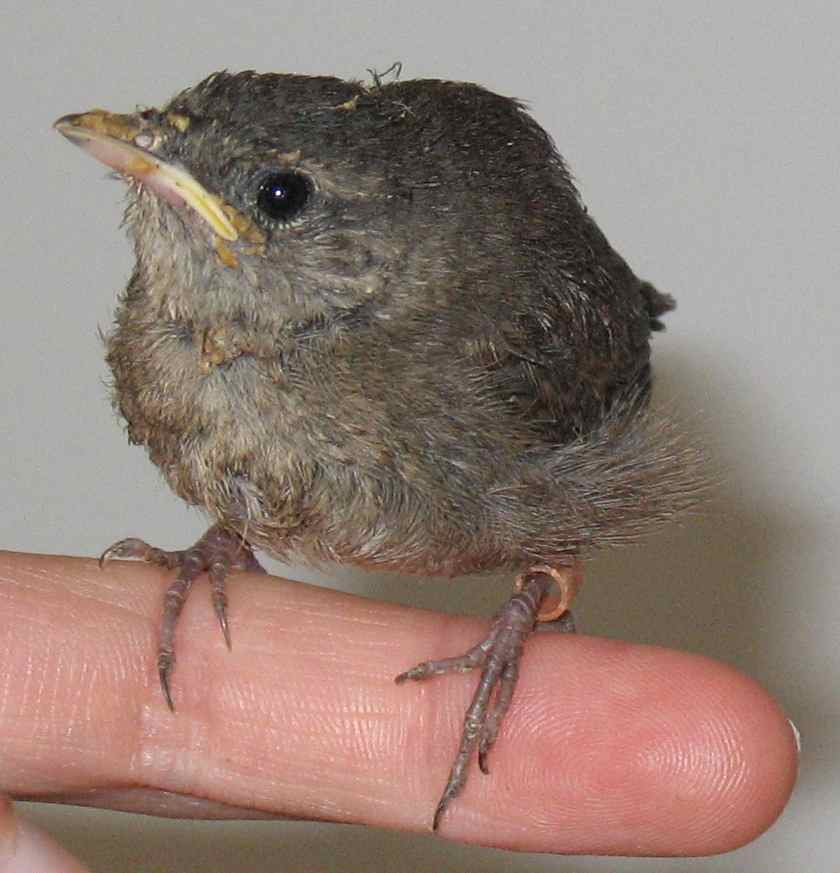
A rehabbed House Wren nestling (and messy eater) nearly ready to fledge

Continue reading

Follow-up: almost nobody understands mirrors

Since several people have contacted me to defend junco intelligence after the mirror post yesterday, I thought I might talk a bit more about birds and mirrors.

Very, very few species understand mirrors, and an enormous majority of them behave as if the mirrored images are real, as the junco did. The list of birds that do not recognize themselves in the mirror is long: Budgerigar; House Sparrow; Kea; Black-capped Chickadee; Zebra Finch; Cedar Waxwing; Glaucous-winged Gull; Blue Grouse; Peach-faced Lovebird; reviewed in (1). In 1964, Edith Andrews kept an injured junco in a cage with a mirror and observed that it was quieted by the mirror, liked to perch next to it, and “appeared to be smitten with its own image” (2).

Continue reading